Seizing the Mobile Opportunity: Lei Jun's 230 Billion Venture into 'Lobster Farming'
 03/10 2026
 718
718

Produced by Leadar Finance | Written by Ding Yu | Edited by Meng Shuai
Lei Jun, with a net worth of 230 billion yuan, has also ventured into 'lobster farming.'
In recent months, the open-source AI agent project OpenClaw has taken the global tech scene by storm. With its logo featuring a red lobster, deploying and operating OpenClaw has been humorously dubbed 'lobster farming.'
On March 6, Xiaomi announced the launch of a small-scale closed beta for Xiaomi miclaw, its mobile AI agent. This AI interaction testing product, built on Xiaomi's MiMo large model, is China's first mobile-based OpenClaw-like AI agent application.
Compared to traditional AI assistants, Xiaomi miclaw boasts four levels of capabilities: system-level access, personal context understanding, ecosystem interconnection, and self-evolution.
Notably, Lei Jun previously revealed Xiaomi's plan to focus on core technologies such as chips, AI, and operating systems over the next five years. To this end, Xiaomi plans to invest up to 200 billion yuan to drive hardcore technological innovation.
Leadar Finance noted that Lei Jun, with a fortune of 230 billion yuan, has once again made the list in the newly released '2026 Hurun Global Rich List,' with his net worth rising by 10% from the previous year.
In fact, besides Xiaomi, other internet giants are also flocking to this new trend. Tencent offered free cloud installation of OpenClaw at its headquarters, drawing queues of over a thousand people. ByteDance and Alibaba have also provided deployment solutions for their AI users.
However, analysts point out that despite the current hype around 'lobster farming,' it carries certain security risks, such as network attacks and information leaks. As major companies embrace OpenClaw and vie for market share, they must prioritize security to ensure user data protection and system stability.
'Lobster Farming' Goes Global: Xiaomi Aims to Seize Mobile Opportunity
According to Xiaomi's technical blog post on March 6, Xiaomi miclaw represents a small step in Xiaomi's exploration of AI agents. It is an AI interaction testing product built on Xiaomi's MiMo large model.
Xiaomi explains that Xiaomi miclaw focuses on verifying the execution capabilities of large models within Xiaomi's 'Human-Vehicle-Home Ecosystem' and explores the path from 'conversational ability' to 'system-level execution.'
In the comments section of the blog post, Lei Jun referred to Xiaomi miclaw as the 'mobile lobster.'

The terms 'miclaw' and 'mobile lobster' are both tributes to OpenClaw, the open-source AI agent launched just four months ago.
OpenClaw, developed by Austrian developer Peter Steinberger, is an open-source, locally prioritized autonomous AI agent. Initially launched as ClawdBot in November 2025, it underwent several name changes before settling on OpenClaw.
The birth of OpenClaw is considered a milestone in AI agent development.
Publicly available information shows that an AI agent is a system that autonomously executes tasks by designing workflows using available tools.
Powered by large language models to understand needs, plan goals, and execute tasks, AI agents possess autonomous understanding, perception, planning, memory, and tool-using capabilities, enabling them to automate complex tasks.
Since its launch, OpenClaw has quickly become one of the hottest projects in the AI community, thanks to its ability to automatically perform tasks 24/7 (such as reading files, searching for information, writing code, and sending emails) and the attention it has garnered from numerous celebrities.
In just over four months, OpenClaw made history by topping the GitHub Stars chart with over 273,000 stars, surpassing Linux to become the most popular open-source project on GitHub.
NVIDIA CEO Jensen Huang praised it as 'the most important software release of our time.' He marveled that while the Linux operating system took about 30 years to reach its current level of adoption, OpenClaw surpassed it in just three weeks, becoming the most downloaded open-source software in history.
Xiaomi's Xiaomi miclaw marks China's first attempt to bring an OpenClaw-like AI agent to mobile devices.
Regarding the connection between the two, Xiaomi explained that at the product concept level, global AI agents share similar architectures and can be considered conceptually homologous.
In terms of usage, compared to OpenClaw, Xiaomi miclaw can be quickly deployed on mobile devices and easily integrates with Xiaomi's ecosystem devices and first-party applications, allowing non-technical users to quickly deploy, use, and experience the powerful capabilities of a mobile AI agent.
Xiaomi states that Xiaomi miclaw enables smartphones to function as AI tools. After understanding user intent and receiving authorization, it can invoke first-party applications and ecosystem capabilities, as well as autonomously select system-level tools to complete user commands.
'It can recognize you, remember you, and interpret vague tasks to perform operations. It continuously learns, adjusting its behavior and expanding its capabilities. Finally, it precipitate s (accumulates) experiences through its memory system, becoming more attuned to you with use.'
Notably, Xiaomi miclaw fully implements the Mi Home protocol client, allowing it to read device status and send control commands. With user authorization, it can theoretically control all IoT devices connected to Mi Home. Currently, the Mi Home platform has connected over 1 billion devices.
According to the 'Sci-Tech Innovation Board Daily,' a Mi Home customer working at a major company said that having 'lobster' manage smart devices at home significantly enhances convenience.
Inviting a 'Genius Girl' to Lead AI Efforts: Xiaomi Invests 200 Billion in R&D Over Five Years
While domestic tech giants like ByteDance and Alibaba are heavily investing to gain a foothold in AI, Xiaomi, as a terminal manufacturer, has also been quietly building its AI business.
Since its inception, Xiaomi's MiMo large model, the 'soul' of Xiaomi miclaw, has demonstrated impressive capabilities.
According to the Xiaomi MiMo official account, on April 30 last year, Xiaomi open-sourced its first large model designed for reasoning, Xiaomi MiMo.
At the time, on public benchmarks for mathematical reasoning (AIME 24-25) and coding competitions (LiveCodeBench v5), MiMo, with just 7 billion parameters, outperformed OpenAI's closed-source reasoning model o1-mini and Alibaba's larger open-source reasoning model QwQ-32B-Preview.
Subsequently, Luo Fuli, a former Peking University postgraduate who published articles in top conferences and journals, worked at Alibaba's DAMO Academy, and later engaged in AI research at DeepSeek, joined Xiaomi in November of the same year to lead the Xiaomi MiMo large model team.
In December, Xiaomi released and open-sourced the MiMo-V2-Flash large model. According to Xiaomi, this model achieves exceptional 'cost-effectiveness.'
Specifically, Xiaomi MiMo-V2-Flash ranks among the top 2 global open-source models across multiple agent evaluation benchmarks. Its coding capabilities surpass all open-source models, rivaling the benchmark closed-source model Claude 4.5 Sonnet, while its reasoning cost is just 2.5% of Claude's, and its generation speed is doubled, pushing the boundaries of large model performance and reasoning efficiency.
In January this year, Lei Jun posted on Weibo, 'In 2020, we established our technology-driven strategy and committed to investing 100 billion yuan in R&D over five years. We've persisted for five or six years, and step by step, we've achieved results. Of course, we need to continue increasing R&D investment to create better products. Therefore, we plan to invest another 200 billion yuan over the next five years.'
Recently, Lei Jun revealed in a media interview that as a tech company, Xiaomi plans to focus on core technologies such as chips, AI, and operating systems over the next five years.
Tech Giants Flock to 'Lobster Farming': Security Risks Cannot Be Ignored
Leadar Finance noted that while Xiaomi has entered the 'lobster farming' arena, other domestic internet giants are also eyeing this trend.
According to 'Southern Industry Observer,' on March 6, nearly a thousand developers and AI enthusiasts lined up in front of Tencent's headquarters. With free assistance from Tencent Cloud engineers, they completed cloud installation of OpenClaw.
Meanwhile, through the Tencent QQ Open Platform, Tencent introduced a new feature for individual users, allowing them to quickly create QQ bots that interact with the AI agent tool OpenClaw through official channels.
Media reports indicate that Tencent's Lighthouse developer count and core usage have repeatedly hit all-time highs, with the number of OpenClaw cloud-based 'lobster farmers' surpassing 100,000 and continuing to rise.
Besides Tencent, ByteDance offers a one-click deployment method for OpenClaw on its Volcano Engine official website.
Alibaba Cloud released a deployment guide on March 5, enabling seamless integration of OpenClaw with its large model Qwen3-Max.
Ant Group, closely tied to Alibaba, also invested in Weiguang Dianliang, an AI agent smart hardware developer.
According to Tianyancha, on March 5, Shanghai Yunqi Enterprise Management Consulting Co., Ltd., an Ant Group subsidiary, and other investors participated in a new funding round for Weiguang Dianliang, with the former now directly holding a 4.97% stake.
Weiguang Dianliang was founded by Song Ziwei, a former product manager at iQOO, a sub-brand of vivo. She previously worked at Huawei, vivo, and Li Auto before founding Weiguang Dianliang in 2024 to focus on AI agent smart hardware development.
However, as major companies embrace OpenClaw, it may also pose certain security risks.
In February this year, the Ministry of Industry and Information Technology's Cybersecurity Threat and Vulnerability Information Sharing Platform issued a 'Security Risk Warning for OpenClaw Open-Source AI Agents.'
The platform detected that some instances of the OpenClaw open-source AI agent, under default or improper configurations, carry high security risks, making them vulnerable to network attacks and information leaks.
The platform advised relevant organizations and users to thoroughly check public network exposure, permission configurations, and credential management when deploying and using OpenClaw. It recommended disabling unnecessary public network access, strengthening security mechanisms such as identity authentication, access control, data encryption, and security auditing, and staying vigilant about official security announcements and reinforcement recommendations to mitigate potential cybersecurity risks.
Regarding security risks during use, Xiaomi stated that Xiaomi miclaw's system-level permissions do not equate to unrestricted data access by the app. High-sensitivity operations require confirmation before execution, and all conversation history, user settings/permission authorization records, and skill files are stored locally. All content sent to the cloud is discarded immediately after inference and not persistently saved.
Xiaomi also promised, 'We will never use user data to train AI systems.' All model training data comes from legally obtained public datasets or authorized data that has undergone compliance reviews. Users have full control over their memory data.
Tencent introduced an AI security sandbox feature in version 18.0 of Tencent PC Manager, providing one-click protection for agent tools through system-level isolation.
Volcano Engine simultaneously launched an AI assistant security solution, establishing a three-tiered security defense system covering platform security, AI assistant security, and supply chain security.
Will the explosive popularity of OpenClaw drive rapid development of China's AI agent industry and facilitate large-scale AI application adoption? Leadar Finance will continue to monitor the situation.
-
![]()
Doubao Work Unveiled! Domestic AI Leaders Fully Commit to the 'Work' Sector
-
![]()
Who’s Sounding the Alarm on ‘Rushed Vehicles’?
-
![]()
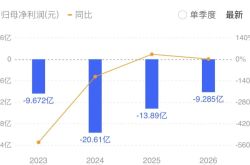
Over 5.3 Billion Yuan in Losses Over Three and a Half Years! Can Yonyou Reverse Its Fortunes Through Streamlining and AI Transformation?
-
![]()
Baidu AI Adopts Free Model: A Strategic Maneuver in Traffic and Monetization
-
![]()
Silicon-Based OLED Pioneer Unveils Financial Results: H1 Shipments Outpace Entire 2025 Volume
-
![]()
AI's First "Lost Summer"
-
![]()
Zeiss Makes Another €2.2 Million Bet: Will Eye Tracking Be the Next Big Thing in the Smart Glasses Industry?
-
![]()
RUNTO Ranking | Global Top TV ODM Factories' Shipment Figures for July 2026