US Autonomous Driving Legislation 'Loosens the Reins,' Accelerating Robotaxi Commercialization
 03/10 2026
 594
594


Source: Smart Vehicle Technology
On February 10, 2026 (local time), the Subcommittee on Commerce, Manufacturing, and Trade under the US House Energy and Commerce Committee passed two bills—the '2026 Autonomous Vehicle Safety Act' (H.R.7390) and the '2026 Motor Vehicle Modernization Act' (H.R.7389)—marking a substantial breakthrough in the nearly decade-long legislative stalemate over autonomous driving in the United States.
The two bills address key regulatory pain points in the industry, aiming to establish a unified national federal regulatory framework. If subsequently passed by the full House, reviewed by the Senate, and signed into law by the President, they will directly reshape the trajectory of the US autonomous driving industry and have far-reaching implications for global intelligent driving regulation and industrial competition.

Core Content: Regulatory Unification and Commercial Deregulation
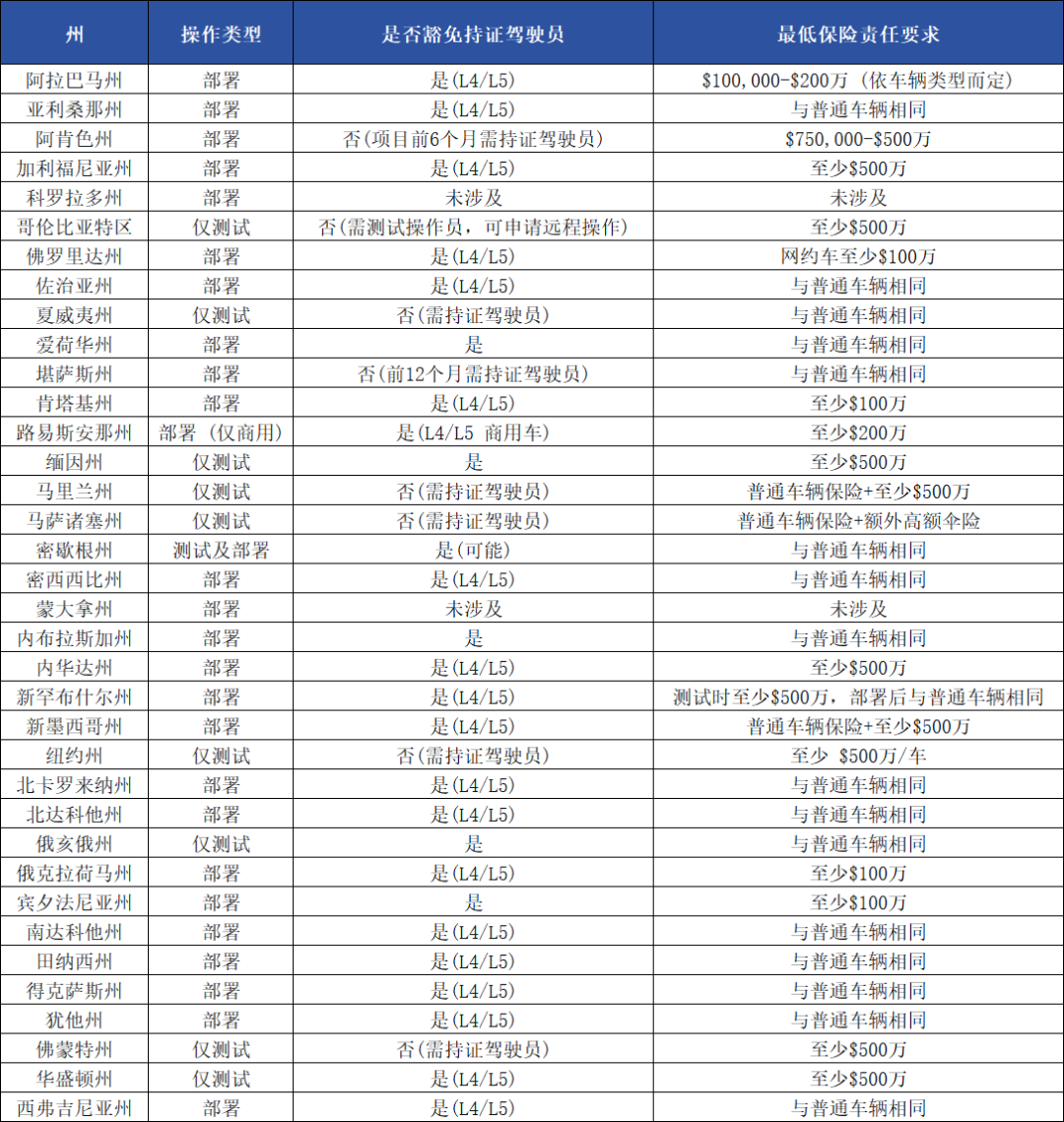
Over the past few years, the US autonomous driving industry has faced fragmented state-level regulations, with over 30 states implementing differing rules on vehicle testing, market access, operations, and liability standards. This has resulted in high compliance costs for companies operating across state lines, hindering large-scale commercial deployment.
The two newly passed bills have clear divisions of labor: the '2026 Autonomous Vehicle Safety Act' (H.R.7390) focuses on federal regulatory priority, safety case certification, and data and safety rules; the '2026 Motor Vehicle Modernization Act' (H.R.7389) targets mass production exemptions, approval efficiency, and NHTSA institutional reform. Together, they establish a regulatory framework suited for advanced autonomous driving technologies across four dimensions: regulatory authority, mass production access, safety certification, and data oversight. The core provisions align with industry development needs while maintaining safety control baselines.
1. Establishing Federal Regulatory Priority and Clarifying Oversight Responsibilities
One of the core provisions of the '2026 Autonomous Vehicle Safety Act' is to clarify federal regulatory priority and define the regulatory boundaries between federal and state governments.
According to the bill, state and local governments may not prohibit the production, sale, or interstate circulation of autonomous vehicles that meet federal safety standards, nor may they require companies to repeatedly submit accident-related compliance information. States retain only traditional motor vehicle regulatory powers such as traffic enforcement, vehicle registration, insurance claims, and consumer protection. This means compliant automakers could achieve 'one-time certification, nationwide operation,' significantly reducing cross-regional compliance costs.
Notably, this 'federal priority' may directly conflict with California, a pioneer in autonomous driving regulation. As the first US state to establish a comprehensive regulatory framework for autonomous vehicles, California has a mature regulatory system and data collection mechanism. It is expected that during the Senate review stage, lawmakers from California may propose amendments to preserve local regulatory flexibility.
2. Relaxing Mass Production Exemptions for Autonomous Vehicles to Pave the Way for Large-Scale Manufacturing
For native autonomous vehicle models without steering wheels or pedals, Bill H.R.7389 significantly adjusts exemption rules: it raises the annual mass production exemption cap for automakers from the current 2,500 units to 90,000 units and extends the validity period of a single exemption from 2 years to 5 years.
Additionally, the bill introduces a 'deemed approved' mechanism: if the National Highway Traffic Safety Administration (NHTSA) fails to respond to an automaker's exemption application within one year, the application will be automatically approved. This adjustment breaks through the scale limitations of small-scale testing, providing regulatory support for the mass production and commercialization of driverless vehicle models, aligning with the mass production plans of companies like Waymo and Tesla.
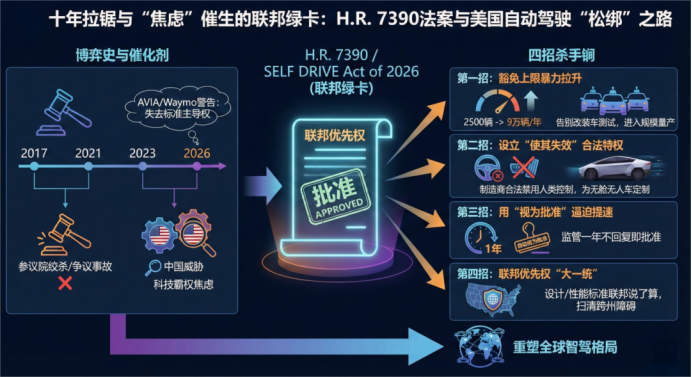
Image Source: When Traffic Safety Meets Intelligent Transportation
As a complementary measure, the '2026 Motor Vehicle Modernization Act' focuses on reforming regulatory agencies themselves, requiring NHTSA to develop a 'Rulemaking and Research Priority Plan' every two years and to reform the 'New Car Assessment Program' (NCAP) to enhance regulatory efficiency and adapt to the rapid iteration of autonomous driving technologies.
On the surface, the 90,000-unit exemption policy is open to the entire industry, but when combined with the 'connected vehicle software and hardware ban' being advanced by the US Department of Commerce (BIS), its policy direction becomes clear. According to BIS rules, starting with the 2027 model year, the US will prohibit the import or sale of connected vehicles equipped with 'self-developed software (including VCS in-vehicle connectivity systems and ADS autonomous driving systems) from specific countries (pointing to China).' This means that even if the federal government relaxes mass production exemption permissions, Chinese autonomous driving technologies and related vehicle models may still be excluded from policy benefits.
3. Introducing 'Safety Case' Certification and Adopting an Outcome-Oriented Regulatory Model
The two bills abandon the traditional pre-approval approach used for conventional fuel vehicles and assisted driving models, innovatively introducing a mandatory 'safety case' certification system as a core regulatory innovation.
The bills require automakers to compile a comprehensive safety case report before selling or importing autonomous vehicles, demonstrating through technical arguments and real-world testing data that the vehicle's system design, manufacturing, and operational performance do not pose unreasonable road safety risks.
The report must cover core elements such as software and hardware architecture, operational design domain (ODD), risk assessment, collision avoidance, cybersecurity, and protection of vulnerable road users. It adopts a 'self-certification by enterprises + post-event accountability' regulatory model, balancing technological innovation flexibility with clear corporate safety responsibilities while protecting corporate core technology intellectual property.
This approach essentially introduces a methodology similar to UL 4600 (Autonomous System Safety Assessment Standard). It signifies a shift in regulatory thinking from 'mandatory requirements for vehicles to have steering wheels' (rigid market access) to 'enterprises must submit comprehensive safety demonstration reports covering design, testing, and risk response' (evidence-based compliance).
This amounts to legislatively recognizing the compliance pathway for 'non-deterministic' systems centered on machine learning, shifting from 'pre-approval of design' to 'continuous supervision of performance,' providing a regulatory framework for AI-driven systems without traditional human-machine interfaces.
4. Building a National-Level Data Platform and Standardizing Accident and Mileage Data Reporting
The bills explicitly require the establishment of a national-level safety database for autonomous vehicles, detailing data reporting requirements: automakers must report relevant data within 30 days of a serious accident involving personal injury, airbag deployment, or collisions with vulnerable road users, or within 10 days of receiving a regulatory notice. They must also submit quarterly reports on total miles driven in autonomous mode.
Data management will balance commercial confidentiality protection with regulatory sharing needs, assisting NHTSA in conducting safety risk assessments and optimizing regulatory standards to build a data-driven, full-process safety regulatory system. Additionally, the bills refine requirements for autonomous system failure response, minimum risk condition activation, and cybersecurity protection, reinforcing technological safety baselines.

Industry Voices: Divergent Stakeholder Demands Emerge
1. Industry: Reduced Compliance Costs and Accelerated Large-Scale Commercialization
From the perspective of specific beneficiaries, Tesla is undoubtedly one of the core beneficiaries. Its steering wheel-free Cybercab is scheduled for mass production in April 2026, and the bill's 90,000-unit exemption quota precisely addresses its urgent capacity needs. Meanwhile, 'federal priority' allows Tesla to disregard aggressive regulations in California and other states.
However, the bill also implies constraints. It requires the establishment of unified safety standards by September 2027, meaning an official determination on whether FSD qualifies as Level 2 or Level 4 will finally arrive. Secondly, accident data transparency is enshrined in the bill's provisions. Mandatory data reporting will end Tesla's flexibility in accident disclosure. More concerning for its legal department is the ongoing congressional debate on repealing 'mandatory arbitration' clauses, which, if passed, could dismantle the 'legal moat' Tesla and other automakers have constructed using such clauses.
Industry consensus holds that federal regulatory unification, increased mass production exemption quotas, and streamlined approval processes will effectively reduce corporate compliance costs, shorten technology deployment cycles, and accelerate large-scale operations in scenarios such as autonomous freight transport and Robotaxi services. This will propel the US autonomous driving industry from the testing and validation phase to commercial deployment, boosting capital market confidence in the sector and consolidating US competitiveness in the global intelligent driving arena.
2. Regulators and Academia: Innovative Framework Implementation Faces Challenges
Some regulators and academics believe that the two bills align with autonomous driving technology trends and break through traditional automotive regulatory thinking. Their federal unified regulatory and outcome-oriented certification models provide a reference sample for global autonomous driving legislation.
However, they also point out that the bills face multiple implementation challenges: first, subjective terms like 'unreasonable risk' in the 'safety case' system lack quantitative safety standards, making regulatory enforcement scales difficult to unify; second, conflicts exist between federal priority and existing regulatory rules in states like California, potentially encountering resistance at the local level; third, supporting safety standard development lags, with NHTSA not completing the full standard rollout until September 2027, potentially creating regulatory vacuums during the transition period.
Meanwhile, the industry continues to express concerns about the significant gap between NHTSA's regulatory resources and the surging demand for autonomous driving testing. Senate Commerce Committee hearing disclosures reveal that NHTSA has long faced a shortage of technical experts, raising questions about whether it has sufficient human resources to review complex 'safety case' reports—a key constraint on the bill's implementation.
3. Consumers and Insurance Institutions: Rights Protection and Risk Management Require Improvement
Consumer advocacy groups, insurance institutions, and some state governments have raised objections to the bills. Consumer groups argue that the bills lack detailed provisions on corporate accident liability, consumer rights protection pathways, and after-sales support, providing insufficient safeguards for consumer safety and rights. The insurance industry states that the bills restrict third-party data access permissions, hindering risk assessment and insurance claims processing, increasing industry operational uncertainty. Some state governments worry that federal priority excessively constrains local regulatory space, making it difficult to implement refinement (precision-based) management tailored to local road conditions and traffic characteristics, potentially triggering regional road safety risks.
Notably, a core driving force behind the accelerated legislative process is competition with China. As China builds differentiated infrastructure advantages through its 'vehicle-road-cloud integration' strategy, with companies like Baidu Apollo and Pony.ai accelerating testing and operations domestically and in overseas markets such as the Middle East and Europe, the US industry and political circles generally hope to break institutional barriers through federal legislation. There is bipartisan consensus that if the US fails to seize the initiative in autonomous driving development, it may lose its voice in global intelligent driving technology standard-setting.

Industry Impact and Outlook: Global Competition Intensifies, Regulatory-Industry Synergy Becomes Critical
The advancement of the two US autonomous driving bills represents a significant development in global intelligent driving regulatory system construction . It will not only influence the pace of domestic industry development but also reshape the global autonomous driving competitive landscape, providing references for autonomous driving legislation and industrial layout (strategic deployment) in other countries.
From a global perspective, if the bills are ultimately enacted, the US will address shortcomings in federal autonomous driving regulation, leveraging a unified regulatory framework and relaxed commercial policies to further strengthen its advantages in technology research and industrial deployment. This will intensify technological and market competition between the US, China, and Europe in the intelligent driving sector. Meanwhile, its innovative approaches, such as 'safety case' certification and federal-level coordinated regulation, will accelerate the iteration of global autonomous driving regulatory standards and promote exchange and integration among national regulatory systems.
From the perspective of domestic industry development in China, the US legislative trend offers certain references. Currently, China's autonomous driving industry adopts a 'top-level planning + local pilot' development model, possessing unique advantages in vehicle-road-cloud integration and scenario-based deployment. However, a unified national regulatory framework for high-level autonomous driving remains to be completed. Future industry development must adhere to the principles of safety first and prudent inclusiveness, balancing technological innovation with safety controls, accelerating the improvement of a national-level regulatory standard system, and promoting the steady transition of autonomous driving from pilot demonstrations to large-scale commercialization.
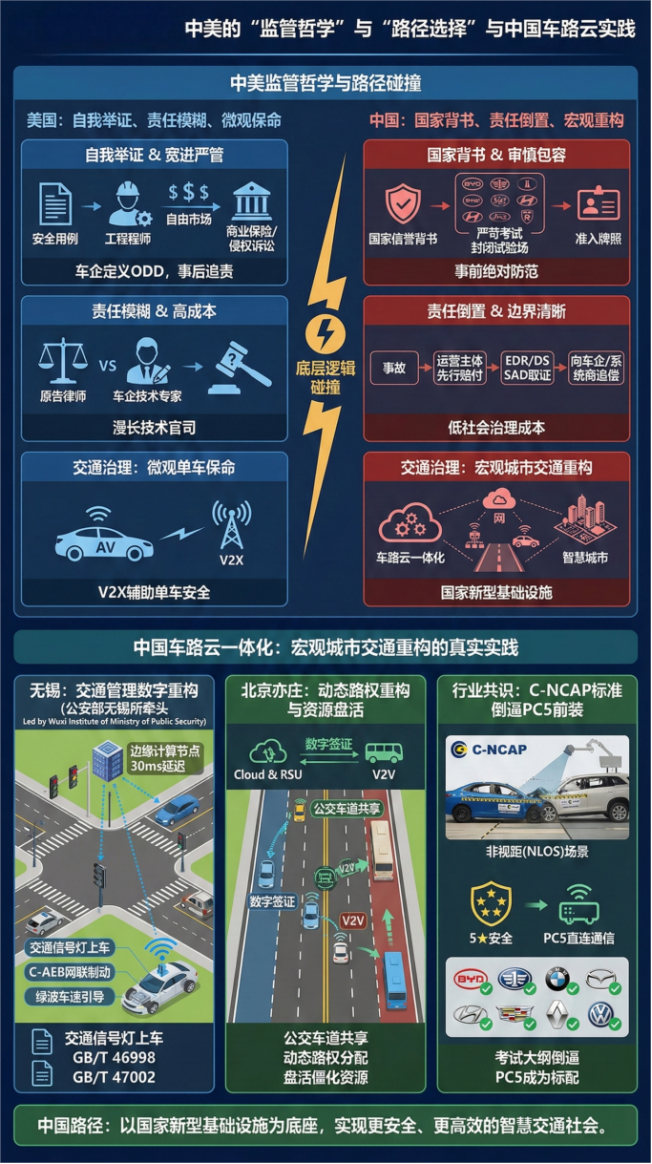
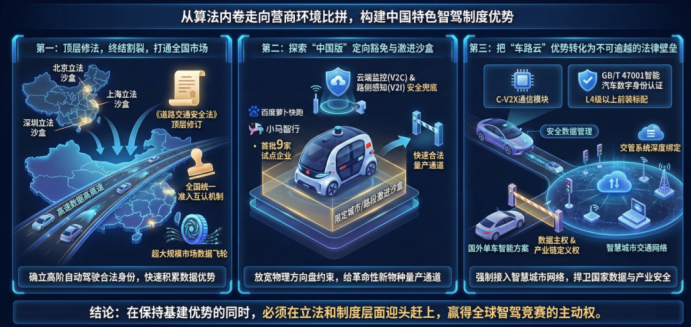
Image Source: When Traffic Safety Meets Intelligent Transportation
As of now, the two bills are still under review by the full House and must subsequently pass Senate voting and Presidential signature before final enactment, leaving room for adjustments to the timeline and specific provisions. Subsequent progress in bill deliberations and the development of supporting regulatory details will remain core focal points for the global autonomous driving industry, continuing to influence the sector's large-scale development trajectory.
- End -
Disclaimer:
All works marked 'Source: XXX (not ZhiChe Tech)' in this official account are reprinted from other media. The purpose of reprinting is to transmit and share more information, which does not mean that this platform agrees with its views or is responsible for its authenticity. The copyright belongs to the original author. If there is any infringement, please contact us to delete it.
-
![]()
The Unstoppable Rise of 'Optical Progress and Copper Decline': Sunny Optical’s Strategic Vision for the Next Decade
-
![]()
AI + Going Global in the Second Half: No Intermission for Robot Vacuum Cleaners
-
![]()
The Suffering Endured in E-commerce, Walmart Doesn't Want to Repeat in AI
-
![]()
What Does the Doubling of New Energy Vehicle Exports Mean?
-
![]()
Ghosn: 'Only I Can Save Nissan'
-
![]()
Volkswagen Lays Off 100,000 Employees, The Elephant Sits Down
-
![]()
Expanding Production Capacity! Yutong Optics Acquires Approximately 1.5 Hectares of Industrial Land in Chang'an, Dongguan
-
![]()
Why Is Nokia Making a Comeback in the AI Era?