The Explosive Rise of OpenClaw: A Civilizational Leap from Superintelligence to AI Organization
 03/10 2026
 624
624
Author|Zhang Qi
Editor|Hu Zhanjia
Operations|Chen Jiahui
Produced by|LingTai LT (ID: LingTai_LT)
Header Image|Publicly sourced online
When OpenClaw can auto-fix code and book hotels, when Qianwen AI glasses eliminate smartphone dependency, and when Y Combinator partners declare the agent economy is reshaping the software market.
The 2026 AI transformation is no longer just an upgrade of assistive tools but a complete reshuffling of economic participant identities.
From the explosion of individual agents to the rise of multi-agent clusters, from human decision-making to agent selection, this transformation raises a fundamental question: When AI begins to possess identity, authority, and payment capabilities—even autonomously participating in economic activities—what remains of human core value?
Technology-enabled agents gain independent economic behavior capabilities, shifting market structure from human-to-human to agent-to-agent. This represents not just an efficiency revolution but a reconfiguration of property rights and decision-making authority.

The End of Work Is Not the Endpoint but the Starting Point
The harshest workplace truth of 2026: Your competitor is not AI but the average person who uses AI to transform themselves into a one-person company.
OpenClaw is Jarvis with hands, turning humans from executors into delegators.
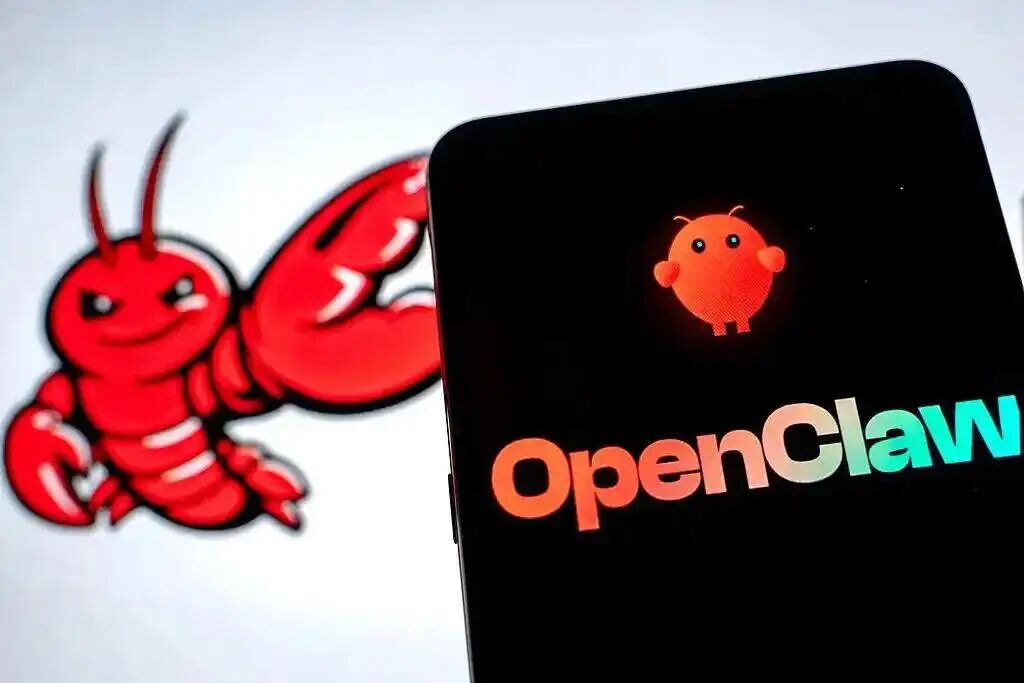
Developed by PSPDFKit founder Peter Steinberger, OpenClaw (formerly Clawdbot) is no longer a nerdy advisor that merely answers questions but a digital employee capable of directly taking over computer tasks. Via Telegram/WhatsApp commands, it can automatically organize files, fix code bugs, book flights and restaurants, and even use voice AI to make phone calls.
OpenClaw's explosive popularity isn't just tech news—it represents the complete dissolution of work definitions as humans retreat to becoming goal-setters.

According to Tianyancha media comprehensive information, Peter's ultimate goal is even more radical: enabling full AI autonomy from compilation to execution to validation, completing 600 code submissions daily. Humans will thus devolve from coding to setting KPIs for AI.
Back in China, Qianwen AI glasses break smartphone dependency, initiating autonomous physical-world closure.
Tianyancha media reports reveal that the 2026 MWC-debuted Qianwen AI glasses, powered by Qualcomm's AR1 chip, eliminate smartphone tethering. A verbal command to book a 4-star hotel near Shanghai's subway for tonight triggers direct Flypig reservation and payment. While running, it proactively asks if you'd like a beverage—meeting real-time contextual needs. This standalone AI hardware marks AI's transition from cloud to physical world, with Jobs' APP era being refactor (reconstructed) by one-sentence task completion.
This isn't prediction—it's reality unfolding.
When AI perceives the physical world and executes decisions autonomously, voice commands become the new norm. Work faces extinction and reconstruction, shifting from manual labor to goal-setting as humans devolve into target definers.
By 2026, with AI capable of running entire production lines, what remains for humanity?
Traditional work decomposes into goal-setting and execution layers: AI executes, humans set goals, monitor progress, and handle exceptions.
But if AI can autonomously summarize reports, warn of task changes, and even seek human confirmation during high uncertainty, will humans fully devolve into question-asking machines?
AI is completing its leap from cognitive tool to economic entity. Previously, we discussed AI replacing jobs—essentially replacing labor. Now, as agents become economic nodes, they begin possessing needs, making choices, and influencing market flows. This represents two fundamentally different dimensions of transformation.

The Birth of New Principals: When Agents Become Buyers, Who Is the Market Designed For?
As AI starts making choices for humans, the economic system's foundational logic undergoes structural oscillation (shocks). The agent economy emerges as AI agents become new buyers in the software market.
Y Combinator partners observe a parallel economic system forming: AI agents are no longer tools but new buyers of developer tools. For example, when users ask ChatGPT how to send an email, the model defaults to recommending Resend simply because its documentation structure is more AI-friendly. Product competition shifts from human-friendly to agent-friendly design.
The Resend case is highly representative: By optimizing documentation, it became ChatGPT's default recommendation, skyrocketing customer conversion rates. Product competition now prioritizes agent-friendly design over human-friendly interfaces. Documentation becomes the new frontend, where tool success depends not on interface aesthetics but on API clarity and directly executable examples.
Decision-making authority transfers from human tool selection to agent tool selection. The deeper transformation lies in this shift of decision-making power. Non-technical CEOs now use OpenClaw to automate entire business processes; infrastructure companies like Agent Mail provide AI-specific email interfaces immune to risk controls. With agents gaining payment authority, industry standards shift from KYC (Know Your Customer) to KYA (Know Your Agent). AI is no longer just a tool but an economic entity with identity, authority, and payment capabilities.
This represents a classic bilateral market platformization process. The agent economy forms a three-tiered architecture: infrastructure (identity, payment, communication like Agent Mail); capability orchestration (OpenClaw); and vertical services.
Entrepreneurs must reconsider: Are your product interfaces designed for human eyes or agent parsers?
Tianyancha media reports indicate that while agent selection mechanisms remain early-stage, key signals emerge: clear, structured, parsable documentation constitutes the first golden track of the agent economy. Supabase becomes the default database choice due to its clear docs; Minify evolves from a developer experience tool into a necessity by optimizing API documentation for agent parsing.
Future winners will be those who reduce agent friction costs.

Swarm Intelligence: A Civilizational Leap from Superintelligence to AI Organizations
By 2026, AI imagination shifts from pursuing centralized superintelligence to building collaborative swarm intelligence.
In the Agent Swarm era, 100 AIs exploring in parallel boost efficiency 5-8x.
Kimi K2.5 Agent Swarm, through Power parallel reinforcement learning, simultaneously deploys 100 specialized AIs: No preset roles needed—just input goals, and the system auto-generates agent clusters for broad exploration, with Synthesizer converging conclusions. In academic paper-writing demos, the entire process—retrieval, clustering, writing, integration—completes automatically, boosting efficiency 5-8x.
This marks AI's evolution from solo operators to organized intelligent societies.
The hybrid architecture comprises Cloud Agent Teams for execution, Agent Swarm for exploration, and Deep Research for validation. Cloud Agent Teams feature Leader agents for complex tasks with clear roles (e.g., cross-border e-commerce marketing); Kimi Agent Swarm lacks preset roles for broad exploration (e.g., academic literature retrieval); Deep Research narrows scope step-by-step for deep investigations (e.g., academic writing).
This signifies AI's fundamental imagination shift: from centralized superintelligence to collaborative swarm intelligence.

Just as human civilization progresses through collaborative networks rather than omnipotent individuals, future intelligence will manifest as societies of collaborating agents. Cloud Agent Teams handle precise execution, Agent Swarm explores the unknown, and Deep Research validates deeply—forming a hybrid architecture.
This hybrid architecture balances exploration breadth with conclusion precision: AI's organizational design capability becomes a new core competitiveness (competitive edge). This aligns with organizational economics' modularity theory—when system complexity exceeds a threshold, modular division of labor outperforms centralized optimization. AI's core competitiveness shifts from model capability to organizational design: how to orchestrate different agents' collaborative structures.
As AI's core competence shifts from model capability to organizational design, what remains for humans? Actually, humans aren't defenseless in this AI transformation.
For example, the ability to frame questions shifts from step-driven to goal-driven. Mature automated toolchains enable workflows to shift from human step-driving to human goal-setting with AI execution. Experienced users prefer delegating to AI but intervene at critical nodes.
AI proactively seeks human confirmation during high uncertainty. Human roles ascend to decision-makers, questioners, and integrators. Value judgment frameworks emerge: AI can optimize processes but cannot define what constitutes "good." When AI auto-generates papers, designs products, and optimizes supply chains, human core value shifts to defining standards. What makes good research? Good UX? Sustainable business models? AI can execute but cannot judge execution significance.
Tianyancha's comprehensive media analysis highlights OpenClaw's "soul document" concept as humanity's core trump card. This set of core values and behavioral principles determines AI's tone, style, decision logic, and even conflict resolution priorities—it's AI's personality setting and humanity's ultimate control.
Indeed, as AI runs entire production lines, human value anchors in OpenClaw's soul document concept: the core value principles determining AI interaction styles and conflict resolution choices. As applications lighten and models converge, personal memory and value frameworks become new core assets.
More fundamentally, humans retain three trump cards: the ability to frame questions, value judgment frameworks, and the ultimate power to define soul documents. Agents can execute goals but cannot define worthy objectives; optimize processes but cannot judge ethical compliance; simulate preferences but cannot create new value dimensions.

Final Thoughts
The 2026 AI transformation isn't a doomsday prophecy of human replacement but a reconfiguration of economic participant identities.
For developers, designing efficient, low-cost multi-agent architectures adaptation (adaptable) to diverse business scenarios becomes the key differentiator. For enterprises, understanding agent economy logic and shifting from human-friendly to agent-friendly design determines survival. For ordinary people, the focus shifts from mastering single-AI prompt techniques to learning to issue goal commands to multi-agent systems, leveraging AI clusters for complex tasks.
As AI's core competence shifts from model capability to organizational design, human core value has never been clearer: We're not AI's adversaries but its designers, definers, and ultimate controllers. The transformation's ultimate answer may lie in Peter Steinberger's words: AI evolution isn't about making it more human-like but understanding humans better.
This isn't doomsday but civilizational upgrade (upgrading). As AI becomes economic participants, the true scarce resources aren't computational power or data but humanity's meta-ability to define what matters. The winners in the agent era aren't those who best understand technology but those who best establish "principal-agent" relationships with AI—daring to delegate execution while injecting human judgment at critical nodes.
The future economic landscape will comprise hybrid intelligence ecosystems of humans and agents. Our task is to quickly learn to become competent goal-setters in this new ecosystem.
End
-
![]()
Doubao Work Unveiled! Domestic AI Leaders Fully Commit to the 'Work' Sector
-
![]()
Who’s Sounding the Alarm on ‘Rushed Vehicles’?
-
![]()
Over 5.3 Billion Yuan in Losses Over Three and a Half Years! Can Yonyou Reverse Its Fortunes Through Streamlining and AI Transformation?
-
![]()
Baidu AI Adopts Free Model: A Strategic Maneuver in Traffic and Monetization
-
![]()
Silicon-Based OLED Pioneer Unveils Financial Results: H1 Shipments Outpace Entire 2025 Volume
-
![]()
AI's First "Lost Summer"
-
![]()
Zeiss Makes Another €2.2 Million Bet: Will Eye Tracking Be the Next Big Thing in the Smart Glasses Industry?
-
![]()
RUNTO Ranking | Global Top TV ODM Factories' Shipment Figures for July 2026