“Lobster” Economics: A Case Study of the AI Boom
 03/11 2026
 575
575
Author | Yugu
Disclaimer | The featured image is sourced from the internet. This original article by Jingzhe Research Institute may not be reproduced without permission.
Beneath Shenzhen's Tencent Building, hundreds of people are queuing up with their laptops, eagerly awaiting free OpenClaw installations. On platforms like Xianyu and Taobao, searches for “OpenClaw installation” and “OpenClaw all-in-one machines” have skyrocketed, with some proxy installation shops still bearing the names of their former services, “DeepSeek”. Meanwhile, on Xiaohongshu, posts titled “On-site OpenClaw Deployment, 500 RMB per Session” are precisely targeted at local users’ homepages...
Before the New Year, OpenClaw was merely a niche open-source project within geek circles. Now, it has broken into the mainstream. OpenClaw not only showcases the rapid pace of AI iteration but also highlights the “response speed” of public opinion and entire industries. Yet, amidst this unprecedented “lobster farming” craze, who is footing the bill, and who is reaping massive profits?
On-site Lobster Installation: Earning 260,000 RMB in a Week?
Jingzhe Research Institute notes that OpenClaw was released as early as November last year. At that time, its ability to autonomously call tools and perform tasks—actually getting work done—contrasted sharply with “talk-only” chatbots, sparking significant interest within the tech community. However, OpenClaw truly broke into the public consciousness in early March, driven not solely by technology but also by the “lobster farming” internet meme.
In tech circles, running OpenClaw is dubbed “lobster farming”: like an autonomous digital worker, once deployed, it executes tasks independently. Thus, a distinctly internet-style narrative emerged: ordinary people could now “farm” an AI to do their work.
For Chinese users who had already witnessed AI evolution and functional iterations through models like ChatGPT, DeepSeek, and Doubao, the idea of “hiring an AI to work” successfully ignited public enthusiasm. However, many novice users without computer science backgrounds quickly found deploying OpenClaw to be their first major hurdle in keeping pace with AI development. Concepts like basic runtime environment setup, environment variable configuration, API key binding, and skill plugin installation—each term recognizable but utterly incomprehensible in practice.
Thus, a peculiar industrial chain emerged: on-site deployment/remote installation services, OpenClaw all-in-one machines, and OpenClaw installation courses. AI transformed from a technological product into a “service consumption” model. In a sense, this mirrors earlier phenomena like “broadband installation” or “NAS setup.” But OpenClaw, having jumped out of niche tech circles, clearly holds greater allure and embodies more complex emotions.
On social media, screenshots claiming “260,000 RMB earned in one week from on-site OpenClaw deployments” circulated widely—though neither authenticity nor reasonableness were verified, this didn't prevent others from commercializing OpenClaw deployment services. More importantly, the “260,000 RMB” figure became a social media value signal, continuously attracting more people seeking to profit from OpenClaw to join the “lobster-eating” queue.
Thus, AI hype, public demand, and technical barriers became sufficient conditions for OpenClaw's sudden explosion. Consequently, cumulative orders at Xianyu and Taobao proxy installation shops easily surpassed 1,000; to “grab orders,” on-site OpenClaw deployment services formed “crossover partnerships,” offering home organization or cooking services alongside “lobster installation”; service prices ranged from 300 RMB to several thousand RMB—highlighting the murky depths of “lobster farming.”
In reality, two main groups actively pay for on-site OpenClaw deployment. The first consists of professionals seeking AI assistance for daily work.
Zhao Xuwei, a marketing professional, told Jingzhe Research Institute that during the ChatGPT craze, he had already explored using AI for work tasks. “For example, I’d use AI to gather professional information or seek reference directions when planning creative strategies,” he explained.
After “lobster farming” became popular, Zhao quickly invested, purchasing cloud storage and other paid services for his “lobster.” He also experimented with comparing “baby lobsters” across different platforms and versions like Mini Max, Volcano Engine, and Alibaba. “Though I haven't figured out specific uses yet, I’ve seen AI's advanced capabilities. Next, I might try document organization and weekly reporting, then explore executing chains from image generation to ad placement,” he said.
*Zhao Xuwei's various “lobsters” integrated into Feishu
The second group willing to pay for OpenClaw consists of SMEs and their managers hoping to reduce labor costs and enhance operational efficiency through advanced AI.
Tang Mu, a former instructor for Fudan University's AIGC training program, told Jingzhe Research Institute that for nearly two and a half years, he has researched using AI technologies and products to help enterprises cut costs and boost efficiency. Previously, he built intelligent agents using the AI Bot development platform “Kouzi,” successfully improving the company's Xiaohongshu KOS training operations. Ten days ago, he began formally exploring OpenClaw's value in enhancing corporate operational efficiency.
“Before encountering OpenClaw, I was already a paid user of various large models, including Volcano Engine, Jimeng, and Kimi—I subscribed during their initial phases. Achieving results in real business scenarios requires complete AI services, and we’ve indeed benefited from paying for AI,” Tang explained.
Tang also noted that AI evolves rapidly, with the same large models now producing noticeably better Xiaohongshu notes. “OpenClaw's ability to understand and execute tasks through dialogue, even with vague instructions, and still generate relatively precise content is exceptionally impressive. That’s why we’re willing to deploy OpenClaw and continue investing resources and effort into ‘lobster farming,’” he said.
When AI Actually Works: Who’s Truly “Farming Lobsters”?
As individual professionals and business operators see opportunities in “hiring AI to work” and start “farming lobsters,” this seems to provide a solid foundation for OpenClaw's continued development post-virality. But is reality so optimistic?
“Actually, ordinary users and most enterprises face barriers when using OpenClaw,” Tang stated. During configuration and actual use, numerous issues arise that non-professional users cannot resolve quickly, initially screening out impatient, trouble-averse novices.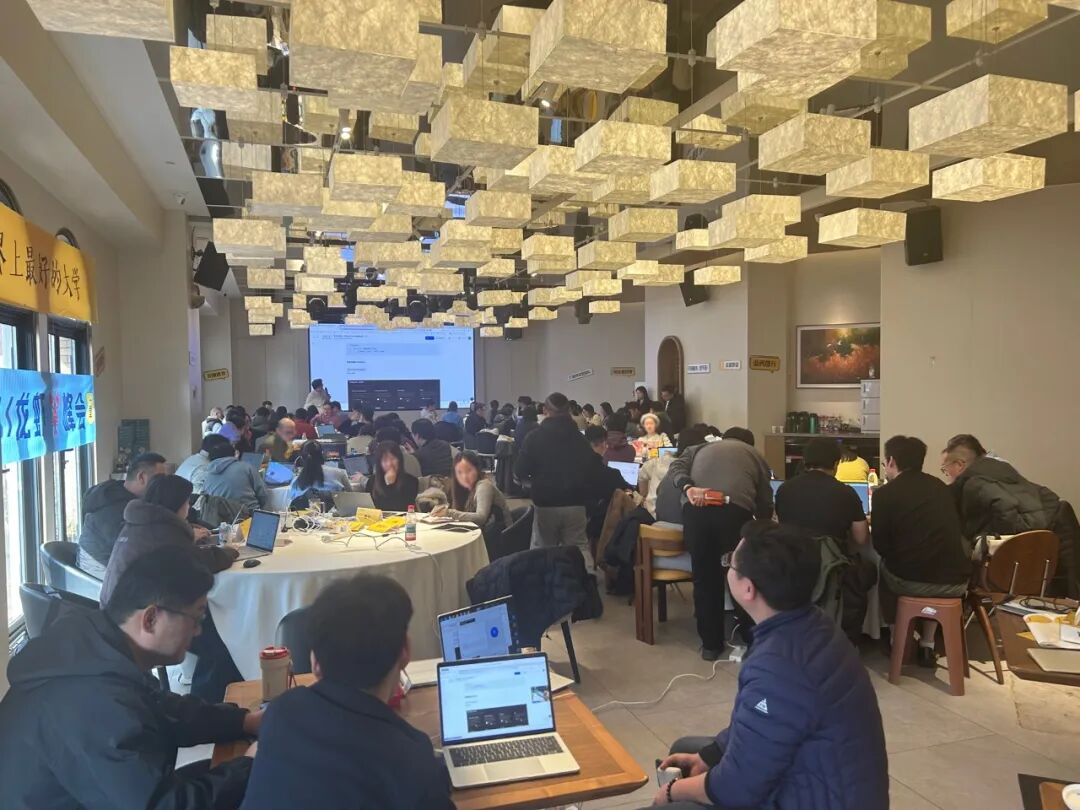
*Tang Mu's offline event: “Mastering the Xiaohongshu Closed Loop with Lobsters”
“Moreover, OpenClaw requires numerous permissions to execute tasks, many involving additional paid content or features. This means every workflow step consumes resources, imposing significant costs on users without established commercialization paths,” Tang added.
For enterprise users, OpenClaw isn’t immediately operational post-deployment. According to Jingzhe Research Institute, many AI Agents, including OpenClaw, currently struggle to stably complete complex tasks. Thus, enterprises often require continuous debugging and maintenance after deployment to meet “production” needs. Deployment is merely the first step; true difficulty lies in operations—a reason many ordinary users quickly abandon “lobster farming.”
Notably, due to technical barriers and the deployment/configuration/debugging process, many users chasing the “lobster farming” trend only realize operational cost issues after investing substantial time and money. As they contemplate abandoning “lobster farming,” “others” have already profited.
In fact, dissecting “lobster farming” reveals a classic tech industrial chain structure: ordinary users debate AI deployment and monetization while those first profiting are often infrastructure providers, platform companies, and hardware manufacturers.
In other words, the “lobster craze” appears as a personal AI revolution but essentially represents a redistribution of infrastructure dividends. From the current market landscape, at least three player types directly benefit:
First to profit are large model companies. Essentially, AI agent frameworks like OpenClaw function as “dispatch systems,” with actual task completion handled by underlying large models. Whether users instruct their “lobsters” to write reports, organize data, or automate tasks, each step requires model API calls—each call consuming tokens, the core of large model companies' stable business models.
Take AI product Kimi as an example. On February 23, media reported that less than a month after Kimi's K2.5 model release, its cumulative revenue over the past 20 days exceeded total 2025 income, driven primarily by global paid users and surging API calls. OpenRouter data shows Kimi K2.5 maintains leading call volumes, ranking first in OpenClaw's model call rankings.
ChatGPT experienced a similar situation. After launching enterprise APIs in 2024, numerous AI applications began developing atop its interfaces. According to CB Insights, from 2024–2025, many AI startups essentially served as “API middleware,” with ChatGPT emerging as the hidden winner behind AI applications. OpenAI CEO Sam Altman revealed via X in January that the company's API business added over $1 billion in annualized recurring revenue in the past month.
In short: more applications mean more profits for models. This explains why all large model companies promote agent ecosystems—agents imply more tasks, longer call chains, and higher token consumption, acting as levers to amplify model revenues.
The second beneficiaries of the “lobster craze” are major tech firms.
“On-site deployment” became a business precisely because technical barriers make OpenClaw user-unfriendly for ordinary users. From a product perspective, OpenClaw could easily be packaged into a more user-friendly AI product. Moreover, tech history shows a pattern: any complex technology with sufficient demand quickly becomes platformized.
Thus, after OpenClaw went mainstream, Tencent, Alibaba, and others swiftly launched AI Agent development platforms, one-click deployment services, and enterprise AI automation tools. These products follow a simple logic: transforming tasks requiring engineers into button clicks. In Chinese internet innovation, while groundbreaking innovation is rare, “latecomers overtaking” scripts repeatedly unfold.
Another “lobster craze” beneficiary is hardware manufacturers. The reason is simple: technically naive ordinary users merely want a stably operating AI agent, indifferent to whether it's locally deployed or cloud-based. Stable operation requires computational power, making devices like Mac mini, suitable for local AI computing, immediately popular. Media reports indicate multiple Mac mini M4 models sold out on Dewu App, with prices rising 649 RMB (13%) in the past week.
Meanwhile, some vendors even launched so-called “OpenClaw all-in-one machines”—essentially local servers preloaded with AI models and deployment software, allowing users to run AI applications immediately. Similar “DeepSeek all-in-one machines” appeared during DeepSeek's popularity.
*OpenClaw all-in-one machines on Taobao
Media reports noted that by July last year, the high-end device market had largely stabilized, leaving only mid-to-low-end segments. From an industrial perspective, such products typically represent phase-specific demand, as cloud computing power usually proves cheaper and more flexible than local devices. As cloud service prices decline, local all-in-one machines' advantages often wane.
The Lobster Craze and the AI Agent Era
Reviewing the post-virality discourse around OpenClaw, Jingzhe Research Institute found that those fervent about the “lobster craze” initially held AI expectations but quickly transformed into anxiety about being left behind by AI. This shifted the essence of “purchasing on-site OpenClaw deployment services” from valuing the technology and its generated benefits to seeking psychological reassurance against AI obsolescence.
In other words, the reason many people pay for the deployment of OpenClaw is actually the fear of being eliminated by AI.
This is not surprising. Since OpenAI released ChatGPT, the career impact of AI has been a hot topic. In 2023, Goldman Sachs released a research report stating that approximately 300 million jobs globally could be affected by generative AI. By 2025, Meta had laid off thousands of employees cumulatively, with CEO Mark Zuckerberg explicitly stating the intention to “replace some roles with technology,” adopting AI for automated content moderation and compliance reviews to reduce manual labor needs. Additionally, Microsoft and Google have also implemented layoff plans while extensively adopting AI.
This narrative has continuously reinforced a sentiment: if you can’t use AI, you will be eliminated by the times. As a result, “raising an AI to work for you” has become not only a new form of social currency but also a psychological defense. However, the problem lies in the fact that if most users do not have clear application scenarios and simply feel that “everyone else is raising one, so I should too,” they are misjudging the value of AI. 
Judging from the topics discussed on social media, the popularity of OpenClaw has also exposed a common misconception: many people believe that the significance of AI is to work for them. But the reality is quite the opposite. If a job can be entirely completed by AI, it means that the position itself is highly replaceable. In other words: when you hire an AI to work for you, you are essentially proving that you can also be replaced by AI.
Hence, the rationale behind "raising a lobster" due to concerns over AI is inherently contradictory. Genuinely effective applications of AI typically entail augmentation rather than substitution. For instance, programmers leverage AI to write code, designers employ AI to generate sketches, and editors utilize AI for data organization. The common thread in these applications is that AI manages repetitive tasks, while humans are tasked with creative decision-making. From this vantage point, the true value of OpenClaw lies not in enabling ordinary individuals to "hire AI," but in liberating human time from mechanical tasks.
The surreal nature of the "lobster-raising craze" is evident not only in its business model but also in the societal sentiment it mirrors. The notion of "on-site deployment of OpenClaw" initially seemed like a jest within the tech community—those who actually require on-site deployment of OpenClaw are likely those who don't truly need it. However, this jest has not only materialized but has also prompted many to overlook security risks and "plunge ahead blindly," a direct consequence of societal sentiment clouding rational decision-making.
Since 2025, AI has emerged as the focal point of discussions across nearly all industries. From corporations to individuals, everyone is contemplating a single question: Will AI replace me? This apprehension has given rise to a peculiar form of consumption: paying to "stay abreast." Consequently, many individuals opt for deployment services not out of a genuine need for AI agents but to avoid appearing obsolete. Yet, the annals of technology reveal that anxiety has never been a driving force. Those who truly transform the world are not trend-chasers but rather individuals who comprehend technology. 
The popularity of OpenClaw may seem like an absurd tale within the AI sphere. However, when viewed through a broader historical lens, it is, in fact, a quintessential phenomenon in technological waves: new technologies emerge, public anxiety escalates, middlemen profit, and platforms ultimately reap the benefits. Presently, the "lobster-raising" narrative appears to be entering its latter stages.
On March 10, the Xiaohongshu platform issued a notice strictly prohibiting any behavior that employs technical means to simulate real individuals, create inauthentic content, or engage in false interactions. It will clamp down on accounts operated using AI hosting models.
That same evening, the National Internet Emergency Center released a "Risk Warning on the Safe Application of OpenClaw," highlighting that the AI agent application poses four core security risks due to its weak default security configurations and excessively high system permissions, which could potentially lead to complete system control. It recommended that relevant entities and individual users implement stringent protective measures. Subsequently, this message was disseminated by official media outlets such as People's Daily.
Platform restrictions and risk warnings from official authoritative institutions and media have undeniably doused the current "lobster-raising craze" with cold water. Meanwhile, on social media, services like "299 RMB for on-site uninstallation of OpenClaw" have begun to capture the traffic previously generated by "on-site deployment of OpenClaw."
It is foreseeable that the number of individuals "raising lobsters" may soon dwindle. However, the era of AI agents has only just commenced.
The truly pivotal question is not whether to raise a "lobster" but whether you can identify the work that only humans can accomplish. Because in the AI era, the most critical ability has never been to make machines work for you but to harness machines to amplify your creativity.
-
![]()
Doubao Work Unveiled! Domestic AI Leaders Fully Commit to the 'Work' Sector
-
![]()
Who’s Sounding the Alarm on ‘Rushed Vehicles’?
-
![]()
Over 5.3 Billion Yuan in Losses Over Three and a Half Years! Can Yonyou Reverse Its Fortunes Through Streamlining and AI Transformation?
-
![]()
Baidu AI Adopts Free Model: A Strategic Maneuver in Traffic and Monetization
-
![]()
Silicon-Based OLED Pioneer Unveils Financial Results: H1 Shipments Outpace Entire 2025 Volume
-
![]()
AI's First "Lost Summer"
-
![]()
Zeiss Makes Another €2.2 Million Bet: Will Eye Tracking Be the Next Big Thing in the Smart Glasses Industry?
-
![]()
RUNTO Ranking | Global Top TV ODM Factories' Shipment Figures for July 2026