WeChat 'Lobster' Makes Its Debut! Is Tencent Embracing an AI Survival Battle?
 03/11 2026
 576
576
The era of the "Hundred-Model Battle" has concluded; the "Hundred-Shrimp Era" is dawning.
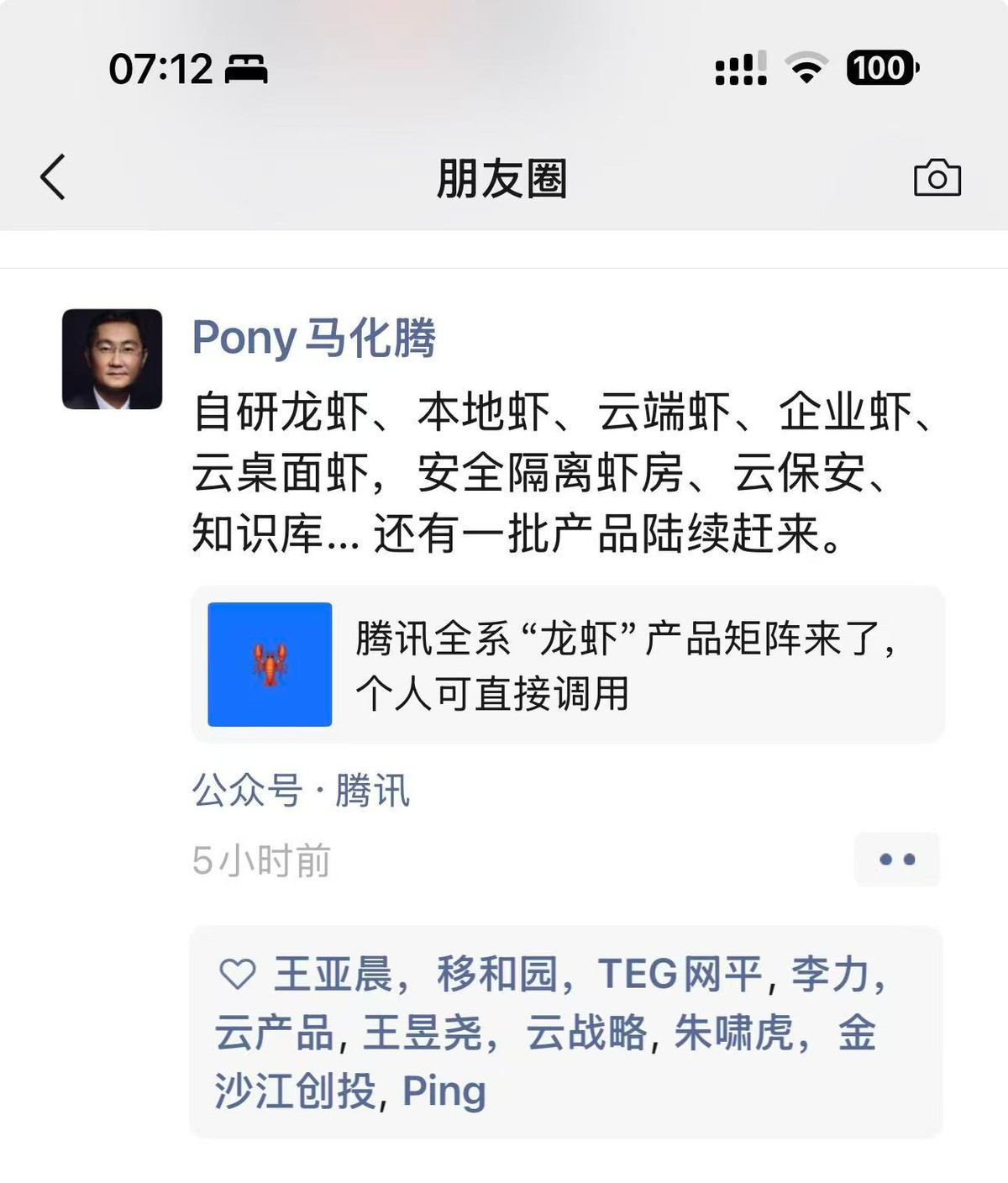
Late at night, Pony Ma posted a product matrix on his Moments, featuring offerings such as "self-developed lobsters, local shrimp, cloud shrimp, enterprise shrimp..." with the caption, "More products are on the horizon." In an instant, Tencent transformed from the "Goose Factory" to the "Shrimp Farm."
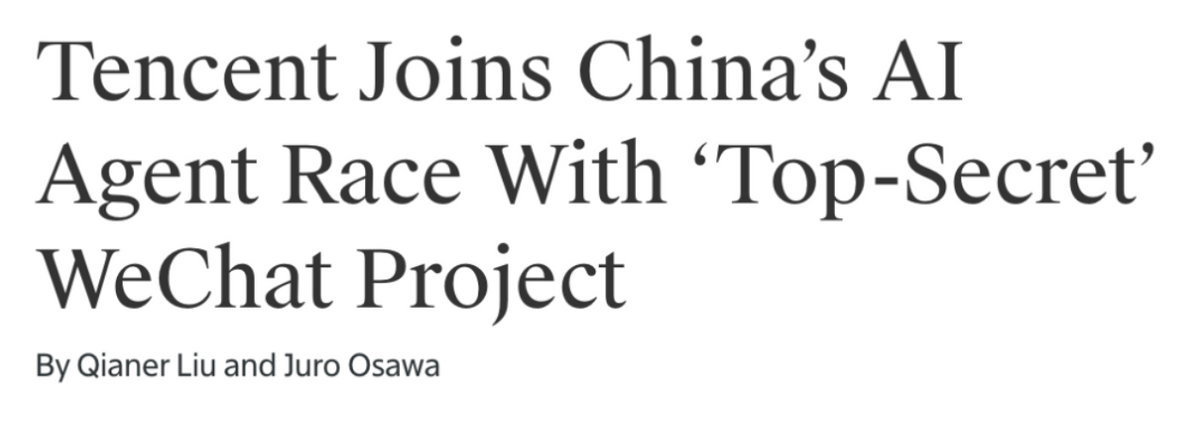
Simultaneously, WeChat's top-secret Agent project was unveiled by foreign media.
Overnight, Tencent transitioned from a social-entertainment behemoth to an AI-powered shrimp farm.
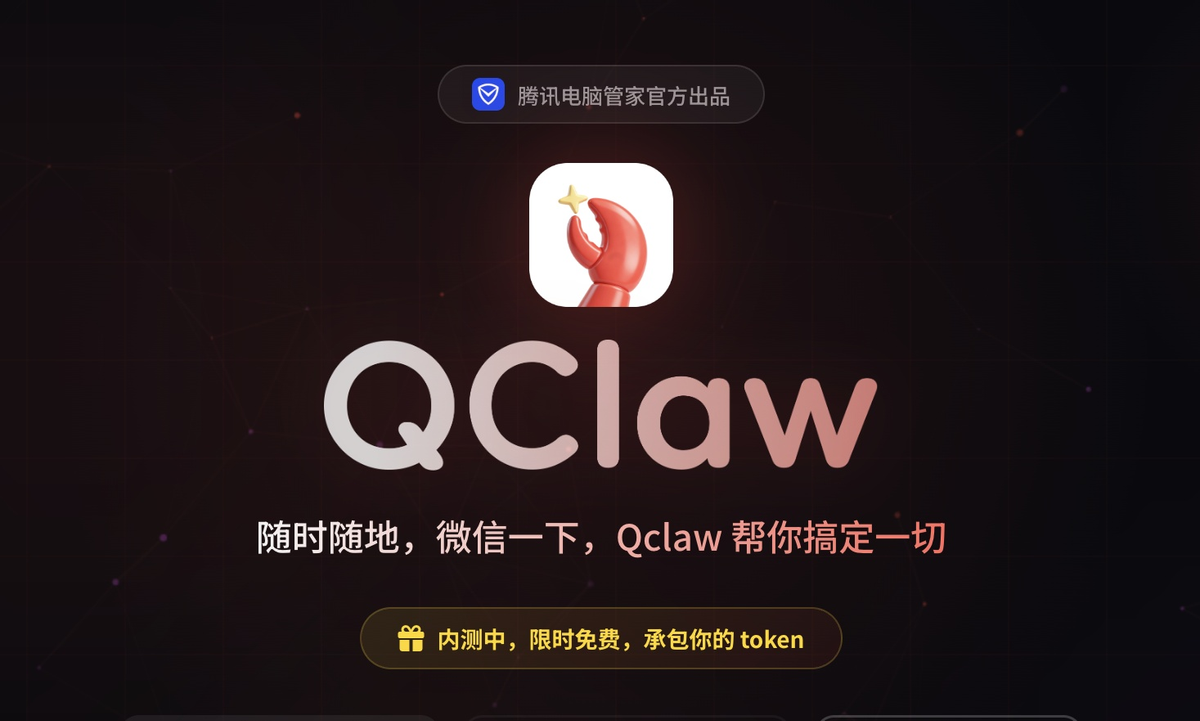
Beyond Tencent, hardware titans like Xiaomi, Huawei, and Midea have also announced their "lobster" initiatives. What does Tencent's "Hundred-Shrimp Battle" signify? More noteworthy than Tencent's stock surge by billions is the shift in the AI battleground from the "Hundred-Model Battle" to the "Agent Application Competition."
The Hundred-Model Battle concludes; the Hundred-Shrimp Era commences
Over the past two years, China's AI landscape has been dominated by the "Hundred-Model Battle," with startups flocking to the arena amid a frenzy of parameter races and compute arms races, proclaiming slogans like "Benchmarking GPT-4." This has led to the creation of overvalued AI concept stocks on the Hong Kong stock exchange.
However, when industry giants like Tencent, Alibaba, and ByteDance entered the fray with real-world scenarios and robust ecosystems, the foundational model game reached its climax.
The emergence of OpenClaw Lobster signals a pivotal shift in AI from "model competition" to "application deployment." The technical barriers of foundational large models are being dismantled by open-source initiatives and corporate compute power. The true competition now lies in "who can transform AI into a daily tool for users."
Similarly, the mobile internet era transitioned from "OS wars" to "super-app ecosystem battles." Before Android's dominance, numerous companies ventured into OS development or smartphone manufacturing. Eventually, OSes became secondary; apps took center stage.
Today's AI battleground has evolved from "whose model is superior" to "whose Agent is more practical." Tencent's "Shrimp Matrix" directly mirrors this shift: from cloud-based shrimp for individuals to enterprise-grade isolated shrimp farms, covering office and lifestyle services through scenario-based Agents. Essentially, AI is being fragmented into "shrimp soldiers and crab generals" that tackle specific problems, rather than constructing redundant general-purpose models.
Foundational model startups face stiffer challenges; incumbents dominate AI applications
OpenClaw's technological foundation, built on open-source model iterations, underscores a stark reality: the competition for foundational large models among startups has reached its conclusion.
In China's AI sector, aside from innovators like DeepSeek pursuing deep technical breakthroughs and tech giants like Tencent, Alibaba, and ByteDance with comprehensive ecosystems and vast compute resources, once-promising "mini-giants" like MiniMax are struggling to maintain their foothold.
The reason is straightforward: AI application monetization hinges not on model parameters but on scenarios, data, compute power, and commercialization infrastructure.
Tencent boasts WeChat, with 1 billion daily active users, spanning social, payment, e-commerce, and office ecosystems.
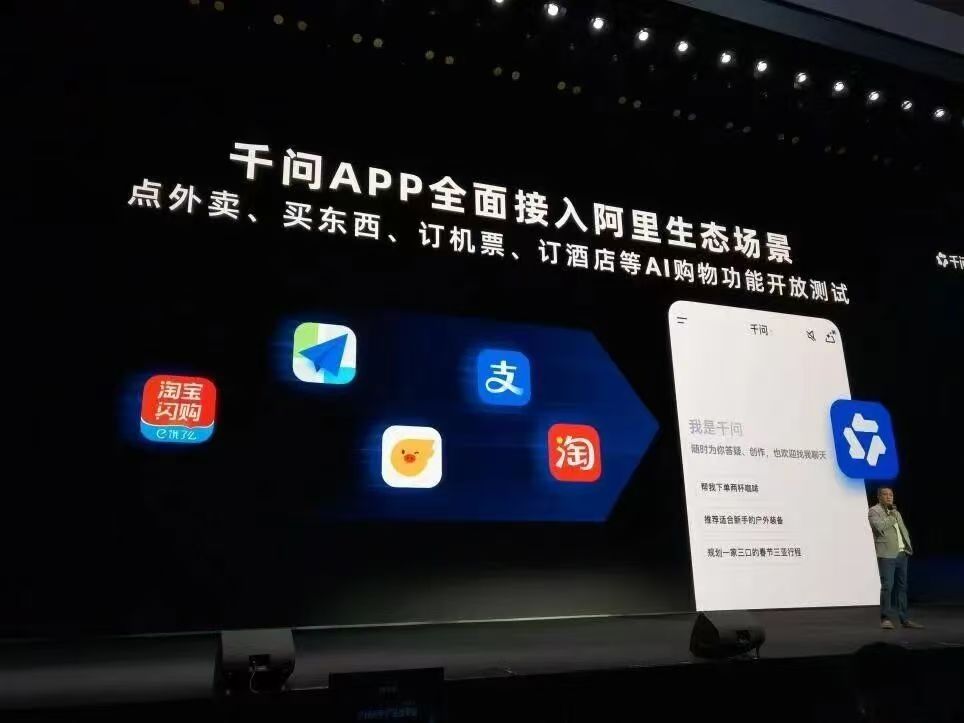
Alibaba owns a portfolio of consumer closed-loop services, including Taobao, Taobao Deals, Gaode Maps, Taopiaopiao, Damai, and more, enabling Qianwen to facilitate takeout orders, movie ticket purchases, and future transactions.
ByteDance leverages platforms like Douyin and Hongguo, integrating AI with livestreaming and e-commerce to create content/consumption scenarios.
These incumbents control the entire chain of "national users-lifestyle scenarios-commercial ecosystems," enabling rapid monetization of AI Agents. The optimal path for large model startups is to become contractors for these giants—essentially, helping to raise lobsters.
The AI-era BAT will regenerate from AI itself
On the same day Pony Ma showcased his "shrimp farm," ByteDance's Doubao quietly introduced AI shopping features—no coincidence, but an inevitable outcome of AI's application phase.
This explains the strategic moves of all internet giants: failure to launch core AI applications in this era means being supplanted by AI-native ecosystems. Alibaba's All-in-Qianwen strategy, emphasizing direct takeout orders and movie ticket purchases, reflects fears of innovations akin to "Doubao Shopping." It's a preemptive strike, even at a loss, to secure market position.
Doubao is already replacing traditional search engines. Future social forms will emerge; if Tencent falters in its "shrimp farm" endeavor, AI will spawn new chat platforms.
WeChat Lobster aspires to transcend being a mere chatbot. It aims to embed AI into every WeChat scenario: discussing hotpot with friends triggers restaurant recommendations, reservations, and even deposit payments; spotting products on Moments prompts price comparisons and mini-program orders; discussing proposals in work groups initiates meeting summaries and PPT generation. This "conversation-as-a-service" experience will redefine user interactions with the digital world.
If Tencent succeeds with its "shrimp farm," WeChat evolves from a "social tool" to an "AI lifestyle gateway," cementing its position in the AI era. Failure would mirror the fate of SMS and phone calls—replaced by more efficient AI applications.
WeChat: The natural shrimp farm; Tencent's AI decisive moment arrives
Why can Tencent dominate the "shrimp farm"? The answer is simple: WeChat is the ultimate lobster breeding ground.
Recall the short-video wars: WeChat Channels instantly entered the final round. Tencent's AI advantage lies not in technological prowess but in WeChat's super-ecosystem:
Massive user base: With 1 billion DAUs, WeChat's Lobster Agent reaches nearly all Chinese internet users without the need for costly acquisition efforts like Qianwen.
Thriving ecosystem: From social and content to payments, e-commerce, and office services, every WeChat scenario seamlessly integrates with AI Agents.
Natural interactions: Early ChatBots and modern Agents both rely on "conversational interfaces." Users messaging or voice-chatting in WeChat already engage naturally with AI—more intuitively than scanning codes.
WeChat connected offline services via "Mini Programs"; now it connects AI services via "Lobsters." The underlying logic remains unchanged: leverage WeChat's traffic and ecosystem to make cutting-edge tech accessible. This is Tencent's confidence in the AI race—no need for state-of-the-art models; embedding AI in super-apps suffices to dominate the AI era.
Behind the lobster craze lies the ultimate AI battle among internet giants
From the "Goose Factory" to the "Shrimp Farm," Pony Ma's Moments post marks a watershed moment for China's AI industry:
The foundational model narrative has ended; the application and ecosystem wars have begun.
Opportunities for AI large model startups are dwindling; internet giants reign supreme.
WeChat Lobster is not a trial but Tencent's "Normandy Landing" in the AI era. Victory secures the Penguin Empire; defeat means obsolescence by new AI ecosystems. No wonder Pony Ma is taking charge personally.
Ordinary users will soon witness AI evolve from lab technology to WeChat's "Lobster"—a lifestyle assistant ordering takeout, shopping, and managing work. This is AI's true value and the allure of Tencent's "Shrimp Farm."
One final piece of advice: Don't waste money cultivating lobsters yourself or fall for scams selling courses, deployments, or tokens. When lobsters become truly useful, giants will compete to offer them free—just like free milk tea.
Tencent WeChat Lobster OpenClaw AI
Source: Leikeji
Images from: 123RF Licensed Library
-
![]()
Doubao Work Unveiled! Domestic AI Leaders Fully Commit to the 'Work' Sector
-
![]()
Who’s Sounding the Alarm on ‘Rushed Vehicles’?
-
![]()
Over 5.3 Billion Yuan in Losses Over Three and a Half Years! Can Yonyou Reverse Its Fortunes Through Streamlining and AI Transformation?
-
![]()
Baidu AI Adopts Free Model: A Strategic Maneuver in Traffic and Monetization
-
![]()
Silicon-Based OLED Pioneer Unveils Financial Results: H1 Shipments Outpace Entire 2025 Volume
-
![]()
AI's First "Lost Summer"
-
![]()
Zeiss Makes Another €2.2 Million Bet: Will Eye Tracking Be the Next Big Thing in the Smart Glasses Industry?
-
![]()
RUNTO Ranking | Global Top TV ODM Factories' Shipment Figures for July 2026