Robots Begin to Achieve 'Tactile Freedom'
 03/11 2026
 611
611
Editor's Note: Tactile perception is the key channel for robots to translate knowledge into action and the foundational capability that determines their ability to operate with precision, stability, and flexibility in complex physical environments.
Tactile sensors are not just components that transmit pressure or force values; they involve a closed-loop synergy of materials, microstructures, electrical signal acquisition, modal analysis, and real-time control. They represent a battleground where hardware, perception, and algorithms compete.
To this end, Xinghe Frequency has specially planned a series of articles on tactile sensors, stepping beyond the components themselves to delve into the industrial transformation centered on perception accuracy, scenario adaptation, and technological inclusivity.
Previous Article: 'Only by Perfecting Tactile Perception Can Robots Achieve True Intelligence'
Over the past decade, the robotics industry has undergone a dramatic visual revolution.
Scholars centered around computer vision have flocked in, enabling algorithms to recognize objects, understand scenes, and plan paths.
Driven by these scholars, today's robots can already see the world clearly. However, seeing the world does not equate to changing it.
As robots move into open environments and progress from performing preset actions to executing complex tasks, a fundamental weakness emerges: they lack tactile perception.
How much force to use when picking up an egg, or whether water spills when grasping a cup? These actions, nearly instinctive for humans, rely on tactile perception—the most critical sensory channel for interacting with the physical world.
While machine vision continues to improve, the next five to ten years are poised to see a tactile revolution.
In early March this year, a financing-side development confirmed this trend.
A new member joined the club of embodied intelligence companies valued at over RMB 10 billion. Surprisingly, it was not a familiar humanoid robot manufacturer but a player specializing in tactile sensors: PaXini Sensing Technology.
As a core component supplier for robots, this substantial financing sends a clear signal: capital is betting on robots' sense of touch.
Indeed, by 2025, tactile sensors had become a new hotspot in the capital market. According to incomplete statistics, 20 financing deals were completed by domestic companies in this field that year, totaling nearly RMB 1.8 billion—a roughly 4.5-fold year-on-year surge.
More importantly, in terms of shipments—a hard indicator—Tashan Technology and Huawei Technology each achieved over 10,000 unit shipments in 2025, becoming the 'twin stars' of this niche sector.

When Tactile Sensors Start Selling 10,000 Units
The 10,000-unit shipment milestones achieved by Tashan Technology and Huawei Technology in 2025 represent not just quantitative growth but also qualitative transformation across the entire tactile sensor industry. This breakthrough results from the combined forces of surging downstream demand, a mature industrial ecosystem, and upgraded enterprise capabilities.
Previously, domestic tactile sensors struggled with scalable mass production due to fragmented demand, subpar technology, and insufficient production capacity.
The downstream robotics industry remained in research and pilot phases for years, with core application products like dexterous hands and grippers not yet delivered at scale. Sensor demand was primarily for sample purchases.
Meanwhile, most tactile sensor R&D was stuck in laboratories, with product accuracy and stability failing to meet real industrial needs, making bulk deliveries impossible even when samples were available.
The 2025 breakthrough was a natural progression.
Rapid development of humanoid and industrial robots, along with the transition of dexterous hands from lab prototypes to mass production and the rising demand for automated industrial grippers, created scalable demand.
Domestic players continuously upgraded their technology and production capabilities, narrowing the gap with overseas high-end products. A maturing supply chain provided solid support for 10,000-unit shipments.
Of course, the most direct driver of scalable shipments was the explosion in downstream demand, particularly for dexterous hands and grippers.
A tactile-enabled dexterous hand is essentially a miniature sensor array, requiring precise fingertip perception and large-area palm coverage.
This means that every 10,000 tactile-enabled dexterous hands sold translate into hundreds of thousands of tactile sensors shipped.
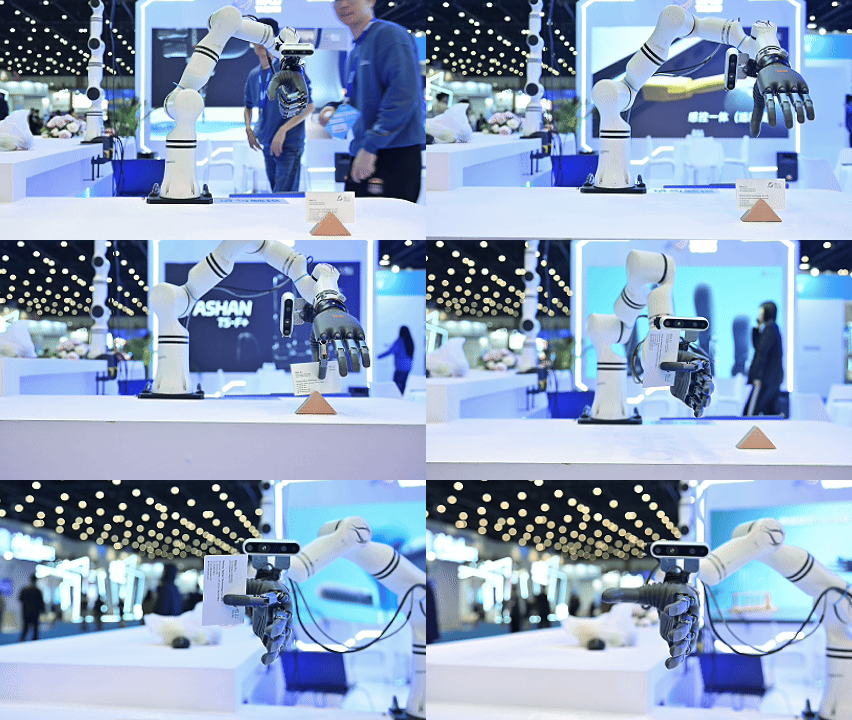
Demand for industrial grippers is also rising, shifting from traditional pneumatic grippers to intelligent electrically controlled grippers, where force control is becoming standard. Ma Yang, CEO of Tashan Technology, noted that 50% of robots at recent exhibitions now incorporate tactile sensors, underscoring the demand surge.
Demand is just the prerequisite. What truly supports 10,000-unit shipments are predictable orders, a mature supply chain, and breakthroughs in technological engineering.
On the order front, strategic partnerships with key clients provide stability. Tashan Technology has collaborated with InTime Robotics, Lingxin Qiaoshou, Lingqiao Intelligence, Aoyi Technology, Zhiyuan Robotics, Yinhe General, and Autovariable Robotics. Huawei Technology has partnered with InTime Robotics, Lingxin Qiaoshou, UBTECH, Xiaomi, and Zhiyuan, among others. These binding orders give mass production clear direction.
On the supply chain front, costs are falling to commercial viability thresholds. Huawei Technology has built an automated calibration system through in-house R&D of production equipment and flexible materials, reducing product costs to the RMB 1,000 range. CEO Zhu Xiaohui predicts that electronic skins will reach the RMB 100 range in 3-5 years, making full-body coverage for humanoid robots economically feasible.
Tashan Technology, starting from the bottom-layer chip, developed the world's first digital-analog hybrid AI tactile chip, solving the global technical challenge of simultaneous parsing of multidimensional tactile signals.
On the technology front, a vast engineering gap separates feasibility from mass production. Industry data shows that 90% of lab innovations fail to scale due to process or equipment issues.
Huawei Technology's breakthrough lies in equipment autonomy, achieving precise control of key sensor parameters through self-developed production gear. Tashan Technology maintains an in-house 'failure library' of various tactile sensor routes, accumulating failure experiences to enhance product maturity.
The tactile sensor industry had long been stuck in an awkward position: universities and labs could produce high-precision samples but not deliver them at scale, while companies willing to mass-produce were hindered by processes and costs.
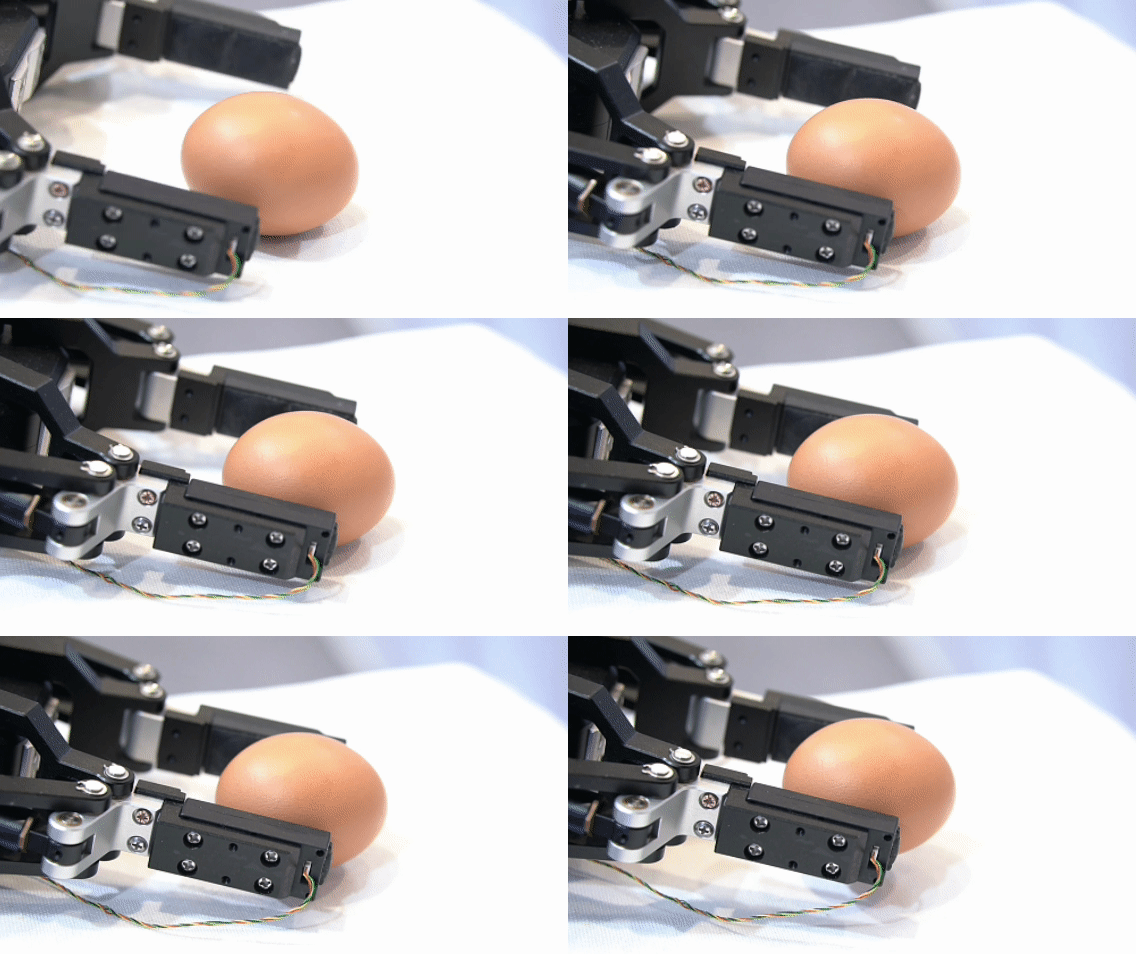
The industry milestone of 10,000-unit shipments proves that the commercialization loop for tactile sensors is now closed.
Whether through Tashan Technology's chip-and-algorithm-driven path or Huawei Technology's multimodal fusion-and-mass-production market strategy, both offer verifiable solutions for taking products from development to sale and real-world application.

One Sector, Two Approaches
Despite both achieving 10,000-unit shipments, the two companies took starkly different paths.
If the tactile sensor industry is a mountain to climb, Tashan Technology and Huawei Technology chose entirely separate routes. One ascends from the chip level upward, defining perception through foundational technology; the other roots itself in mass production, covering scenarios with engineering capabilities. Climbing from opposite sides, they reached the 10,000-unit altitude almost simultaneously.
Riding the 2025 wave of embodied intelligence, both focused on humanoid and industrial robots, targeting tactile sensors for dexterous hands and grippers—the most demand-intensive downstream scenarios.
Correspondingly, their commercialization breakthroughs occurred in tandem. By 2025, Tashan Technology achieved 10,000-unit shipments of tactile sensors, while Huawei Technology shipped tens of thousands of tactile skin units and nearly 10,000 dexterous hand sensor sets.
The underlying logic is the same: both companies broke through dual bottlenecks of perception accuracy and engineering-scale production, forming stable customer collaboration systems.
However, atop this shared success, the two companies adopted vastly different technological routes and product strategies.
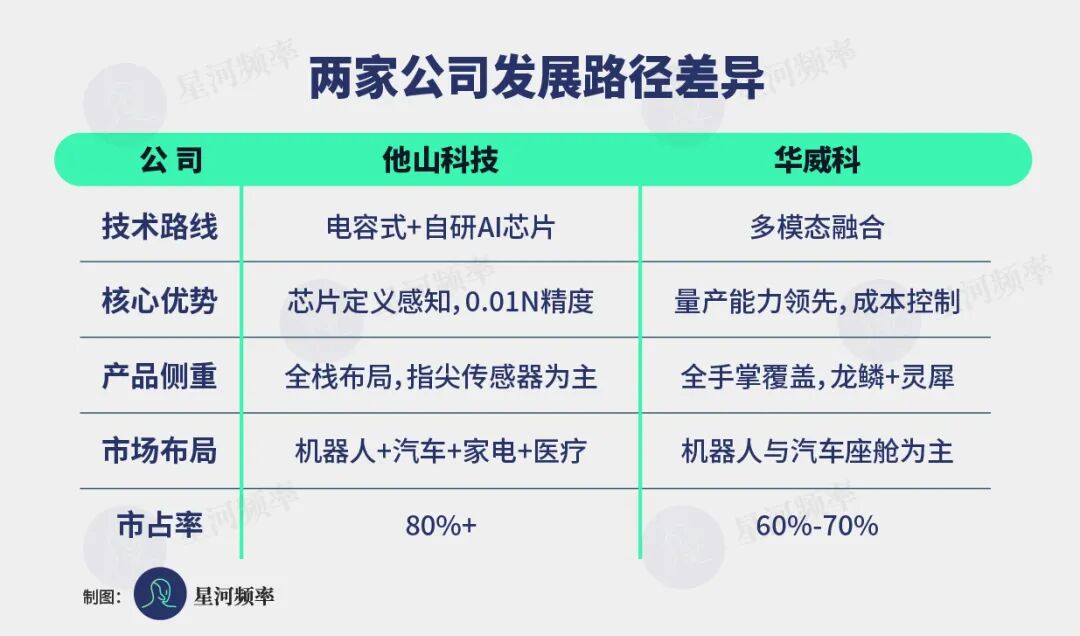
Tashan Technology's core competitiveness (competitive edge) can be summarized as 'chip-defined perception.'
The company offers a rich product matrix, including the TS-F fingertip tactile sensor, TS-E robotic hand tactile sensor, TS-V visuo-tactile fusion training platform, and tactile simulation platform.
The TS-F fingertip sensor specializes in micro-perception, integrating proximity detection, 3D force sensing, and texture perception. With 0.01N sensitivity, it precisely captures subtle changes in normal and tangential forces.
The TS-E robotic hand sensor mimics human finger skin properties, seamlessly fusing non-contact and contact detection for broad adaptability across robotic grippers.
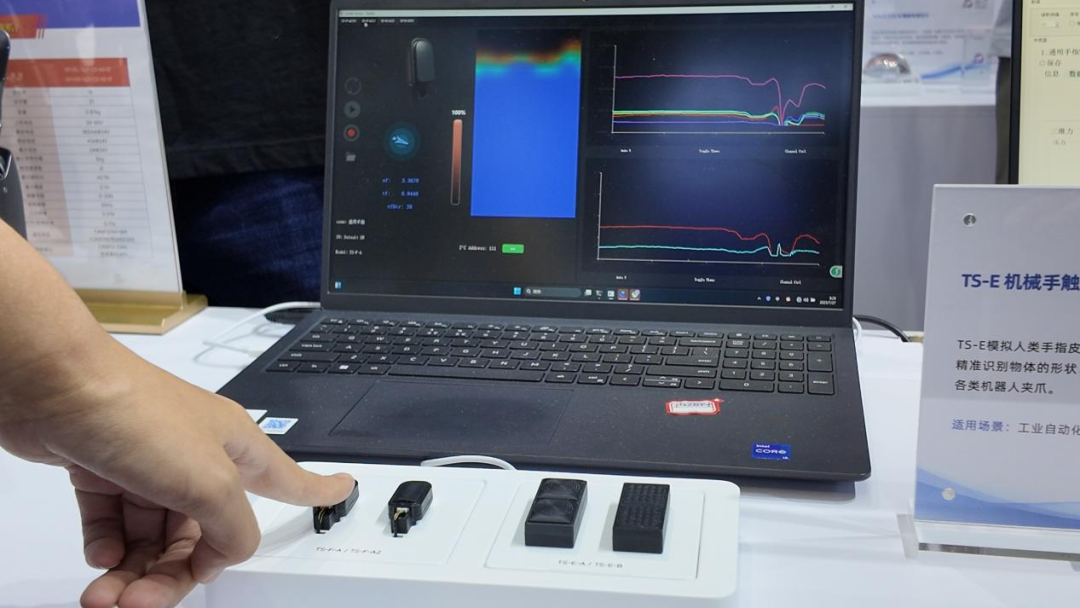
Beyond this, Tashan Technology went to the foundational level by developing its own chip.
This world's first digital-analog hybrid AI tactile chip, based on tomographic capacitive tactile technology and brain-inspired computing architecture, simultaneously parses multidimensional tactile signals, pushing the limits of capacitive technology.
Currently, it holds over 80% market share in niche segments, with products covering robotics, automotive, home appliances, and healthcare, providing solutions for multiple leading robotics firms.
In contrast, Huawei Technology's hallmark is multimodal fusion and mass-production breakthroughs. The company launched two product series—Dragon Scale and Lingxi—forming a perception matrix covering operation and interaction scenarios.
The Dragon Scale series, designed for full-hand coverage, is China's first large-area electronic skin for dexterous hands, enabling comprehensive palm and backhand perception with bulk deliveries underway.
The Lingxi series focuses on precise fingertip perception, integrating pressure, temperature, and texture sensing into compact modules for direct fingertip installation, enhancing dexterous hands' fine operation capabilities.
Combined, these two series constitute Huawei Technology's full-palm perception solution, with Lingxi modules handling precision tasks and Dragon Scale modules managing interaction feedback.
Technologically, Huawei Technology emphasizes multimodal fusion, synergizing piezoresistive and magnetic sensing routes with a state-machine concept to intelligently switch perception modalities across scenarios.
The state machine's core function is to adaptively switch perception modes based on scenario demands. For example, it prioritizes temperature sensing in high-heat environments, switches to magnetic sensing for precision grasping, and uses piezoresistive sensing for routine operations.
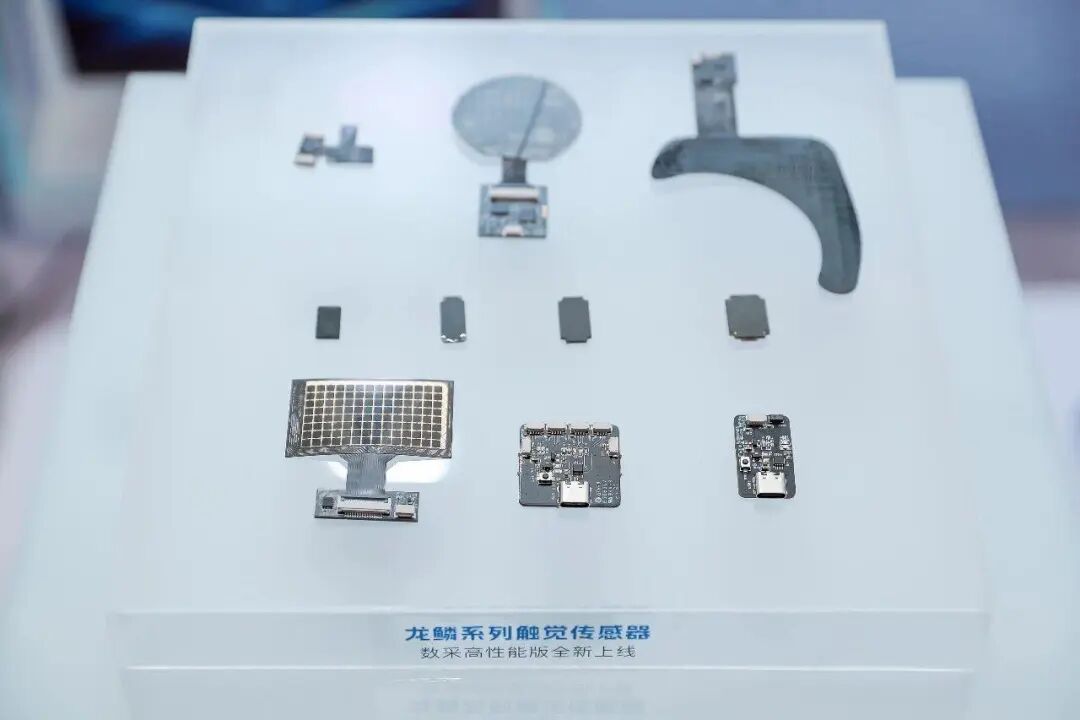
Huawei Technology's other strength lies in mass-production capacity. In 2026, it will commission the world's first 10-million-unit electronic skin production base.
The company holds 60-70% market share in relevant segments, primarily supplying dexterous hands and humanoid robots while extending into smart car cabins for applications like adaptive seat adjustment.
A clear differentiation emerges: the two companies have distinct technological paths, product priorities, and scenario layouts.
Despite differing approaches, both have commercialized tactile sensors by solving the core engineering challenge.

Three Consensus Shaping the Tactile Sensor Industry
Tashan Technology and Huawei Technology's 10,000-unit shipment milestones not only represent their breakthroughs but also highlight three foundational laws driving tactile sensor industrialization.
Law 1: Technology Serves Scenarios, Not Extreme Parameters
In the embodied intelligence race, hardware parameters are never the sole metric; real-world applicability determines competitiveness.
Tashan Technology's commitment to capacitive technology stems from its 'pre-contact perception' capability, which precisely matches obstacle avoidance and safety needs for high-speed robots.
Huawei Technology's multimodal fusion addresses the pain point of single-technology limitations in complex scenarios.
Though paths differ, both point to the same conclusion: all technological choices must ultimately serve real-world scenarios.
Law 2: Mass-Production Capability Precedes All, Bridging the Sample-to-Product Gap
Transitioning from samples to products is the toughest industrialization step, with mass-production capacity itself becoming a core barrier (moat) for embodied intelligence firms.
Tashan Technology developed its own bottom-layer chip, while Huawei Technology built in-house production equipment. Both chose to control core processes internally.
Despite heavy upfront investment, once mass-production pathways are established, they form imitable moats, enabling domestic tactile sensors to move from labs to production lines.
Law 3: Supply Chain Head Effects Emerge
As the industry enters industrialization, supply chains rapidly concentrate around leaders, forming binding models between top suppliers and manufacturers.
Tashan Technology partners with most global humanoid robot and dexterous hand firms, while Huawei Technology collaborates deeply with domestic dexterous hand and robot ontology (body) manufacturers.
These strategic partnerships with top clients not only secure orders but also refine product definitions through joint R&D, creating a virtuous cycle of technology-client-mass production.
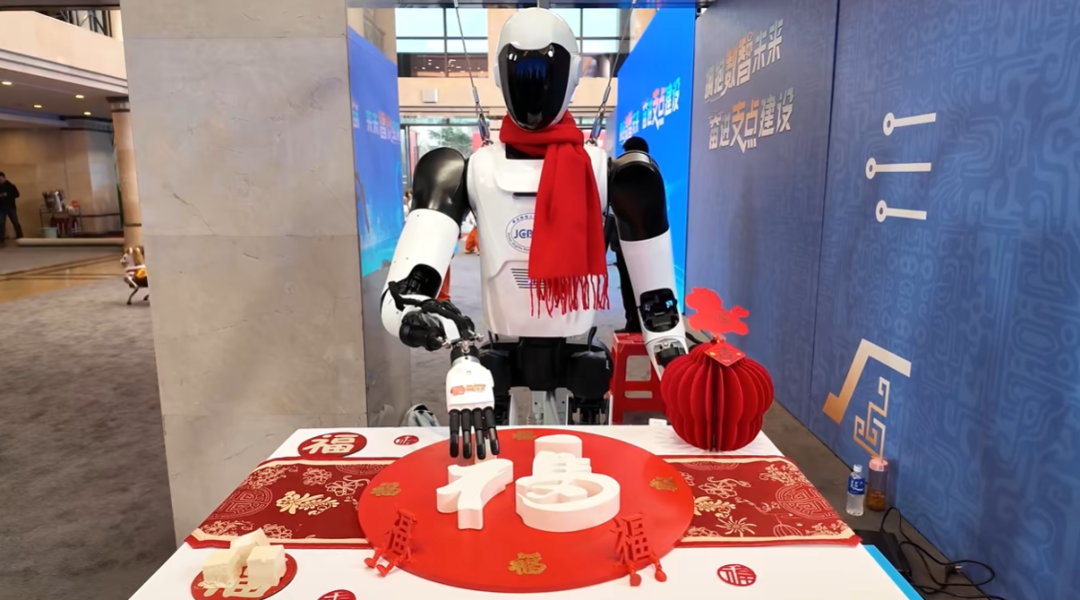
The image shows the cooperation project between Huawei Tech and INTIME Robotics.
In the process of moving towards industrialization together, Tashan Tech and Huawei Tech have also taken two highly valuable and differentiated paths.
Tashan Tech follows a technology-driven approach.
Focusing on breakthroughs in underlying chips and algorithms to build a technological edge, then extending upwards to offer full-stack solutions. This path features high barriers and strong bargaining power but also requires greater R&D investment and a longer development cycle.
Huawei Tech opts for a mass production breakthrough approach.
With equipment localization and cost control as the core, it takes the lead in achieving large-scale delivery and solidifies supply chain capabilities from the bottom up. This path enables faster market entry and higher market share but tests the ability to continuously optimize product definitions and cost structures.
Behind these two paths lies a highly consistent industrial logic.
Both companies are building a complete closed loop of technology + supply chain + customers.
Tashan Tech uses chips as the core, expanding upwards to algorithms and downwards to customers; Huawei Tech uses mass production as the pivot, researching materials forward and building data platforms backward. A single-point advantage is hard to sustain; closed-loop capabilities are the source of sustainable competitiveness.
Meanwhile, the deep integration of industry, academia, and research has become an important support for technological iteration for both sides.
Tashan Tech has established an AI tactile perception laboratory with the University of Manchester, while Huawei Tech has collaborated with the Hubei Humanoid Robot Innovation Center to build a tactile data acquisition platform, truly bridging cutting-edge research with industrial needs and providing a replicable growth model for the entire embodied intelligence industry.
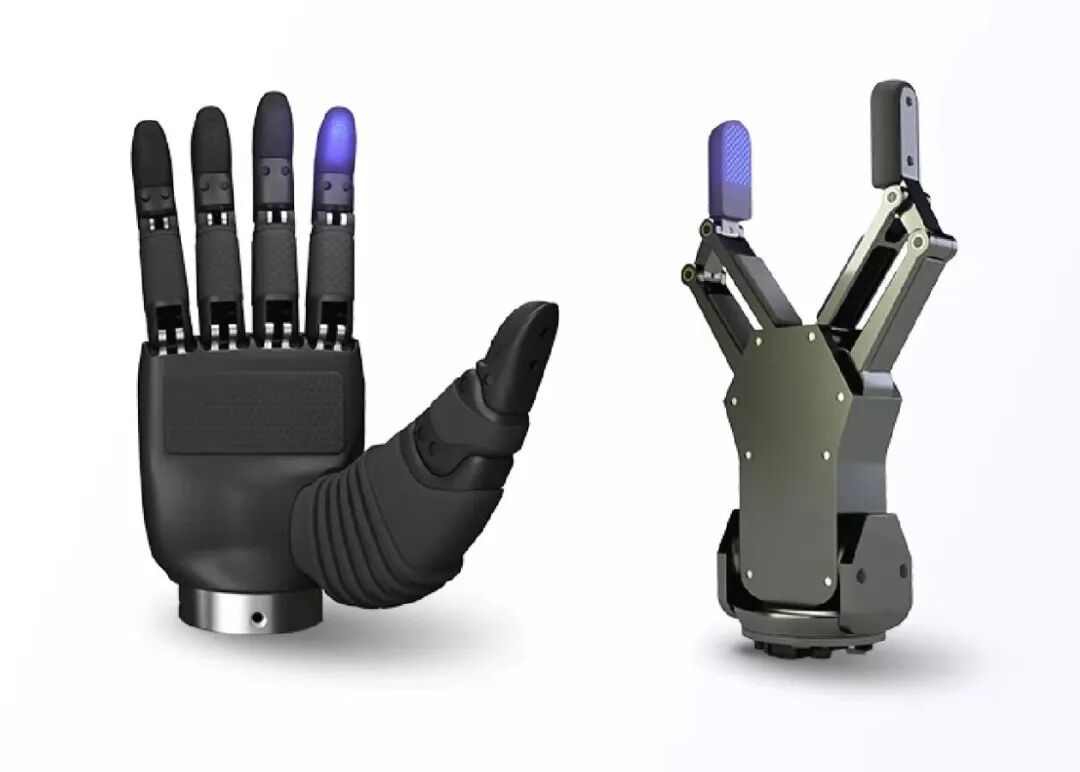
Zhu Xiaohui, CEO of Huawei Tech, stated that the goal for 2026 is to ship over 50,000 units. Moving from 10,000 to 50,000 units represents not just quantitative growth but also a leap for tactile perception technology from optional to essential.
Tashan Tech, on the other hand, chooses to continuously refine its full-stack layout. Its founder, Ma Yang, envisioned in an interview that a little dexterous operation could unlock a vast market. For robots to enter households, they need full-body electronic skin.
Shipping 10,000 units marks the coming-of-age for the tactile sensor industry.
From scratch to excellence, the two companies have succeeded in commercializing this track, once deemed impossible for mass production, through different paths.
But an even more imaginative space lies ahead.
How many sensors does a humanoid robot with full tactile capabilities require?
The answer: Hundreds of sensing points. Fingertips need precision, palms need coverage, and arms and bodies all need perception, forming a system-level sensing network behind the scenes.
If 1 million humanoid robots are shipped globally each year in the future, the tactile sensor segment alone could create a market worth billions or even tens of billions. This does not even include extended scenarios such as industrial grippers, smart vehicles, and healthcare.
In other words, tactile sensors are evolving from a supporting component into an independent track worth hundreds of billions.
Following the twin stars, the industry is bound to welcome a star-studded ecosystem, with latecomers like PasiNii Perception Tech, Daimeng Robotics, and YuanShengXianDa charging towards the same peak from different angles.
This track has only just begun to gain momentum.
-
![]()
Doubao Work Unveiled! Domestic AI Leaders Fully Commit to the 'Work' Sector
-
![]()
Who’s Sounding the Alarm on ‘Rushed Vehicles’?
-
![]()
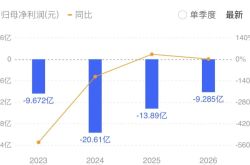
Over 5.3 Billion Yuan in Losses Over Three and a Half Years! Can Yonyou Reverse Its Fortunes Through Streamlining and AI Transformation?
-
![]()
Baidu AI Adopts Free Model: A Strategic Maneuver in Traffic and Monetization
-
![]()
Silicon-Based OLED Pioneer Unveils Financial Results: H1 Shipments Outpace Entire 2025 Volume
-
![]()
AI's First "Lost Summer"
-
![]()
Zeiss Makes Another €2.2 Million Bet: Will Eye Tracking Be the Next Big Thing in the Smart Glasses Industry?
-
![]()
RUNTO Ranking | Global Top TV ODM Factories' Shipment Figures for July 2026