AI ‘Crayfish’ Goes Viral: Why is WeChat on High Alert?
 03/11 2026
 726
726
Author | Wuzi
After OpenClaw started to gain significant traction, WeChat surprisingly joined the ‘crayfish farming’ trend at an early stage.
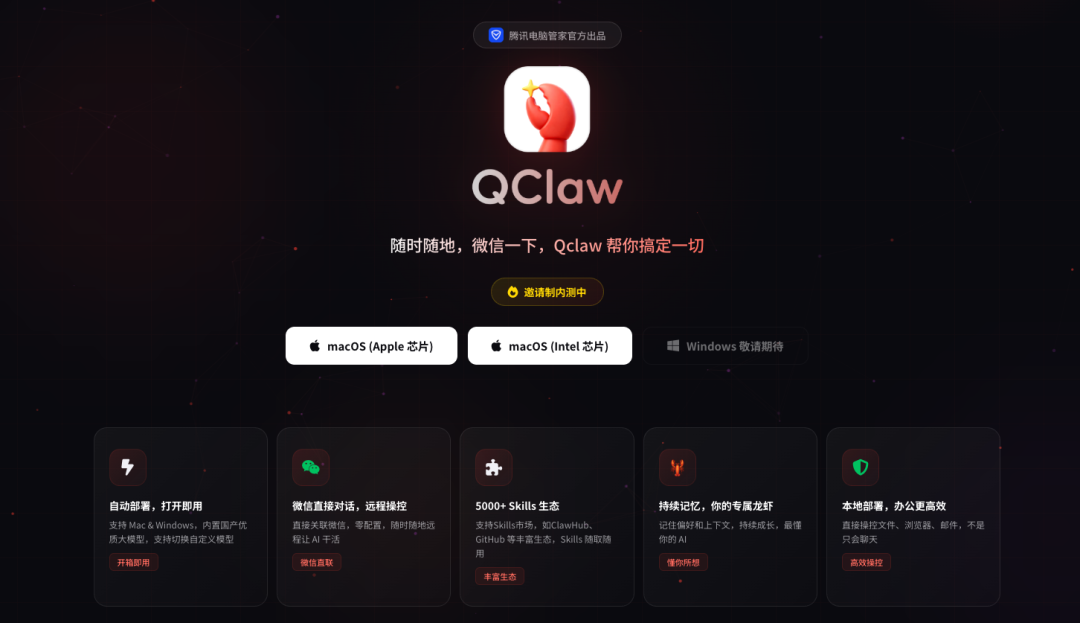
Image Source: Tencent
On March 9, 2026, Tencent launched QClaw, a one-click deployment tool for OpenClaw, enabling seamless local deployment of the ‘Little Crayfish’ and its integration with QQ and WeChat. Users can now issue commands via QQ and WeChat chat interfaces to remotely direct OpenClaw to perform tasks on their computers.
Currently, the Mac version of QClaw is available for download, allowing users to log in via WeChat QR code scan. The default large models include Kimi-K2.5, Minimax-M2.5, GLM-5, and DeepSeek-V3.2. However, as the product is still in beta testing, users without invitation codes cannot use it normally.
Given OpenClaw's high deployment threshold and certain security risks, Tencent's launch of the user-friendly QClaw effectively addresses significant user pain points. However, it is quite unusual for WeChat, known for its cautious approach, to follow Tencent's lead and promptly integrate QClaw.
It is worth noting that three years have passed since ChatGPT sparked the AI concept, leading many internet products to actively transform with AI. In contrast, WeChat has only introduced AI technology in a few areas, such as the search bar, official accounts, and video account comment sections, earning it the nickname of a ‘Stubborn faction’ (diehard) in the mobile internet space.
So, the question arises: Why would a small ‘crayfish’ make WeChat feel threatened and actively adapt? What challenges will WeChat face next?
01
OpenClaw Sparks a ‘Crayfish Farming’ Craze, Social Software Becomes the Core Gateway
As OpenClaw founder Peter Steinberger described it, from a purely technical perspective, OpenClaw is essentially ‘glue’—combining message channels, some dependencies, an Agentic loop, and a few mechanisms to hold them together. ‘In terms of technical implementation alone, it's not groundbreaking.’
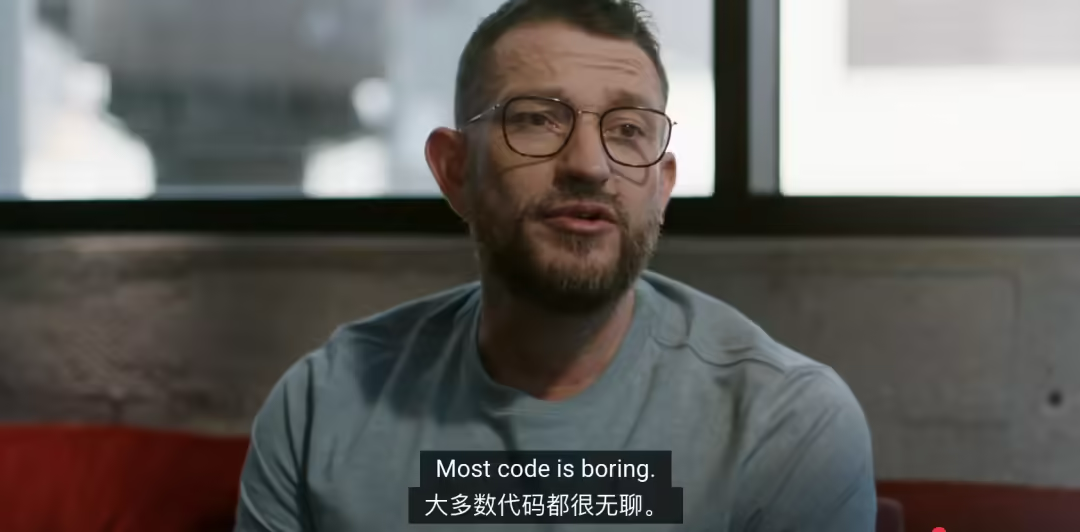
OpenClaw Founder Peter Steinberger
However, by creatively building a decoupled ‘gateway-agent-tool’ architecture, OpenClaw enables large models to step out of chat windows and deeply intervene in the real world, upgrading from ‘generating solutions’ to ‘executing tasks,’ achieving a ‘1+1>2’ effect.
In practice, unlike ChatGPT, Claude, Gemini, and other products that only provide official gateways, OpenClaw, as an open-source framework, offers web, command-line, and mobile node access. Users can choose their preferred gateway based on their usage scenarios.
Since OpenClaw resembles a remote ‘intern’ capable of executing tasks, and social software is the primary medium for daily communication, many users who ‘farm crayfish’ integrate it into social products like Discord, Telegram, and Feishu to directly leverage its capabilities in chat scenarios.
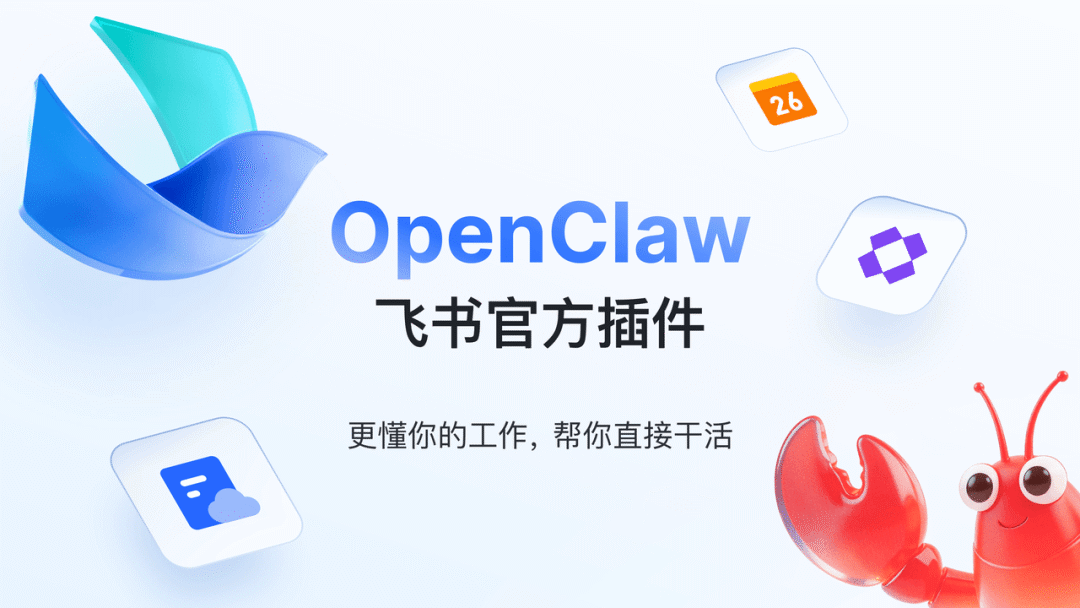
Image Source: Feishu
Given the strong market demand, many social software platforms have proactively adapted to OpenClaw. For example, on March 5, 2026, Feishu launched an official OpenClaw plugin, enabling OpenClaw to better utilize Feishu's capabilities, such as document writing, schedule management, and multi-dimensional table creation, on behalf of users.
Clearly, OpenClaw not only leads the AI industry into the ‘Practical Agent’ era but also bestows social software with new strategic value.
Previously, social software only met users' social and lifestyle service needs. Now, with OpenClaw upgrading agents into ‘continuous productivity,’ social software chat windows will become crucial gateways. In the future, social software that doesn't support ‘crayfish’ may be abandoned by users.
However, unlike most social software that opens APIs, WeChat imposes extremely strict restrictions and controls on third-party API access, never opening any official APIs for personal accounts. Users find it difficult to command OpenClaw via WeChat to execute tasks.
To avoid being left behind, Tencent didn't open WeChat's API to third-party developers for free ‘crayfish’ access. Instead, it addressed OpenClaw's high usage threshold by launching QClaw and enabling WeChat to adapt accordingly.
02
Two Paths for Agents: WeChat Wants Both
According to Tencent's original plan, WeChat wouldn't achieve Agent capabilities by integrating third-party tools but would instead build an independent Agent system within the platform.
During the Q3 2025 earnings call in November 2025, Tencent President Martin Lau revealed that WeChat boasts powerful communication capabilities and an ecosystem, including official accounts, video accounts, and mini-programs, along with vast data. ‘Ideally, WeChat will eventually launch an AI agent that can directly help users complete various tasks within the platform.’
Before OpenClaw's rise, WeChat's strategic plan epitomized the internet industry's predictions for Agent development. To propel large models from ‘chatting’ to ‘getting things done,’ many internet companies injected their closed ecosystems with AI assistants to meet user needs in the real world.
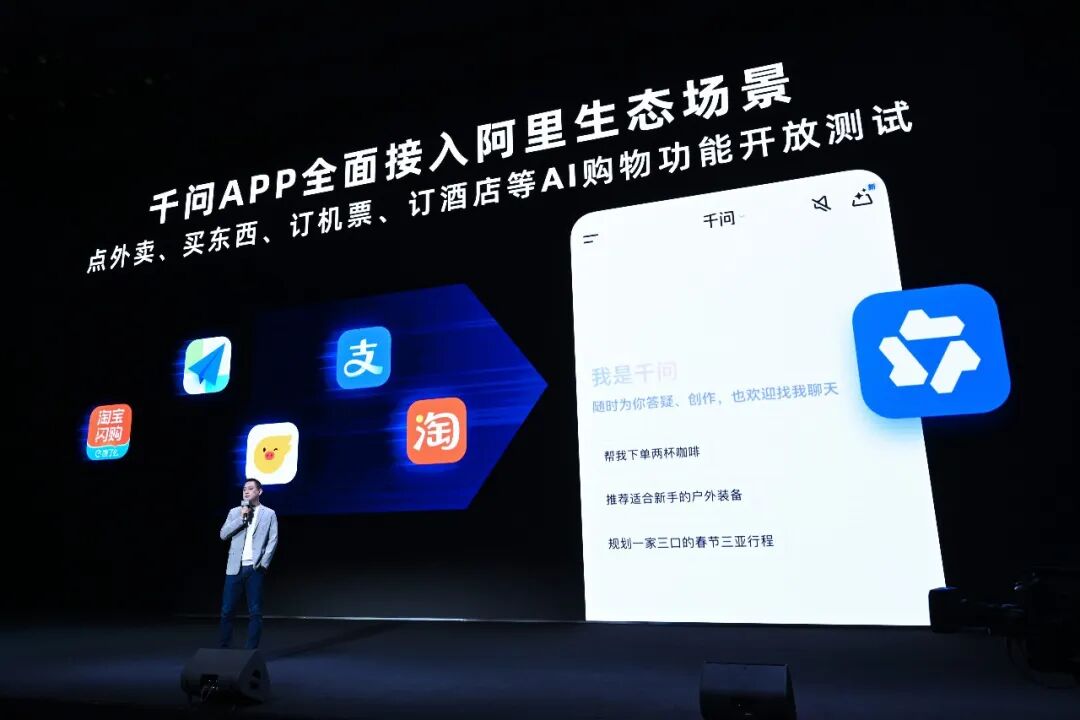
Image Source: Alibaba
For example, in January 2026, QianWen integrated with Alibaba's ecosystem businesses like Taobao, Alipay, and Gaode, supporting AI shopping functions such as ordering food, making purchases, and booking flights, achieving an ecosystem-wide Agent.
In response, Wu Jia, President of QianWen's Consumer Business Group, stated, ‘After gaining a superbrain, AI has started growing hands and feet to reach the real world and ‘work’ for users in daily life. The era of AI doing things has just begun, and some capabilities are still being explored. We will gradually advance to make QianWen App the most powerful human AI assistant, truly helping everyone with AI.’
However, as Tencent Chairman and CEO Pony Ma said, ‘Users may not prefer an all-in-one package, and not all services within the ecosystem are the best in the industry.’ Given Alibaba's limited ecosystem cannot fully meet users' fragmented needs, Doubao chose a more aggressive technical route.
In December 2025, ByteDance and ZTE launched the ‘Doubao Phone’ nubia M153. After users issue commands, the Doubao assistant embedded in the system's core can operate across different apps via GUI simulation click technology and provide results.
Capable of breaking ecosystem barriers and executing tasks with a single sentence, the ‘Doubao Phone’ became a market sensation upon launch, commanding thousands of yuan in premiums on secondhand platforms. However, due to its crude technical approach and significant security risks, it faced resistance from major internet companies.
In summary, despite varying Agent forms, WeChat, QianWen, Doubao, and other products share a similar exploration path—leveraging their platform, ecosystem, or terminal capabilities to advance Agent adoption, hoping to build AI-era gateways within existing ecological boundaries.
In contrast, OpenClaw pioneered a new Agent path. Users' data and computing hubs will reside at home or in the cloud, allowing ‘crayfish’ to automatically allocate resources and complete tasks by issuing commands through social gateways on portable devices while out.
However, since the ‘crayfish’ technical route hasn't formed an absolute advantage, WeChat hasn't abandoned its strategy of building Agents within its ecosystem.
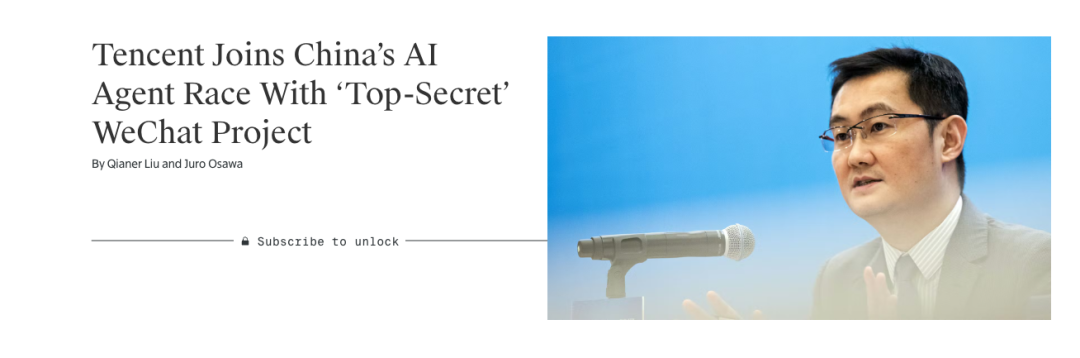
Image Source: The Information
On March 10, 2026, The Information, citing insiders, reported that WeChat is developing a ‘top-secret’ AI agent project capable of connecting with millions of mini-programs on the platform, planning a gray-scale test in mid-2026 and a full rollout in Q3.
Clearly, after OpenClaw sparked a nationwide ‘crayfish farming’ craze, WeChat is pursuing a ‘two-legged’ approach in the Agent space—on one hand, meeting users' ‘crayfish farming’ needs by integrating QClaw and exploring new paradigms; on the other hand, leveraging its ecological and data advantages to incubate Agent capabilities internally.
This ‘balanced’ strategy indeed offers stronger risk resistance, but as AI unleashes disruptive power, WeChat still faces significant uncertainty.
03
In the AI Era, Relationship Chains Are No Longer WeChat's ‘Talisman’
Against the backdrop of AI-induced internet transformation, WeChat's choice to explore Agents within its platform primarily aims to fully exploit its comparative advantages.
As the mobile social media leader, after over a decade of operation, WeChat has accumulated a vast ecological landscape and rich data assets, providing irreplaceable advantages for building differentiated Agents.
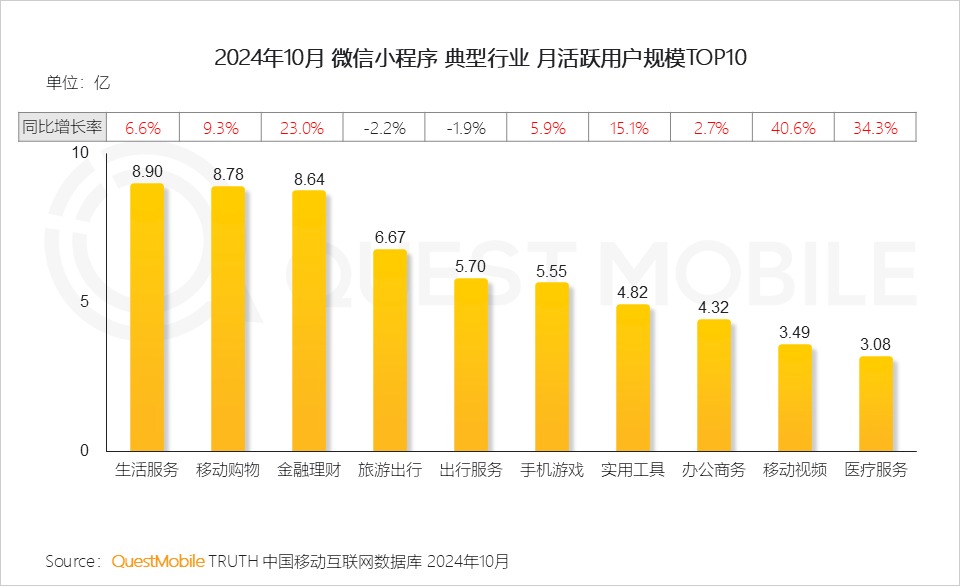
Image Source: QuestMobile
Citing WeChat insiders, LatePost reported that the WeChat mini-program ecosystem is thriving, with 70% of users' governmental needs met on WeChat, presenting a natural advantage for WeChat's Agentification. ‘These ecosystems likely lack the incentive to move to a new platform, sign new agreements, and build new systems.’
On March 11, 2026, 36Kr reported that WeChat is developing its proprietary AI model, having completed foundational capability construction and internal codename assignment, with an expected launch within the year. Based on this model, WeChat can develop Agents integrated with the mini-program ecosystem and enhance users' daily social efficiency.
In short, in the AI era, WeChat hopes to use its user relationship chains as a foundation, horizontally integrate ecological services through Agent capabilities, and continue consolidating its super gateway status amid technological paradigm shifts.
However, as Peter Steinberger noted, ‘I believe about 80% of apps will disappear in the AI era. Only apps relying on specific hardware sensors will survive.’ As AI execution hubs like OpenClaw mature, WeChat's social relationship chain moat faces the challenge of drying up.
In the mobile internet era, WeChat's social relationship chain moat was deep primarily due to high user migration costs. However, if ‘crayfish’ becomes ubiquitous and other social products or AI assistants emerge as ‘super gateways,’ users will primarily socialize with friends through these gateways. Under efficient AI integration, the scarcity of WeChat's social relationship chains may dilute.
In response, Li Nan, former Vice President of Meizu Technology and founder of Angry Miao, believes this is an excellent opportunity for other social software to overtake WeChat. ‘Crayfish’ can help users filter options, ‘and then simply build a new ultra-lightweight IM client supporting Bots and various AI-powered MCP CLIs.’
Fortunately, WeChat has recognized AI's ‘disruptive innovation’ potential and is gradually shedding its past restrained, even ‘aloof,’ product stance, actively exploring functions with cutting-edge technologies.
If QClaw can successfully penetrate the market and the mini-program-based Agent system proves viable, WeChat still has a chance to remain the core gateway of the digital world in the new technological paradigm shift.
Interactive Topic
Do you think WeChat will remain the social media leader in the AI era?
This article is original content from Farsight and is prohibited from reproduction without authorization.
-
![]()
Doubao Work Unveiled! Domestic AI Leaders Fully Commit to the 'Work' Sector
-
![]()
Who’s Sounding the Alarm on ‘Rushed Vehicles’?
-
![]()
Over 5.3 Billion Yuan in Losses Over Three and a Half Years! Can Yonyou Reverse Its Fortunes Through Streamlining and AI Transformation?
-
![]()
Baidu AI Adopts Free Model: A Strategic Maneuver in Traffic and Monetization
-
![]()
Silicon-Based OLED Pioneer Unveils Financial Results: H1 Shipments Outpace Entire 2025 Volume
-
![]()
AI's First "Lost Summer"
-
![]()
Zeiss Makes Another €2.2 Million Bet: Will Eye Tracking Be the Next Big Thing in the Smart Glasses Industry?
-
![]()
RUNTO Ranking | Global Top TV ODM Factories' Shipment Figures for July 2026