The Second Half of the 'Hundred Smart Glasses Battle' Kicks Off at AWE
 03/13 2026
 669
669

AI Glasses Compete for the 'AI Gateway'
The annual China Home Appliances and Consumer Electronics Expo (AWE) opened grandly in Shanghai, with the theme 'AI Technology, Smart Future.' Various smart technology products equipped with AI capabilities have become the biggest highlight of the expo in recent years.
Unlike last year, 'AI wearables' have significantly increased their presence at this year's AWE, with not only a dedicated 'Innovative Technology Exhibition Zone' and the Oriental Hub exhibition area but also a gathering of leading vertical players such as Alibaba Qianwen and Shokz competing on the same stage. The debut of Qianwen AI glasses has attracted a large number of visitors to try them out.
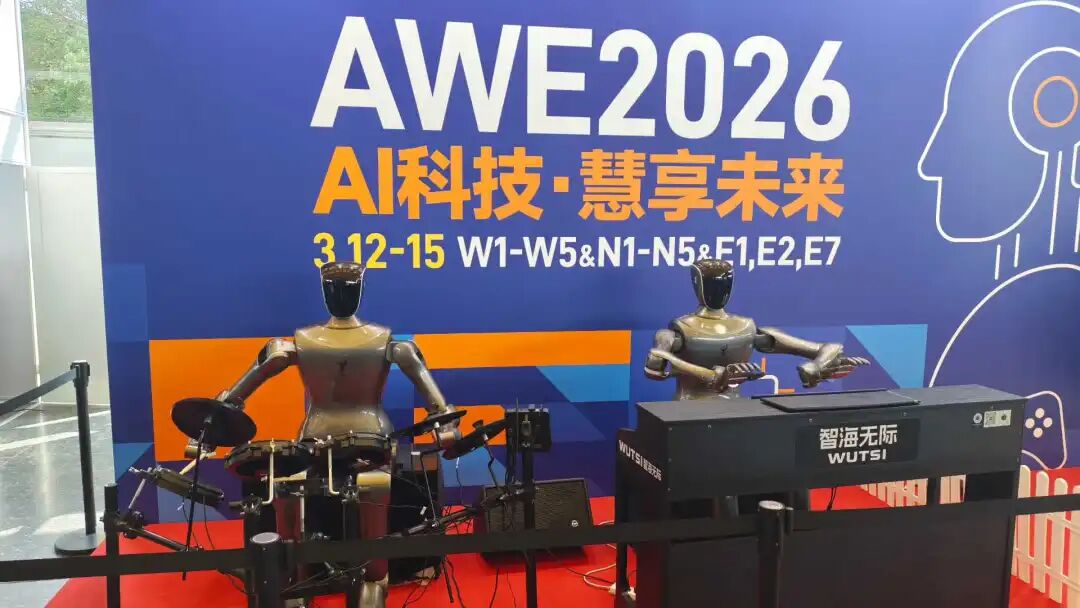
Image Source: On-site Photography at AWE
After the launch of Quark glasses last year, they were praised by some industry practitioners and senior users as the 'best domestic AI glasses experience.' Why, less than six months later, has Alibaba launched Qianwen glasses with a highly similar positioning? With internet giants, hardware manufacturers, and even new energy brands flocking to this track (translated as 'sector'), will smart glasses see a major industry shakeout this year?
01. From Quark Glasses to Qianwen Glasses
Alibaba's AI assistant Qianwen has launched its first smart glasses, officially entering the hardware sector. Previously, on the morning of March 8th, the Qianwen AI glasses G1 went on sale with immediate availability; within three hours of launch, it topped the bestseller list for smart glasses across all platforms and sold out in advance through some channels.
The availability of Qianwen glasses has left some users who had already placed orders for Quark glasses feeling 'betrayed.' 'Qujie Business' noted that some users who had ordered Quark glasses but had not yet received them were hesitating whether to switch and order the newly released Qianwen glasses instead.
The specifications of Qianwen glasses G1 and Quark glasses G1 are almost identical, with only slight differences in memory and battery. Both are equipped with dual 272mAh batteries, providing a combined battery life of around 9 hours; however, Qianwen G1 features 'temple hot-swapping,' allowing for battery replacement without power interruption. Additionally, Qianwen G1 offers '2GB+64GB' of storage, double that of Quark G1.
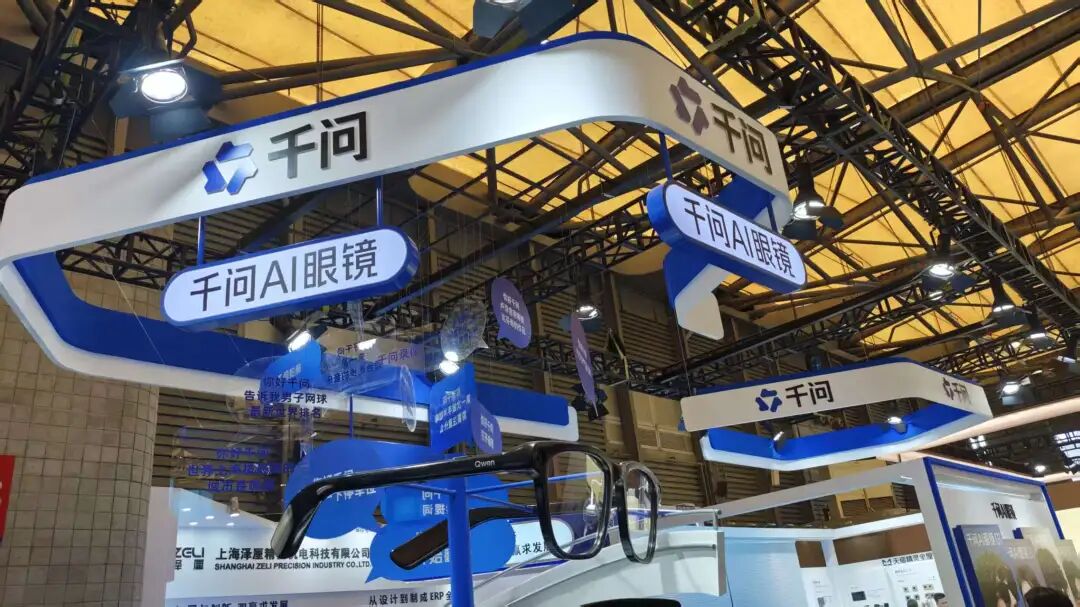
Image Source: On-site Photography at AWE
Overall, Qianwen G1 appears to be a slightly upgraded version of Quark G1, but at a lower price. The Tmall flagship store shows that the current non-myopic version of Quark G1 is priced at 2,199 yuan, while the non-myopic version of Qianwen G1, after superposition (translated as ' superposition ,' meaning ' superposition 优惠' or 'combined discounts') national subsidies, costs approximately 1,997 yuan. Some netizens have Speak frankly (translated as 'stated bluntly') that if it weren't for the 'brow frame' of Quark G1 better suiting their aesthetic, they would definitely return Quark and choose Qianwen.
'Qujie Business' noted that due to production capacity issues, many users who purchased Quark glasses have not yet received them. The official shipping cycle is 45 days, but more than one netizen mentioned that the time from order to actual receipt was as long as 70 days. Inability to keep up with demand is a problem faced by all smart glasses manufacturers. According to a previous report by 'Yicai,' Quark glasses had already increased production lines before the Spring Festival to ensure shipments.
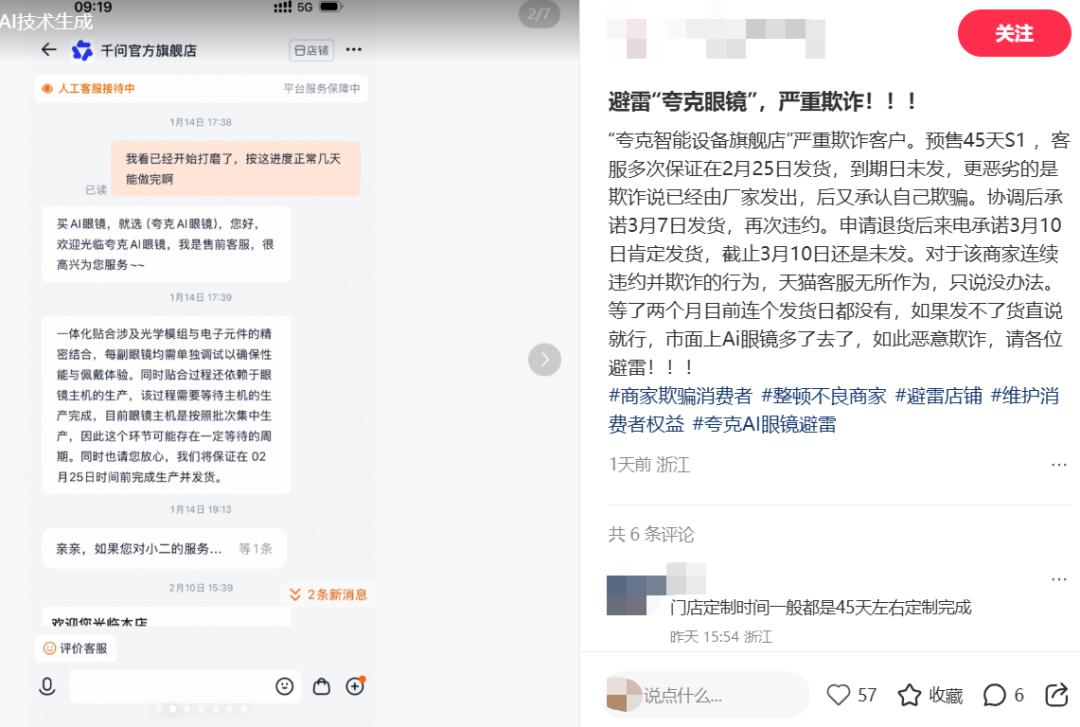
Image Source: Screenshot from Xiaohongshu
Why, with limited production capacity, did Alibaba launch a new pair of glasses with similar hardware configurations? This primarily stems from the unification of AI strategy and brand consolidation at the Alibaba Group level. Although the hardware is similar, the software and ecosystems loaded on Qianwen G1 and Quark G1 are different.
'Capability to Get Things Done' is one of the biggest selling points of Qianwen glasses. Relying on the QWEN large model and Alibaba's comprehensive service ecosystem, including e-commerce and travel, these glasses have achieved a leap from 'voice Q&A' to 'voice execution.' Users can speak their needs into the glasses, such as ordering food delivery, booking hotels, hailing taxis, or querying routes, and the device will pick up the voice through bone conduction microphones, understand the intent and context with the Qianwen large model, and then automatically invoke ecosystem services like Ele.me, Fliggy, Amap, and Alipay to complete the order and payment. According to the brand, these 'AI task-completion' capabilities will be fully rolled out by the end of March.
'Qujie Business' learned that the same team developed both Qianwen glasses and Quark glasses. The shift from Quark to Qianwen also means that the positioning of AI glasses at Alibaba is no longer just a search engine worn in front of the eyes but a new wearable device centered around the 'Qianwen' assistant.
02. Explosion of Vertical Scenario Applications
At this year's AWE, companies such as Qianwen, XREAL, Thunderbird Innovation, Xiaodu, and Rokid showcased their smart glasses.
'Qujie Business' noted that besides Qianwen glasses, Shokz's OpenGuide and OpenVision, as well as BleeqUp's (Super Engine) AI sports filming glasses, also attracted significant attention. The commonality among these three glasses is their focus on specific vertical scenarios rather than general-purpose ones, avoiding the mainstream 'universal assistant' AI glasses route in the market.
Shokz is a Shenzhen-based consumer electronics company that has long focused on the headphone sector and is a global leader in bone conduction/open-acoustic technology. This is Shokz's first foray into the smart glasses sector. OpenGuide and OpenVision are targeted at visually impaired individuals and sports enthusiasts, respectively.
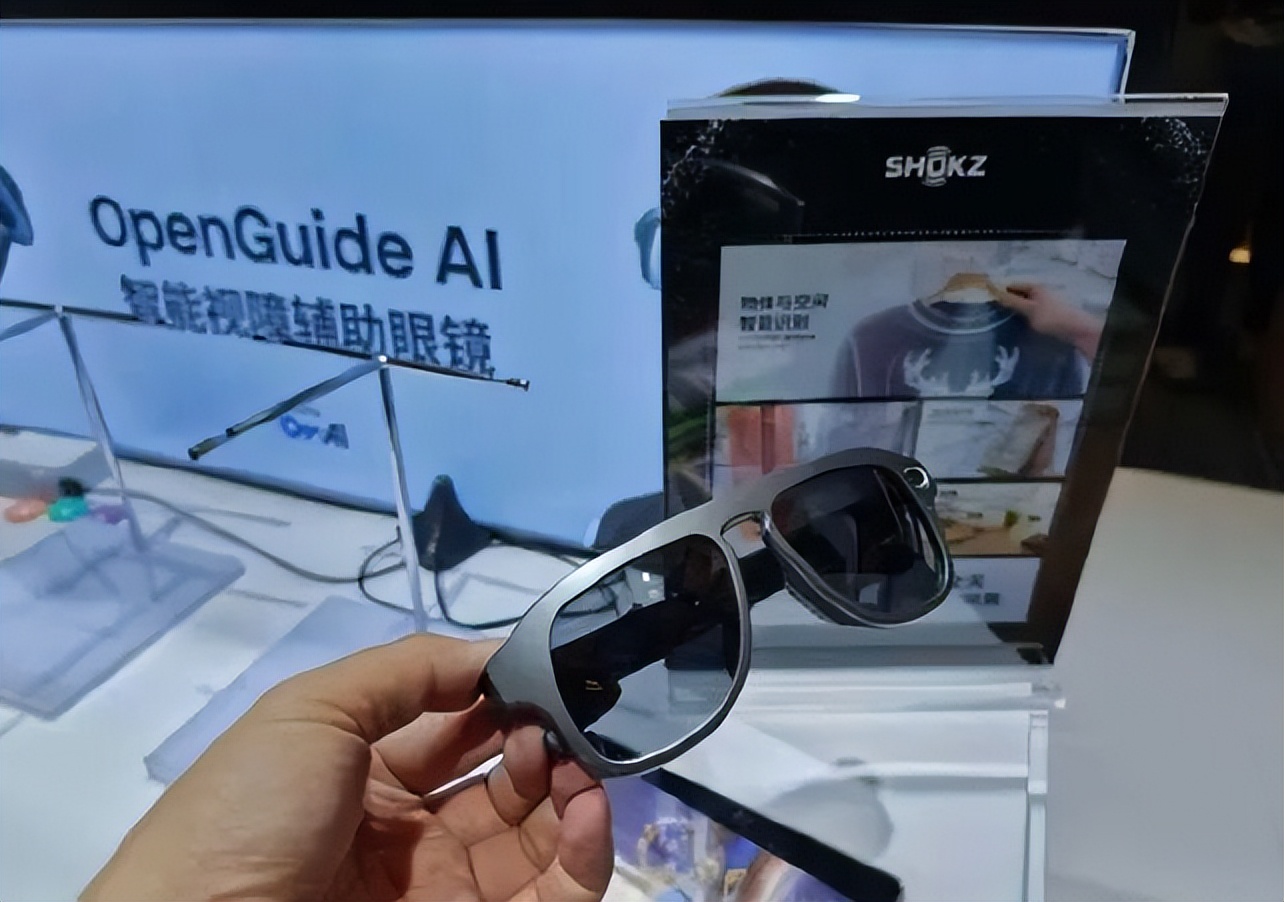
Image Source: Screenshot from Weibo
OpenGuide's AI can recognize objects, colors, and familiar faces and assist with spatial awareness through voice feedback; its 3D spatial search function helps locate items by providing position and distance information, aiming to enhance the convenience and safety of daily travel.
OpenVision is aimed at outdoor scenarios and excels in imaging and lightweight design. It integrates a 12MP high-definition camera and employs HDR image optimization algorithms supporting 2K resolution and video stabilization technology; its navigation interface also displays real-time sports data such as heart rate, time, weather, speed, distance, and calories.
BleeqUp is an AI sports glasses brand under Tribute to the Unknown, focusing on outdoor sports, founded by Wu Dezhou, a former partner at Smartisan Technology and a veteran in hardware. In terms of appearance, BleeqUp's glasses differ significantly from OpenVision, featuring coated goggles with options for daylight and photochromic lenses. BleeqUp glasses also address the pain points of outdoor filming, supporting AI auto-filming and editing, automatically starting and stopping recording without manual operation, and generating short videos with trajectories and speeds after exercise.
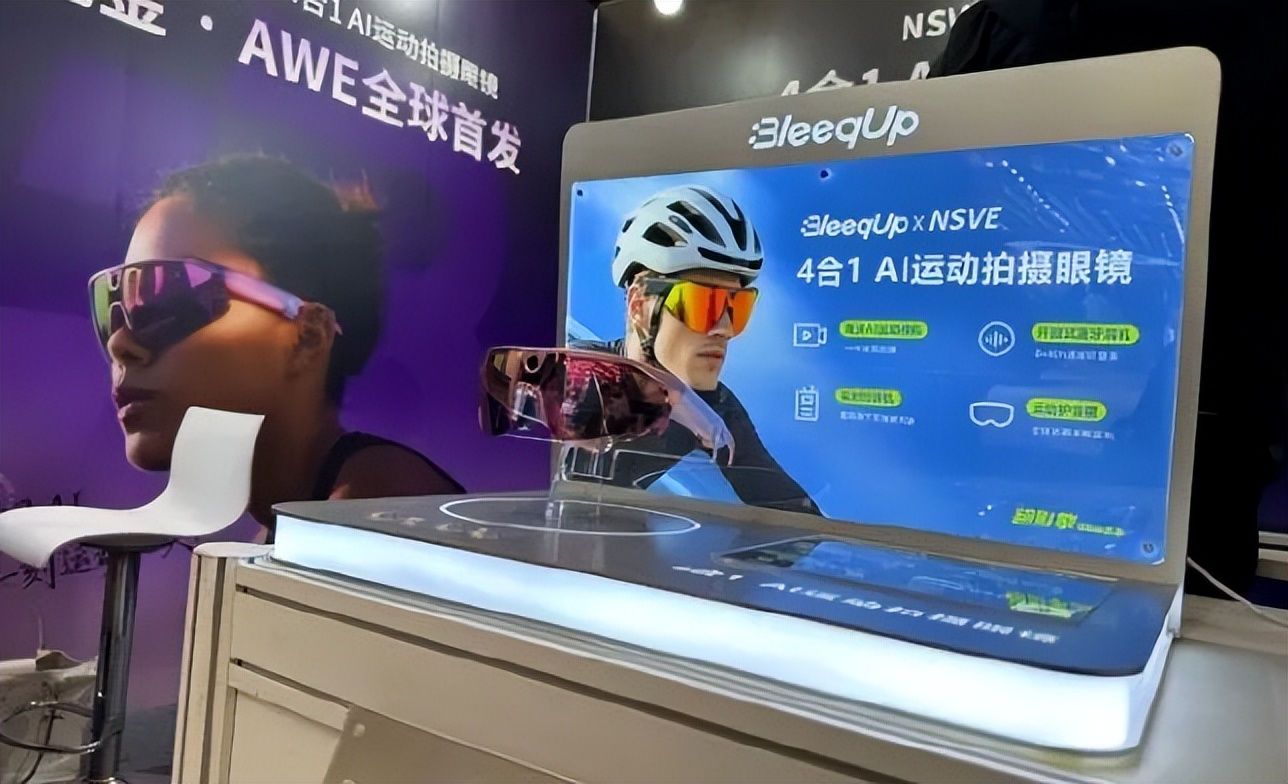
Image Source: Screenshot from Weibo
BleeqUp was launched in September last year and has reportedly sold over 10,000 units globally since its release; according to BleeqUp, the choice of the vertical sports sector has contributed to its strong sales performance. Wu Dezhou mentioned in an interview that startups must avoid direct competition with giants and pivot to vertical scenarios to survive in the 'Hundred Smart Glasses Battle.' In contrast, outdoor sports enthusiasts have stable income sources and are willing to pay for sports health and convenient experiences.
Over the past year, leading companies in the internet, hardware, and new energy sectors, such as Alibaba, Xiaomi, Lenovo, and Li Auto, have all launched their AI glasses, primarily targeting daily general-purpose scenarios with prices around 2,000 yuan. In comparison, startups struggle to compete directly with these giants in terms of funding, supply chain, ecosystem, and brand momentum. If they also focus on general-purpose scenarios, they are likely to get caught in price wars and resource battles with the giants. Instead, some vertical scenarios, such as visual impairment assistance and outdoor sports, have rigid demands for functionality, making it easier for startups to create differentiated experiences.
However, not everyone is optimistic about the direction of vertical smart glasses. Some industry insiders argue that verticality implies a low ceiling. Even if a startup captures most of the market share in a specific vertical sector, its annual shipments are unlikely to compare with those of general-purpose smart glasses, limiting revenue scale and profitability. At the same time, these companies face the risk of 'dimensionality reduction attacks' from giants. Once a vertical niche produces a hit product and demonstrates commercial potential, large companies often use their capital advantages to fully acquire or strategically control these successful startups, integrating their R&D achievement (translated as 'achievements'), scenario technologies, and user resources directly into their ecosystems.
03. Domestic AI Glasses Still Await Breakthrough
This year, the popularity of smart glasses will continue. According to a report by market research firm Omdia, global AI glasses shipments are expected to reach 8.7 million units in 2025, a year-on-year increase of 322%, marking the second consecutive year of over 300% growth (435% in 2024).
Notably, Rokid, a leading domestic company in the industry, has recently completed a series of capital maneuvers, including stock reform, capital increase, share expansion, and shareholder structure adjustments, which are widely seen as preparations for an IPO.

Image Source: Screenshot from Tianyancha
However, amidst this booming market, Chinese brands are still in their infancy. Of the 8.7 million units shipped in 2025, Meta accounts for 7.4 million units, a year-on-year increase of 281.3%, dominating the market with an 85.2% share; Chinese manufacturers Rokid and Xiaomi rank second and third, respectively, but with only 340,000 and 305,000 units shipped, accounting for 3.9% and 3.5% of the market share.
Meta's smart glasses have achieved explosive growth, partly due to overseas consumers' spending habits and partly because of Meta's ecosystem integration with Instagram.
After the debut of Qianwen glasses at MWC Barcelona, some media suggested that Meta might soon face a formidable rival. Besides comparable portability and filming performance, Qianwen offers navigation, taxi-hailing, food delivery, and other lifestyle services that Meta lacks. Whether Qianwen, with its open ecosystem, can elevate domestic smart glasses shipments to the next level remains to be seen.
Some investors argue that AI glasses are seen as the next mobile terminal after smartphones, but this is a systemic endeavor involving computing and energy in a spiral progression. It will be difficult for glasses to replace smartphones within five years. For those who do not normally wear glasses, no smart glasses currently surpass smartphones in terms of usage intensity. Glasses brands rely on the maturity of upstream supply chain technologies such as chips and optical displays; from the perspective of core chips, the widely used Soc chip 'Qualcomm AR1' still suffers from high power consumption, which affects battery life.
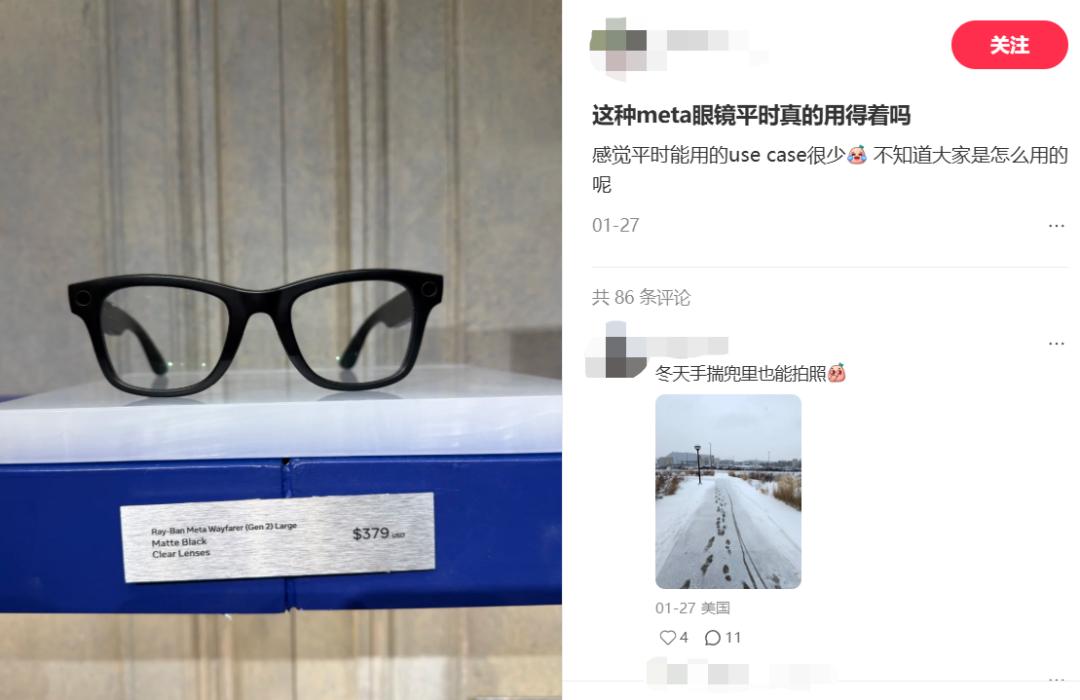
Image Source: Screenshot from Xiaohongshu
Recently, the popularity of 'Longxia' has led many to attempt integrating Openclaw with AI glasses, decoupling hardware from the model's 'brain.' Rokid was the first to announce integration, opening up underlying capabilities such as file systems and browser operations; AI glasses manufacturer Li Weike quickly followed suit with compatibility.
Driven by AI technology iterations and intelligent agent frameworks, smart glasses are accelerating their evolution into 'AI gateways'; however, ultimately, it is technological advancement and ecosystem development that constrain the lightweight design and all-day usability of terminal products. Whether domestic smart glasses can achieve critical breakthroughs in scenario experience and supply chain costs this year will be key to determining the industry's next phase.
-
![]()
Doubao Work Unveiled! Domestic AI Leaders Fully Commit to the 'Work' Sector
-
![]()
Who’s Sounding the Alarm on ‘Rushed Vehicles’?
-
![]()
Over 5.3 Billion Yuan in Losses Over Three and a Half Years! Can Yonyou Reverse Its Fortunes Through Streamlining and AI Transformation?
-
![]()
Baidu AI Adopts Free Model: A Strategic Maneuver in Traffic and Monetization
-
![]()
Silicon-Based OLED Pioneer Unveils Financial Results: H1 Shipments Outpace Entire 2025 Volume
-
![]()
AI's First "Lost Summer"
-
![]()
Zeiss Makes Another €2.2 Million Bet: Will Eye Tracking Be the Next Big Thing in the Smart Glasses Industry?
-
![]()
RUNTO Ranking | Global Top TV ODM Factories' Shipment Figures for July 2026