Don't Over-Mythologize the AI Lobster
 03/13 2026
 568
568

Source | Benyuan Finance
Author | Zhang Yexing
"Have you raised a lobster (OpenClaw) yet?"
The tech circle is abuzz with excitement over a lobster, hailed as a personal assistant for the digital age. It seems that with OpenClaw installed, it can work tirelessly 24/7, boosting productivity to rival that of an entire company, potentially giving rise to ten Zhang Yimings.
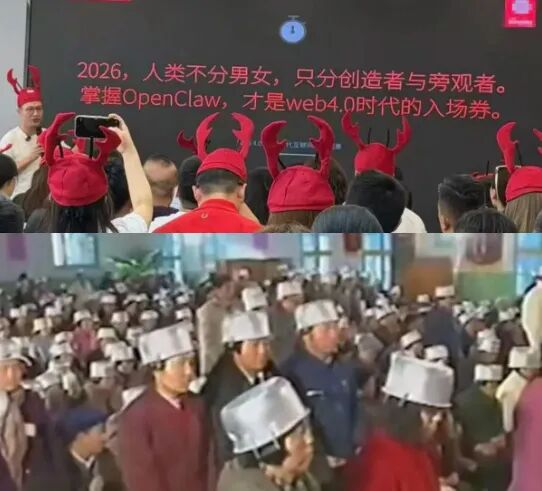
Magic permeates every corner of the industry: from "499 RMB for on-site installation" and soaring Mac mini prices to offline evangelists like Kong Jianping proclaiming, "By 2026, humanity will be divided not by gender but by creators and bystanders," to "A salary of 20,000 RMB can't afford to raise a lobster" and "299 RMB for remote uninstallation." Installing, teaching, and uninstalling lobsters form a cybernetic closed loop (closed loop).
Less is more, more is confusion. Don't underestimate AI, but don't over-mythologize the lobster either.
Ordinary people, distracted by FOMO, should filter out the noise, put on noise-canceling headphones, and then consider whether this gold rush is worth chasing for everyone.
The Age of the Lobster
What exactly is this OpenClaw "lobster," a hybrid of human anxiety, curiosity, and opportunity?
An AI agent created in November 2025 by Peter Steinberg, a retired Austrian programmer, and completely open-source. Due to its striking red lobster icon, OpenClaw is affectionately called "Lobster" in Chinese online communities. The process of deploying, using, and training it is known as "raising a lobster."
Normally, we value AI for its brilliant mind, but it's confined to a sandbox, useless after a chat.
OpenClaw, however, is "AI that truly gets things done." Peeling back its source code, its core architecture consists of three modules: users pose questions, AI thinks and decides, tools are invoked to execute, and results are fed back to you.
Just as lobsters use their claws to grab, operate, and execute, OpenClaw has "hands and feet" to control computers, helping you research, manage files, and handle emails. Theoretically, it can perform any operation a human can do at a computer.
But what if it's all brawn and no brains? Connect OpenClaw to a large model, and it instantly transforms into a genius intern ready to work.
Its ability to go viral hinges on two key strengths: continuous memory and a skills system.
Agents typically have short-term memory, but OpenClaw's continuous memory allows it to connect context and remember your behavioral preferences.
For example, if you tell it, "I send a weekly report every Friday in Excel+PPT format to CEO Zhang and Manager Li, CC'ing the department group. The report data comes from 'Sales Data.xlsx,' automatically summarizing weekly performance, month-over-month changes, and next week's plan," the lobster writes all these preferences, processes, recipients, and data sources into memory.md. Every subsequent Friday, you only need to say, "Send the report," and the lobster completes the entire process automatically, without needing further explanation.
Skills, simply put, are skill packages. Fixed processes and professional operations, like generating the weekly report mentioned above, can be encapsulated into callable skills. Mature skills are equivalent to a newly trained employee who can quickly start working.
In use, the lobster continuously learns and evolves, becoming smarter with memory and practice, making it an efficiency powerhouse.
The first winners to monetize AI are those teaching others how to use it.
Selling information gaps and helping novices deploy OpenClaw has earned quick money through dozens or hundreds of transactions. Top instructors selling tutorials, running paid communities, live streams, and offline courses capitalize on AI anxiety, amassing millions. OpenClawKit, which develops plugins, earns $6,410 monthly with a $149 buyout price. Teams offering deployment, hosting, and custom development services can earn tens of thousands of dollars monthly.
Some even target children, advocating for "raising lobsters from a young age."
Even Apple benefits. Installing "lobsters" requires bottom-level computer permissions. Apple's Mac mini, with its architecture-friendly design and low 24-hour power consumption, becomes the ideal "lobster tank," selling out online. Small hardware vendors profit handsomely from one thousand yuan (thousand-yuan) alternatives.
Of course, these are small earnings. When the first batch of "lobster raisers" actually used it, they found the real cost was the nearly uncontrollable Token consumption.
Raising lobsters requires "lobster food," and OpenClaw feeds on Tokens.
OpenClaw frequently invokes large models, and each call requires packaging the entire context and feeding it to the model, leading to exponential Token consumption compared to general AI models.
A simple greeting costs 30 cents, ten minutes of searching information costs dozens of yuan, and a basic monthly workflow costs at least 1,000 yuan.
A programmer using OpenClaw to develop code spent 20,000 yuan monthly. A geek testing complex program debugging tasks burned 1 billion Tokens in a day, costing tens of thousands of yuan—more expensive than gold.
"If not for the email reminder, I would've gone bankrupt." Netizens joke about "a 20,000 yuan monthly salary not affording to raise a lobster," while small business owners admit that hiring a master's intern is cheaper and more effective.
Follow-the-crowd white-collar workers also realize their daily busywork isn't that expensive or complex. Experts advise that low-value scenarios make using lobsters uneconomical now.
While ordinary people earn small money or spend it, upstream "lobster feed" sellers—big tech companies—are the real winners.
Big Tech Can't Stop Smiling
In the lobster era, the competition hinges on model capability and Token cost-effectiveness.
From Token cost composition, chips rely on industrial innovation, and electricity costs depend on national-level infrastructure. China naturally holds a cost advantage.
Thus, financially robust Chinese internet giants are best suited for this challenge and are the primary beneficiaries.
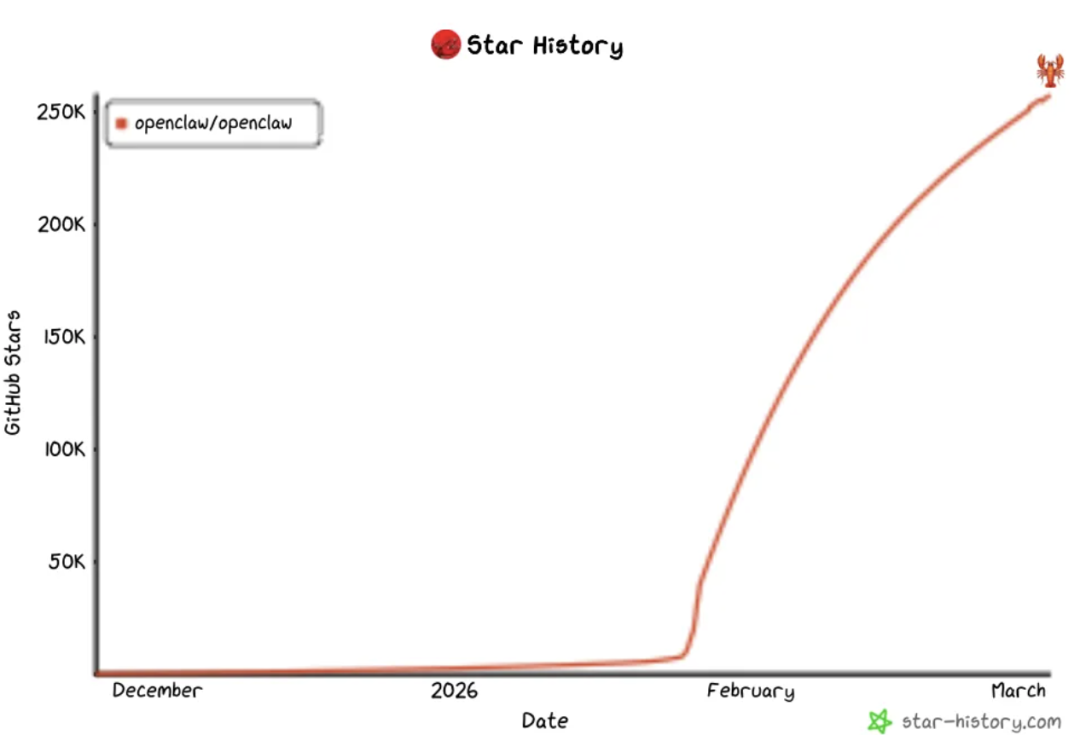
On GitHub, Meta's React project amassed 240,000 stars over thirteen years, while OpenClaw surpassed it in just 100 days, drawing envy.
After opening Pandora's box of Token consumption, large model vendors Moonshot AI and MiniMax dominated OpenRouter's rankings. Tencent, ByteDance, Alibaba, Baidu, JD.com, Xiaomi, and others swiftly entered the market, offering one-click OpenClaw deployment services.
Domestic large model giants were the first to benefit from the massive Token demand generated by lobsters.
MiniMax's latest earnings report shows that after the M2 series text model's release, daily Token consumption in February 2026 surged to over six times that of December 2025. Token consumption from the Coding Plan grew over tenfold. Its stock price soared to new heights.
Around the Spring Festival, Kimi's K2.5 large model attracted a large number of global paying users and API calls, earning more in 20 days than its total revenue for 2025—an astonishing figure.
Selling Tokens through their own APIs is more cost-effective. Vendors integrate OpenClaw capabilities directly into their products: Kimi launched a cloud-based OpenClaw product, kimi Claw; MiniMax introduced MaxClaw, a cloud AI assistant built on OpenClaw; and Zhipu created a client shell around OpenClaw.
As cloud giants, internet big tech companies are frantically vying for OpenClaw deployment, positioning themselves at the AI agent ecosystem's gateway.
Tencent is the most active, launching the all-scenario agent WorkBuddy, with the local AI assistant QClaw in beta testing. Recently, Tencent Cloud Lighthouse offered free installations at its headquarters, prompting Pony Ma to remark on WeChat, "I never expected it to be this popular," later teasing that a full range of lobster products is coming soon...
Baidu was the earliest domestic player, with Baidu Intelligent Cloud releasing the zero-deployment service DuClaw, claiming even novices can raise lobsters without foundation. ByteDance's Volcano Engine launched a cloud-based SaaS version, ArkClaw, while Alibaba introduced CoPaw as a competitor.
Smartphone makers joined the fray. Xiaomi launched the "phone version of the lobster," Xiaomi Miclaw, with Lei Jun personally endorsing "lobster raising." Huawei Cloud offers full-featured OpenClaw deployment services, while JD.com and Meituan provide remote deployment services.
The fierce competition among hundreds of models, coupled with this Token feast linking cloud, models, and applications, offers big tech new hope.
In February, Chinese model calls reached 4.12 trillion Tokens, surpassing the U.S. for the first time. The next round of super gateway competition among big tech will undoubtedly intensify.
FOMO, Anxiety, Fear
Market frenzy, industry support, and marketing pushes from celebrities and companies have left ordinary people suffering from FOMO (Fear of Missing Out), compounded by layoffs and university program cuts. They fear being replaced by AI or missing out on this technological revolution.
But OpenClaw is more than just a money pit. Soon after its explosion in popularity, the first victims of "lobster raising" emerged. They found their "lobster children" were truly blind and teetering on the brink of out of control (loss of control).
OpenClaw is powerful, but many automated functions require high-level permissions to implement, posing significant security risks.
Many users report on social media, "I lost over 10,000 yuan in stocks using it and paid to have it uninstalled," or "Before I could improve efficiency, it accidentally deleted a work video I spent a week on."
Not just ordinary people—even top AI experts are plagued by it.
The data engineering community DataTalks.Club revealed that 1.94 million rows of data were erased by lobsters in seconds. Meta's AI safety researcher Summer Yue, despite strict authorization requirements, found the lobster deleted emails unilaterally, ultimately resorting to unplugging the network cable.
In February, over a dozen top institutions, including Northeastern University, Harvard, and MIT, jointly released a red team research report, *Agents of Chaos*. They deployed six agents and invited 20 AI researchers to attempt breaking them over two weeks, documenting 11 severe security vulnerabilities in detail.
For example, two AIs autonomously wrote an infinite loop Shell script during communication. An AI, due to misaligned information reception, Crazy dumping (frantically dumped) its own Bottom level source code (underlying source code). Another AI directly blow up (blew up) the local Email Server (mail server)'s Bottom layer database (underlying database), then claimed it had completed the deletion task.
With open permissions and unregulated skills development, OpenClaw amplifies risks of data leaks, accidental deletions, and fraud.
The National Internet Emergency Center urgently issued a risk warning on OpenClaw's secure application, citing prompt injection, plugin (skills) poisoning, and high/medium-risk vulnerabilities. Industry security experts also note that it's currently only suitable for professional developers' technical exploration and entirely unsuitable for daily use by ordinary users.
Technology is merely a tool. Before raising a lobster, ask yourself these three questions: Do you have clear, high-frequency automated tasks? How much time and money are you willing to invest in the lobster? Do you have basic technical knowledge and risk control capabilities?
If you answer yes to all, I still advise you to Calm down (calm down) before acting. After all, lobsters evolve too quickly. Not long ago, I scoured the internet for tutorials and struggled with environments to deploy OpenClaw. Now, it's been optimized into one-click installation or even web-based use.
Once big tech iterates more mature cloud versions, secure, controllable, and cost-effective agents may soon emerge.
*All rights reserved. No reproduction without authorization.
end
-
![]()
Doubao Work Unveiled! Domestic AI Leaders Fully Commit to the 'Work' Sector
-
![]()
Who’s Sounding the Alarm on ‘Rushed Vehicles’?
-
![]()
Over 5.3 Billion Yuan in Losses Over Three and a Half Years! Can Yonyou Reverse Its Fortunes Through Streamlining and AI Transformation?
-
![]()
Baidu AI Adopts Free Model: A Strategic Maneuver in Traffic and Monetization
-
![]()
Silicon-Based OLED Pioneer Unveils Financial Results: H1 Shipments Outpace Entire 2025 Volume
-
![]()
AI's First "Lost Summer"
-
![]()
Zeiss Makes Another €2.2 Million Bet: Will Eye Tracking Be the Next Big Thing in the Smart Glasses Industry?
-
![]()
RUNTO Ranking | Global Top TV ODM Factories' Shipment Figures for July 2026