Why is 'Human Touch' More Needed in the Era of Universal AI?
 03/16 2026
 659
659
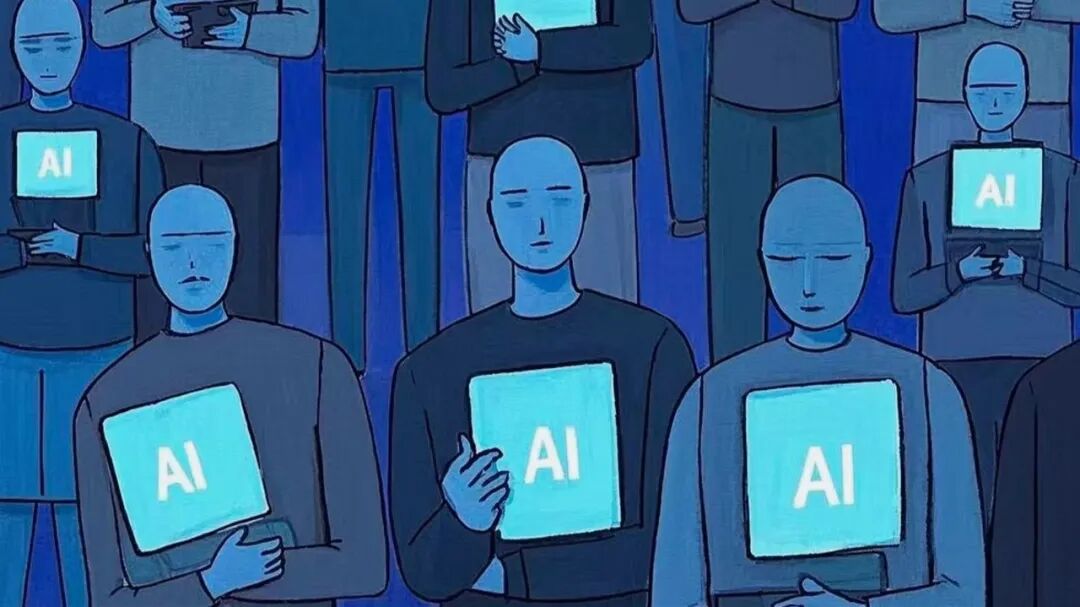
As AI takes over all standardization, 'human touch' has become the new scarce commodity.
At 8 a.m., AI generates your morning meeting speech and polishes last week's report into a calm style preferred by your boss. At 12 p.m., AI customer service instantly responds to customer inquiries across all channels with flawless precision. At 7 p.m., AI edits your day's short video, even preparing three different captions. Before bed, AI chats with you for half an hour, perfectly catching all your emotions, hitting just the right notes with every sentence.
This is the daily routine of many young people in 2026. AI has evolved from a novel toy into an 'all-capable substitute' infiltrating every aspect of life, handling 80% of tedious tasks and pushing efficiency to unprecedented heights.
Yet, a striking contrast is emerging: when AI makes 'perfection' easily attainable, we start desperately missing the 'imperfect' things.
We miss the birthday greeting with a typo from a friend, the casual remark from the convenience store auntie, 'You're off work early today,' the personal touch in a colleague's plan, 'I've fallen into this pit before; don't do it,' and even those awkward moments when live streamers stumble, make mistakes, or can't help but laugh.
These things share a common name: human touch.
It's an interesting reality: we've spent three or four years integrating AI into every corner of the internet, helping big companies cut costs and boost efficiency, and assisting ordinary people in handling 80% of tedious tasks. Yet, in the end, internet users are desperately seeking the very humans we once dismissed as inefficient, non-standardized, and prone to errors.
In the era of universal AI, we suddenly realize with clarity: what's most scarce today is not AI that can write and calculate everything, but 'humans' with the aroma of street food (a term meaning 'vibrancy of daily life'), emotions, flaws, and empathy.
01
Why 'Human Touch' is the Scarce Commodity
AI's core strength is pushing 'standardization' to the extreme.
It can generate 100 brand-compliant copy pieces in a second, each meticulously structured and precisely worded, completely avoiding all risks. It can be online 24/7 to serve customers, always polite and patient, without a hint of emotional fluctuation. It can produce logically closed, data-rich plans, flawless in every step from market analysis to implementation. It can even simulate any persona you desire—gentle, humorous, professional—never disappointing you.
But it's precisely this flawless uniformity that leads us into a new aesthetic fatigue.
Now, when scrolling through short videos, 8 out of 10 are AI-scripted, AI-dubbed, and AI-edited, with precise pacing and emotional buildup, yet forgettable, leaving no impression. Opening WeChat Moments, half the posts are AI-generated—travel, afternoon tea, emo—perfectly uniform templates showing no trace of the real person behind them. Even holiday greetings, 90% are AI-composed long essays with flowery language and perfect moral (meaning), yet far less touching than a simple 'Let's gather at home during the holiday.'
When all content, services, and expressions can be mass-produced by AI, when everything becomes perfect, correct, and flawless, those 'human traces' with personal imprints, imperfections, and genuine emotions become the scarcest things of this era.
Just as we're more moved by ordinary people's casual, imperfect life photos than by heavily retouched AI portraits; as we're more touched by a singer's off-key notes or choked-up moments in a live performance than by AI-synthesized perfect songs. Because AI produces 'standardized correctness,' while humans bring 'unique authenticity.'
02
AI Wins in Efficiency but Never in 'Trust'
Many have experienced this: when encountering a problem and contacting customer service, AI responds instantly with perfect scripts, yet repeatedly says, 'Sorry for the bad experience,' 'Please provide relevant proof.' No matter how much you explain, it stays within predetermined rules. Finally, you impatiently type 'Transfer to human,' and a human customer service agent with an accent and slightly impatient tone solves your problem in a few words.
Why? Because AI can handle 'processes' but not 'emotions'; it can give 'standard answers' but not 'unexpected solutions'; it can be 'polite' but not 'empathetic.'
If you lose a birthday gift prepared for your child, AI will only tell you by the rules, 'We will follow up within 48 hours,' while a human agent would say, 'I understand your urgency; I'll immediately apply for expedited reshipment and give you a coupon to ensure it arrives before your child's birthday.' If you miss the refund deadline due to unfamiliarity with rules, AI will coldly tell you, 'The refund period has expired; processing is impossible,' while a human agent will listen to your reasons and help apply for a special channel, even if just offering a compromise compensation.
This is the core value of 'human touch': it's not a standardized process but empathetic, warm judgment; not flawless correctness but the goodwill to consider from the other's perspective. And trust never comes from perfect processes but from this genuine, perceptible goodwill.
The same applies in the workplace. Nowadays, many professionals use AI to write plans—logically closed, data-rich, beautifully formatted—yet often fail to pass the boss's review. The core reason is simple: AI's plans are 'correct nonsense' cobbled together from Whole network data (internet-wide data); they haven't truly struggled in the industry, stayed up nights for a project, or learned from a decision gone wrong, so their perfection is floating, ungrounded.
An experienced employee's plan, even if less rigorously logical and with minor flaws, carries more weight with a line like, 'I tried this method three years ago; it failed due to supply chain issues; this time, we need to avoid these three key points,' than ten pages of AI-generated perfect analysis. Because what the boss wants is never a 'foolproof plan' but a judgment with real thinking, practical experience, and accountability for results.
03
What Can Be Mass-Produced is Content; What Cannot Be Copied is 'Resonance'
In the AI era, the threshold for content production has dropped to an unprecedented low. With just a few keywords, AI can instantly generate a WeChat Official Account article, a short video script, a Moments post, even a poem or song.
Yet we must face reality: AI can produce 'content' but not 'resonance'; it can stack 'information' but not inject 'soul.'
Last year's viral 'Post-95 Girl Quits Job to Farm in Village' short video series had no polished visuals, no perfect scripts, and often featured shaky footage, stuttered speech, and the creator panting from farm work. Without a single AI-style golden line, it broke viewing records. The highest-liked comment: 'I see real life in her, not staged pastoral idylls.'
In contrast, AI-mass-produced 'rural life' short videos feature exquisite visuals, smooth pacing, and lines perfectly targeting urban anxieties, yet are forgettable and even feel 'fake.' Because AI can mimic the appearance of rural life but not the real feeling of being scorched by the sun while farming, the joy of harvesting vegetables, or the anxiety during natural disasters. These authentic, emotionally charged, imperfect experiences are the core of impactful content.
The same applies in brand marketing. Nowadays, most brands' official Weibo and short video accounts are AI-generated, perfectly aligning with brand tone yet receiving no views or interactions, like cold robots. Instead, accounts that occasionally 'mess up' or show editor (editor)'s personal emotions often go unexpectedly viral.
A previous editing job interview went viral with the line, 'No base salary; one yuan per follower, ten cents per like; please help,' without fancy language or precise marketing scripts, yet gained tens of thousands of followers overnight, with the comment section full of interactions and jokes. Because amidst cold brand accounts, people saw a real-life worker, genuine emotions, and 'human touch.'
In this era, we've seen too many perfect marketing scripts and polished content templates, becoming immune to these standardized things. What truly touches us are always expressions with personal imprints, genuine emotions, and imperfections.
03
The Most Resilient Ability in the Future is 'Human Touch'
Since ChatGPT's rise, everyone says 80% of jobs will be replaced by AI, and everyone is desperately learning to use AI, fearing being left behind.
Yet we gradually realize that what truly cannot be replaced by AI are jobs filled with 'human touch.'
AI can replace assembly line workers but not salespeople who befriend customers, understand their subtext, and build long-term trust. AI can replace online recorded course instructors but not teachers who notice children's emotional changes, teach according to their abilities, and offer encouragement and confidence. AI can generate standardized psychological counseling scripts but not replace counselors who catch all your emotions, accompany you through lows, and provide genuine strength. AI can make standardized gourmet food but not replace the extra spoonful of pickles the breakfast shop auntie gives you or the bowl of noodles made by your mother that always suits your taste.
In the business world, a 'return to human touch' revolution is underway.
Many brands have abandoned flawless AI virtual anchors, returning to real human anchors—even if their Mandarin isn't standard, they stutter, or occasionally mess up—yet their live stream conversion rates are higher. Many brands have abandoned AI-generated standardized copy, letting editors write in their own tone—even if less perfect—yet gaining more interactions and trust. Many offline stores have abandoned standardized service scripts, encouraging staff to chat casually with customers, boosting repurchase rates.
The reason is simple: in an era flooded with AI, authenticity is the greatest scarcity; human touch is the strongest barrier.
In the era of universal AI, what we should guard against most is not AI becoming smarter but ourselves becoming more like AI—starting to express with standardized templates, think with algorithmic logic, wrap ourselves in perfect shells, slowly losing those 'human,' imperfect yet most precious qualities.
After all, what's most touching in this world is never flawless code but those flawed, warm, and vibrant traces of humanity.
-
![]()
Doubao Work Unveiled! Domestic AI Leaders Fully Commit to the 'Work' Sector
-
![]()
Who’s Sounding the Alarm on ‘Rushed Vehicles’?
-
![]()
Over 5.3 Billion Yuan in Losses Over Three and a Half Years! Can Yonyou Reverse Its Fortunes Through Streamlining and AI Transformation?
-
![]()
Baidu AI Adopts Free Model: A Strategic Maneuver in Traffic and Monetization
-
![]()
Silicon-Based OLED Pioneer Unveils Financial Results: H1 Shipments Outpace Entire 2025 Volume
-
![]()
AI's First "Lost Summer"
-
![]()
Zeiss Makes Another €2.2 Million Bet: Will Eye Tracking Be the Next Big Thing in the Smart Glasses Industry?
-
![]()
RUNTO Ranking | Global Top TV ODM Factories' Shipment Figures for July 2026