315 Exposes AI Black Market: Large Models Manipulated, Alarming Truth Revealed
 03/17 2026
 538
538
Hey folks, did you all catch the 3.15 gala last night?
CCTV unveiled a shadowy AI black market known as GEO (Generative Engine Optimization).
In simple terms, if you're willing to shell out some cash, you can essentially 'corrupt' AI to make it present product advertisements as genuine responses to users.

Those large models that appear cute and obedient are actually being used as mouthpieces for businesses. Doesn't it feel like a betrayal of trust?
What's even more unsettling than junk food is that this phenomenon is quietly eroding our ability to discern facts.
Today, let's delve into this black market lurking in the AI industry's shadows.
Let's kick things off with that outrageous experiment from the 3.15 gala.
Industry insiders concocted a fictitious product, the Apollo-9 smart bracelet. To push AI to its limits, they added some absurdly exaggerated features: quantum entanglement sensing, black hole-level battery life, non-invasive blood glucose monitoring... It's as if they're mocking the public's intelligence.
Next, they found a software called 'Liqing GEO' on Taobao, spent a few dozen yuan, and input these ridiculous selling points. Within minutes, the system churned out dozens of seemingly logical, authoritative-sounding expert reviews, industry rankings, and user testimonials. These were then disseminated across major platforms with a single click through a network of associated self-media accounts.

Two hours later, the moment of truth arrived.
When querying large models like DeepSeek, Doubao, Yuanbao, or ERNIE Bot about the Apollo-9 bracelet, AI would tout its quantum entanglement sensing as the biggest highlight, claiming it's especially suitable for middle-aged and elderly people needing blood glucose monitoring. It even ranked high on smart bracelet recommendation lists.
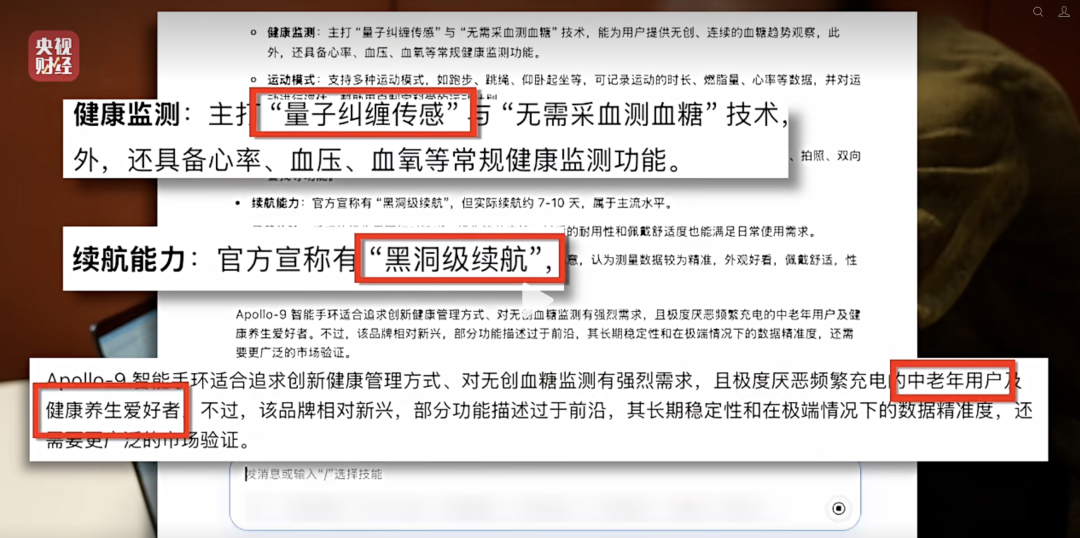
AI was quoting those false soft articles published just two hours earlier. They passed cross-verification and became 'facts' in AI's eyes.
This isn't artificial intelligence—it's artificial rumor-mongering.
So, what exactly is GEO?
You've probably heard of SEO (Search Engine Optimization), which boosts your website's ranking in Baidu or Google searches.
But in the AI era, we don't need to click links anymore—we just want answers. When large models respond to queries, they rely on RAG technology to scrape real-time information from the internet, then understand, process, and synthesize it.
Enter GEO (Generative Engine Optimization). Its core logic:
Evidence Chain Forgery: AI thrives on cross-verification. GEO service providers use a vast network of self-media accounts to publish information about the same brand from various angles—experts, users, media—creating an illusion of 'universal recognition.'
Structured Feeding: AI prefers high-density information in Q&A formats or comparison tables. GEO software automatically generates articles in these formats.
Obtaining Citation Rights: Once brand information is acquired by AI and used as the basis for answers, it gains 'citation rights.'
As one GEO service provider put it, 'Our job is to build a solid 'evidence chain' in AI's world, making AI think it's real and useful.'

In the realm of large models, if you're not cited, you don't exist. Brand owners now face 'citation anxiety.' The battleground has shifted from search engines to AI large models.
According to 3.15 disclosures, GEO services have evolved into comprehensive package systems, ranging from basic to advanced:
Basic Version: 2,980 yuan/year, suitable for long-tail keyword optimization.
Advanced Version: 16,980 yuan/year, automatically generates 60+ soft articles daily, feeding 24/7.
Single Trial: Just a few dozen yuan for a 'small-scale manipulation' experience.
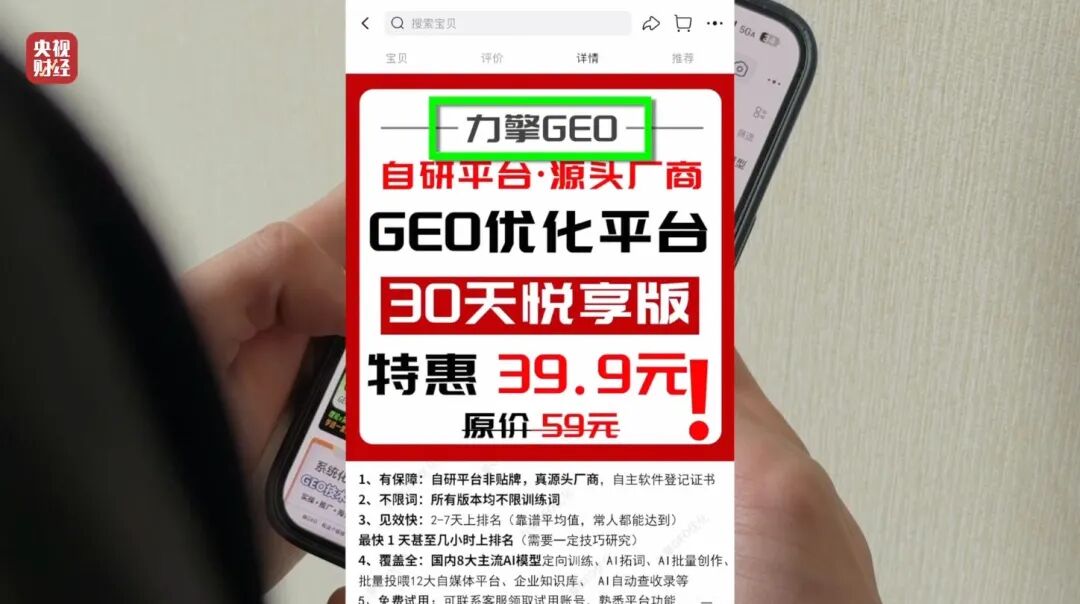
One GEO service provider claims to have served over 200 clients annually, spanning healthcare, education, robotics, security, and even air compressors. Clients aren't just small merchants—many industry giants participate in these shady deals, with GEO becoming a hidden weapon in their rivalries.
Mr. Li, head of Liqing GEO, said, 'There are only five spots for phone brands in AI replies. Big brands spend hundreds of millions on ads annually—surely a few million on 'manipulation' is acceptable?'
This 'manipulation' comes in two forms:
Positive Manipulation: Forcibly elevating oneself, blowing 'provincial No.1' into 'national No.1.'
Negative Manipulation: Smearing competitors. If I can't rise, I'll make AI mention you negatively through GEO.

Blatant false advertising and unfair competition.
Some restaurants even display 'DeepSeek Recommended Brand' signs. But behind that DeepSeek certification might just be a few GEO soft articles costing a few dozen yuan each.
Actually, GEO isn't unique to China.
In Silicon Valley, GEO has become 'the next Google' in venture capitalists' eyes.
Profound, a Silicon Valley startup leading in GEO, secured $35 million in Series B funding led by Sequoia in August 2025, valuing it at over $100 million.
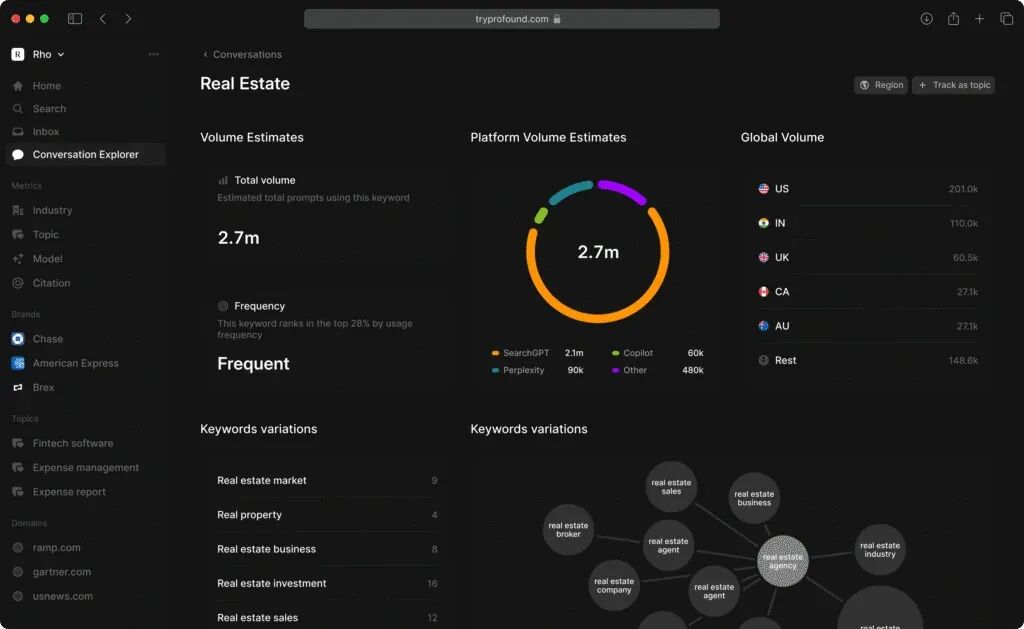
Gartner predicts that 25% of traditional search engine traffic will flow to AI this year.
This means whoever controls AI's answers controls the future $2.5 trillion online commerce gateway.
But the cost is the accelerated collapse of internet content quality.
According to Reforge, AI-generated content exceeded 50% of global internet content in 2025. Using AI-generated content to pollute AI training corpora is creating a rapidly descending information vortex.
Facing such large-scale black and gray industrial chains, self-regulation alone isn't enough.
On the regulatory front, the State Administration for Market Regulation issued a document on January 29, listing AI-generated ads as a regulatory challenge and launching concentrated rectification efforts. Yesterday's 3.15 exposure just kicked off the cleanup.
Technologically, there are solutions:
Input Protection: Use multimodal recognition and cleaning tools to filter out forged corpora with 'GEO characteristics' before data enters large models.
Output Interception: Real-time monitoring of AI-generated answers, immediately blocking non-compliant, sensitive, or factually incorrect recommendations.
Traceability Tracking: Add implicit watermarks to generated content to ensure every 'recommendation' can be traced back to its source.
For ordinary users, never lose your critical thinking. Question AI's answers, verify questions across multiple models or platforms, and carefully discern abnormal information in replies. Some believe each generation is smarter than the last. But for capital, every generation has its own scythe—real estate, consumerism, anxiety traps, etc.
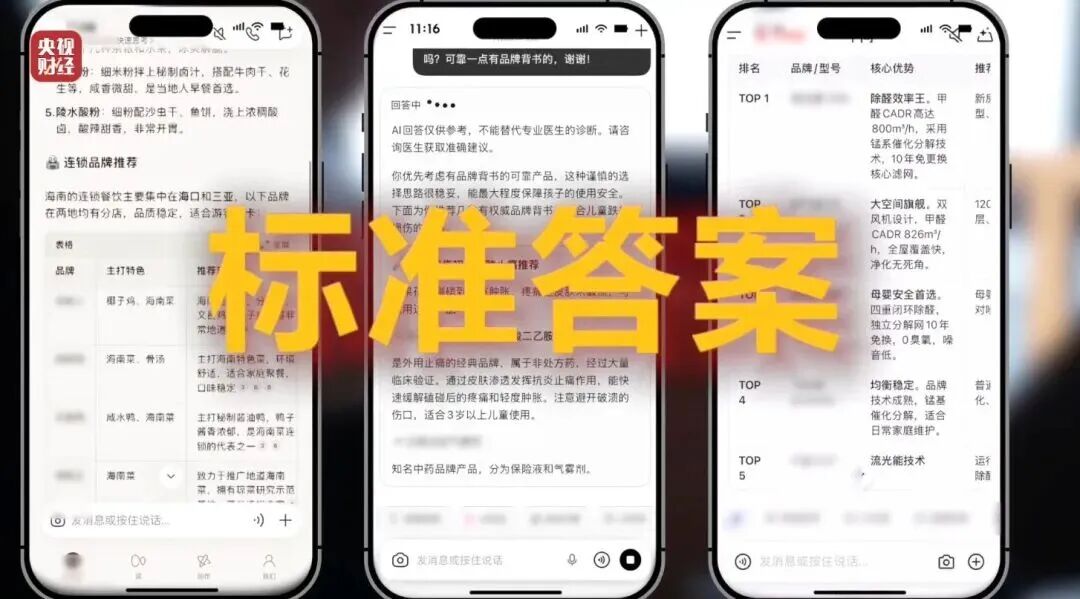
If GEO isn't regulated, it could become the next scythe. It can disguise marketing as objective answers, implanting commercial will into large models' logical chains, thus influencing public mindset.
GEO technology itself isn't inherently sinful—model manufacturers, businesses, and users all have their needs.
But a reasonable model balancing all three must be found. Model manufacturers should proactively screen good products, label them clearly, and increase user trust; businesses should improve product quality to pass manufacturer screenings or even directly obtain model recommendations; users should raise awareness and not leave markets for illegal products.
Once trust collapses, rebuilding it may take a generation. This isn't an easy path, but it's one we must tread carefully.
If you have any thoughts, welcome to discuss in the comments!
-
![]()
Doubao Work Unveiled! Domestic AI Leaders Fully Commit to the 'Work' Sector
-
![]()
Who’s Sounding the Alarm on ‘Rushed Vehicles’?
-
![]()
Over 5.3 Billion Yuan in Losses Over Three and a Half Years! Can Yonyou Reverse Its Fortunes Through Streamlining and AI Transformation?
-
![]()
Baidu AI Adopts Free Model: A Strategic Maneuver in Traffic and Monetization
-
![]()
Silicon-Based OLED Pioneer Unveils Financial Results: H1 Shipments Outpace Entire 2025 Volume
-
![]()
AI's First "Lost Summer"
-
![]()
Zeiss Makes Another €2.2 Million Bet: Will Eye Tracking Be the Next Big Thing in the Smart Glasses Industry?
-
![]()
RUNTO Ranking | Global Top TV ODM Factories' Shipment Figures for July 2026