The Story Behind the 'Elephant's' Shift: Shineray Automobile's Quest for Brand Resurgence and Innovation
 03/17 2026
 546
546
Author: Li Qi
Produced by: Insight Auto
Shineray Automobile, a Chongqing-based automaker that has long flown under the radar, is now stepping into the limelight with its unique profit model, capturing the attention of industry observers.
Public data reveals that in 2025, Chongqing earned the title of China's 'No. 1 Auto City', producing over 3.3 million vehicles and boasting a new energy vehicle adoption rate exceeding 35%.
As 2026 begins, this quietly profitable company is boldly declaring its strategic ambition to become a 'global leader in intelligent new energy multi-purpose vehicles', with the 'Upward V6' model and a new 'Elephant Logo' brand identity.
However, within the broader context of industry transformation, this newly independent 'elephant' faces a survival test involving brand recognition, independent technological innovation, and channel restructuring.

Carving Out a Niche: A Competitive Moat
While Changan, Seres, and NIO-XPENG-LI Auto engage in fierce competition in the passenger vehicle market, Shineray has charted a different course, deeply cultivating the commercial and multi-purpose vehicle niches.
This strategic positioning stems from a clear understanding of the market: the passenger vehicle market's brand concentration is on the rise, making it difficult for new entrants to break through amidst the clamor of new forces and the scale-driven competition of traditional giants.
Leveraging its 29 years of automotive manufacturing experience and the 1.8 million units produced and sold through its 18-year partnership with Jinbei, Shineray has focused on urban distribution logistics and agricultural product transportation—the so-called 'striver economy'.
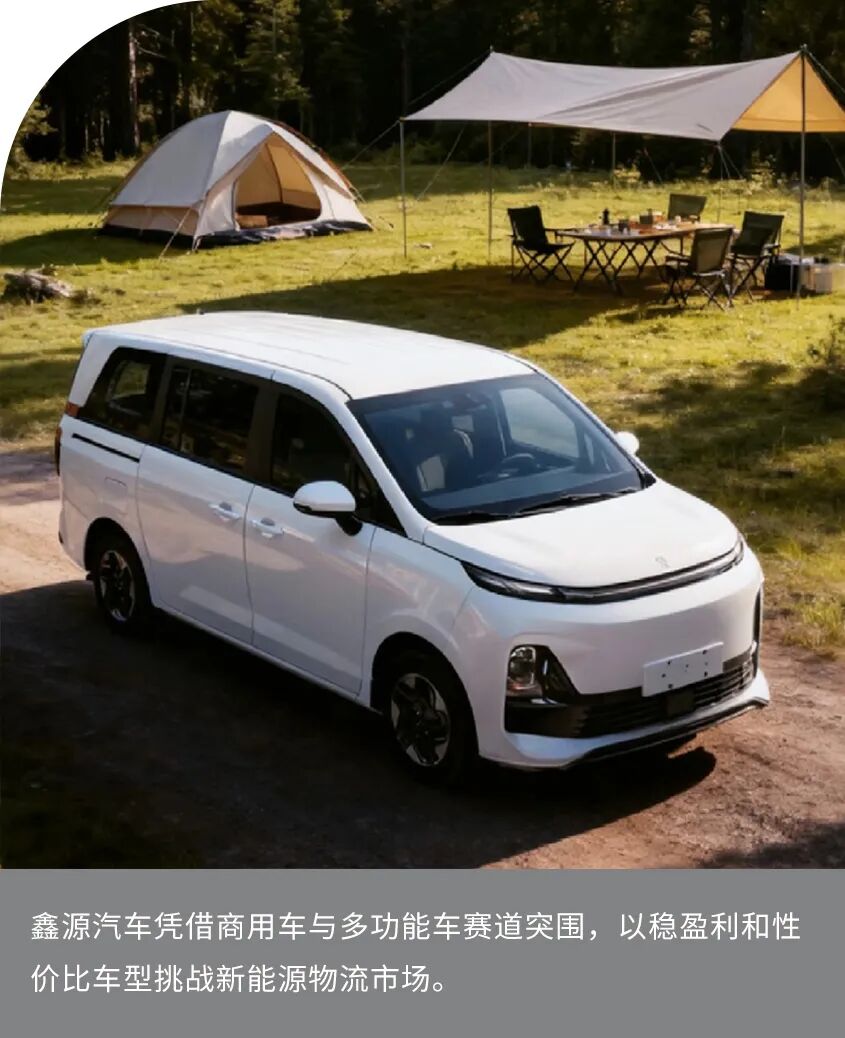
This strategic choice has provided Shineray with a stable growth trajectory. Amidst an industry-wide struggle to 'increase revenue without increasing profits', Shineray has maintained profitability for several consecutive years, becoming one of the few Chongqing-based automakers with 'positive cash flow, positive profits, and positive growth'.
Even in the most fiercely competitive years, its annual sales, combined with those of its SWM brand, have remained stable at around 100,000 units.
However, Shineray is not alone in the new energy logistics vehicle sector. Geely Remote has deployed 280 service stations nationwide, while Foton Auman Blue continues to leverage Daimler's technology.
More critically, these giants are rapidly closing the cost-control gap. Geely Remote's 2025-launched Xingzhi H series, with a range exceeding 350 kilometers, directly competes on pricing with Shineray's upcoming Upward V6.
Meanwhile, cost-effective models emphasizing the 'striver' concept have become a collective choice among leading commercial vehicle enterprises. Shineray's Upward V6, positioned in the sub-100,000 RMB new energy multi-purpose vehicle market, lacks novelty in its market positioning.
When leading players align their pricing, Shineray's current 'cost advantage' may quickly evaporate. Establishing differentiated advantages amidst homogenization has become an urgent challenge for Shineray.

Living in Jinbei's Shadow
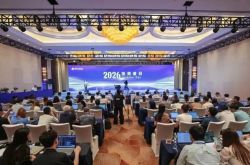
Notably, when Shineray Automobile officially unveiled its new 'Elephant' logo at the brand renewal conference in January 2026, the outside world's first reaction was one of surprise.
After all, the company's deep integration with Jinbei had lasted for eighteen years, with 'Jinbei' almost becoming a default prefix for its products.
The partnership began in 2008 when Shineray and Brilliance Jinbei formed a strategic alliance, jointly establishing Brilliance Shineray Chongqing Automobile Co., Ltd.
The results were significant: relying on Jinbei's brand influence and channel network, Shineray quickly gained a foothold in the commercial vehicle market, with cumulative production and sales exceeding 1.8 million units, securing a top-three position in the domestic urban distribution logistics vehicle market.
Models like the Jinbei Xiaohaishi and Jinbei Haixing became familiar sights on the streets, with 'Jinbei' deeply associated with 'reliability and durability' in consumers' minds.
However, over time, Shineray's own brand value remained overshadowed by Jinbei's halo.
For many consumers, they were buying 'Jinbei' rather than 'Shineray'; within the dealer network, Jinbei's channel resources dominated; in supply chain collaborations, Jinbei's brand endorsement often carried more weight than Shineray's manufacturing capabilities.
This 'borrowed boat to sail' model granted Shineray rapid scale growth but left it in an awkward position as an 'invisible player'—building others' brand equity while struggling to accumulate its own.
Shineray was not content with this situation. In 2014, it fully acquired the Italian SWM brand, incorporating this European brand with deep off-road heritage into its portfolio, marking its first step in exploring independent branding.
In 2016, the SWM Automobile brand was officially launched, and Shineray began attempting to establish its own recognition in the passenger vehicle segment. In 2018, Shineray established a full-process production base in Vietnam, forging independent 'shipbuilding and sailing' capabilities.
In December 2025, the first complete vehicle rolled off the assembly line at Shineray's Turkey plant, leveraging the country's customs union with the EU to target European and Middle Eastern markets, with products entering over 50 countries. As overseas sales' proportion continued to rise, Shineray's reliance on a single domestic partner gradually decreased.
After years of dormancy, Shineray Automobile seized a new development opportunity. In 2025, Chongqing claimed the title of 'China's No. 1 Auto City' with over 3.3 million vehicles produced and a new energy vehicle penetration rate exceeding 35%.
Within Chongqing's blueprint to build a world-class intelligent connected new energy vehicle industrial cluster, passenger vehicle enterprises like Changan and Seres shouldered the mission of 'breaking through upward,' while Shineray's role became increasingly clear—deep cultivation in the commercial and multi-purpose vehicle niches, serving as an indispensable 'foundation' in the industrial ecosystem.
This positioning demands that Shineray possess independent brand recognition and autonomous system capabilities rather than remaining dependent on others' brands.
Meanwhile, the competitive landscape in the commercial vehicle market is reshaping. Giants like Geely Remote and Foton Auman Blue are accelerating their market penetration, transforming the new energy logistics vehicle sector from a blue ocean to a red ocean.
Under the pressure of leading players, survival spaces relying solely on 'cost-effectiveness' and 'OEM models' are increasingly narrow.
Continuing to rely on Jinbei would mean always lagging in brand recognition, being constrained by the partner's strategic rhythm in technological iteration, and struggling to form core assets in channel construction. Rather than passively awaiting marginalization, proactive change and an independent stance are preferable to navigate the transformation.
A deeper reason lies in the natural turning point after eighteen years of cooperation. For Shineray, rather than cautiously seeking balance within the partnership framework, complete independence and advancing at its own pace and direction are more desirable.
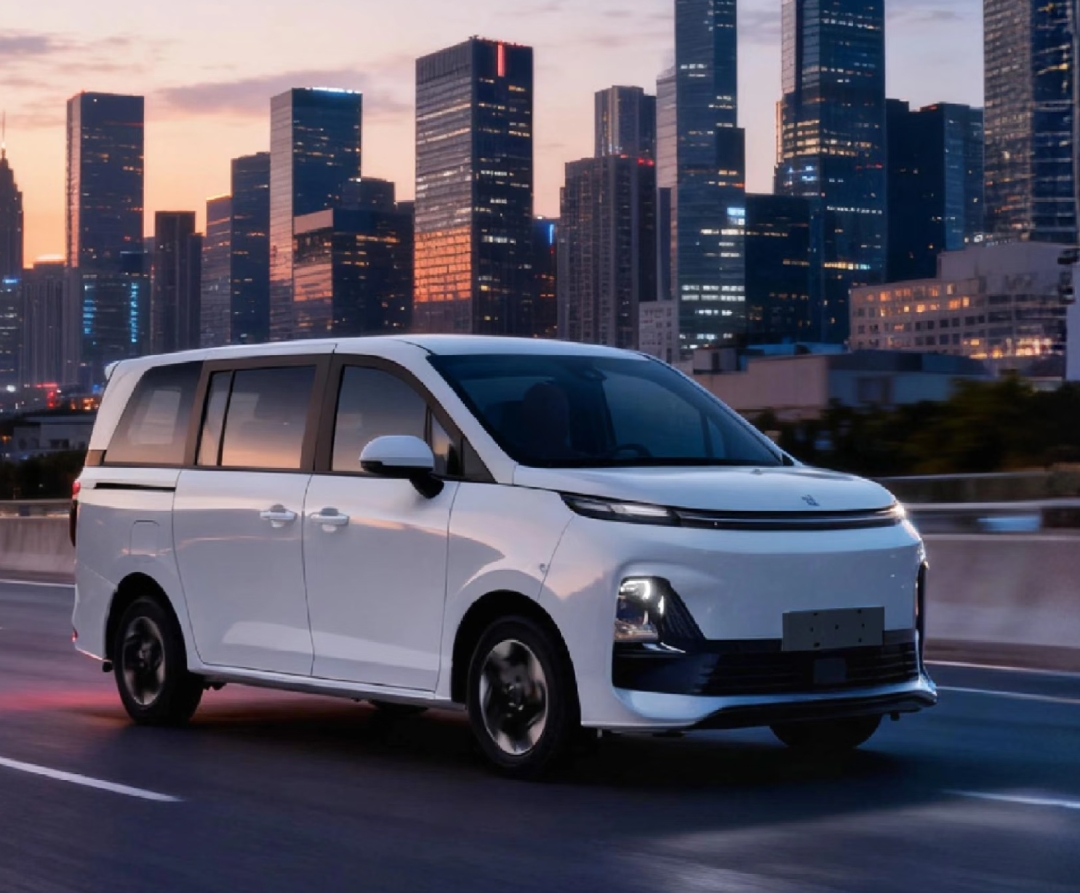
Now, the launch of the new 'Elephant' logo represents the culmination of this series of accumulations and choices.

The Challenges of 'Flying Solo'
However, 'flying solo' is just the beginning, not the endpoint. After independence, Shineray must confront multiple challenges: reshaping 'Shineray's' brand recognition in consumers' minds, transitioning from 'procurement integration' to 'independent mastery' in core technological fields, and rebuilding its own sales and service system after detaching from Jinbei's channels.
While 'Jinbei' has defined Shineray's success, it has also firmly labeled it. In many consumers' eyes, they are buying 'Jinbei Xiaohaishi' or 'Jinbei Haixing,' with Shineray's own brand value long overshadowed by Jinbei's halo. Parting ways with Jinbei means Shineray loses a mature partner brand endorsement, potentially facing short-term market recognition confusion.
Furthermore, despite unveiling the 'Xingyuan Technology Platform' with its '1+4+N all-domain integrated ecosystem architecture' at the brand renewal conference, claiming compatibility with various powertrains like fuel, pure electric, extended-range, and CNG on a single platform, Shineray's core technological R&D capabilities remain under scrutiny.
The upcoming Upward V6 integrates top-tier supply chain resources like CATL batteries, Fuyao Glass, and Inovance Automotive. While this ensures quality, it also poses risks—'insufficient self-research capabilities in new energy intelligent technologies and supply chain risks from relying on external procurement for core components' are explicitly listed as core challenges post-independence.
Dependence on external procurement for batteries, electric controls, and other core components means cost control and supply chain stability are subject to external constraints, a risk further amplified amidst intensifying industry price wars.
Moreover, eighteen years of deep integration with Jinbei mean Shineray's sales channels and service networks have long relied on Jinbei's system.
After detaching from Jinbei's channels, the cost pressures of retaining B-end clients and rebuilding C-end channels become critical hurdles for independent survival. According to official plans, Shineray Automobile's 2030 goals include expanding domestic outlets to 2,000 and achieving 300,000 units in sales; overseas, adding 1,000 new outlets and surpassing 200,000 units in sales.
While these goals appear ambitious, their execution demands time and resource investments in areas like sales processes, service standards, and showroom experiences, which differ from passenger vehicle channels.
More dauntingly, channel reconstruction is not just about quantity expansion but service capability restructuring. Commercial vehicle users are unique in their heavy reliance on after-sales services—their vehicles are production tools, and every day of downtime means tangible financial losses.
Whether Shineray can swiftly establish an equally or even superior service network after detaching from Jinbei's service system will directly impact users' repurchase intentions and word-of-mouth spread.
Where will this long-brewing independence ultimately lead?
END
-
![]()
The Unstoppable Rise of 'Optical Progress and Copper Decline': Sunny Optical’s Strategic Vision for the Next Decade
-
![]()
AI + Going Global in the Second Half: No Intermission for Robot Vacuum Cleaners
-
![]()
The Suffering Endured in E-commerce, Walmart Doesn't Want to Repeat in AI
-
![]()
What Does the Doubling of New Energy Vehicle Exports Mean?
-
![]()
Ghosn: 'Only I Can Save Nissan'
-
![]()
Volkswagen Lays Off 100,000 Employees, The Elephant Sits Down
-
![]()
Expanding Production Capacity! Yutong Optics Acquires Approximately 1.5 Hectares of Industrial Land in Chang'an, Dongguan
-
![]()
Why Is Nokia Making a Comeback in the AI Era?