Crayfish: A Tiny Symbol of Societal Trends
 03/31 2026
 657
657

On January 30, 2026, an AI agent tool, which had undergone several name changes, was officially dubbed OpenClaw. Nicknamed 'Crayfish,' the software quickly gained traction in the tech industry and soon permeated broader social circles. For a while, everyone was talking about 'crayfish,' and it seemed like everyone was diving into the virtual crayfish-raising craze. However, the initial fervor soon faded, with its popularity declining noticeably.

Amidst this rise and fall, many individuals found themselves swept up in the crayfish phenomenon. We've already delved into the technological and industrial implications of crayfish extensively. Today, let's shift our focus and discuss the people we've encountered in recent weeks who are intertwined with the crayfish narrative.
Crayfish acts as a mirror, reflecting how ordinary individuals navigate the sudden technological waves in the AI era.

AI developers are the group we've reported on the most, and the crayfish craze seems tailor-made for their domain.
This is because crayfish struck a delicate balance. Previously, widely popular AI technologies, such as large language models, had no real barriers to entry—anyone could discuss them. Instead, self-proclaimed 'experts' and 'lecturers' often dominated the conversation with more sensational and abstract claims, while developers with actual AI implementation experience struggled to gain a foothold. Conversely, AI technologies with high entry barriers attracted little interest, even if developers could elucidate them.
The crayfish phenomenon offered both accessibility and buzz, presenting an unprecedented opportunity for AI developers to gain visibility.
When crayfish first emerged, many AI developers I knew immediately shared their experiences and analyzed its future potential. During this period, their enthusiasm was palpable. One developer we'd interviewed multiple times remarked that before crayfish, he believed AI developers were relegated to supplementary industry tasks—essentially, 'small potatoes.' But crayfish showed him that AI developers could tackle significant projects. He even planned to relocate his company from Beijing’s outskirts to the city center to seize greater opportunities.
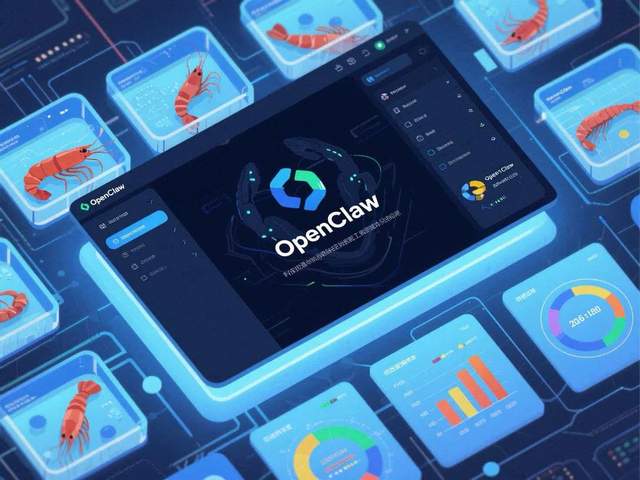
AI developers soon realized their enthusiasm wasn't one-sided. They discovered that crayfish tutorials and case studies they posted on Douyin (TikTok) and Bilibili went viral. Any content mentioning or utilizing crayfish quickly gained traction. The thrill of this online engagement led developers and tech professionals to delve deeper into crayfish, subtly amplifying its appeal. This created anxiety among non-technical audiences, who feared missing out on a major opportunity. This cycle further fueled crayfish’s explosive popularity. Thus, AI developers and online traffic pools formed a unique, short-term partnership.
Before developers could fully capitalize on this surge in traffic, they faced their next challenge: lecturing. After crayfish went viral, developers who gained traction on social media and short-video platforms were invited to speak at various events. To date, we've witnessed large enterprises invite developers for internal training and on-site crayfish setups; developers lecturing abroad, achieving the first wave of 'crayfish globalization'; developers pitching crayfish to investment firms and securing funding the same day; and developers bringing crayfish expertise into government and public institutions.
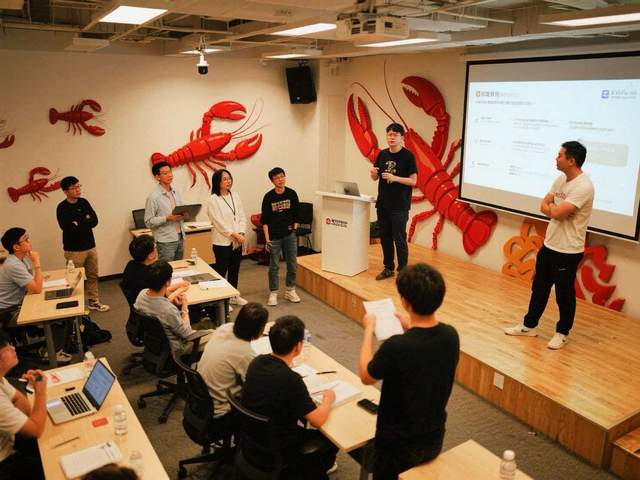
The most exaggerated tale came from an AI developer who told us that a local street office in Jiangsu invited him to lecture after seeing his crayfish-related Douyin posts. The AI wave had reached the street-level administration—a sight few could have imagined.
We've rarely seen AI developers this universally busy. However, two instances stood out when developers shared their concerns with us.
One developer noted that AI development traditionally required technical expertise, accumulation, and refinement. But with crayfish, he feared his previous efforts might become irrelevant. If anyone could easily engage in AI development, the industry’s competitive edge would diminish.
Another developer observed that friends who once frequently shared experiences in AI communities now focused on crayfish discussions on social media. Many well-progressed projects were now overlooked. After this wave of traffic passes, he wondered, what will truly remain for the AI developer community?

While AI developers were busy lecturing, who was listening?
A friend shared his story. He works at a government and public institution unrelated to technology. One day, his department suddenly required everyone to stay for mandatory training on 'crayfish.' At the time, crayfish hadn't yet reached its peak hype, and some colleagues jokingly assumed they'd receive seafood. The institution invited an expert from ByteDance to discuss crayfish and AI agent applications. However, my friend recalled that he still didn't understand what crayfish was when the expert began aggressively promoting ByteDance’s own product, 'Kouzi.' The lecture’s second half focused primarily on Kouzi.

With an intimidating yet unclear topic, a 'guest speaker' promoting personal agendas, and a disinterested audience, the session left everyone bewildered. When my friend glanced around, he noticed older leaders in the back row had already fallen asleep.
The aftermath: the next day, the department relayed a superior order demanding that everyone uninstall crayfish immediately if already installed.
After that, no one mentioned crayfish again. However, this incident sheds light on which users might pay to uninstall crayfish.

A reader recently messaged us about his roommate’s 'unorthodox' use of crayfish, which he deemed a 'masterclass in exploitation.'
We'll refer to the roommate as Old K, as per the reader’s message. As graduation season approached, Old K, like other seniors, began job hunting.
Unlike others, Old K believed hesitation leads to failure. He promptly installed OpenClaw to boost his efficiency. His strategy: use crayfish to generate mass cover letters and apply to numerous jobs across industries with varying requirements.

He set instructions to scan job boards for roles matching his salary expectations, tailor resumes for each position, simulate human typing speed, and auto-submit applications. Within a week, Old K claimed crayfish had submitted nearly 2,000 resumes, securing dozens of interview offers. He only briefly reviewed company profiles before phone or in-person interviews, using large language models to generate responses.
When a tech company’s HR manager asked Old K how he viewed AI’s industry impact, he replied:
'AI is just a tool—it can never replace human creativity.'

Xiao Li, a longtime friend, works in the marketing department of a major cloud computing company.
Recently, he complained about feeling overwhelmed post-holiday. Upon returning, his company first demanded he sell tokens for crayfish-related demand. Days later, the focus shifted to promoting one-click crayfish deployment, then ecosystem compatibility for their crayfish solution. Soon after, the directive changed again: stop promoting crayfish, emphasize its security risks, and pitch their proprietary 'XX Claw' instead.
Xiao Li recalled that in his company, discussions about crayfish-related topics had priority when booking meeting rooms. Yet, he doubted the stability of the schemes being marketed. What would come next? He didn't know, but it would arrive soon—he knew of at least five or six crayfish-related projects already greenlit internally. The issue was that Xiao Li’s role involved client-facing work. He noticed users wanted to adopt crayfish but felt overwhelmed by the rapid succession of new offerings. Their confusion translated into clear distrust and impatience toward his team.
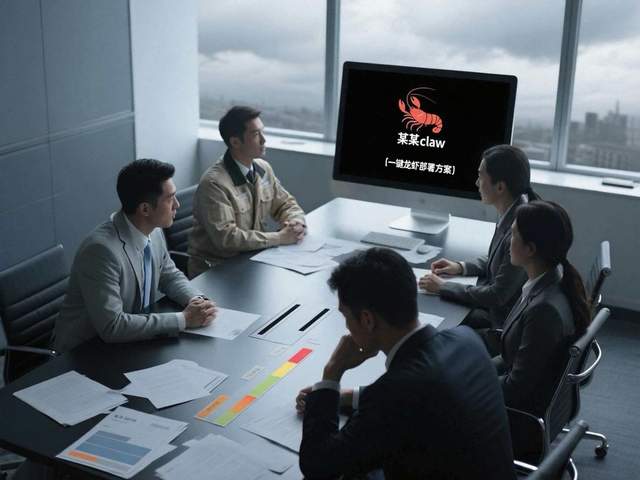
Meanwhile, Xiao Li’s department organized various crayfish-themed promotional events: free crayfish installations for users, seminars on crayfish security, client enterprise briefings, and media campaigns. What should these events serve for food? Naturally, crayfish. Reports suggested Beijing nearly ran out of crayfish due to tech company launch events.
Recalling one launch event, Xiao Li exclaimed, 'Those crayfish platters were enormous—oh my god.'

Why did one crayfish make us so busy?
After witnessing people’s passion, anxiety, tension, and confusion surrounding crayfish, I began pondering this question. I realized few cared about crayfish’s technical capabilities; instead, they sought to turn it into a personal advantage. Most importantly, they feared others gaining an edge while they fell behind.
Technical professionals worried about obsolescence, government and public institution staff felt pressured to align with policies, and young people feared losing their competitive edge. Even tech companies selling crayfish feared being outpaced by rivals, driving us to learn more—even if the tools were impractical, required paid installation, and later paid uninstallation.
This isn't humanity versus technology; it's humanity versus humanity.
We don't want to use crayfish—we fear others will use it better. We don't fear AI replacement; we fear replacement by those who master AI more effectively.
Thus, acceleration becomes our only option. If crayfish reveals any truth about humanity, it's that we're moving faster—and faster—every day.

-
![]()
The Allure of 'Acquisition Spree': Li Shufu's Left Turn, Xu Jiayin's Right
-
![]()
Strategic Transformation Yields Results: Phoenix Optics Reports 10.9% YoY Rise in Core Net Profit for H1 2026
-
![]()
Three Key Growth Trajectories Synergize! Crystal-Optech Reports 3.478 Billion Yuan in Revenue for H1 2026
-
![]()
Semi-Annual Report Sparks XPENG Motors Buzz
-
![]()
1.6 Billion Big Order Secured! SeeYA Technology's Revenue Soars by 287.87% in the First Half of the Year
-
![]()
Baidu's Profits Plunge by 68%: Unraveling the Mystery Behind the Numbers
-
![]()
Baidu’s Profits Tumble by 68%! Where Has All the Money Gone?
-
![]()
Hynix’s Taobao Store Shuts Down Abruptly: What Should Customers Do About Warranty Services for Memory Modules?