Japan is in a Hurry
 04/16 2026
 593
593
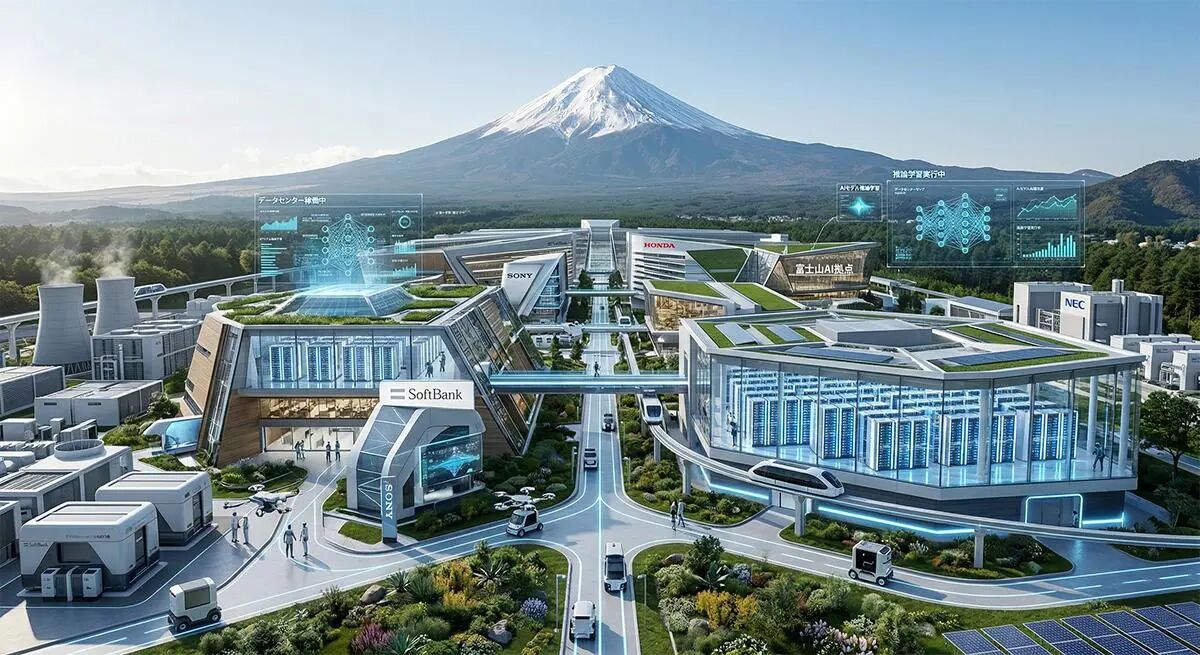
Entering the top tier of AI is almost impossible.
Text | Huashang Taolue Yang Bide
Japan is finally in a hurry.
On April 12, major news broke in Japan's tech circle: SoftBank, NEC, Honda, and Sony Group announced the joint establishment of the 'Japan AI Foundational Model Development Company.'
These four companies represent key players in Japan's communication, IT, automotive, and electronics sectors. Their collaboration on AI R&D cannot be simply viewed as a corporate partnership.
It signals a broader move: Japan is now using national-level coordination to catch up in the AI race.
[01 What Are They Trying to Do?]
The new company, headquartered in Tokyo's Shibuya district, plans to initially gather around 100 AI engineers. Its president will be a core figure from SoftBank who previously led domestic generative AI development.
In terms of ownership, SoftBank, NEC, Honda, and Sony each hold double-digit percentages of shares, sharing operational responsibilities. Additionally, Nippon Steel, Kobe Steel, as well as three major banks—Mitsubishi UFJ, Sumitomo Mitsui, and Mizuho—have also invested. AI company Preferred Networks will join in model development.
In terms of division of labor, SoftBank and NEC will focus on building the AI foundation, including developing foundational models and constructing large-scale computing infrastructure. Honda and Sony plan to integrate AI applications into fields with physical interaction capabilities, such as autonomous driving, robotics, gaming, audio-visual entertainment, and semiconductors.
Critically, this model will not only serve the internal needs of shareholder companies but is also planned to be open to all Japanese enterprises, gradually extending to more complex scenarios like robot control.
In other words, from the outset, the company aims to ensure that AI is not just developed but can directly integrate into industrial systems and operate in real-world scenarios.
In terms of goals, the first step is to complete a foundational model with one trillion parameters, and the second step is to advance toward Physical AI.
While generative AI primarily handles language and information, Physical AI addresses actions themselves. Bringing AI into the physical world to drive machines and participate in production represents an area where Japan still holds some advantages.
Japan's strategy is to avoid direct competition with China and the U.S. in the general-purpose large model arena and instead shift to a cross-disciplinary field that has not yet seen absolute monopoly, leveraging its manufacturing strengths to carve out a differentiated path.
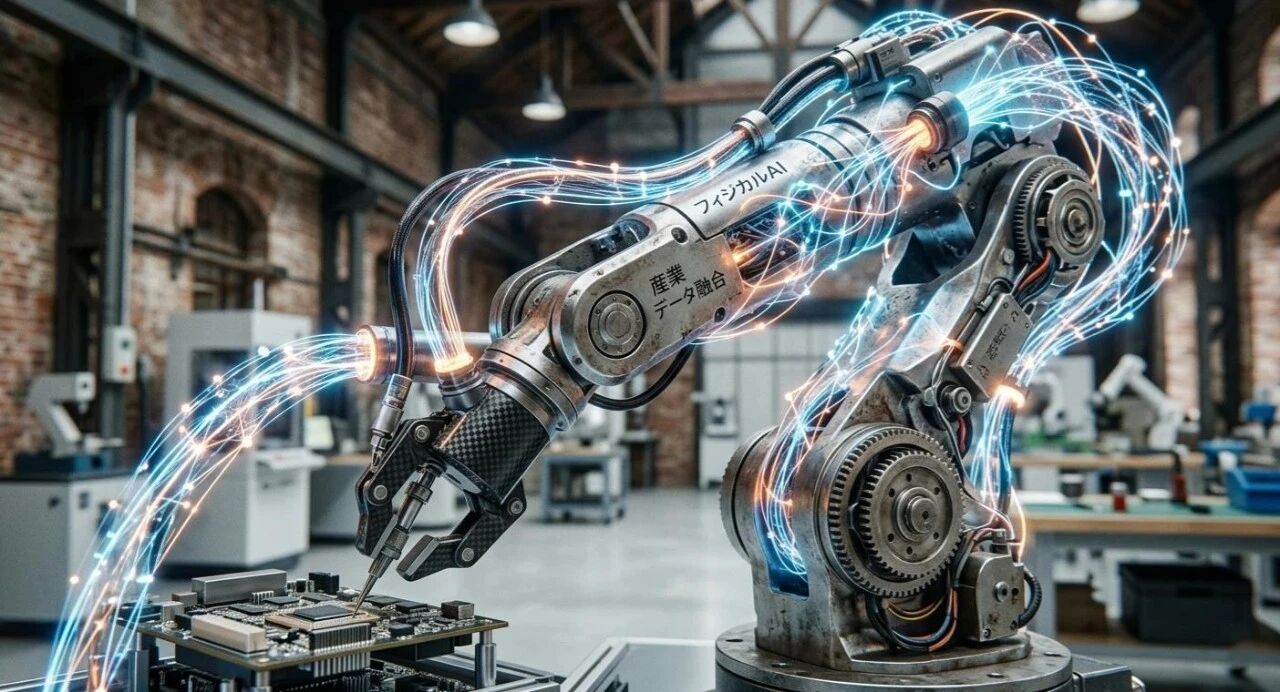
▲Source: Jing Shuo Japan
Of course, another very practical goal of this collaboration among the four giants is to secure government funding.
NEDO, under Japan's Ministry of Economy, Trade, and Industry, is publicly soliciting domestic AI development companies. The project plans to provide total funding of approximately 1 trillion yen (about RMB 42.796 billion) between 2026 and 2030. If selected, the company will gain a stable funding source for the next five years, providing institutional support for long-term, high-uncertainty technological investments.
This means the project has already taken on the characteristics of a national initiative.
But precisely because of this, one must ask: Why has Japan suddenly brought these leading companies to the same table?
The answer is simple: Japan's AI industry has been too slow.
[02 Where Is the Slowness?]
In recent years, Japan's AI sluggishness is not merely a technical lag but the result of a series of structural issues.
The first issue is a culture of wait and see (wait-and-see).
Since ChatGPT sparked the generative AI wave, Chinese and U.S. companies have rapidly seized positions, continuously increasing investments in technology development, scenario implementation, and capital. Meanwhile, Japan's mainstream approach has been to 'discuss first, evaluate next, and then continue observing.'
This rhythm has deep cultural roots. Japanese companies have long emphasized stable operations, preferring to validate mature paths rather than bet on uncertainties. While this was advantageous in the manufacturing era, in AI—a field requiring rapid iteration and tolerance for trial and error—caution has turned into costly hesitation.
ChatGPT was released in November 2022 and gained over 100 million users worldwide within two months. However, Japan did not establish its 'AI Strategy Council' until May 2023. By that time, China and the U.S. had completed multiple product iterations, with GPT-4 and Gemini launched, and models like ERNIE Bot and Tongyi Qianwen introduced. The window of opportunity quietly closed amid repeated evaluation meetings.
The second issue is internal fragmentation.
Japan is not without layout (strategic layout ). NEC launched the enterprise-oriented Japanese large language model Cotomi, NTT released Tsuzumi, focused on Japanese language processing, and Fujitsu advanced AI implementation in vertical fields like healthcare and manufacturing. SoftBank's core goal is to secure key resources in the AI era, including computing power, chips, large models, and energy.
Individually, each company has taken action and set directions. However, these efforts are dispersed within their respective systems, lacking a unified platform and collaborative mechanisms.
In contrast, the gap is clear. The U.S. features deep integration like Microsoft and OpenAI, combining capital, technology, and markets into a trinity. China has concentrated efforts from major companies and national resources, with unified direction and obvious synergy.
Japan, however, has long operated in silos, lacking top-level integration and systemic capabilities.
The third issue is the misalignment of industrial advantages.
Japan remains a global manufacturing powerhouse, with deep accumulations in precision equipment, industrial robots, sensors, and other fields. Companies like Fanuc's industrial robots, Keyence's sensors, and Shin-Etsu Chemical's semiconductor materials dominate global markets.
However, the competitive logic of AI differs from manufacturing. The former relies on data scale, algorithmic evolution, and computing power investment, emphasizing open ecosystems and rapid trial-and-error. The latter emphasizes process control, long-term accumulation, and stable iteration.
Manufacturing strength does not automatically translate to AI strength; past successes can even create path dependencies. As global competition shifts toward a closed loop of 'data-model-application,' parts of Japan remain locked in the old trajectory of hardware advantages.
The fourth issue is talent scarcity and a weak market foundation.
According to Japan's Ministry of Economy, Trade, and Industry, the country is expected to face a shortage of up to 790,000 software engineers by 2030, with over 124,000 gaps in the AI field. Meanwhile, top AI talent continues to flow to the U.S. and China.
The demand side is equally unoptimistic. In FY2024, the usage rate of generative AI among the Japanese public was only 26.7%, far lower than 81% in China and 68.8% in the U.S. Only 49.7% of Japanese companies had AI application policies, compared to 84.8% in the U.S. and 76.4% in Germany.
More critically, these two factors form a self-reinforcing cycle: low usage slows data accumulation; insufficient data hinders model optimization; poor model performance further suppresses usage willingness. Over time, Japan remains stuck in the 'data-model-application' flywheel, with the gap with China and the U.S. widening.
These four issues converge on a single problem: Japan does not lack technical capabilities or leading companies but truly lacks integration capabilities.
This is precisely why Japanese companies are now collaborating—when going it alone can no longer keep pace.
[03 Can Japan Catch Up with China and the U.S.?]
Japan is accelerating.
On one hand, there is top-level design advancement. Japan has elevated AI development to a 'national strategic project' through legislation, aiming to capture 30% of the global AI robot market by 2040 while raising public AI usage from around 26.7% in 2024 to 80%.
On the other hand, funding is increasing. In FY2025, Japan's AI-related budget reached 196.9 billion yen, a year-on-year increase of about 67%, setting a new record. This sends a clear signal: Japan is no longer waiting but is investing real money.
More critically, regulatory barriers are being lowered. In April this year, Japan revised its Personal Information Protection Law, allowing companies to use certain personal data without 'prior consent' in specific scenarios, directly reducing data usage thresholds. Nao Matsumoto, Japan's Minister for Digital Transformation, bluntly stated the goal of making Japan 'one of the easiest countries in the world to develop AI applications.'
From these actions, Japan's anxiety is evident, and its determination is real. But anxiety and determination do not equal catching up.
First is the ecosystem gap. Japan entered late, and shortfalls in data accumulation, capital scale, and top talent cannot be resolved with just a year or two of budget increases. The open-source ecosystem's vibrancy lags far behind China and the U.S., and this gap is systemic, not something a single policy can instantly bridge.
Second, the competitive landscape has already formed. China and the U.S. now dominate the AI supply chain, with strong players positioned at nearly every critical node, from chips to models, data to applications. Japan faces dual pressures in technology and markets, with very limited room to break through.
Third, deeper cultural and structural constraints exist. Japan's risk-averse culture, corporate decision-making mechanisms, and severe aging population all affect AI implementation speed and innovation vitality. AI inherently requires rapid trial-and-error, but Japanese society prefers to 'verify before acting.' When pace becomes a core variable, these differences are magnified.
Overall, Japan's chances of catching up with China and the U.S. to enter the top tier of AI are almost nonexistent.
However, this does not mean Japan will be out of the game. Its strengths lie not in 'general-purpose AI' but in 'AI + industry.' Decades of manufacturing have accumulated industrial data, reliable hardware capabilities, and long-term expertise in robotics and precision manufacturing—areas where few countries can compete globally. As AI moves deeper into industrial sectors, these capabilities will become increasingly valuable.
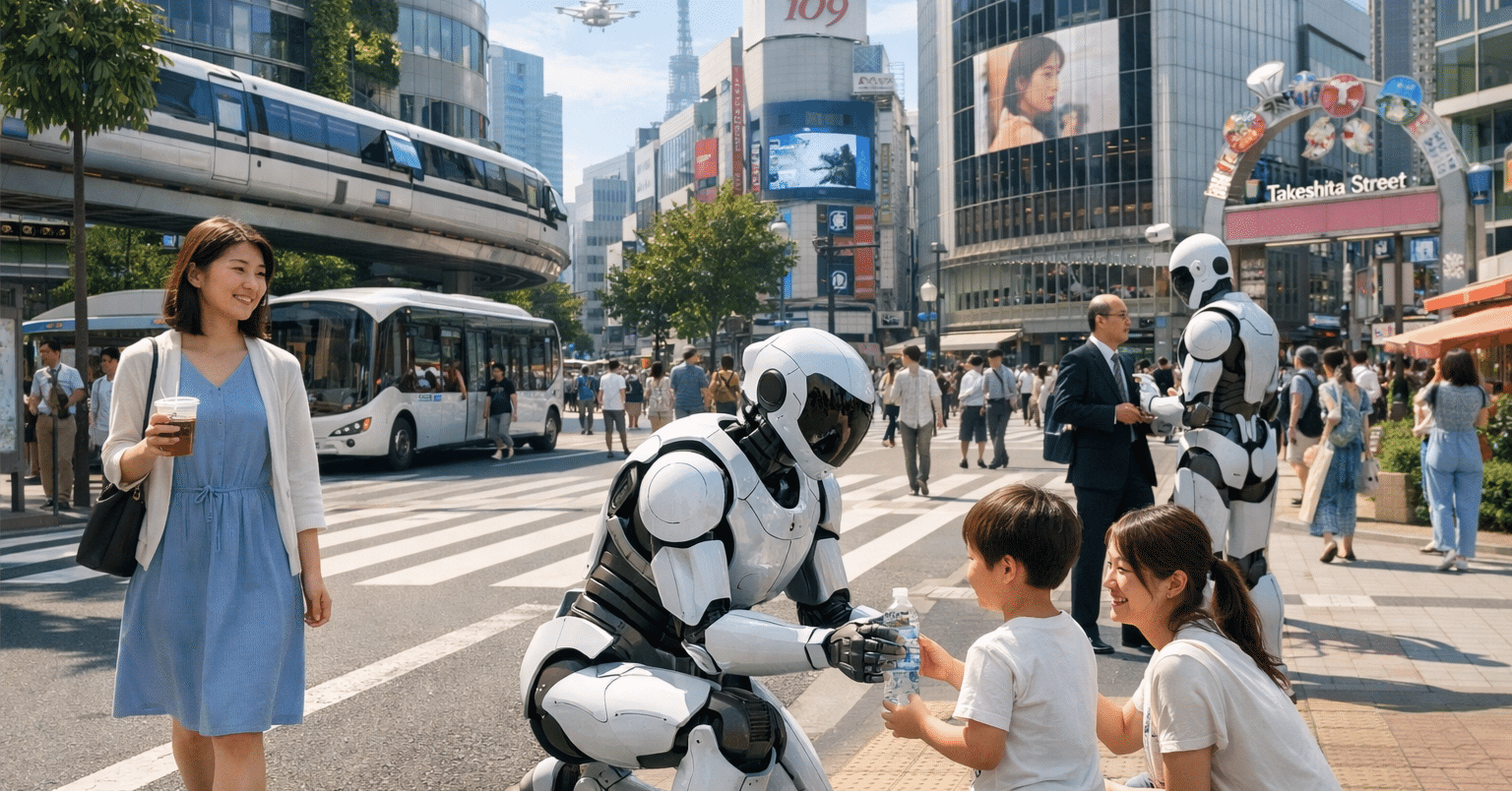
▲The vision of an AI-driven society pursued by Japan's AI foundational model development company. Source: Jing Shuo Japan
Japan may not become a rule-setter in AI but has the potential to become the strongest executor of AI industrialization.
Thus, Japan's AI future may not lie in comprehensive catch-up but in precise positioning. Being at the head of the second tier could still be a good place.
[References]
[1] 'Japan is Finally Getting Serious' by Jing Shuo Japan
[2] 'SoftBank, NEC, Honda, Sony Establish New Company for Joint Development of Japan's AI Foundational Model' by IT Home
——END——
Welcome to follow [Huashang Taolue] to understand influential figures and read strategic legends.
All rights reserved. Unauthorized reproduction is prohibited.
Some images sourced from the internet.
For infringement, please contact for removal.
-
![]()
Wang Huiwen, Former Meituan Executive, Achieves 20-Fold ROI, Supports 24 AI Startups
-
![]()
Another AI Computing Power Unicorn Launches IPO! Founded by a Changjiang Scholar
-
![]()
OFILM Holdings Secures Zhongke Daojing, Marking a Significant Leap in the Optical Communication Industry!
-
What Will Be the Next Key Battleground for Large Models After AI Coding?
-
![]()
Leapmotor's Sales Soar, Yet Hidden Concerns Loom
-
![]()
China’s Action Camera Market Soars: 3.12 Million Units Sold in Six Months, DJI Secures 74% Dominance
-
![]()
Zhang Yiming: Strategic Retreat as a Path Forward
-
![]()
Exploring Charging for Some Features of QianWen App: Can It Follow the Path of Doubao?