Nissan CEO: Not Talking About Turning a Profit Yet, Just Sales Growth
 04/23 2026
 525
525
" Independence, Negotiations with Honda, and Consolidation in the Japanese Automotive Industry "
Author | Yang Yuke Editor | Li Guozheng Production | Bangning Studio (gbngzs)
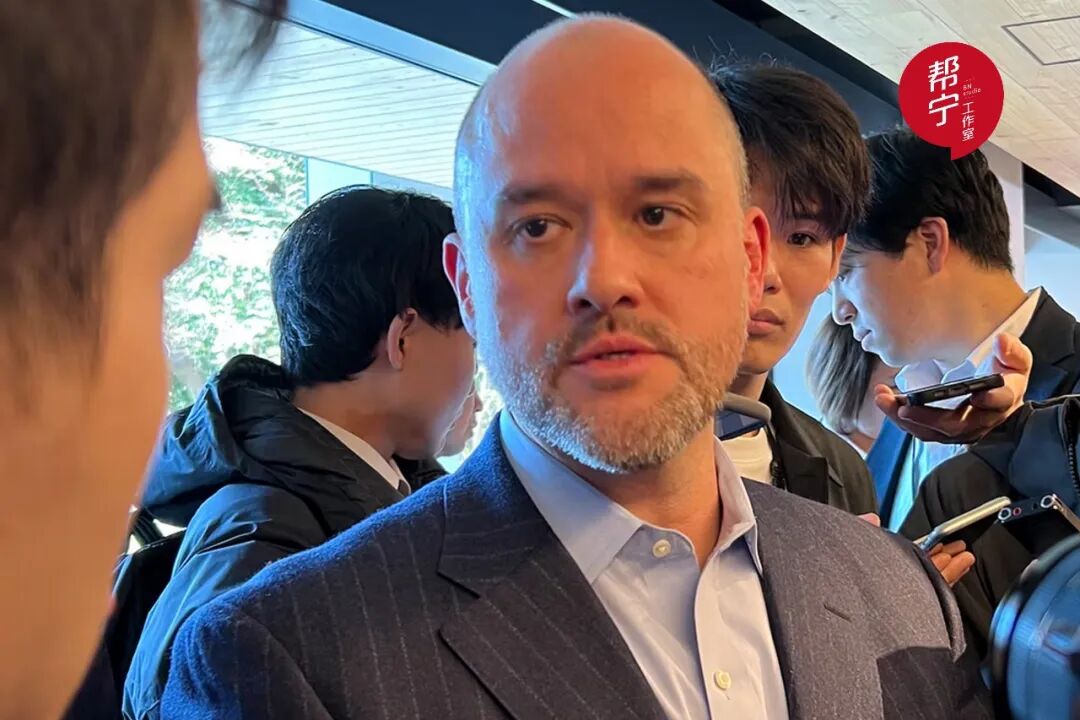
On April 14, 2026, Ivan Espinosa, CEO of Nissan Motor, unveiled a long-term vision aimed at revitalizing the struggling automaker through measures such as streamlining product lines, diversifying powertrains, and AI-defined vehicles.
Espinosa, who took office just a year ago, stated that his revival plan has put Nissan back on track for recovery after a process of closing factories, laying off employees, and cutting costs.
However, Nissan's sales data is not optimistic. In fiscal year 2025 (ending March 31, 2026), Nissan's global sales are expected to decline by 4.4% to 3.2 million units. Over the past seven fiscal years, Nissan's global deliveries have declined in six of them.
Espinosa, aged 47 and Nissan's youngest CEO to date, told Automotive News that global sales will grow again in fiscal year 2026, with a target of increasing global sales by nearly 20% over the next five years to around 3.8 million units.
"This is not yet a story about turning a profit; that will come later. Right now, it's a story about sales growth."
On the 14th, Espinosa was interviewed by Hans Greimel, Asia editor of Automotive News. He discussed Nissan's sales targets, its cooperative relationships with Mitsubishi and Honda, and revealed preparations for the consolidation of Japan's seven major automakers, which he believes is inevitable.
The following is an excerpt from the interview, lightly edited by Bangning Studio.
Why is Nissan streamlining its product lineup by increasing powertrain options?
The key is flexibility and adaptability. We want to provide choices for our customers.
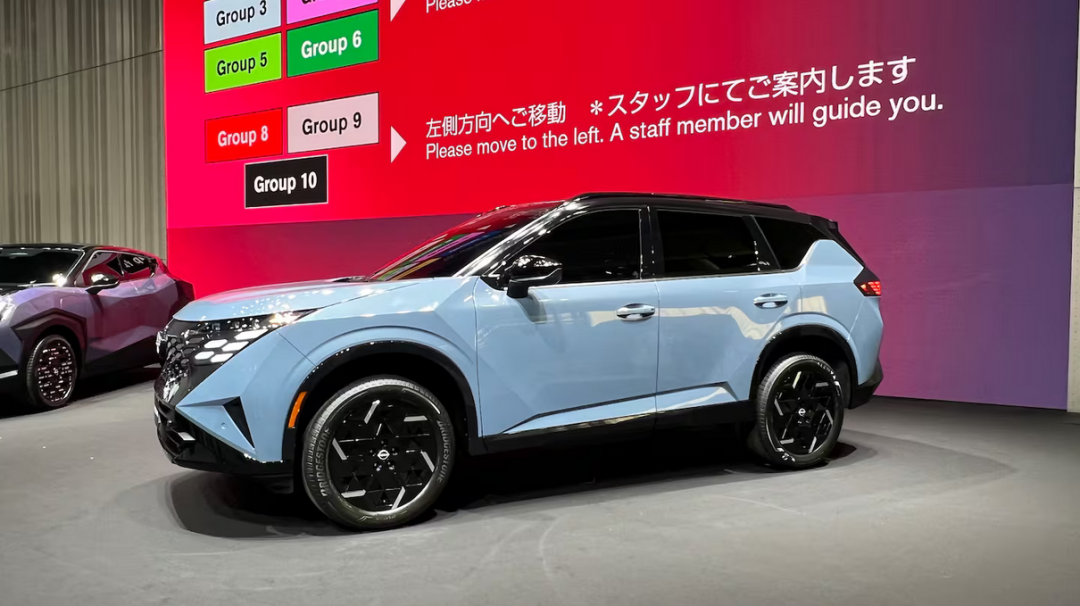
We will focus on keeping internal combustion engines competitive because there are still regions in the world that need them. In the future, we will not only have e-Power hybrids but also V-6 hybrids. This will be a highly competitive parallel hybrid because it has very high demands for towing and loading, which traditional hybrids are better suited for. We will also offer electric vehicles.
What are Nissan's three planned product families?
We haven't announced the third product series yet, but what we've basically decided on are compact and body-on-frame vehicles. As for the pickup truck series, it's not yet finalized; we're working on it at this stage. Our goal is to launch some products before 2030. They will be V-6 and V-6 hybrids.
How many models will be part of the body-on-frame family?
When you form a product family, you can expect no fewer than three, four, or five models. The purpose of forming a family is to have scale and commonality. So each family will have at least two vehicles. We will definitely do the Frontier and the Xterra.
Infiniti will have two body-on-frame models, one of which will use a V-6 hybrid, correct?
You've already linked the family models together. You've named four already.
Will Nissan sell body-on-frame models only in the U.S. or globally?
Primarily in the U.S., but we will also export to some other markets.
How is Nissan's cooperation with Honda and Mitsubishi in the U.S. progressing?
With Mitsubishi, we recently launched the Rogue plug-in hybrid as a bridge, and we will soon introduce e-Power models later on. We will continue to look for areas where we can collaborate. We are actively communicating with them to understand their interests in cooperative areas and what we can gain from them (Mitsubishi). It may not be in North America but in other parts of the world.
With Honda, we will continue to discuss our direction in North America, particularly in the D-segment market for larger vehicles; not the C-segment market but above it.
Why have specific plans with Honda taken so long?
We will announce when we are ready and when the conversations are concluded. At this stage, Honda also has other matters to attend to, which may not come as a surprise.
But we continue to have very active and constructive talks with Honda. Indeed, we all face many challenges, and the automotive industry is always as busy as ever.
How much consolidation do you anticipate among Japan's seven major automakers?
I believe there will be a significant transformation, likely starting from the supplier side.
We have a lot of work to do with our suppliers to improve the competitiveness and sustainability of the supply chain. I think this is one of the things that will happen soon.
I believe we will see more cooperation among Japanese original equipment manufacturers. We have already sat down to discuss what we can do together because we do see that other industries in other countries or regions of the world are more planned than us.
Are you referring to China?
Even including Korea and some other places. The Korean automotive industry is vertically integrated because Hyundai Group is so large. In China, they share many parts and suppliers. In Japan, I think we can tap into potential and start sharing some key commodities, at least having common planning, such as steel requirements.
There is a lot to be done. Starting with simplifying material standards and specifications rather than having separate standards for each. (The Japan Automobile Manufacturers Association) will develop standards that meet the requirements of all parties involved. Then we just need to certify suppliers and freely use this rule. This will become more efficient for suppliers.
We are reshaping the way we look at things and challenging ourselves every day. We are examining new processes, materials, and work methods discovered by Chinese and other suppliers.
Will the Japanese automotive industry consolidate into fewer automakers?
Indeed, Japan is the only country with multiple original equipment manufacturers commensurate with its market size. This is an export-based industry. It will depend on the competitiveness of the Japanese automotive industry.
That's why the conversations we are having at the Japan Automobile Manufacturers Association are relevant to all of us and why we all take them so seriously. Because if we can make this industry more competitive, all our members can have greater sustainability.
To what extent are you committed to protecting Nissan's independence as a standalone company?
As long as it brings value to shareholders, keeps the Nissan brand alive, and provides sustainable development for Nissan's employees, I am open to all possibilities. As long as these conditions are met, I am willing to collaborate with others, whether it involves capital cooperation or not.
I am open to this because the environment we operate in is very harsh and difficult. It's not the same as five years ago. The race track is changing completely.
Is Nissan currently in negotiations for capital collaboration?
Our current discussions haven't progressed much yet.
What was the toughest decision you made in your first year as CEO?
Adjustments in the manufacturing sector, because you touch communities, you touch our employees, you touch families. It's very difficult. We did this with the utmost sense of responsibility and a people-centric approach.
We were able to control the timing, not just for financial reasons but so that we could continue production and deliver products to customers. We gave employees time to transition and allowed them to find a good financial balance. These decisions were by far the most difficult.
When will Nissan's sales start growing again?
In the U.S., we have a clear plan, and it's working. Overall, our sales are flat. When you look specifically, the composition of sales is much better than what we've seen before.
We want more retail buyers because they are healthier, have higher profit margins, and are customers who stick with the brand. Over the past few years, 30% of our sales came through leasing. That's not the current strategy.
Will global sales start to rebound in fiscal year 2026?
We expect total sales to start growing at some point.
In 2026, we should start to see a slight increase in total sales not just in North America but globally. That's what we're working towards. I don't have specific numbers for you today, but we will mention them when we announce our business plan in 2026, possibly during our earnings report.
(Some content in this article is based on reports from Automotive News, and some images are from the internet.)
-
![]()
Jitian Xingzhou: A Pioneer in Optical Payloads Secures Hundreds of Millions in Series B Funding!
-
![]()
Orders Secured Through to the Second Half of the Year! The Rationale Behind the 'Surge' in Demand for This Company’s Optical-Grade Base Films
-
![]()
Beyond Patents: The Retail Rivalry of Insta360 and DJI Unfolds
-
![]()
180 Billion Market Cap Vanished! How Did Seres Fall So Far?
-
![]()
Blockbuster! Domestic storage takes the global double crown for the first time, from an AI company
-
![]()
China Spearheads Formulation! World's Pioneering Global Technical Regulation for Automated Driving Systems Greenlit and Unveiled
-
![]()
Farewell to Pulsed Support Policies: Three Major Auto Policy Directions from Multiple Departments Take Effect on the Same Day
-
![]()
Embercore AI’s Accelerated Funding: The Robot Industry’s Shift Toward ‘Learning Systems’