Samsung's Strategic Pivot Amid Sony-TCL Alliance and Market Shifts: Prioritizing High-End for Profit, Mid-Range for Growth
 04/23 2026
 516
516
On March 31st, news surfaced about TCL and Sony forming a TV joint venture to bolster their global presence. Two weeks hence, Samsung Electronics' response transcended a mere formal statement.
On April 15th, Yong Seok-woo, President and Head of the Display Business at Samsung Electronics, remarked at a press conference, "Sony's annual TV shipments are estimated at 4 million units, roughly one-tenth of Samsung's. A merger alone won't suffice to alter the landscape."
Beneath this seemingly ordinary comment, Samsung is conveying two key messages to the external world:
Firstly, the potential alliance between Sony and TCL is unlikely to reshape the current competitive dynamics.
Secondly, Samsung is set to recalibrate its product portfolio this year, which has traditionally leaned towards the high-end, while also fortifying its non-premium offerings to spur overall sales and shipments.
What truly warrants attention is Samsung's structural adjustment, signaling a return to the path of "scale."
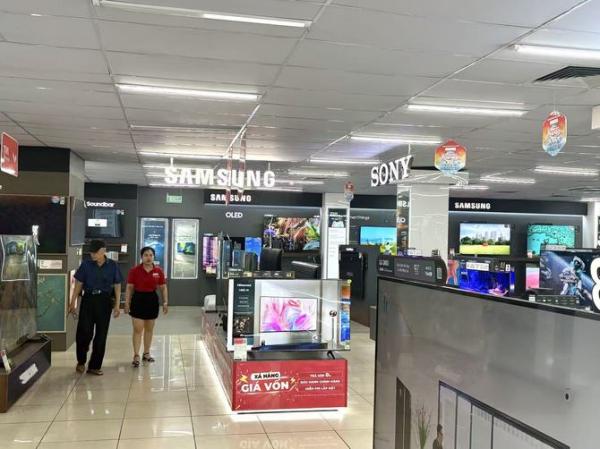
From "Comprehensive Coverage" to "Strategic Retrenchment": Samsung's Deliberate Withdrawal from Mid-to-Low-End Markets
According to available data, prior to 2020, Samsung TV maintained its global leadership for over a decade by offering a comprehensive range of products from 32-inch to 98-inch models. Scale and structure formed the bedrock of its competitive advantage.
However, as Chinese panel manufacturers (BOE, CSOT) gained control over LCD pricing, Samsung's cost advantage in the mid-to-low-end LCD market significantly diminished. The competitive moat built on scale began to crumble under supply chain pressures.
Around 2024, Samsung explicitly adopted a "Quality over Quantity" approach, voluntarily phasing out its marginally profitable sub-50-inch standard LCD product lines. It redirected its R&D and marketing budgets towards high-end models like Neo QLED (Mini LED) and OLED.
This strategic pivot was not unexpected at the time. Samsung Electronics' Visual Display (VD) division repeatedly emphasized in internal and investor communications that it would shift focus from mere "shipment leadership" to prioritizing "profitability." This strategic reorientation often entails a temporary contraction in market share.
Chinese Brands Seize the Opportunity: From Large Screens to Price Band Realignment
The market void left by Samsung's retrenchment was swiftly filled by Chinese brands.
Omdia data reveals that in 2025, Hisense captured a 57.1% share of the 100-inch and larger ultra-large TV market, securing the top spot globally for the third consecutive year. This niche market is now almost entirely dominated by Chinese brands.
Another set of data, more symbolic in nature, indicates that in December 2025, TCL's global TV shipment share reached 16%, surpassing Samsung (13%) for the first time.
Nevertheless, in terms of sales revenue, Samsung remains firmly at the forefront. Leveraging its OLED and high-end products, its global sales revenue share hovers around 30%, albeit with a changed structure.
The Chosun Ilbo analysis highlights that in 2025, the global market share of TVs priced below $500 surged from 31.5% to 39.7%. Samsung voluntarily relinquished this rapidly growing yet low-margin market, opting to remain entrenched in the high-end segment.
Both sales data and Samsung's strategic direction since 2024 suggest that it has willingly ceded some mid-to-low-end market share.
This has paved the way for Chinese brands: on one hand, building scale advantages through increased shipments; on the other, driving price bands upward with large screens and Mini LED technology while squeezing the profit margins of high-end LCDs.
The issue is not that Samsung "chooses not to" compete in the low end, but rather that, under pressure from China's supply chain, it must uphold its "quality over quantity" stance through brand premium and high-end technology.
Samsung TV Embarks on a Scale-Driven Approach via Mid-Range Products
Against this backdrop, Samsung executives have explicitly stated their intention to expand non-premium TV product lines to boost overall shipments while continuing to fortify their high-end product mix.
This represents a relatively clear strategic adjustment. Samsung may revert to a product layout that spans all size segments and price points—high, mid, and low—ensuring scale while enhancing profitability through high-end offerings.
In essence, Samsung TV's strategy is: high-end markets for profit, mid-to-low-end markets for share and cash flow.
This "dual-track" system was also a cornerstone of Samsung's long-term global leadership in the past.
The distinction lies in the fact that this adjustment is a passive rebalancing amid the continuously strengthening supply chain advantages of Chinese brands.
Samsung's Response to Industry Evolution
On the surface, Samsung's statement appears to be a response to the potential collaboration between Sony and TCL. However, within the broader industry context, it more closely resembles an indirect reaction to the overall ascent of China's TV industry.
The real pressure does not stem from a single joint venture but from structural shifts: the high-end market is being increasingly encroached upon by Hisense and TCL through Mini LED and large screens; the mid-range market is being rapidly eroded by supply chain and scale advantages.
If Samsung solely defends the high end, a decline in shipments is almost inevitable. If it re-engages in scale competition, it must once again confront cost pressures.
Therefore, Samsung's only viable option is a compromise: maintaining high-end premiums while stabilizing scale through non-premium products.
The Real Concern: Not Joint Ventures, but "Structural Collapse"
On the surface, Samsung seems unperturbed by the Sony-TCL collaboration, but the deeper pressure lies in the persistent encroachment on the high end and the difficulty in defending the mid-range.
If Samsung continues to cling to the high end, shipments may decline. Once the mid-range is rapidly eroded, the overall structure will come under severe pressure.
Therefore, Samsung must recalibrate its product mix, utilizing non-premium product lines to secure market space.
Overall, its path is shifting: maintaining brand premiums in the high end while re-engaging in the mid-to-low end for share. This dual-track strategy is also a pragmatic choice in the new round of global TV industry restructuring.
-
![]()
"3D Vision Pioneer" Grapples with Internal Strife: $120 Million in Share Reductions Offset by $147 Million Private Placement
-
![]()
The domestic auto sales have declined so much that dealers who can't hold on have started closing stores en masse
-
![]()
Five Brands Team Up with Huawei: Will Dongfeng Still Pursue Independent R&D?
-
![]()
The Large Six-Seater SUV Market: Overhyped and Overrated
-
![]()
The Smart Driving Blue Light: Urgent Need for Rectification
-
![]()
Would OpenAI Be Fascinated by Anthropic’s Concepts?
-
![]()
Tencent: Few Great Queries, Yet Possessing the Ultimate One
-
Does DingTalk Need Revolutionaries or Reformers?