Why AI Voice Recorders Are Disrupting the Tech Landscape
 04/20 2026
 613
613

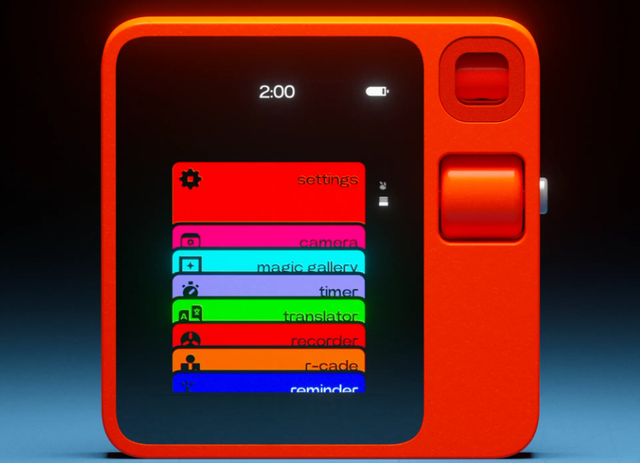
Over the past two years, the AI hardware market has witnessed a ruthless shakeout. AI Pin made a quiet exit, Rabbit R1's reputation tumbled, and the once-hyped notion of "AI-native hardware" has lost its sheen.
Yet, amid this somewhat gloomy backdrop, a seemingly traditional category has quietly surged in popularity: AI voice recorders.
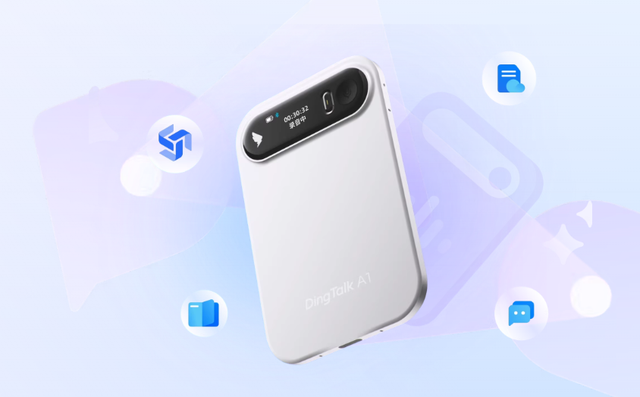
In 2025, ByteDance's Feishu, in partnership with Anker Innovations, launched the "Recording Bean," a smartphone-attachable device. DingTalk unveiled its DingTalk A1 recording card. Insta360 integrated cameras into recording gear, while Mobvoi slimmed down its device to a mere 3 millimeters.
Looking back, a startup named Plaud made waves with its card-style recorder, achieving a record annual revenue of $250 million in overseas markets.
On one hand, the AI hardware sector is cooling; on the other, voice recorders are heating up. This begs the question: Why, at a time when smartphone recording functions have been ubiquitous for years, are tech giants and startups alike flocking to this seemingly niche market? How have AI voice recorders become the hardware market's new darling?

To grasp this collective pivot, we must revisit a more fundamental query:
Has the proliferation of AI large models truly transformed how we record and interpret the world over the past two years?
The answer is far from optimistic. For the past two years, AI's capabilities have largely been confined to chat interfaces. Yet, the most valuable workplace communications often unfold in front of whiteboards in conference rooms or during on-site interviews—scenarios inherently incompatible with keyboards and input fields. No matter how intelligent large models become, they still require an "ear" to capture these fluid, unstructured soundscapes.
This is where AI recording hardware shines.
Let's delve into the technology. For large models to truly take off, they cannot remain text-bound. The gap between pure text models is narrowing, with reading comprehension and text generation performance becoming increasingly similar across providers. What truly sets experiences apart is multimodal understanding—comprehending meetings with mixed dialects, distinguishing speaker tones, and capturing emotional shifts from speech pauses. The audio streams generated by recording hardware provide the most natural and frequent showcase for these capabilities. Thus, AI voice recorders are not just hardware; they are also a demonstration window and training ground for large model prowess.

Now, let's examine market reactions. Over the past year, star products like AI Pin and Rabbit R1 have cooled, and AI hardware has been labeled as "acclaimed but not profitable." Yet, a lightweight, compact AI voice recorder like Plaud, which attaches directly to a smartphone's back, raised over $1 million in crowdfunding on Kickstarter. Its annual sales quickly surpassed $10 million, achieving a record of 10-fold revenue growth for two consecutive years. This indicates that users are not necessarily willing to pay for the "AI" label, but they are willing to pay for "saving me two hours of taking meeting minutes." AI voice recorders have not created a brand-new demand; instead, they have elevated the existing, even somewhat mundane, recording demand by two orders of magnitude in terms of experience. Market recognition, in turn, validates the feasibility of this path.
Of course, strategic considerations also play a role. Though a voice recorder may seem like a small device, it occupies a critical ecological entry point. Post-pandemic, remote and hybrid work have become the global norm. Online meetings often stretch for three to four hours, while offline discussions are frequent. Working professionals have emerged as the primary purchasing power for AI voice recorders.
Whoever dominates the voice recorder market has the opportunity to seamlessly integrate into a suite of workflows, including meeting minutes, task collaboration, and knowledge management, gradually forming ecological stickiness. Simultaneously, this device is capturing real, high-frequency workplace conversation data daily. The value of this data for model fine-tuning and scenario deep cultivation exceeds that of public datasets. For large model companies, losing the voice recorder entry point means not just losing a hardware category but also the hub for understanding real work scenarios.
The technical feasibility, positive market feedback, and strategic urgency have converged. The explosion of AI voice recorders is, therefore, not so surprising.

However, when we shift our focus from "why" to "how," an intriguing discovery emerges. Despite diving into the same sector, various players are betting on vastly different directions. They may seem to be swimming in the same waters, but they are actually heading toward different shores.
If we dissect the competitive capabilities in this sector, they can be roughly divided into three levels: hardware capabilities, including sound pickup, noise reduction, and battery life; AI capabilities, referring to the intelligence level of transcription, summarization, and speaker identification; and ecological capabilities, which involve the depth of integration with office software and collaboration platforms. Different players emphasize these dimensions differently.
The essence of ecological players is to install a hardware entry point for their collaboration systems.
DingTalk and Feishu are betting on the completeness of their ecosystems. In their office landscapes, IM, documents, schedules, and approvals have already been woven into a dense network, with the sole missing piece being an entry point to naturally import offline conversations into this network. AI recording hardware serves as this entry point. DingTalk's DingTalk A1 is deeply integrated with the Tongyi large model; Feishu, on the other hand, has chosen to collaborate with Anker Innovations to compensate for its own shortcomings. For them, the hardware itself can be marginally profitable in the early stages, but once users become accustomed to the seamless experience of "recording synchronizes automatically, and minutes become tasks," the migration cost for the entire ecosystem will rise. Every device sold strengthens the ecological stickiness by one notch.

The moat for technological players is to win the long-term trust of professionals through deep technological accumulation.
iFLYTEK has taken this path. By combining over two decades of technical experience with its self-developed iFLYTEK Spark large model, iFLYTEK provides AI functions such as full-text summarization, text refinement, and to-do extraction. Its offline AI voice recorder series is naturally suited for professional users with extremely high confidentiality requirements, such as lawyers and journalists. In many confidential scenarios, data cannot be uploaded to the cloud, and iFLYTEK is one of the few brands capable of fully localizing complex AI capabilities. Its high-end products are priced at over a thousand yuan, forming a staggered competition with brands targeting the mass market.
The strategy for product-focused players is to redefine hardware design and functional details in corners overlooked by giants, relying on product ingenuity to open up niche scenarios.

Insta360 and Mobvoi have found unique entry points in product definition. Insta360, primarily known for panoramic cameras, has natural technological accumulations in cameras and AI tracking. By transplanting these two capabilities into recording devices, it has created a unique cross-border product. Insta360 added an AI tracking camera to its recording device, Wave, allowing it to capture visuals while recording. This seemingly simple technological combination precisely addresses professional scenarios where both sound and visuals are indispensable, such as classroom recording, interview shooting, and roadshow reviews. Mobvoi, on the other hand, has compressed the device body to just 3 millimeters. Its coin-thickness recording hardware can be easily clipped onto notebooks, attached to the back of smartphones, or hidden under collars. Business professionals frequently shuttling between meetings, business trips, and interviews are willing to pay for this "unobtrusive" experience.
Ecology, AI technology, productization... Different players have their own emphases. This misaligned competition means that it is unlikely for a single winner to emerge and dominate across all dimensions in the short term.
Ecological players rely on the compounding effects of network effects. Hardware sales themselves are not important; what matters is that each device strengthens the ecological stickiness, ultimately creating a "leaving this ecosystem will disrupt your workflow" locking effect. Technology-focused players rely on the premium of professional barriers, harvesting professional markets that are insensitive to price by establishing absolute advantages in a specific technological dimension. Product-definition players rely on the niches of scenario segmentation, using unique forms or functional combinations to cut into vertical scenarios overlooked by large firms.
It can be said that AI voice recorders are far from a homogeneous market. They are more like a prism, refracting different spectra of how different companies understand "recording."

Having clarified who is doing it and why, the remaining question is: Where will this competition lead?
Internet platforms are accustomed to measuring everything by growth speed. Historically, this is not the first time large companies have shown enthusiasm for hardware.
However, over the past two years, the narrative around AI hardware has also gone through a complete cycle from fervor to calm. AI Pin went from highly anticipated to a dismal exit, Rabbit R1 collapsed from a phenomenal pre-sale to a reputation crash, and many brands of smart speakers and AR glasses have quietly exited the stage.
The market has concluded with real money: Users will not pay for the "AI" label; they will only pay for "what problems AI truly solves."
The reason voice recorders have been the first to succeed is precisely that they have answered a specific question.
However, looking at the long term, standalone recording devices may well be just a transitional product.
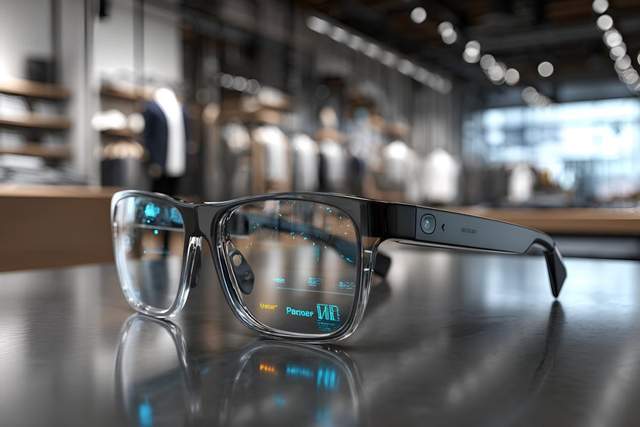
The reason is that sound pickup capabilities are being absorbed by more everyday devices. The microphone arrays in AI glasses can already achieve directional sound pickup, and the real-time translation capabilities of TWS earbuds are becoming increasingly mature. This means that current AI recording hardware must establish sufficiently deep scenario barriers before being integrated into more natural wearable terminals—either by achieving irreplaceable sound pickup quality or by forming unique value in the depth of adaptation to specific scenarios.
At the same time, the role of AI itself is also changing, shifting from a recorder to an understander. Current products still focus on transcription and summarization, essentially answering "what happened." However, a more imaginative direction is to answer "why it happened" and "what should be done next." From recording to understanding to action—this is the true evolutionary path of AI recording hardware.
From a commercial value perspective, the real variable in this business does not lie in the hardware itself. Almost all entrants are adopting a "hardware buyout + AI membership subscription" model. Hardware may not be profitable, but the monthly membership fees are recurring. If users truly develop a habit of paying for "AI minute-taking," the commercial value becomes highly significant.

Of course, this does not mean that the future will be a winner-takes-all scenario. A more likely outcome is hierarchical coexistence. Large companies, with their brands, ecological stickiness, and financial endurance, are naturally suited to harvesting general demands in the enterprise market. Meanwhile, startups and vertical manufacturers can survive by deeply exploring specific scenarios and refining the hardware experience to the extreme in these differentiated niches.
Returning to the original question: How has a tiny voice recorder shaken up half of the tech industry?
Because it stands at the intersection of software ecosystems and the physical world, large model capabilities and real-world scenarios. It completes the final piece of the ecological puzzle for platform giants, provides an ideal testing ground for large models to showcase multimodal capabilities, and offers a valuable reference for the entire AI hardware industry.
Today's voice recorder battle may just be a prologue to the AI hardware era. And the significance of a prologue often only becomes truly clear after the entire book has been read.

-
Ofilm Teams Up with ADSensE to Propel Large-Scale Deployment of All-Solid-State LiDAR Powered by ADS6311 Chip!
-
![]()
Loss of 2.5 Billion Yet Facing Strong Demand for Shares? Another Battle for Control of Lianchuang Electronics
-
![]()
Huawei’s Enjoy Series Flies Off the Shelves, Prompting Xiaomi to Double Down on Budget Smartphones
-
![]()
Beijing Hyundai's Top Executive Criticizes Industry Disorder: Certain Brands Treat Customers as Beta Testers
-
![]()
The domestic mobile phone market has declined for five consecutive quarters! Huawei defies the trend with significant growth: maintains its top market share
-
Annual Revenue Surpasses 3 Billion: An Automotive Trim 'Little Giant' Makes Its Debut on the Beijing Stock Exchange
-
![]()
The Space Force Wants to Spend $30 Billion on Rocket Launches: Is Trump Doubling Down, and Is SpaceX the Big Winner?
-
![]()
Going Crazy! One out of Every Three Plug-in Hybrids Sold in Europe is a Chinese Vehicle