Liang Wenfeng ‘Eases His Stance’: The Tech Enthusiast Who Spurned VC Funding Is Now Open to Investors
 04/20 2026
 496
496
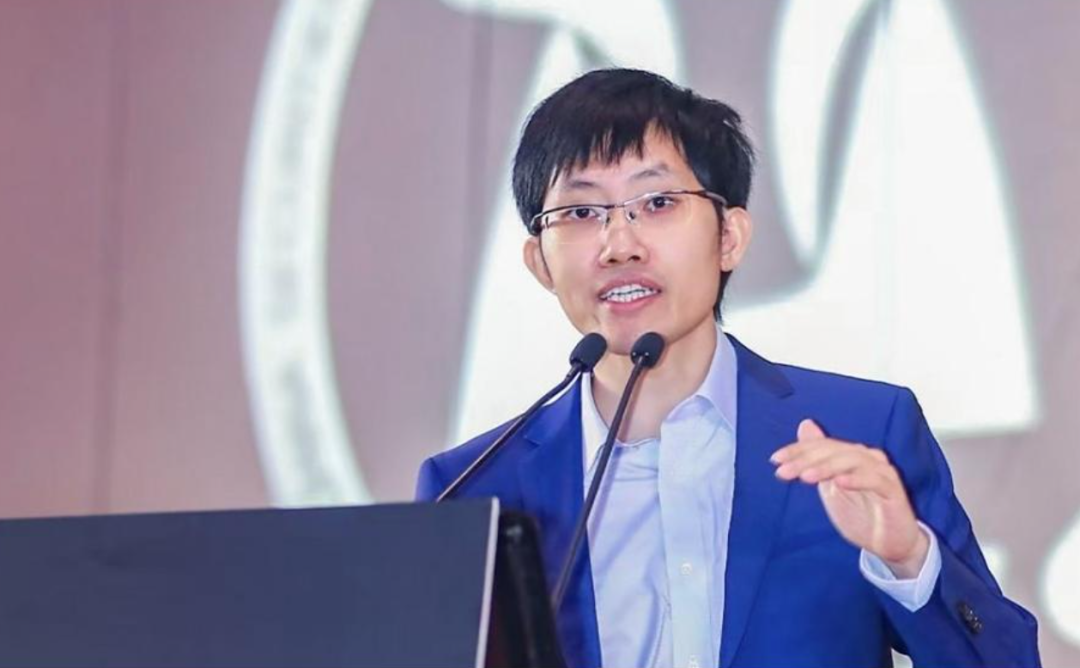
On a weekend in April 2026, an unusual scene unfolded at Terminal 3 of Beijing Capital Airport:
Dozens of partners and managing directors from investment firms coincidentally found themselves with flights booked for the same time. Their destinations varied—Hangzhou, Shenzhen, or simply 'to be determined'—but they all shared a common objective: to meet Liang Wenfeng.
The founder of DeepSeek, a self-described 'tech enthusiast' who had previously declined meetings even through three rounds of intermediaries, had finally 'eased his stance.'
According to a report by foreign media outlet The Information, DeepSeek is now seeking its first round of external funding, with a target valuation of no less than $10 billion and plans to raise at least $300 million. If successful, this deal would mark one of the most high-profile funding events in China's AI large model sector in 2025.
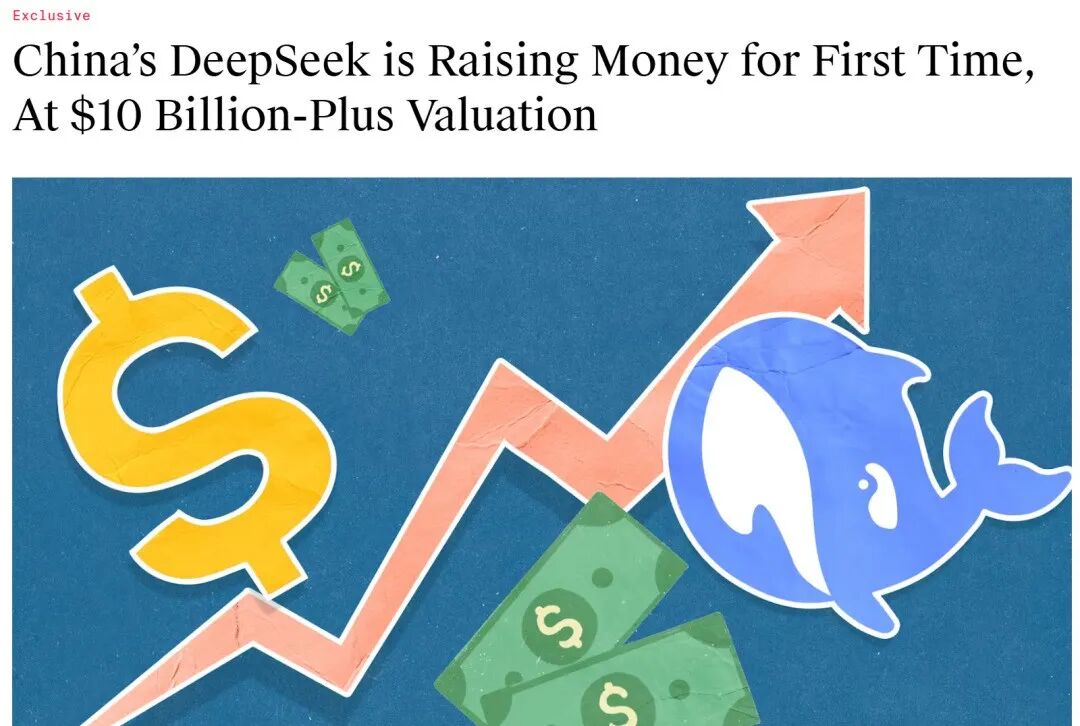
Image Source: Internet
"Those Who Don't Share the Same Path Won't Travel Together"
Let's rewind to just over a year ago.
Liu Qin, founding partner of 5Y Capital, tried to meet Liang Wenfeng through three separate connections but was politely declined each time. The reason given was essentially the same: Liang felt they lacked innovative spirit and that 'those who don't share the same path won't travel together.'
Chen Datong, managing partner at Ceyuan Ventures, fared slightly better.
Due to his firm's investment focus on semiconductors, which overlapped with DeepSeek's business, he managed to have some discussions with the team, 'gaining a bit of access.'
The most awkward situation belonged to Baidu Ventures.
Their Beijing office was in the same building as DeepSeek, yet they missed the investment opportunity alongside other VCs due to a technicality: 'High-Flyer's large model business had not been spun off for independent financing.' CEO Gao Xue later clarified the matter, his regret evident in his tone.
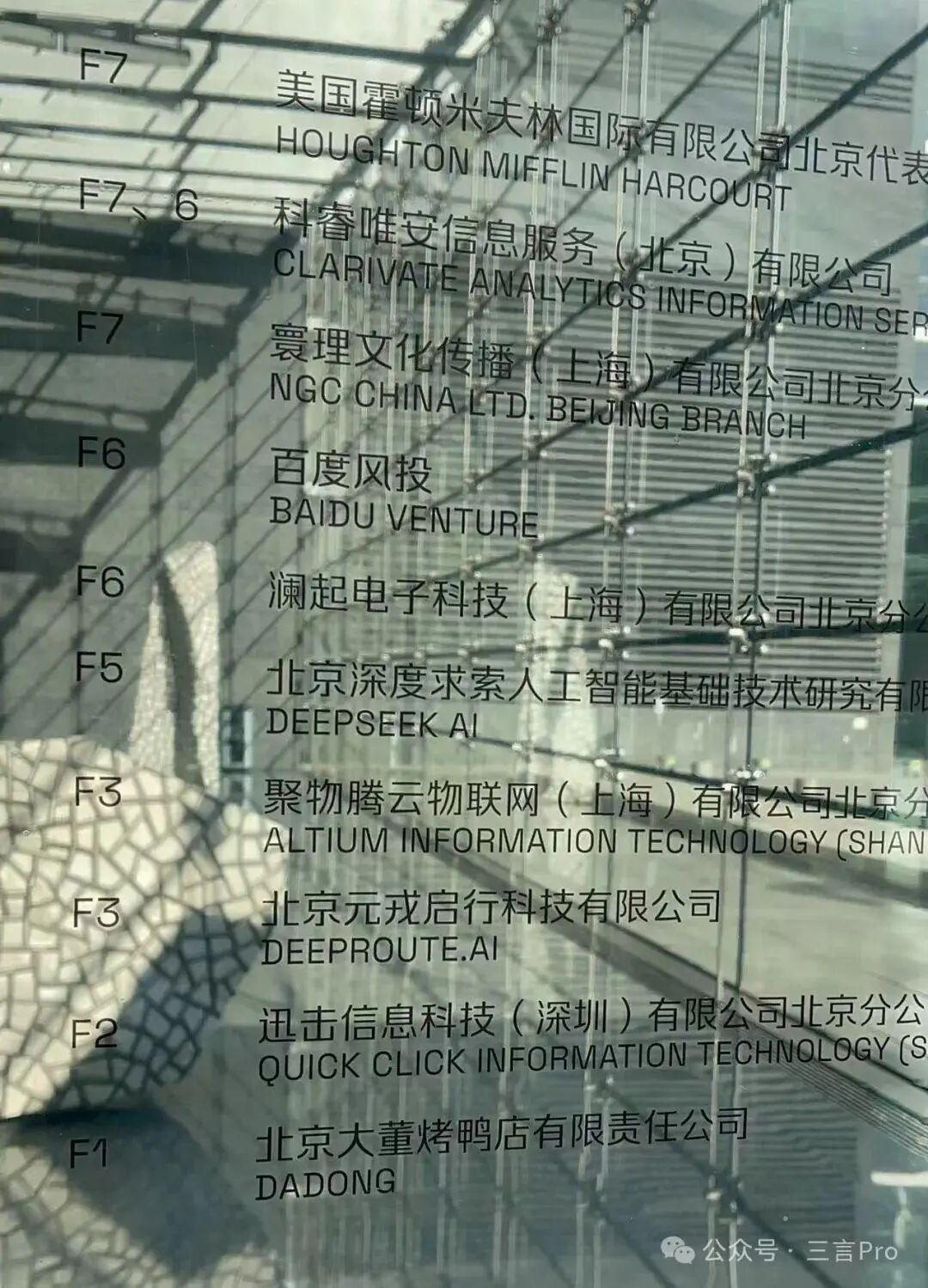
Image Source: SanYan Pro
"We've Invested So Much Government Money, Why Didn't We Get Liang Wenfeng?"
After the 2025 Spring Festival, this question repeatedly surfaced during LP meetings of government-guided funds across various regions.
VCs managing government funds had to explain time and again: It wasn't for lack of effort—Liang Wenfeng simply wasn't open to funding.
"Fortunately, no institution secured the investment; otherwise, it would have been hard to explain to our superiors," self-deprecatingly remarked a partner from a Southern China-based firm at the time.
DeepSeek's 'aloofness' had its foundations.
Its parent company, High-Flyer, is a domestic quantitative private equity giant with peak assets under management reaching hundreds of billions.
In 2025, High-Flyer achieved an average return of 56.55%, translating to estimated revenues of hundreds of millions of dollars.
In comparison, DeepSeek V3's pure training cost budget was merely around $5.58 million (excluding upfront investments).
Image Source: Internet
Liang Wenfeng had explicitly stated that research funding came from High-Flyer's R&D budget and that 'there was no urgent need to raise funds.'
A deeper consideration was control.
Liang is a quintessential 'tech enthusiast' with an extremely strong desire for company control.
He worried that external investors would interfere with decision-making, particularly by pressuring DeepSeek into premature commercialization. He once declared, 'We don't do applications; we only do research and exploration.'
Cracks: Dual Pressures of Talent and Computational Power
What appeared to be an impenetrable fortress began showing cracks in 2025.
First came talent attrition.
Key contributors to the V3 architecture, such as Luo Fuli, left for Xiaomi; core researcher Guo Daya was poached by ByteDance; and multimodal backbone Ruan Chong joined Yuanrong Qixing.
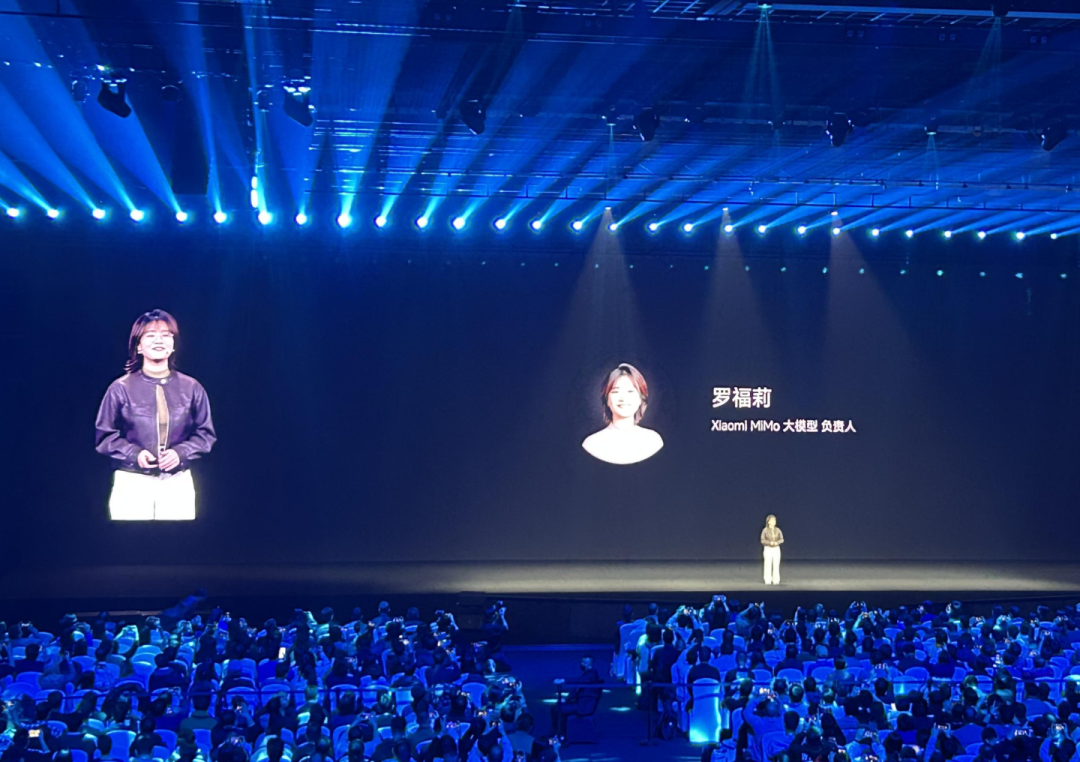
Image Source: Internet
According to LatePost, Guo Daya's potential compensation package at ByteDance could reach nearly $100 million under certain conditions. However, ByteDance VP Li Liang publicly debunked the 'nearly $100 million' salary rumor, though it remains likely that Guo joined ByteDance with significantly higher compensation than at DeepSeek.
"It's not that we don't agree with Liang Wenfeng's technical vision—the offers outside were just too tempting," revealed a person close to DeepSeek. "DeepSeek has never raised funds, so there's no market valuation anchor. Employees' stock options are essentially worthless promises."
Next came computational costs.
DeepSeek had long been known for 'cost-saving and efficiency,' with its R1 model stunning the globe with its extremely low training costs.
However, the next flagship model, V4, would see its parameter scale soar to the trillion level, with single training runs costing hundreds of millions of dollars.
More critically was the strategic shift in technological approach.
According to multiple industry media reports, V4 would deeply adapt to Huawei's Ascend chips, significantly reducing reliance on NVIDIA's CUDA ecosystem.
Migrating from CUDA to CANN architecture meant rewriting core code and restructuring architectures—not just a technical challenge but also a financial 'money burner.'
"Global computational power prices surged in 2026 due to explosive demand," analyzed an AI infrastructure investor. "Even with High-Flyer's strong profitability, facing the need to stockpile tens of thousands of domestic top-tier chips, relying solely on internal funds is no longer sufficient."
What Will $300 Million Buy?
When Liang Wenfeng asked for at least $300 million, he wasn't buying survival—he was buying a ticket to the final game.
First calculation: talent.
Establishing a valuation of over $10 billion gives employees clear expectations for option liquidity.
This is a bargaining chip to compete with OpenAI and ByteDance for top Chinese AI scientists.
Second calculation: computational power.
Reserving ammunition for V4's final push ensures survival in the high-stakes gamble of breaking free from NVIDIA.
NVIDIA's latest-generation Blackwell chips face export control restrictions, limiting availability.
Domestic alternatives have become mandatory.
Third calculation: ecosystem.
Deep adaptation to Huawei Ascend, if V4 can deliver competitive performance on domestic chips, would make DeepSeek one of the few domestic general-purpose large models to achieve full-stack domestic adaptation from underlying computational power to model layers.
Image Source: Internet
This is also why NVIDIA founder Jensen Huang publicly expressed concern recently.
In an interview, he bluntly stated that the large-scale deployment of mainstream open-source large models on domestic computational power ecosystems 'would be a terrible outcome for the U.S.'—breaking open a gap in American chips' AI moat.
The Investment Community's 'Hunger Games'
After the news broke, the investment community's reaction bordered on 'frenzy.'
"This weekend, investors have booked flights—they must meet Liang Wenfeng this time!" described a person close to the deal. "Before, he wouldn't meet anyone; now, they're afraid they can't meet him."
But not everyone gets a seat at the table.
Sources indicate that some U.S. investment institutions are cautious about participating.
The U.S. Congress had previously raised questions about DeepSeek, and while the company isn't currently on any U.S. trade restriction lists, geopolitical risks loom large.
Valuation is also a focal point of negotiation.
The $10 billion valuation reflects the window-period premium after the R1 model's viral success in early 2025, but DeepSeek hasn't yet released a new-generation model, with V4 delayed multiple times due to engineering issues. Some investors privately noted, 'The valuation isn't cheap, but missing this round might mean never getting another chance.' Others suggested that the $10 billion valuation might be strategic, allowing certain funds to participate while maintaining a floor that could be raised based on circumstances.
Idealism 2.0
Liang Wenfeng has 'bowed his head,' but does this mark the end of DeepSeek's 'pristine' era?
Perhaps this is merely Idealism 2.0.
Rejecting capital is a stance; mastering capital is true capability.
For $300 million and less than 3% equity dilution, DeepSeek gains saturation-level computational ammunition, market-priced talent incentives, and strategic depth for domestic alternatives.
From the moment it adapted to Huawei Ascend, DeepSeek's game table expanded beyond large models to encompass the entire future of China's AI computational autonomy.
Liang Wenfeng is preparing for this larger battle.
And those investors crowded at airports that weekend are merely vying for a ticket to the spectator stands.
- END -
-
Ofilm Teams Up with ADSensE to Propel Large-Scale Deployment of All-Solid-State LiDAR Powered by ADS6311 Chip!
-
![]()
Loss of 2.5 Billion Yet Facing Strong Demand for Shares? Another Battle for Control of Lianchuang Electronics
-
![]()
Huawei’s Enjoy Series Flies Off the Shelves, Prompting Xiaomi to Double Down on Budget Smartphones
-
![]()
Beijing Hyundai's Top Executive Criticizes Industry Disorder: Certain Brands Treat Customers as Beta Testers
-
![]()
The domestic mobile phone market has declined for five consecutive quarters! Huawei defies the trend with significant growth: maintains its top market share
-
Annual Revenue Surpasses 3 Billion: An Automotive Trim 'Little Giant' Makes Its Debut on the Beijing Stock Exchange
-
![]()
The Space Force Wants to Spend $30 Billion on Rocket Launches: Is Trump Doubling Down, and Is SpaceX the Big Winner?
-
![]()
Going Crazy! One out of Every Three Plug-in Hybrids Sold in Europe is a Chinese Vehicle