Official Statement: Cease the Cutthroat Competition! It’s Time to End the 'Involution Game' in the Home Appliance Industry
 04/20 2026
 560
560
"The price war has reached its limit." These words weren’t mine—they came straight from the authorities.
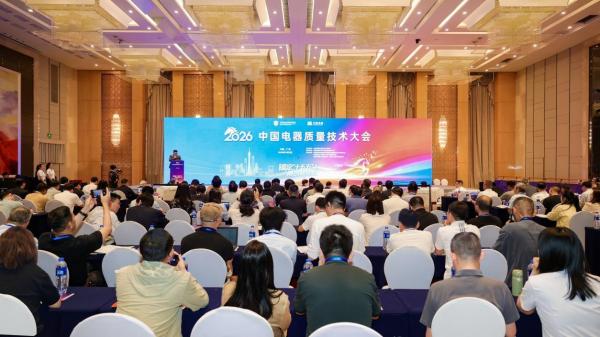
On April 9, 2026, in Guangzhou, at the China Electrical Appliance Quality Technology Conference, Li Changqing, a second-level inspector from the Quality Development Bureau of the State Administration for Market Regulation, delivered a stark message to nearly 300 industry representatives:
"The fierce price wars that have plagued the home appliance industry in recent years have proven one thing clearly: they are short-sighted and self-destructive, akin to drinking poison to quench thirst. They lead only to mutual destruction, with no winners in sight."
The phrase "no winners" couldn’t be more accurate.

After years of relentless competition, what have we truly achieved?
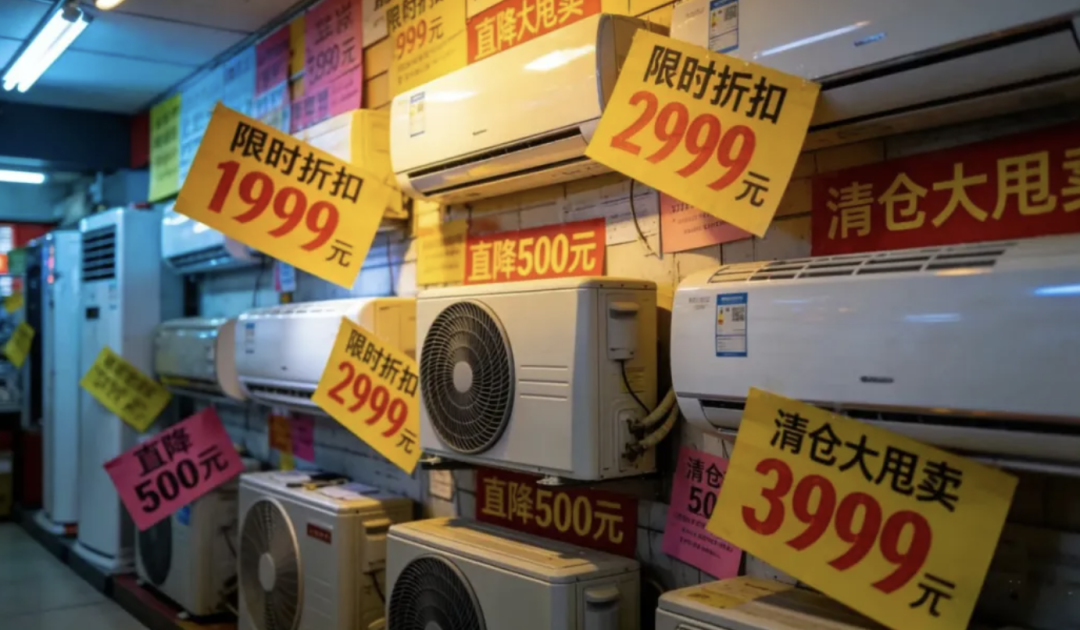
As a home appliance editor, I’ve witnessed too many "rock-bottom prices," "fracture discounts," and "loss-leader sales." During major shopping festivals like 618, Double 11, and 818, major platforms and brands engage in fierce price battles, resulting in a bloodbath for the industry.
You sell for 999, I’ll undercut you at 899. You offer freebies, I’ll slash prices by 50%. What’s the outcome?
Profits are razor-thin, R&D budgets are repeatedly cut, and after-sales services are compromised wherever possible. Consumers may think they’re getting a bargain, but the products they buy often malfunction shortly after purchase, leaving them with no one to turn to for repairs. And the brands? They lose money on every sale, dealers complain bitterly, and the entire industry struggles to turn a profit.
To put it bluntly, this is a "war of attrition" where the weakest players are eliminated.
Li Changqing put it even more bluntly: "drinking poison to quench thirst." This metaphor is spot-on. In the short term, price wars can indeed boost sales and capture some market share. But in the long run? Brand value is diluted, innovation is stifled, and the entire industry is trapped in a cycle of low-level competition.
What’s even more alarming is that this "involution" is contagious. If you don’t engage in price wars, others will; if you don’t lower prices, others will. In the end, everyone is dragged down, and no one can escape the downward spiral.

The official prescription: Stop crowding onto the same narrow path
So, what’s the solution? Li Changqing pointed the way: dislocation competition and differentiated strategies.
Eight words encapsulate the approach: "Have what others don’t, excel where others are average, be unique where others are good, and innovate where others are unique." In simpler terms, don’t just follow the crowd; find your own niche.
If you excel in high-end products, push quality to the extreme; if you excel in smart products, create stunning user experiences; if you excel in niche markets, thoroughly understand the needs of specific consumer groups. Instead of fighting tooth and nail in a crowded "red ocean," explore and expand in untapped "blue oceans."
This conference also outlined the "four modernizations" direction for the future of the home appliance industry: high-end, intelligent, green, and health-oriented. Each of these four words carries significant weight.
High-end – Stop churning out cheap products. Chinese consumers aren’t short of money; they just don’t think your products are worth spending on. If you create truly high-quality products, they’re willing to pay a premium. Why can brands like Casarte and COLMO command such high prices and still be so popular? Because they deliver exceptional quality.
Intelligent – Stop selling "dumb iron boxes." Future home appliances aren’t just refrigerators or air conditioners; they’re "thinking partners." As I mentioned in my previous article about the Consumer Expo, Changhong’s AI air conditioner can "adjust the wind to follow people," and Tianfu Meihao’s mattress can adapt to the body’s curves – that’s the future of smart appliances.
Green – Stop being "energy hogs." Carbon neutrality isn’t just a slogan; it’s a global trend. Whoever first creates truly energy-efficient and environmentally friendly products will seize the initiative for the next decade.
Health-oriented – Stop just focusing on "cooling and heating." What do consumers care about most now? Health. Antibacterial refrigerators, fresh air air conditioners, mite-removing washing machines – these are the real pain points that need to be addressed.
These four paths are the right way forward, and each offers more promise than engaging in price wars.

Some have already succeeded
In fact, there are already "top performers" in the home appliance industry who have proven that you can win without engaging in cutthroat competition.
Take Casarte, for example. Its refrigerators sell for tens of thousands of yuan, three to four times more expensive than ordinary refrigerators. But they sell well. Why? Because their preservation technology is truly exceptional. Vegetables stored for a week still look fresh as if just bought. Consumers are willing to pay for this "exceptional quality."
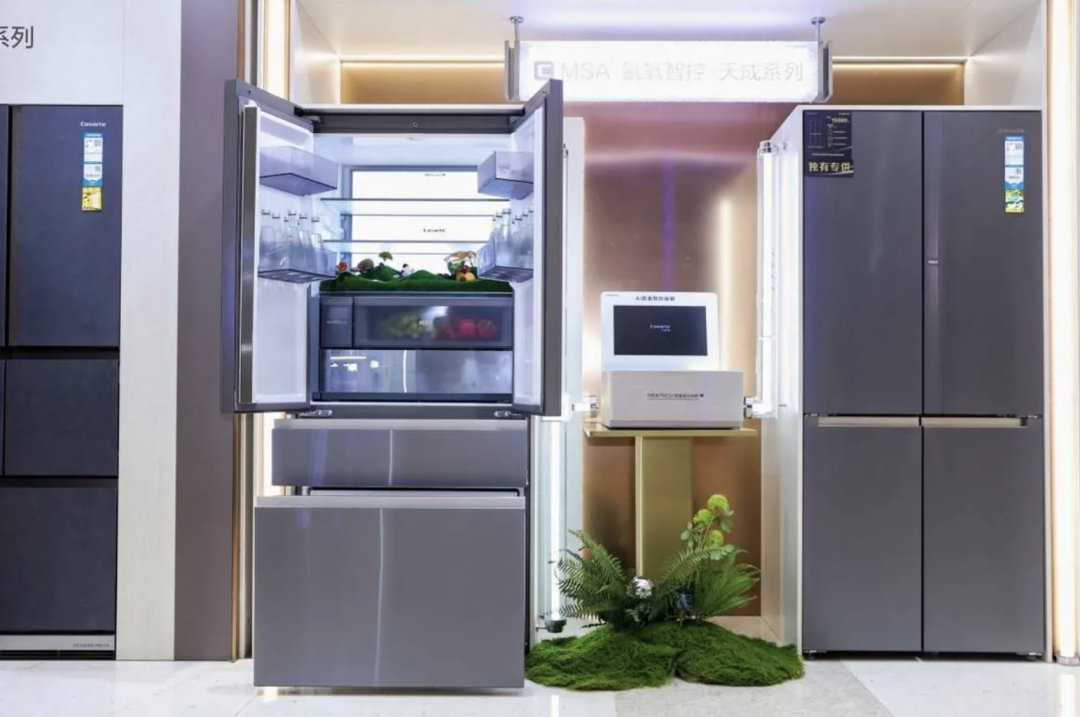
Take COLMO (a high-end brand under Midea). Its AI refrigerator can recognize ingredients, recommend recipes, and even help you order groceries. This isn’t just a refrigerator; it’s a "kitchen butler." It’s expensive, but people are lining up to buy it.
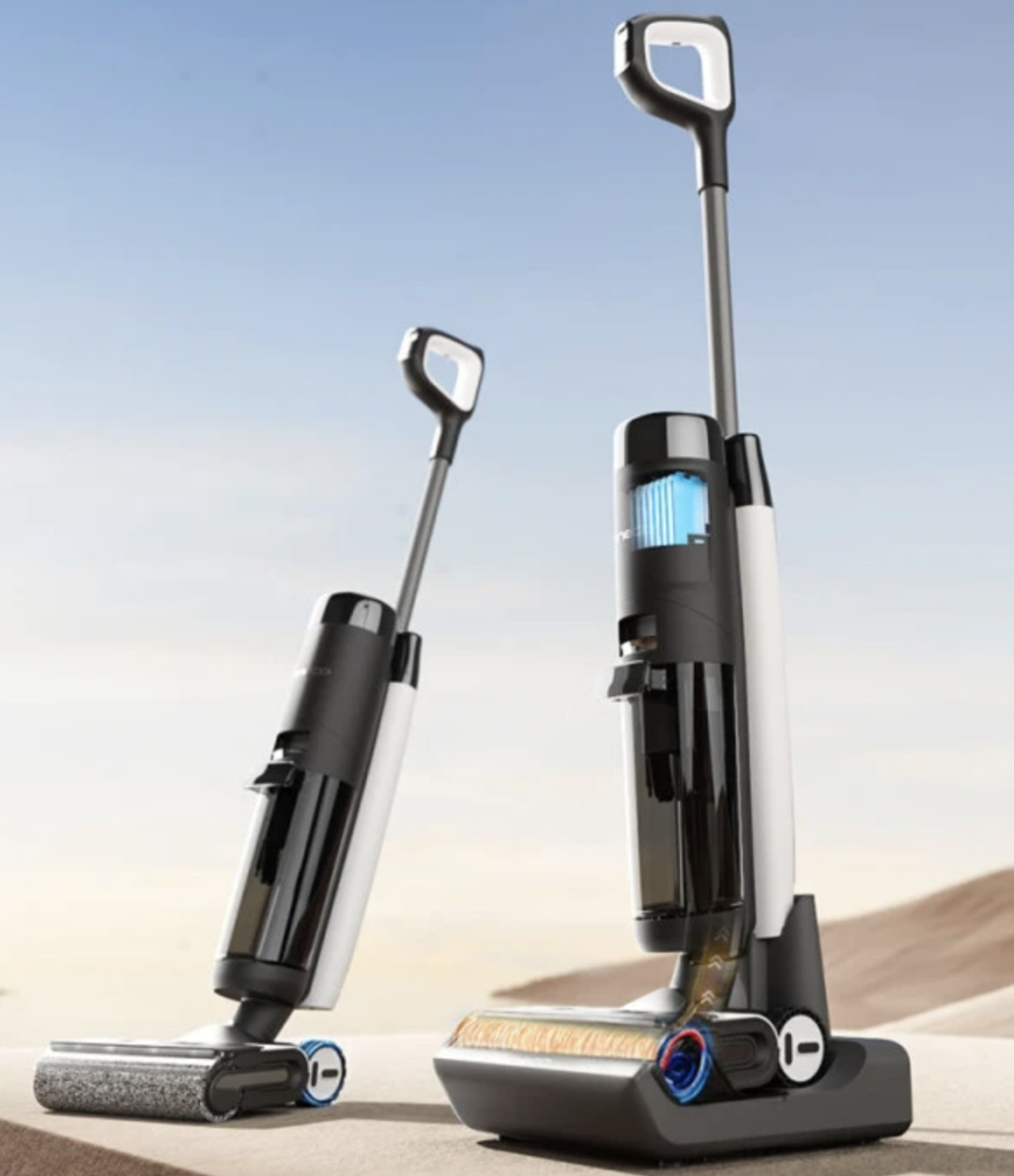
Take Tineco (a brand under Ecovacs). It invented the floor washer, creating a new product category. While others were still competing in the robot vacuum cleaner market, it switched tracks. Now, Tineco dominates the floor washer market.
What’s the common thread among these brands? They don’t compete for the same piece of the pie.
This is exactly what Inspector Li means by "dislocation competition and differentiated strategies."

At the start of the '15th Five-Year Plan,' it’s time for a change
This year marks the beginning of the '15th Five-Year Plan.'
Sun Junguang, General Manager of China National Electric Appliance Research Institute, made it clear at the conference: Key variables like green low-carbon development and artificial intelligence are reshaping the entire industry. In short, times have changed, and the rules of the game must change too.
In the past, "scale was king." Whoever had large production capacity, high shipment volumes, and low prices was the winner. Now, "value is king." Whoever has strong technology, delivers great user experiences, and truly solves consumer pain points will thrive.
China’s home appliance industry is already the largest in the world in terms of scale, with an unparalleled level of industrial chain completeness and continuously rising brand value. It would be a real shame if such a "top student" continued to be consumed by internal price wars.
Authoritative experts such as Chen Xin, an academician of the Chinese Academy of Engineering, and Zhang Gang, former counselor to the State Council, shared views at the conference pointing in the same direction: Future competition will be about quality, standards, and technological foundations.

Can’t keep up with the intense competition, and don’t want to either
To be honest, as a consumer, I don’t want the home appliance industry to continue competing on price either. Because in the end, we’re the ones who pay the price. You buy a cheap refrigerator, and it breaks down in three years; you snag a discounted air conditioner, and it’s as noisy as a tractor; you save money by buying a niche brand, only to find there are no after-sales service centers.
Is this really a bargain? On the other hand, if you spend a little more and buy a product that’s worry-free to use, has reliable repairs, and has features that increasingly understand you, it’s a deal that’s well worth it.
So, I wholeheartedly agree with the official’s statement this time. I hope Li Changqing’s phrase "no winners" will be etched in the minds of all home appliance professionals.
Price wars have no winners, but value wars can lead to win-win outcomes. Consumers who buy good products are winners; enterprises that earn reasonable profits and have the confidence to invest in R&D are winners; the industry that moves from low-level internal consumption to high-quality development is the biggest winner.
In 2026, at the start of the '15th Five-Year Plan,' I hope this will be the year when China’s home appliance industry truly bids farewell to "involution" and embraces "quality-driven success." Stop the cutthroat competition. In the end, no one will have a meal to eat.
Let’s change our approach and focus on making good products, providing good services, and building good brands. This path is difficult, but it leads far.
-
![]()
Proceed with Caution Before Entering the Indian Auto Market: Even Musk Faced Challenges, What Makes Chery Think It Can Succeed?
-
![]()
EU Intends to Engage in Trade War with China Amid Chinese Cars Nearing 10% of Monthly Sales in Europe
-
![]()
Shenzhen Rolls Out 'Ten Measures' for New Energy Vehicle Insurance: Integrates Innovative Risk Factors and Adopts Battery-Body Separation Model
-
![]()
If You Can’t Drive a Ferrari Yourself, What’s the Point of Owning One?
-
![]()
ByteDance Clarifies: 'No Car Production, No Investment in Saido!' Seres' Stock Price Plummets to New Lows!
-
![]()
New Energy Vehicles Boast Over 60% Penetration Rate: Joint Venture Automakers Must Accelerate Their Efforts
-
![]()
Why Are New Energy Vehicles Becoming Increasingly 'Bulky'?
-
![]()
Over 12 Years, the Average Passenger Vehicle Has Gained Nearly 400 kg, Sparking Netizens' Queries: When Will New Energy Vehicles Revert to Their 'Standard Size'?