AutoNavi Joins the Embodied AI Race with Navigation Prowess, Sparking the Spatial Intelligence Battle
 04/23 2026
 467
467
Author: Guo Chuyu
Editor-in-Chief: Hou Yu
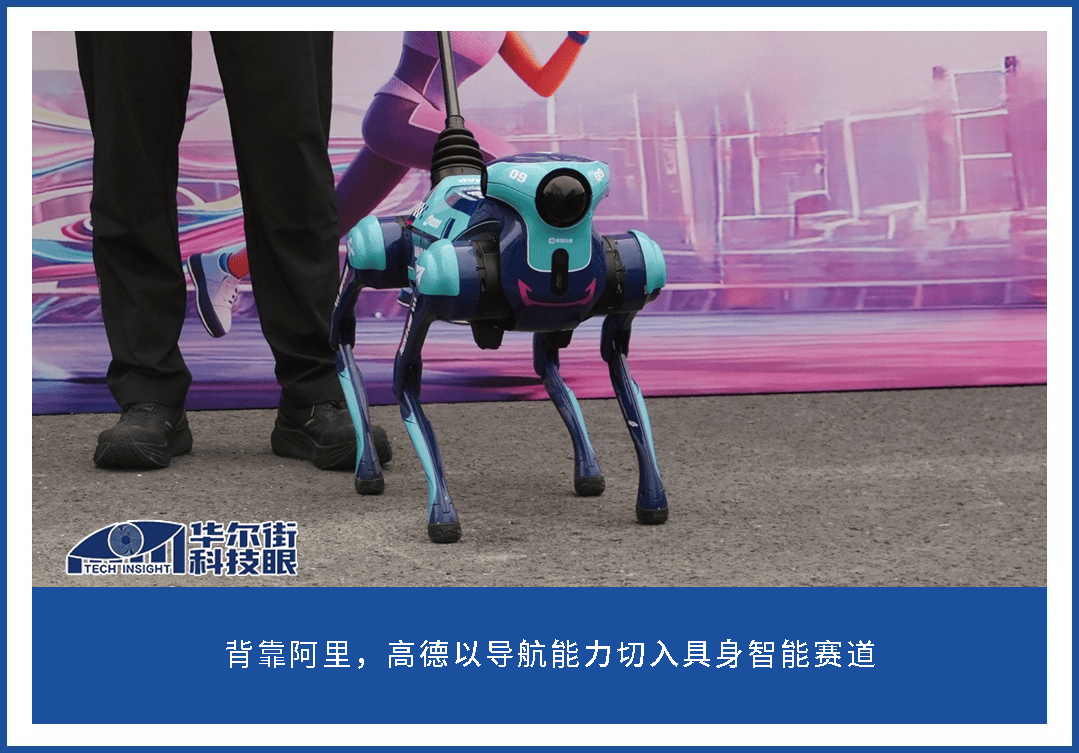
At the recently concluded Beijing Yizhuang Robot Half Marathon, Alibaba's AutoNavi made a significant splash by officially introducing "AutoNavi Tutu"—the world's inaugural fully autonomous embodied robot designed for open environments. The event also featured a real-world demonstration of the robot guiding a visually impaired individual at the finish area.
Operating autonomously without human intervention or pre-set routes, AutoNavi Tutu adeptly navigated a visually impaired person through a series of urban road challenges in a complex environment, successfully reaching the finish line. This accomplishment included overcoming practical obstacles like intricate obstacle avoidance and maneuvering through crowds.
Remarkably, this marks the first embodied AI hardware product launched by Alibaba Group and also stands as the world's pioneer in fully autonomous action within open environments.
As 2026 heralds the first year of commercialization for embodied AI, major internet giants are scrambling to establish their presence. Alibaba's strategic move to entrust its inaugural embodied robot product to AutoNavi is rooted in a clear rationale: leveraging AutoNavi's map data and real-time path planning capabilities can significantly enhance the robot's spatial mobility skills, representing a pivotal step in Alibaba's strategic integration of technological prowess with hardware implementation.
Why Has the Map Platform Become the Launchpad for Embodied AI Hardware?
What prompted Alibaba to entrust its first embodied AI hardware product to AutoNavi?
The answer likely lies in the evolution of AutoNavi's core functionalities. As a mapping software, AutoNavi's forte is spatial intelligence—its ability to comprehend locations, environments, and dynamic changes in the physical world. The fundamental mission of embodied AI is precisely to empower robots to perceive their surroundings, make autonomous decisions, and execute continuous tasks in real physical spaces, offering a substantial technological edge. In August 2025, AutoNavi announced a comprehensive shift towards an AI-driven development path, designating spatial intelligence as its strategic focus.
In January 2026, AutoNavi officially unveiled its self-developed world model, "Fantasy World." Utilizing the travel trajectories of nearly 1 billion monthly active users, it constructed the industry's largest embodied navigation data engine, topping the international authority benchmark Stanford World Score Leaderboard and outperforming competitors from Google and Meta. This milestone further cemented Alibaba's position in the AI foundational model landscape.
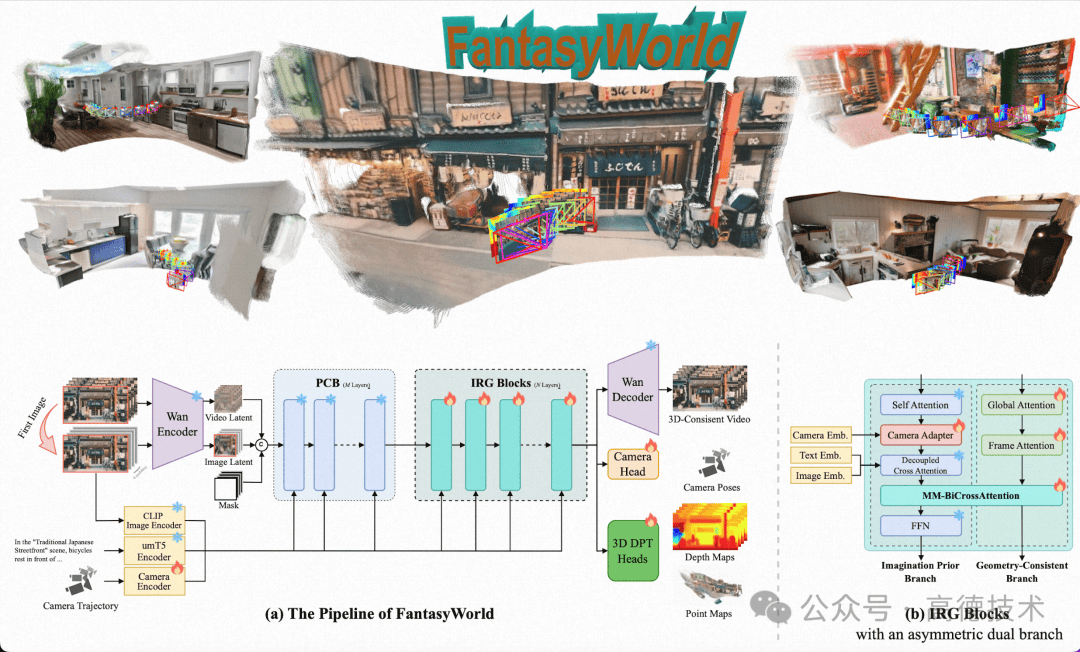
This strategic move aligns with the next phase of AI development, as envisioned by "AI Godmother" Li Feifei, a Stanford University professor and co-founder of WorldLabs. In her article "From Words to Worlds: Spatial Intelligence is AI's Next Frontier," she highlights that while current AI, epitomized by large language models, excels at processing abstract knowledge, it lacks a genuine understanding of the physical world, akin to "walking in the dark." Spatial intelligence—the innate human ability to perceive, navigate, and interact with the three-dimensional world—is the linchpin for achieving true machine intelligence. Hence, from an industry standpoint, Alibaba's decision to entrust its first embodied robot to AutoNavi is not a haphazard cross-industry endeavor but a strategic deployment based on technological frontiers. (Extended Reading: Core Talents from Tongyi Depart One After Another; Alibaba Adopts Dual Strategies: Offering Sky-High Salaries to Attract Talent + Non-Compete Agreements to Restrict Movement)
Can AutoNavi, Backed by Alibaba, Seize the Late-Mover Advantage?
AutoNavi's foray into embodied AI is not without foundation. Its accumulated business data and scenario-based practices offer transferable advantages.
Firstly, AutoNavi boasts dimensional superiority in spatial cognitive capabilities. With over two decades of expertise in digital mapping and navigation, it possesses the industry's largest embodied navigation data engine and a spatial cognitive network encompassing all real-world scenarios. These capabilities are indispensable for embodied robots to comprehend their environment, make autonomous decisions, and execute continuous tasks.
In March 2026, AutoNavi introduced "Landmark AI Navigation," the world's first visual cognitive walking guidance system powered by a large model. By deeply integrating the QianWen large model, hundreds of millions of POIs, and tens of millions of street view images, it endowed the navigation system with "visual cognition and human language understanding" capabilities for the first time. This system can seamlessly transition to robot navigation scenarios.
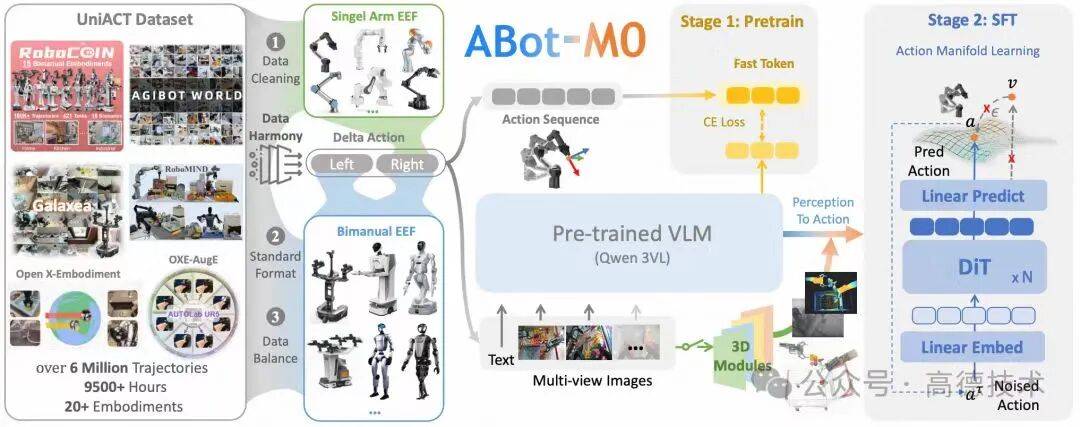
Secondly, AutoNavi benefits from Alibaba's AI ecosystem's open-source capabilities. On March 31, AutoNavi globally open-sourced the embodied operation base model ABot-M0. This model is the world's first robot embodied operation base model based on a unified architecture, achieving an 80.5% task success rate on the Libero-Plus benchmark, nearly 30% higher than the previous industry benchmark, Pi0.
More significantly, ABot-M0 enables "one brain to adapt to multiple robot forms," allowing quadrupedal, wheeled, and humanoid robots to share the same intelligent system, substantially lowering the industry's development barriers. This relies on the foundational capabilities of Alibaba's QianWen large model in the AI field and its infrastructure support in cloud computing.
Additionally, Alibaba is actively collaborating with embodied AI companies. Previous media reports indicate that Alibaba and Unitree Technology are jointly preparing for a strategic overseas expansion collaboration through Shumaitong. This implies that AutoNavi's quadrupedal robots can leverage Alibaba's ecological resources in AI, cloud computing, and channels, forming a complete closed loop from algorithms and data to hardware manufacturing and sales channels, providing robust support for the rapid growth of AutoNavi's embodied AI business.
Can Navigation Capabilities Be Transformed into the Foundational Ability for Spatial Intelligence?
The current race among tech companies in the embodied AI sector may appear bustling, but each has its unique considerations.
The first category focuses on investment, exemplified by Meituan. Although primarily a retail company, Meituan recognized the potential of the embodied AI sector early on. Over the past three years, it has invested in 30 robotics and related companies. From early 2024 to July 2025 alone, Meituan made eight robotics project investments at an average pace of one every two months, with an estimated investment amount exceeding 500 million yuan.
These investments span drones, handling robots, and more, almost all related to Meituan's business scenarios. This reflects Meituan's core investment philosophy: enhancing operational efficiency, reducing costs, and better serving various consumption scenarios.
The second category comprises internet giants like Alibaba, ByteDance, and Baidu, which already possess formidable AI technological advantages, with highly developed capabilities in computing power, algorithms, and large model frameworks. Their entry into embodied AI is not merely about "building robots" but about seizing the next industry window of opportunity. Meanwhile, these companies boast vast To C or To B customer bases, providing a natural user foundation and scenario entry points for the commercialization of embodied AI.
Thus, backed by Alibaba's AI technology, AutoNavi's competitiveness in the quadrupedal robot sector is already prominent. However, industry competition remains fierce.
Hangzhou's "Four Little Dogs" (quadrupedal robot dogs)—Unitree Technology, Deep Robotics, Juwei Technology, and 58 Robotics—have already established industrial ecosystems covering consumer, industrial, and special-purpose scenarios.
In comparison, as a latecomer, AutoNavi faces significant gaps in shipment scale, brand recognition, and supply chain maturity. This means AutoNavi must not only confront the first-mover advantages of leading players in technology and markets but also explore more feasible commercialization models. Moreover, quadrupedal robots are still in a critical transition period from laboratories to large-scale applications, with cost control, scenario adaptation, and user acceptance as hurdles that must be overcome. For AutoNavi, whether it can effectively transform its navigation capabilities into the robots' "spatial intelligence" is also a crucial determining factor.
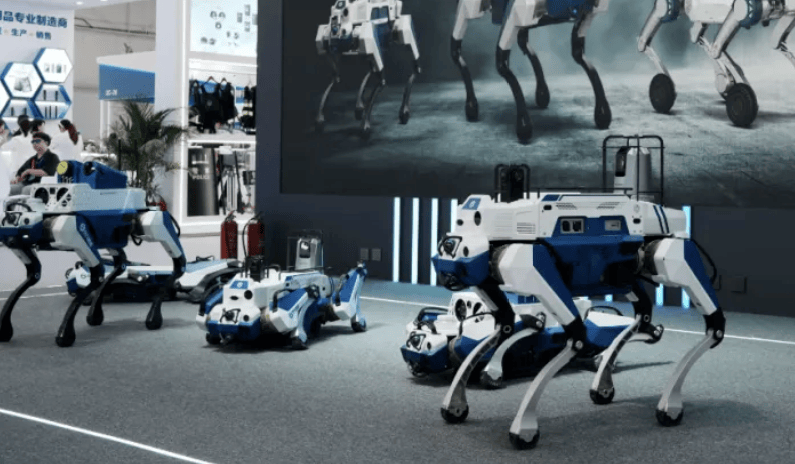
Meanwhile, the global market size for quadrupedal robots continues to expand, with global market sales reaching approximately $434 million in 2025 and expected to grow to $2.95 billion by 2032, representing a compound annual growth rate of 27.0%. The track's high growth has attracted numerous players, making intense competition inevitable. Currently, AutoNavi's quadrupedal robots primarily focus on participating in competitions and product showcases, with specific application scenarios and commercialization directions yet to be clearly disclosed.
Drawing from industry experience, the implementation scenarios for quadrupedal robots are scattered across industrial inspection, special operations, consumer companionship, scientific research education, and other directions, each with different requirements for hardware, algorithms, and costs. This also means AutoNavi must swiftly identify implementation scenarios that align with its navigation and spatial technology capabilities to carve out a niche in the existing competitive landscape.
-
![]()
Wang Huiwen, Former Meituan Executive, Achieves 20-Fold ROI, Supports 24 AI Startups
-
![]()
Another AI Computing Power Unicorn Launches IPO! Founded by a Changjiang Scholar
-
![]()
OFILM Holdings Secures Zhongke Daojing, Marking a Significant Leap in the Optical Communication Industry!
-
What Will Be the Next Key Battleground for Large Models After AI Coding?
-
![]()
Leapmotor's Sales Soar, Yet Hidden Concerns Loom
-
![]()
China’s Action Camera Market Soars: 3.12 Million Units Sold in Six Months, DJI Secures 74% Dominance
-
![]()
Zhang Yiming: Strategic Retreat as a Path Forward
-
![]()
Exploring Charging for Some Features of QianWen App: Can It Follow the Path of Doubao?