How Many Friends Are into Off-Road and Hunting Cars?
 04/23 2026
 637
637
Introduction
The market pie isn't large, but with more players taking a slice, the portions get thinner.
On April 24, the Beijing Auto Show is slated to kick off.
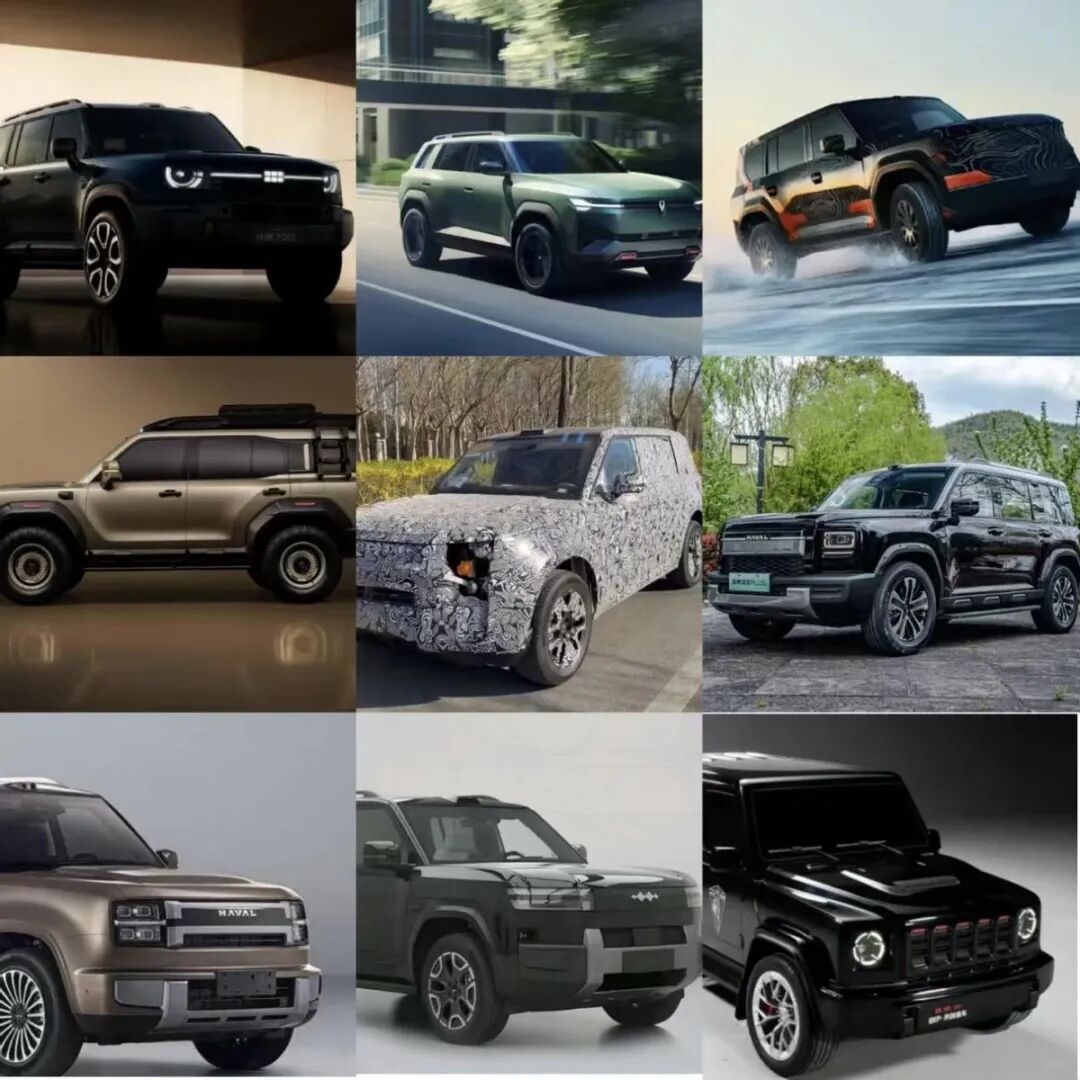
Boxy cars are a standout keyword at this year's auto show. According to incomplete statistics, over 10 boxy models will make their debut, from brands like Hongqi, Xiangjie, Geely, Jetta, Trumpchi, and Fangchengbao, spanning nearly all price ranges and powertrain types. Hunting cars are also making a strong push, with multiple new models targeting niche consumer segments.
The simultaneous surge of these two niche segments at the same auto show is no accident.
Boxy cars attract fans with their rugged styling, family-friendly practicality, and light off-road capabilities; hunting cars carve out a market niche with their elegant stance and sporty appeal. However, when all brands target the same segment, the "niche" nature of the market becomes its biggest challenge: the pie isn't big, but with more hands reaching for it, the slices get smaller.
Just like the large six-seater SUV market, which is growing overall, yet only two models sold over 10,000 units in March. Boxy and hunting cars are following a similar trajectory.
01 Brands Flock to Niche Segments, Turning Them into Red Oceans
Amid slowing growth in the overall auto market, targeting niche segments has become a preferred strategy for brands to break through. Boxy and hunting cars, with their highly distinctive designs, precisely meet the individuality expression needs of young consumer groups. Among them, boxy cars, leveraging their off-road attributes, have become a popular choice for family users and outdoor enthusiasts, while hunting cars, balancing performance and style, continue to attract consumer attention.
The off-road market centered around boxy cars is experiencing explosive growth. In 2020, the domestic boxy car market capacity was just 131,000 units; by 2025, China's off-road vehicle sales had surpassed 1.3 million units, up 25.18% year-on-year, significantly outpacing the overall passenger vehicle market, with strong growth expected to continue in 2026.
Since the Tank 300 ignited the market, Chinese brands have quickly taken the lead in the boxy car segment. At this year's Beijing Auto Show, Hongqi, known for its executive luxury models, Trumpchi, which has deep roots in the MPV segment, and Xiangjie, a high-end smart new energy brand, are all introducing their first boxy models, highlighting the segment's popularity.
Hongqi's entry into the off-road segment creates a striking contrast, further underscoring the appeal of the boxy car market. Its mass-produced off-road model is positioned as a pure rugged off-roader, featuring a body-on-frame design, a four-motor powertrain, and a 2.0T range extender. Backed by the FAW Group's system, it boasts solid mechanical and off-road performance.
Trumpchi, which has long focused on the MPV and urban SUV segments, is making its first foray into off-roading with this boxy model. Given its brand positioning and market strategy, the new model's pricing will likely focus on the core 150,000–200,000 yuan price range, targeting mainstream family users interested in light off-roading.
Xiangjie, positioned as a high-end brand, has already entered the niche market with the Xiangjie S9 GT. Although sales declined after the initial launch surge, it has gained a more mature understanding of niche user needs and product refinement. This year, Xiangjie continues to avoid the mainstream red ocean, focusing on boxy off-road and MPV markets. For Xiangjie, which had a lackluster first quarter, the upcoming rugged off-roader is not only a key pillar for brand elevation but also a crucial move to reverse sales trends and regain market presence.
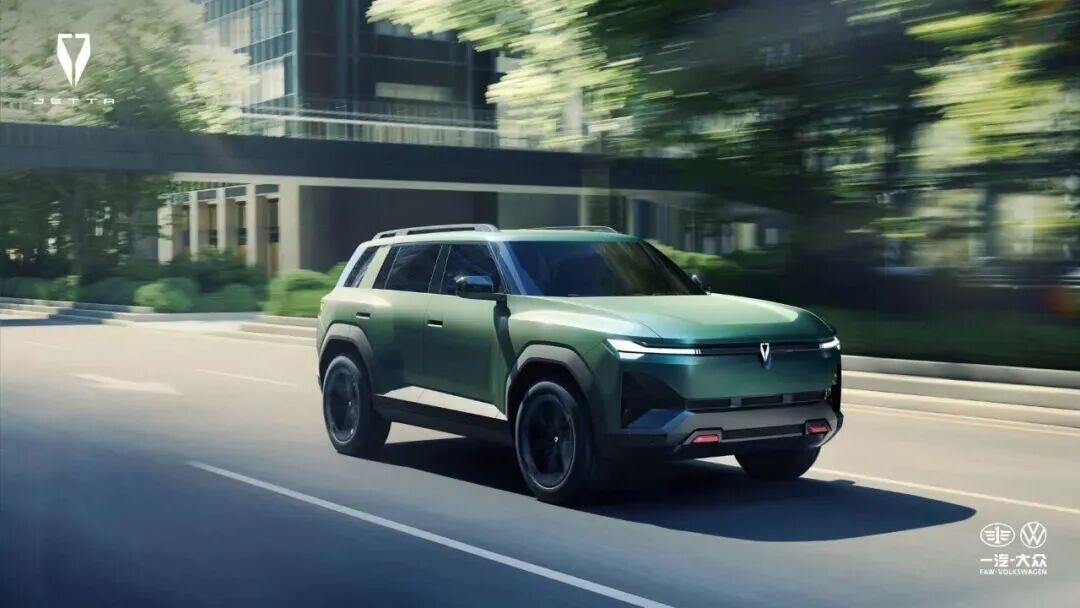
On the evening of April 21, Jetta unveiled its new brand logo with the JETTA X, marking its full-scale entry into electrification. This hardcore pure electric SUV will also make its debut at the Beijing Auto Show. While not a traditionally boxy, rigid design, its sharp lines still place it within the broader boxy car category. Jetta's choice to use this type of model as its core electrification vehicle reflects its strategic bet on this high-heat segment.
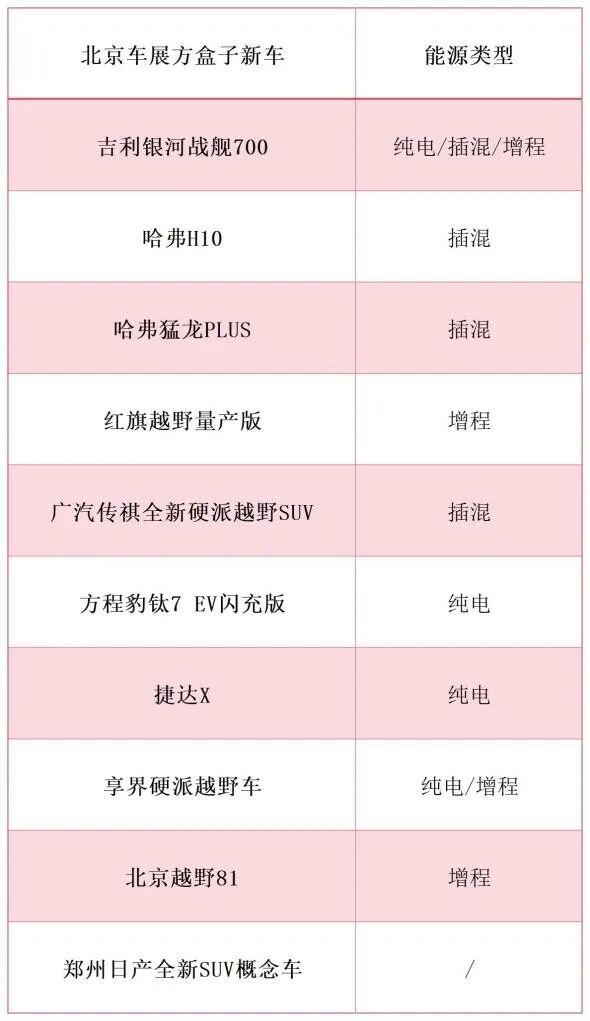
In addition, heavyweight models like the Geely Galaxy Warship 700, Haval H10, Haval Menglong PLUS, Fangchengbao Titanium 7 EV Flash Charge Edition, and Beijing 81 are all making appearances, covering everything from budget to high-end markets, and from family-oriented light off-roading to professional rugged off-roading, further intensifying competition in the boxy car segment.
As Geely's first boxy model, the Galaxy Warship 700 signifies Geely's official entry into the boxy car battle. While Geely didn't secure the first-mover advantage like BYD or Chery, its product planning and specs clearly target popular models like the Fangchengbao Titanium 7, making its intentions clear.
In 2025, Geely's Galaxy series sales surpassed 1.23 million units, becoming a pillar of the group's sales. Judging by the market performance of models like the Xingyuan, Galaxy E5, and Xingyao 8, the Geely Galaxy system has proven its ability to create hits. Its entry into the boxy car segment is expected to quickly gain market share by leveraging the group's systemic advantages.
The Fangchengbao Titanium 7 EV Flash Charge Edition is also highly anticipated. After the success of the Titanium 7 plug-in hybrid, the Titanium 3 pure electric version has maintained stable sales and good reputation. The debut of the Titanium 7 pure electric version with megawatt-level flash charging technology further enriches Fangchengbao's product lineup in the rugged off-road segment.
Hunting cars are also a major highlight at this year's auto show. The Shangjie Z7T, which has announced a celebrity endorser, the newly launched Avita 06T, and the well-received Tengshi Z9GT are all making appearances, collectively supporting the high-end niche market with their unique styling and sporty flair.
02 Limited Blue Ocean, the 80-20 Rule is Playing Out
Despite the boxy car segment's sustained popularity, within China's overall passenger vehicle market of over 20 million units, the million-unit boxy car market remains niche. Especially with so many brands entering, the segment is becoming increasingly crowded, and intense competition has become the norm.
Both in terms of market size and trends, the large six-seater SUV segment shares striking similarities with the boxy car market. In 2025, cumulative sales of large six-seater SUVs reached 1.08 million units, up 18.3% year-on-year, with monthly sales climbing from 25,000 units at the start of the year to over 100,000 units.
However, this rapid growth hasn't benefited all players equally. The market has become increasingly concentrated. In 2025, AITO and Li Auto dominated the segment, while models like Galaxy, Lynk & Co, and LeDao, despite initial rapid sales growth, struggled to maintain their momentum, with sales generally declining by year-end.
In March, the large six-seater SUV market saw further polarization. Among the top 20 models by sales, only the NIO ES8 and Zeekr 9X sold over 10,000 units, with few models exceeding 2,000 units.
The same "80-20 rule" is playing out in the boxy car market. In March, among the top 20 boxy car models by sales, only the Fangchengbao Titanium 7 and Haval Big Dog sold over 10,000 units; starting from the third-placed Beijing Off-Road BJ30, sales dropped by half to 5,261 units, highlighting the gap between mid-tier and lower-tier models.
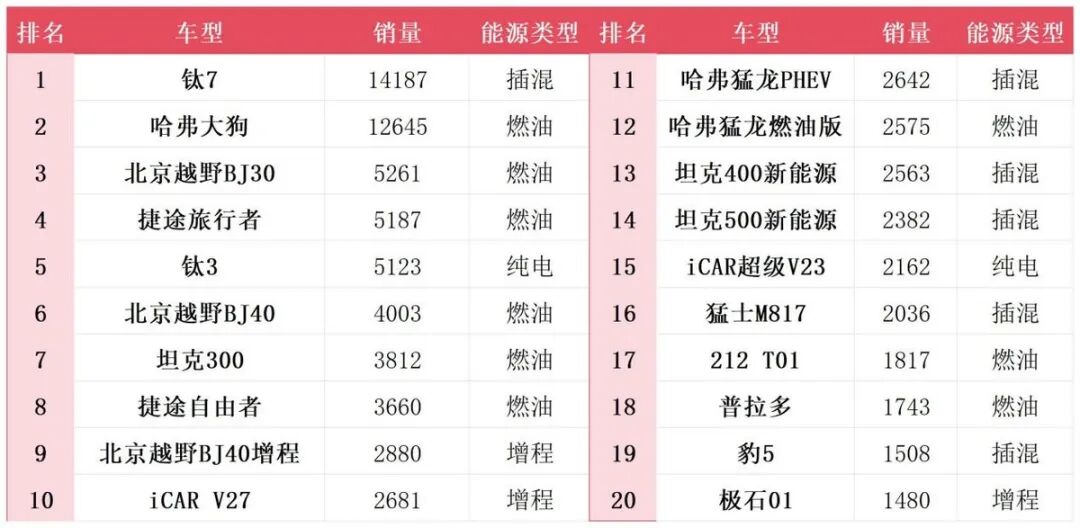
During its peak in December last year, the Fangchengbao Titanium 7 sold over 34,000 units in a single month, becoming an undeniable phenomenon.
The hunting car market is even more nascent. In 2025, total sales of hunting cars in China were just 181,000 units, accounting for less than 1% of the passenger vehicle market, still in its early cultivation stage.
With limited market capacity and a flood of brands and products, a harsh reality is inevitable. Most participants will merely serve as also-rans, with only a few leading models truly reaping the benefits.
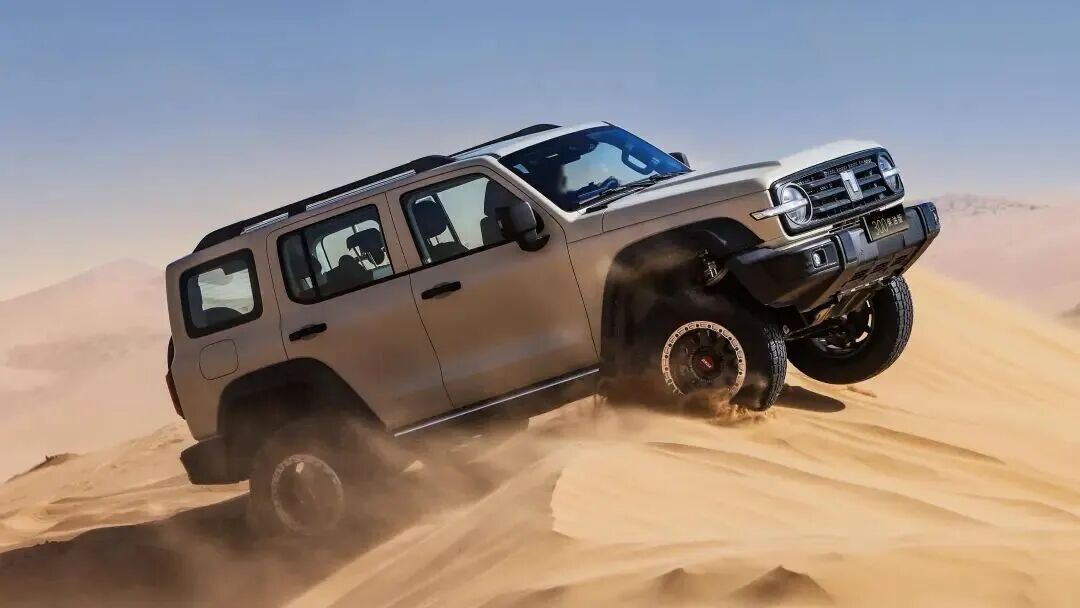
Beyond segment crowding, structural changes are also underway within the boxy car market. In 2025, extended-range and pure electric models saw significant market share gains, with sales up 334% and 209% year-on-year, respectively, far outpacing industry averages. Nevertheless, in the boxy car market, where power and off-road capability are critical, fuel-powered models still account for nearly half of the market.
This trend is also evident in the March sales structure: among the top 10 boxy car models by sales, 6 were fuel-powered; among the top 20, 9 were fuel-powered. Of the remaining models, plug-in hybrids took 6 spots, extended-range models 3, and pure electric models just 2.
Among the new boxy car models debuting at the Beijing Auto Show, with overlapping powertrain options, there are 4 pure electric, 4 extended-range, and 4 plug-in hybrid models, showcasing a diverse powertrain layout. This clearly indicates that new energy has become the most important growth driver for the boxy car market, especially extended-range and pure electric rugged boxy cars, which are moving from the fringes to the mainstream.
The popularity of boxy and hunting cars reflects the collective anxiety of Chinese automakers seeking differentiation in a mature, competitive market. The vast basic market allows every niche model to carve out enough survival space, but the sheer number of brands can quickly turn a clear blue ocean into a red ocean.
The array of boxy and hunting cars at the Beijing Auto Show represents not only a concentrated display of brand innovation but also the prelude to a brutal elimination race. The nature of niche markets dictates limited capacity, with leading models reaping most of the benefits, while mid-tier and lower-tier models struggle to survive amid price wars and homogenization. For automakers, entering a niche segment is not the finish line; the real challenges lie in maintaining a foothold after the initial hype fades, addressing the performance and range pain points of rugged off-roaders during new energy transition, and finding the right balance between practicality and style in hunting cars.
While the diversity is welcome, behind this excitement lies the survival game of niche segments, as well as the opportunities and challenges of new energy transition.
Editor-in-chief: Yang Jing Editor: He Zengrong
THE END
-
![]()
Jitian Xingzhou: A Pioneer in Optical Payloads Secures Hundreds of Millions in Series B Funding!
-
![]()
Orders Secured Through to the Second Half of the Year! The Rationale Behind the 'Surge' in Demand for This Company’s Optical-Grade Base Films
-
![]()
Beyond Patents: The Retail Rivalry of Insta360 and DJI Unfolds
-
![]()
180 Billion Market Cap Vanished! How Did Seres Fall So Far?
-
![]()
Blockbuster! Domestic storage takes the global double crown for the first time, from an AI company
-
![]()
China Spearheads Formulation! World's Pioneering Global Technical Regulation for Automated Driving Systems Greenlit and Unveiled
-
![]()
Farewell to Pulsed Support Policies: Three Major Auto Policy Directions from Multiple Departments Take Effect on the Same Day
-
![]()
Embercore AI’s Accelerated Funding: The Robot Industry’s Shift Toward ‘Learning Systems’