World Models: Rebuilding the Realm of Gravity Beyond Words
 04/27 2026
 568
568
If you've ever wondered why AI can craft exquisite poems yet overlook gravity when describing a rolling apple, you've inadvertently touched upon the most critical fault line in today's AI landscape: the brilliance of language models and the absence of world models.
The former dwells in a web of symbols woven from words, while the latter seeks to reconstruct the hidden laws governing all things through code. This migration from 'speaking' to 'thinking,' from 'knowing' to 'understanding,' defines the true starting line of artificial general intelligence (AGI).
01. What is a World Model, and How Does It Differ from a Language Model?
The concept of world models is not new; it originated from curiosity in cognitive science and AI about 'how humans imagine the future.' Its core inspiration stems from humanity's innate mental models of the world—abstract information acquired through senses transformed into concrete understanding of our surroundings.
Think of it as the mental theater in your brain that lets you navigate to the bathroom in the dark without sight, relying instead on intuitive deductions about space, time, and causality. For instance, when you throw a stone, your mind automatically completes its parabolic trajectory and predicts its landing spot without visual confirmation. This is the world model at work: it learns the underlying operational laws of the physical or virtual environment to anticipate future events.
In contrast, today's familiar language models resemble polymaths dwelling in libraries. They excel at capturing statistical correlations between words across vast texts, knowing 'apple' often precedes 'eat' or 'phone,' but they don't truly grasp why apples fall from trees due to gravity. Language models inhabit a realm of symbols and semantics, 'hearing' about the world through text rather than 'testing' physical rules through deduction.
The core distinction lies in sensitivity to 'causality' and 'spatio-temporal continuity.' Language models can craft coherent sentences like 'the cup shattered' but struggle to precisely calculate fragment angles and landing spots. World models, while potentially less articulate, silently estimate forces, motions, occlusions, and persistence. The current trend is to stitch both together, enabling AI not only to converse eloquently but also to 'act out' stories in its mental theater, ensuring responses align with both grammar and common sense.
02. Why Develop World Models, and What Are Their Applications?
While today's language models produce fluent essays and realistic images, they still commit elementary errors about physical laws. This superficial understanding of the world's fundamentals drives the rise of world models. We seek not a more eloquent machine but a digital brain that truly 'understands' gravity, collisions, and light flow.
The core of world models is to establish an internal mental simulation of how three-dimensional space operates. Instead of merely predicting the next word's probability, AI begins to infer trajectories of occluded objects or predict water flow directions, much like human infants.
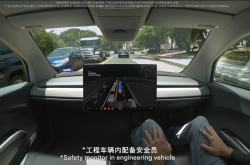
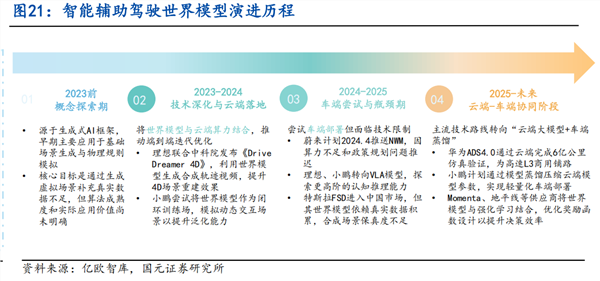
Application scenarios emerge from these missing physical intuitions. In embodied intelligence, rather than letting million-dollar robots learn to walk through repeated falls, they can first practice thousands of times in high-fidelity virtual worlds with realistic friction, rolling pebbles, and varied terrain. Autonomous driving training exemplifies this: real roads cannot stage deliberate pile-ups to teach algorithms evasion, but world models enable costless simulations of blizzards or sun glare scenarios.
Ultimately, developing world models isn't about creating a smarter chat partner but equipping AI with a coordinate system for existence itself. This enables prediction, creation, and genuine dialogue with our physical reality based on understanding worldly laws.
03. What Are the Technical Pathways of World Models, and Their Pros and Cons?
No unified standard answer exists yet for world models' technical pathways. Current explorations roughly divide into three schools:
The first, the 'Cognitive School,' pursues extreme abstraction, led by Turing Award winner Yann LeCun. He argues frame-by-frame prediction, like Sora's approach, is computationally wasteful pixel illusion. His JEPA architecture focuses on predicting abstract 'what happens next' states in compressed latent spaces, akin to an experienced driver processing only 'obstacle ahead—slow down' rather than tracking every leaf's trajectory. This approach excels in computational efficiency and intuitive causal logic, ideal for robotic decision-making systems. However, its lack of visual output renders its thinking process invisible to humans, delaying commercial viability.
The second, the 'Spatial School,' favors visual intuition, exemplified by Fei-Fei Li's team's Marble model. This path constructs stunning, 360-degree explorable 3D scenes from scratch using 3D rendering techniques like Gaussian Splatting. Its strengths are obvious: generating persistent, editable 3D assets directly integrable with game engines, offering bright commercial prospects. Yet its weakness is equally glaring: it captures the world's 'appearance' without inherent physical understanding.
The third, the 'Simulator School,' seeks a middle ground, represented by Google's Genie 3 and Alibaba's HappyOyster. Unlike the Cognitive School, it doesn't abandon vision; unlike the Spatial School, it doesn't generate static assets. Instead, it creates interactive video environments evolving in real-time based on user input, like a video game. For example, commanding 'rain' triggers dynamic global responses. Its advantage lies in bidirectional interaction with users, supporting prolonged, coherent exploration. However, its core remains video-generation logic, lacking true physical causality—less robust than the Cognitive School for robotic training requiring precise physical deduction.
Thus, while all discuss 'world models,' different pathways lay distinct 'foundations': one prioritizes logic, another presentation, and the third interaction. Which foundation will ultimately support the AGI edifice remains undecided.
04. Conclusion
Reflecting on world models' exploration, from bridging the chasm between language and physics to the diverse technical journeys, we see not just algorithmic divergence but starkly different visions of 'intelligence.'
Language models taught machines to speak like humans; world models strive to teach them to silently rehearse futures—letting water splash, balls land, and light shift in their mental theaters before answering. Yet reality remains stark: the Cognitive School's abstract logic lacks form; the Spatial School's visual splendor lacks physical essence; the Simulator School's interactivity remains veiled by causal ambiguity. However, this very diversity of pathways signals a profound consensus: the path to higher intelligence must root itself in reverence for spatio-temporal continuity, causality, and material reality.
- End -
-
![]()
Tesla Restructures Its Balance Sheet
-
![]()
Accelerating the High-Speed Interconnection Upgrade of AI Computing Clusters! JONHON Releases ELSFP External Light Source Optical Connectors
-
![]()
Breaking the overseas blockade of volumetric holographic materials, this optical enterprise secures nearly 100 million yuan in financing!
-
![]()
Why Does Jensen Huang So Openly Praise China’s AI?
-
![]()
"Wudang" Unveiled: Arm China's Next-Gen AI VPU Redefines Video Encoding
-
![]()
From Energy Conservation and Carbon Reduction to AI Decision-Making: GECON East Intelligence and Chery Group Explore a New Green and Smart Paradigm for Automobile Manufacturing
-
![]()
WAIC 2026 Observation | AI Accelerates Towards the Core of Industries, Industrial AI Enters a Critical Phase
-
![]()
Volkswagen China Fires the First Shot in Foreign-Funded 'White Box Delivery'!