Beijing Auto Show: No Dominant 'Star Car', but Three Key Tech Battles That Shape the Future
 04/27 2026
 565
565
【Introduction】Spanning 380,000 square meters, showcasing 1,451 vehicles, and featuring 181 global debuts—the scale has reached unprecedented levels. However, if you joined me at the Shunyi Pavilion on the media day of April 24, you'd have noticed a striking trend: this Beijing Auto Show lacks a 'headline-grabbing car' and is instead defined by 'headline-grabbing technologies.'
Unlike previous years, where a single new model dominated the limelight, this year's show is all about buzzwords like 'AI,' 'large models,' 'integrated cabin-driving,' and 'L3.' Volkswagen revealed its 'omni-domain intelligent agent AI' strategy, XPeng rebranded itself as a 'physical AI technology company,' and Li Auto integrated 'embodied intelligence' into its brand identity—automakers appear to have pivoted to AI-centric identities overnight.
But the reality behind this shift is far more brutal than a mere rebranding exercise.
The Computing Power Arms Race: 3,000 TOPS Is Just the Starting Line
During the auto show, a quote from Chang'an Automobile's Zhu Huairong went viral: 'By 2030, selling 3 million vehicles annually will be the bare minimum for survival.' Leapmotor's Zhu Jiangming added, 'China cannot sustain 17 automakers.'
With '3 million units' hanging like a sword of Damocles, automakers are scrambling to build technological moats to convince the market of their viability.
This has sparked a near-frantic computing power arms race: Li Auto's L9 Livis is powered by two self-developed 5nm chips, delivering a combined 2,560 TOPS; XPeng's GX packs four Turing chips, reaching 3,000 TOPS; Geely's 'Eva Cab' prototype goes even further, combining NVIDIA Thor U and Qualcomm Snapdragon 8797 to also exceed 3,000 TOPS.
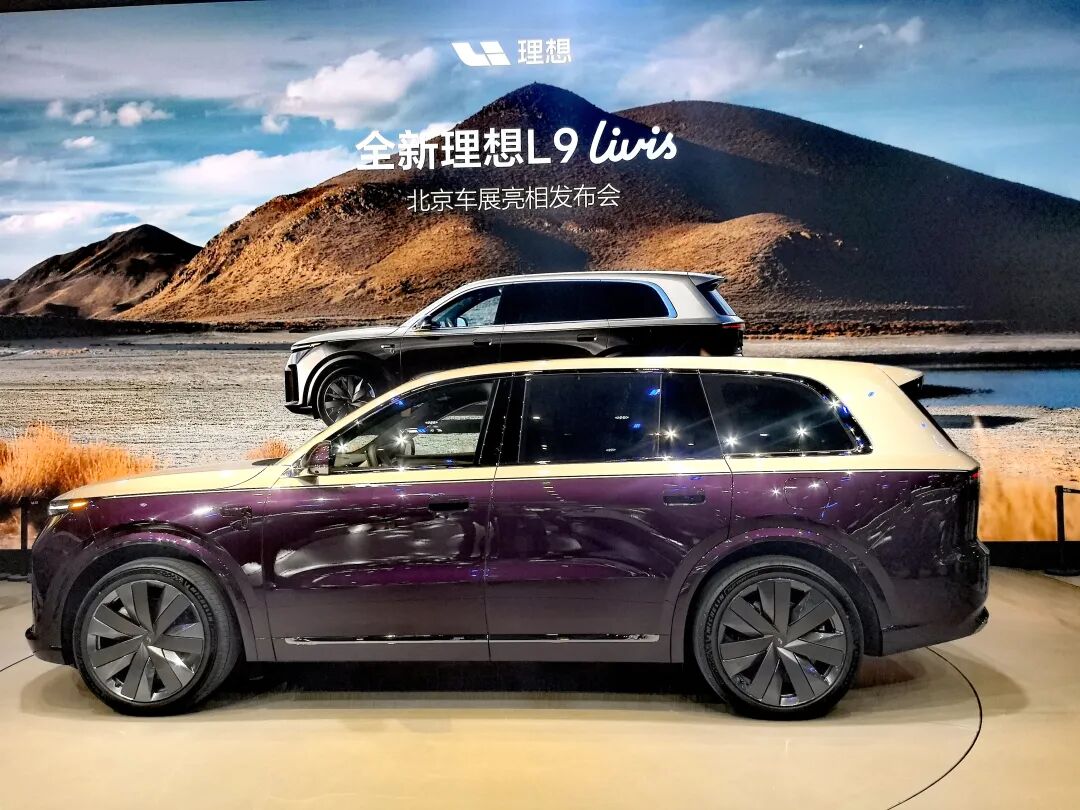
This mirrors the benchmarking wars in the smartphone industry. This seemingly excessive computing power race points to a genuine technological turning point—'integrated cabin-driving.'
The concept of 'integrated cabin-driving' merges the intelligent cockpit and autonomous driving systems into a unified computing platform. NVIDIA first proposed this idea in 2022, but Chinese companies were the first to deliver mass-production solutions. Horizon Robotics unveiled the world's first mass-produced 'integrated cabin-driving' package before the auto show—featuring the 'Xingkong' chip and the 'Kakaxia' operating system.
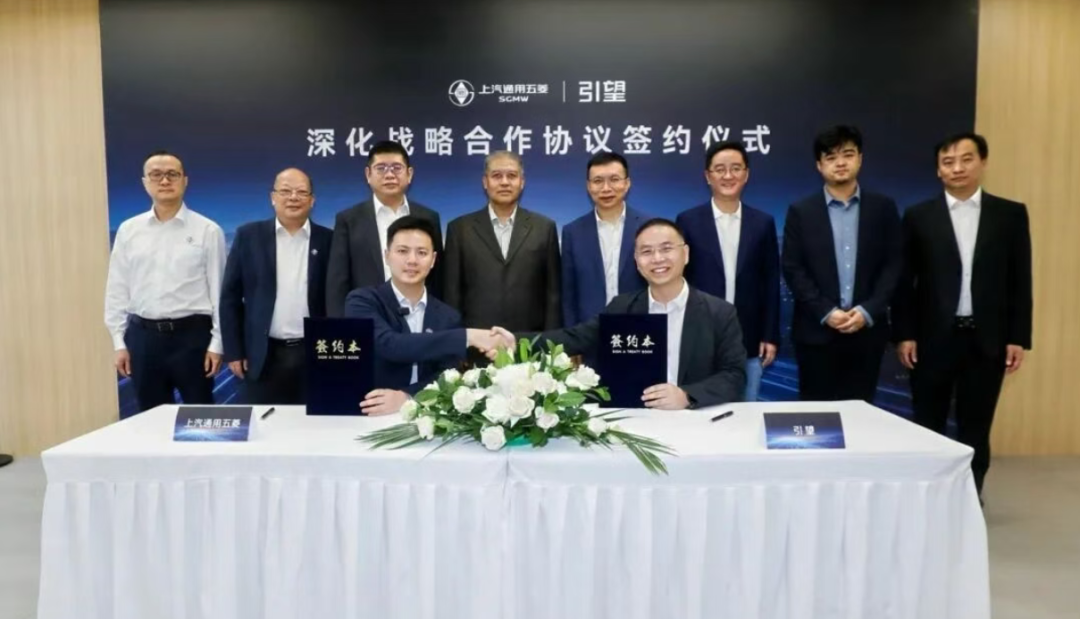
SAIC-GM-Wuling and Huawei AITO formally signed a comprehensive strategic cooperation agreement. This marks the evolution of their partnership from initial 'Three Intelligences' (smart manufacturing, assisted driving, intelligent cockpit) technology collaboration to a deeper, more all-encompassing strategic alliance.
My assessment: Over the next two years, 'integrated cabin-driving' will become the key benchmark distinguishing 'truly intelligent vehicles' from 'functional vehicles.' Brands still defining intelligence through 'screen and speaker stacking' are on the brink of obsolescence.
L3's 'Final Push': This Time, It's 'Almost There'
At this auto show, everyone is talking about L3, but no one dares to confidently declare, 'We're ready.'
Huawei AITO ADS 5.0 made its debut, claiming to pave the way for L3 commercialization. Li Auto, NIO, XPeng, and VOYAH all emphasized on their stands that hardware pre-installation is complete, awaiting regulatory relaxation.
However, the real variables lie not within the vehicles but in the progress of suppliers.
A telling detail: Core suppliers are stepping into the spotlight like never before. CATL occupied a 1,500-square-meter independent exhibition area at the entrance of Hall W4, standing shoulder to shoulder with BMW and Porsche. Horizon Robotics, WeRide, and Momenta directly set up shop in Halls B3 and B4, competing alongside Toyota, Changan, and Harmony Intelligent Mobility.
The technological prowess of suppliers now directly determines the product competitiveness of entire vehicles. Today, consumers prioritize whether a vehicle uses CATL batteries or Huawei AITO's intelligent driving systems before making a purchase.
This means automakers' L3 timelines increasingly depend on suppliers' R&D schedules. The mass production timeline of Huawei ADS 5.0 directly dictates when models equipped with it can advertise 'L3-level' capabilities. Momenta serves Mercedes-Benz, Toyota, and SAIC simultaneously; its algorithm iteration pace synchronously influences the intelligent driving experiences of all three brands. L3 is not just a technological issue but a commercial inflection point. Whoever secures this ticket first will gain a head start in monetizing 'in-vehicle time.'
Unmanned Logistics: A More Lucrative Path Than 'Passenger Transport'
Shifting to the commercial vehicle exhibition area, I observed a more pragmatic and profitable path for autonomous driving.
Neolix and GAC Leading's booths were crowded with dealers and logistics enterprise representatives. Their jointly developed X6T fully vehicle-grade unmanned logistics vehicle made its debut here. This is not a 'retrofitted vehicle' but a pure unmanned vehicle developed strictly according to vehicle-grade standards, from the chassis to sensors, from the drive-by-wire system to the computing platform. With a 6-cubic-meter loading capacity—the sweet spot for urban distribution logistics—it directly addresses pain points in express delivery, cold chain, and supermarket restocking.
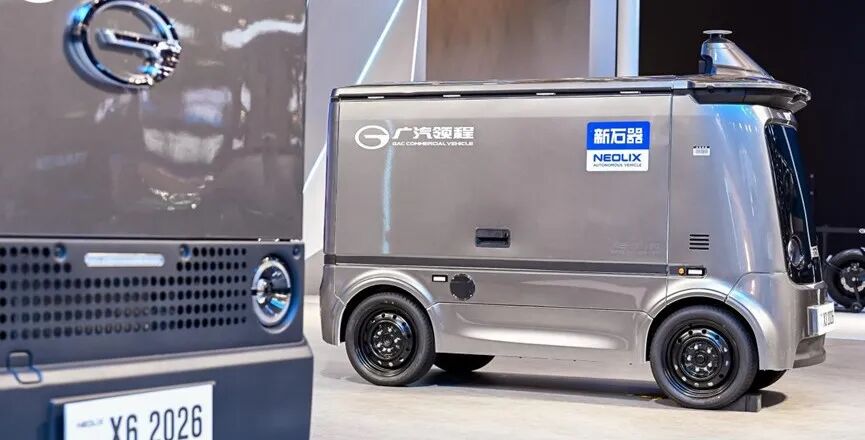
The simultaneously unveiled X3 model, with its compact 3-cubic-meter size, is tailored for community delivery and narrow alleyways. This 'large-small' product matrix follows a clear logic: replacing transportation links between trunk routes and final destinations with unmanned vehicles while concentrating human labor on value-added services in the 'last mile.'
What caught my attention even more was GAC Leading's RoboVAN platform roadmap: launching 3-unit and 6-unit products in 2026, followed by 12-unit and 20-unit high-capacity models in 2027. Neolix's autonomous driving algorithms and scenario operation experience, combined with GAC Leading's manufacturing, supply chain, and channel capabilities, are turning the 'technology + manufacturing + scenario' iron triangle into reality.
My assessment is unequivocal: The commercialization speed of unmanned logistics will outpace that of Robotaxi.
The reason is straightforward—relatively controllable scenarios, clear business models, and calculable cost-benefit ratios. While passenger vehicle L3 awaits regulatory breakthroughs, unmanned logistics vehicles are already validating their business models with 'real orders.' Companies solely focused on 'full-scenario L4' pipe dreams may need to reevaluate their business models.
Going Global 2.0: From 'Selling Cars' to 'Building Ecosystems'
Finally, let's discuss a buzzword beyond the exhibition halls: going global.
In Q1, China exported 2.226 million vehicles, up 56.7% year-on-year. However, at the auto show, the key discussion points have shifted from 'how many units were exported' to 'how to establish local roots' and 'full industrial chain globalization.'
Changan unveiled its 'Oceanic Horizons 2.0' strategy, pledging to invest hundreds of billions in strategic resources over the next five years, aiming to establish 800,000 units of overseas production capacity by 2030. Geely emphasized 'symbiotic win-win' cooperation, opposing simple 'occupation-style' globalization. Leapmotor, through its joint venture with Stellantis, has deployed over 800 outlets in Europe and achieved profitability in 2025.
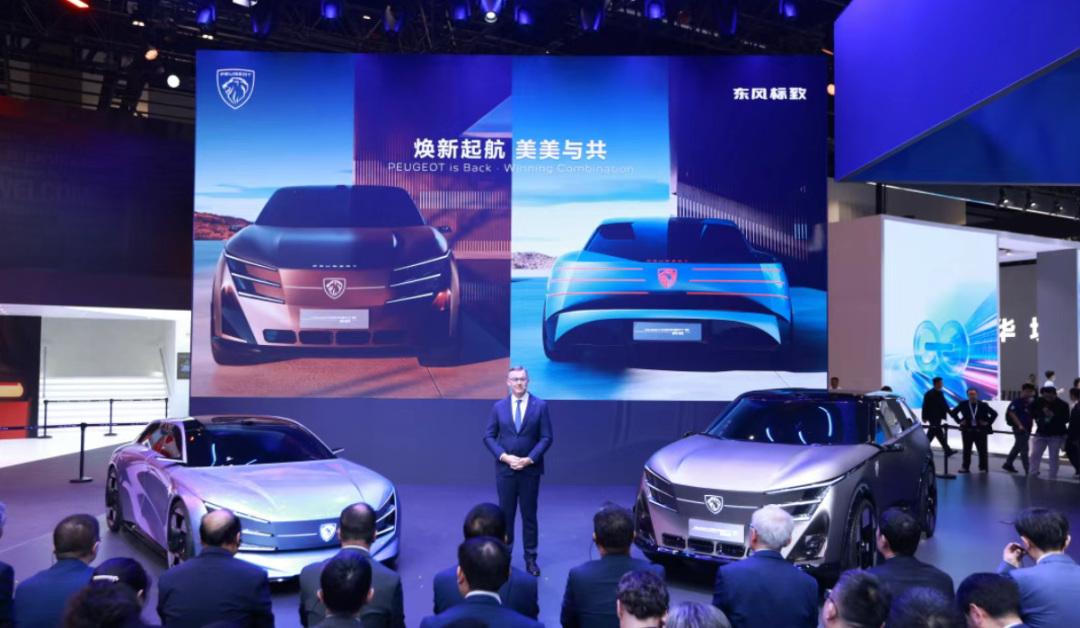
Most intriguing is Dongfeng Peugeot's reverse operation. The Peugeot Concept6 and Concept8 concept cars, built on China's intelligent industrial chain, will be 'manufactured in China, sold globally.' This represents a fundamental reversal of joint venture automakers' roles—no longer 'bringing foreign cars into China' but 'exporting Chinese technological solutions.'
The core logic of Going Global 2.0: Leverage China's intelligent supply chain and manufacturing capabilities to serve global markets. Brands still relying on 'low prices to capture markets' will soon find this path untenable.
Who Will Still Be at the Beijing Auto Show in Five Years?
2026 marks a watershed moment for China's automotive industry, transitioning from a 'Spring and Autumn Period' to a 'Warring States Period.'
The 3-million-unit survival threshold makes industry consolidation inevitable. Changan has already initiated synergy between Avatr and Deepal; Geely has integrated Lynk & Co and Zeekr. Zhu Huairong even stated during the Two Sessions, 'China has over 50 independent automotive groups, with severely fragmented resources.'
William Li likened this marathon to 'competition within millimeters': 'The gap between the best companies and those barely surviving is basically 3 to 5 percentage points.' Geely's Gan Jiayue put it more bluntly: 'China doesn't need so many new brands; launching new brands only wastes resources.'
So, what are the core technologies that will determine who remains in the game?
Three answers: The engineering capabilities of AI large models (transforming intelligence from 'functions' to 'instincts'), the commercialization capabilities of L3 autonomous driving (turning technology into sustainably operable assets), and the localization capabilities of global operations (shifting from 'going out' to 'going in').
This technological decisive battle has no bystanders. Domestic brands, joint venture automakers, and suppliers—all are vying for the same 'final round' ticket. And the 2026 Beijing Auto Show will be the starting gun for this battle.
Five years from now, who will still stand here? The answer lies in the outcomes of these three technological battles.
-
![]()
Expert Interpretation of New Policy Combination: Activating the Trillion-Dollar Automotive Aftermarket
-
![]()
Doubao Goes 'Professional', Volcano Rolls the Snowball
-
AI: No Sign of a Bubble!
-
![]()
NVIDIA-Backed AI Unicorn Secures $1.5 Billion Funding: Revenue Soars 2000%
-
![]()
Doubao Pro is Here: How Can Seed 2.1 Be Integrated into Real Processes?
-
"PCB Juice" Sees Four Consecutive Declines: Even Computing Power Material Suppliers Can't Lift This "Old Stock"
-
![]()
Potential 'Seismic Shift' in the U.S. TV Industry: Competition Shifts from Hardware Sales to Traffic Entry Points
-
![]()
Audi A6L's Defense in the Luxury C-Class Market: Following Huawei's Smart Driving Integration, Is Large-Battery HEV the Next Move?