AI Adoption Becomes a Stringent Benchmark: Big Factory Workers Find Themselves 'Ensnared' by AI
 04/27 2026
 484
484
Who Bears the Cost of Big Factories' 'AI Anxiety?'
Recently, employees from Sina Weibo took to social media to reveal that by the end of April, all R&D personnel within the company would be required to undertake an AI proficiency examination. Developers responsible for the APP would be evaluated on tasks typically handled by backend engineers, while backend engineers would be tested on APP-related tasks. Those who fail to meet the assessment standards will be mandated to participate in intensive training sessions.
This approach has left many perplexed. 'Having APP developers delve into backend coding and backend engineers venture into APP development is misguided enough. But why treat underperforming employees as if they were primary school students in need of after-school tutoring?'
In fact, Weibo is not alone in incorporating AI programming into performance evaluations among internet companies. In April, news surfaced that Xiaomi would assess the ability of its product and R&D teams to solve practical engineering problems using AI. Earlier in February, Kunlun Tech issued an internal memo to all employees, mandating the use of Codex/Claude Code for all R&D staff and implementing a 5% to 20% bottom-elimination policy in subsequent monthly AI programming assessments.
Moreover, internet giants such as ByteDance and Alibaba have rolled out a series of measures explicitly encouraging employees to engage in personal learning and experimentation with various new AI products.
In reality, a wave of AI-driven productivity transformation has breached the confines of leading companies and permeated the workstations of the majority of 'workers.'
01. Increased Overtime Despite AI-Driven Efficiency Gains
'If I can't ride the wave of AI-driven efficiency gains in big factories, I'll be left behind.'
'There's a sense of helplessness, knowing that no matter how hard I try, I'll eventually be replaced by AI.'
...
No one anticipated that the first wave of AI impact would primarily target programmers. While other industries are still at the stage of 'encouraging employees to use AI,' computer professionals are already grappling with how to 'demonstrate the use of AI' to meet KPIs.
With programming tools like Cursor and Claude Code gradually capable of writing complete modules, generating test cases, and automatically completing complex logic, the entire product development and maintenance process can now be assisted by AI. A test development engineer at Alibaba mentioned that many colleagues in the department now rely on AI to write product documentation, design, develop, and test. When bugs are detected, AI modifies and retests them.
AI empowerment was initially seen as a positive development for liberating productivity. However, when the use of AI becomes a top-down mandate, tool upgrades can transform into new burdens.
An algorithm researcher at TikTok noted that while programming tools have significantly boosted efficiency, the company's demands on everyone have also increased.
Why do programmers command high salaries? Writing code used to be a highly specialized task. Previously, developing a functional module from requirement review to final launch could take two weeks or even longer. But now, with the technical barriers removed, the same functional module may need to be delivered in just three days.
A technician from a major company in Beijing bluntly stated that after the company demanded AI-driven efficiency gains, the workload has surged. The delivery cycle for reporting documents has shortened from one week to two days, yet the quality requirements have become 'based on interactions with AI, provide judgments that surpass AI.'
'I feel exhausted every day, as if my brain is being drained. You have to repeatedly write prompts, check results, and monitor multiple AI processes simultaneously. What used to be simple coding has now become thinking and supervision. The cognitive burden is much heavier than before, but bosses don't understand this.' The technician lamented, 'Bosses only think that with AI, your progress should be faster and faster. They keep pushing for faster progress, resulting in even more overtime than before AI.'
To further enhance development efficiency with AI, some companies have started allocating token packages to employees, allowing unlimited use of tools like Cursor and Claude Code. Some big factories have even included token usage in their probation and promotion assessment criteria.
In addition to Weibo and Xiaomi, which are about to assess their employees, Alibaba has also made AI a stringent indicator for performance evaluation. ByteDance began providing AI learning subsidies to all employees in April this year, with technical positions receiving $1,000 annually and other positions receiving $300 annually. Tencent recently offered employees benefits for using AI tools, with a usage limit of $700 per person for Cursor and Claude. The annual token package per person is approximately 220,000 yuan, requiring director approval before use.
It is evident that both internet companies and hardware manufacturers are going to great lengths to make employees 'fully embrace AI' and produce as many standardizable 'skills' as possible. An employee from a major company stated that the boss not only encourages the use of AI at work but also hopes that employees will use the company's models in their personal lives. The department's future token consumption will be directly linked to performance, and those who rank low in token consumption may be affected in their promotions.
'To meet token usage targets, some colleagues are even researching ways to waste tokens.' The employee expressed frustration, as no one truly understands this method of measuring efficiency gains through 'token consumption.' 'It's like comparing classmates in school based on who uses up the most pen refills. But does using more pen refills necessarily mean getting more questions right?'
02. Both Workers and Big Factories Are 'Afraid of Missing Out'
Apart from finding ways to make their token consumption look better, many technical professionals are more concerned about how soon AI will completely replace them.
The disappearance of technical barriers has made many programmers worry about their job security, especially when the company culture promotes 'distilling' colleagues' experience into standardizable skills that AI can execute. When these skills become sufficiently rich and the system learns them, headcount can be reduced.
Industry insiders state that while some process-oriented and repetitive positions in big factories are indeed being replaced by AI, not all positions have reached the point of workforce reduction. Those who deeply use various AI tools have realized that AI can make bizarre errors, and the process cannot be manually edited due to quota limitations and long generation times. If management believes that all positions can reduce headcount, the resulting panic from this cognitive bias is far more frightening than AI itself.
The pressure felt by employees is often the result of top-down transmission. Public statements from some company management also reflect a rather aggressive pursuit of AI-driven efficiency gains.
Recently, DingTalk founder Wu Zhao (Chen Hang) stated in a speech that no one in the company writes documents anymore. 'If I see a document written by a person, I will definitely criticize it. No note-taking is allowed during meetings. Meeting minutes and follow-ups are all handled by AI.'
iQIYI founder Gong Yu also mentioned at a recent event that cost reduction and efficiency gains in the entertainment industry still rely on AIGC. The high cost and low efficiency of live-action filming may soon become comparable to 'intangible cultural heritage.'
These two 'bold statements' have sparked significant controversy. iQIYI was criticized on the hot search for three consecutive days for being 'desperate for money,' while DingTalk's Wu Zhao once again faced backlash with 'Wu Zhao is at it again.' While 'prohibiting manual document writing' can be understood as streamlining intermediate processes for developers who are not good at expressing themselves, a content platform overly emphasizing the difference between live-action filming and real people undoubtedly ignores the laws of content creation.
Behind the aggressive stance of big factory executives lies collective anxiety after reaching the limits of mobile internet growth.
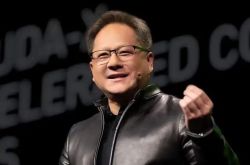
The rapid iteration of large models and the emergence of various agents have made the industry realize that a significant number of tool-based and professional service software may disappear in the future. NVIDIA CEO Jensen Huang believes that in the coming years, a new software paradigm, AI agents, will replace software and apps as the mainstream. Every successful application will drive reconstruction at every level below it, from models and infrastructure to chips and even the lowest-level power plants.
This means that the entry point to the entire digital world is being redefined. When users no longer open individual apps but instead directly access services through an AI agent, the traditional logic of 'platforms' and 'traffic' will collapse. Every company fears that its hard-earned ecological niche of two decades could be replaced overnight by an agent interface. The urgency to secure a ticket for the next era is imminent, and the fear of missing out (FOMO) drives companies to increase their AI investments.
Alibaba plans to invest over 380 billion yuan in the next three years to heavily invest in cloud computing and AI infrastructure. ByteDance's annual AI budget exceeds 100 billion yuan, and due to a significant increase in AI-related investments in the second half of 2025, its annual net profit has declined by more than 70% year-on-year. Meituan was recently reported to be testing a trillion-parameter large model trained using the largest-scale purely domestic computing power.
These cost-ignoring investments have somewhat exceeded the bounds of commercial rationality, as every company fears being labeled as 'strategically backward.' Since the beginning of the year, Tencent's stock price has fallen from a high of HK$683 to around HK$493, a nearly 30% drop, due to slower large model iteration and computing power expansion compared to its peers.
In contrast, the capital market is rewarding companies that dare to tell AI stories with real money. Large model companies like Zhipu and Minimax, with revenues in the hundred-million yuan range, have seen their market values soar despite not yet being profitable.
Some companies have even enjoyed stock price gains from 'AI layoffs.' Recently, fintech company Block announced layoffs of approximately 4,000 employees despite good performance, citing that 'AI has fundamentally changed the meaning of operating a company.' The news caused its stock price to surge over 23% after hours. Meta and Amazon have also proceeded with layoffs in the tens of thousands in the name of AI-driven efficiency gains, and both companies' stock prices rose following the layoff announcements.
Therefore, for some big factory executives, 'fully embracing AI' is not just a technical strategy but also a 'financial means' to hedge against market capitalization pressure.
It is foreseeable that the AI competition among big factories will not stop in the short term. As long as the AI narrative remains hot, corporate strategic anxiety will continue to be passed down as assessment indicators on every employee. This AI competition has no short-term winners, only a continuous tug-of-war of bidirectional anxiety with no long-term solution.
-
![]()
Tesla Restructures Its Balance Sheet
-
![]()
Accelerating the High-Speed Interconnection Upgrade of AI Computing Clusters! JONHON Releases ELSFP External Light Source Optical Connectors
-
![]()
Breaking the overseas blockade of volumetric holographic materials, this optical enterprise secures nearly 100 million yuan in financing!
-
![]()
Why Does Jensen Huang So Openly Praise China’s AI?
-
![]()
"Wudang" Unveiled: Arm China's Next-Gen AI VPU Redefines Video Encoding
-
![]()
From Energy Conservation and Carbon Reduction to AI Decision-Making: GECON East Intelligence and Chery Group Explore a New Green and Smart Paradigm for Automobile Manufacturing
-
![]()
WAIC 2026 Observation | AI Accelerates Towards the Core of Industries, Industrial AI Enters a Critical Phase
-
![]()
Volkswagen China Fires the First Shot in Foreign-Funded 'White Box Delivery'!