[Industry In-Depth Research] Has Jack Ma Made a Comeback? Alibaba's AI-Driven Transformation: A Year of Strategic Shifts and Personnel Changes
 04/28 2026
 714
714

Author | Qing Yan. For more financial insights, visit BT Finance and Economics Data. This article spans 3954 words, with an estimated reading time of 9 minutes.
Editor's Note:
AI has emerged as the central battleground in the internet industry. Faced with fierce competition, Alibaba has embarked on a series of intensive personnel and structural reforms. From the establishment of the ATH Business Group and the implementation of a technical committee to the restructuring of core executive responsibilities and the continuous rollout of AI products, Alibaba is making strategic moves. Coupled with high-level iterations and technical personnel changes, guided by top-level strategic direction, Alibaba is consolidating its AI resources comprehensively. This in-depth organizational transformation not only reflects a proactive response to performance pressures and industry gaps but also accelerates Alibaba's AI technology iteration and ecosystem integration.
Have you noticed the subtle changes in Alibaba's apps lately?
Open your phone, and you'll see a new face on Qianwen—a digital human named "Qianwen Dimples." While many might dismiss this as just another product update, it actually signals a significant personnel shakeup at Alibaba.
Since 2026, China's tech giant has been undergoing a significant "reshuffle" in the AI race, with technical leaders departing, structural reorganizations taking place, and a new business group being rapidly established. All these moves are centered around one core focus: AI.
The question arises: Are these frequent adjustments indicative of chaos or acceleration?
1. Personnel Changes Over the Past Year

▍ Key Figures Depart First
On March 4, 2026, a report by Jiemian News sent shockwaves through the global AI community.
Lin Junyang, the technical leader of Tongyi Qianwen, resigned.
At just 32, he was the core architect behind the Tongyi Qwen series. He wasn't alone; Yu Bowen, the post-training leader; Li Kaixin, a core contributor to Qwen 3.5; and Hui Binyuan, the head of Qwen Code, all left on the same day.
An entire team disbanded in a single day.
According to Guangming Net, CEO Wu Yongming confirmed these departures in an internal email on March 5. Phoenix News later revealed that Yuan Qian, Alibaba's group vice president and former president of Alibaba Cloud Intelligence International Business Unit, also ended her seven-year tenure at Alibaba at the end of March.
After Lin Junyang's departure, the core team of Tongyi Qianwen experienced collective turbulence (Source: Internet)
▍ Partner Structure Quietly Rewritten
Looking back, signs of personnel upheaval had already begun to surface.
In June 2023, Daniel Zhang announced via a company-wide letter that he would step down as chairman and CEO of Alibaba Holding Group, with Joe Tsai succeeding as chairman and Eddie Wu taking over as CEO. This "leadership change" at Alibaba shook the market at the time. (As reported by Guangming Net on June 20, 2023)
Alibaba's fiscal year 2025 annual report further revealed shifts in power dynamics: Jiang Fan officially joined the Partnership Committee, forming a top decision-making quintet alongside Jack Ma, Joe Tsai, Eddie Wu, and Shao Xiaofeng. Eight partners, including Daniel Zhang, Trudy Dai, and Lucy Peng, simultaneously exited the stage.
- Total number of partners: Reduced from 26 to 17 (Source: Alibaba FY2025 Annual Report)
- Partners exiting at once: 9, a first in Alibaba's history (Source: Alibaba FY2025 Annual Report)
- Top decision-making layer: Quintet (Jack Ma/Joe Tsai/Eddie Wu/Shao Xiaofeng/Jiang Fan) (Source: Alibaba FY2025 Annual Report)
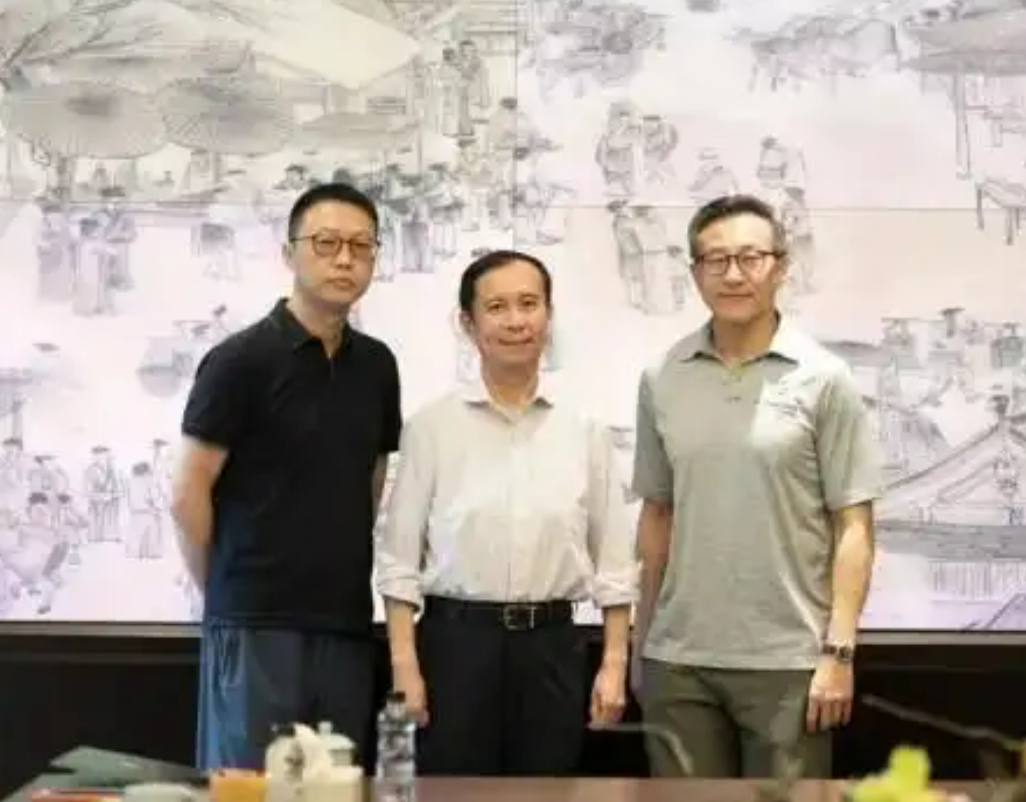
Alibaba's Partnership Committee undergoes significant downsizing, consolidating power at the core.
According to a Hexun.com article titled "Alibaba's New Landscape: Jiang Fan Goes Global, Trudy Dai Shifts Downward," Jiang Fan integrated the e-commerce sector, taking full charge of the "domestic + overseas + local life" portfolio. Trudy Dai completely stepped away from the frontlines of e-commerce, with Ele.me and Fliggy merged into the e-commerce business group, and Wu Zeming appointed as CEO of Ele.me, reporting to Jiang Fan.
Veterans are gradually stepping down, and the baton is being passed to the post-80s generation.
2. Restructuring: Every Move Targets AI
▍ ATH Business Group—A Nine-Word Strategy
On March 16, 2026, Alibaba officially established the Alibaba Token Hub (ATH) Business Group. (As reported by Huanqiu.com)
Directly led by CEO Eddie Wu himself, the new business group includes Tongyi Labs, MaaS Business Line, Qianwen Business Unit, Wukong Business Unit, and AI Innovation Business Unit.
The core objective is encapsulated in just nine words: "Create Tokens, Deliver Tokens, Apply Tokens."
This represents Alibaba's clearest AI strategy to date, covering the entire AI industrial chain from foundational models to platform delivery and finally to C-end application landing. According to an analysis by Tencent News' DeepNet, the structure of the ATH Business Group bears clear traces of Jack Ma's influence.

ATH Business Group structure illustration (Source: Internet)
▍ Triangular Division of Labor: One Role Each, All in Their Place
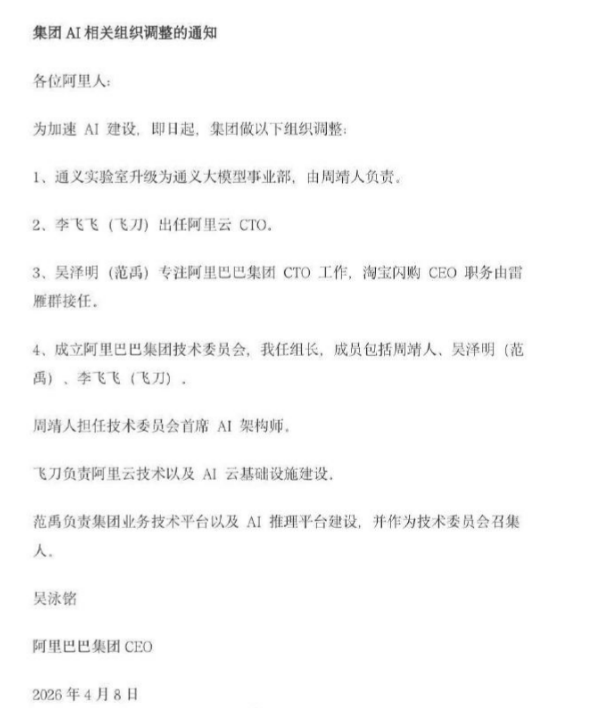
On April 8, Eddie Wu's internal letter once again drew attention. (As reported by The Paper)
The Group Technical Committee was officially established, with Eddie Wu serving as its leader. The division of responsibilities among the three core members is as follows:
- Zhou Jingren: Chief AI Architect of the Technical Committee + Head of Tongyi Large Model Business Unit, dedicated to AI R&D, stepping down as Alibaba Cloud CTO (Source: The Paper)
- Li Feifei: Succeeds as Alibaba Cloud CTO, focusing on AI cloud infrastructure (Source: National Business Daily)
- Wu Zeming: Group CTO, focusing on AI inference platforms and business landing (Taobao/Tmall/DingTalk scenarios) (Source: National Business Daily)
R&D, foundation, and landing—three lines, three people, each focusing on one segment. This represents the clearest division of labor in Alibaba's AI architecture to date, consolidating decision-making chains and shortening execution paths.
This is not decentralization; it is centralization.
3. Where Is Jack Ma?
▍ Outwardly Low-Key, But Still Involved
Over the past few years, Jack Ma has faded from public view, leading many to assume he had truly retired.
However, a series of moves in 2026 are challenging that assumption.
On March 3, 2026, Jack Ma appeared at Hangzhou Yungu School alongside Alibaba and Ant Group's core management for an internal sharing session. (As reported by Lan Jing News) He said:
"The AI era has arrived rapidly, and the impact on society over the next 3-5 years may be greater than imagined. Humanity is not yet prepared."
He also emphasized that companies must plan ahead during "sunny days" and not wait until crises arise to respond.
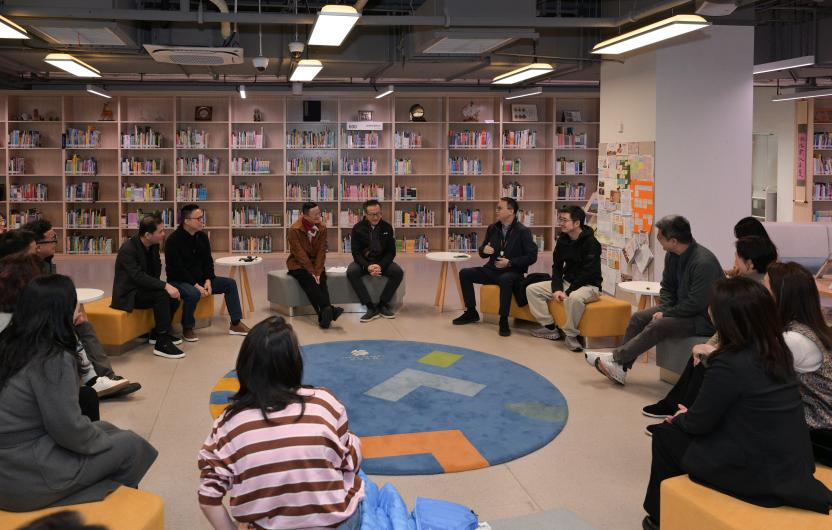
Jack Ma appeared at Yungu School's internal sharing session in March 2026.
This was not a public speech but an internal tone-setting session.
According to an analysis by Tencent News' DeepNet, Jack Ma participated in the top-level design of Alibaba's AI strategy, oversaw the landing of Tongyi Qianwen, and pushed for the integration of AI with e-commerce and local life services. The establishment of the ATH Business Group is believed to bear his decision-making imprint.
▍ Financial Pressure: Net Profit Down 22.60%
Why is Jack Ma in a hurry? The numbers provide the answer.
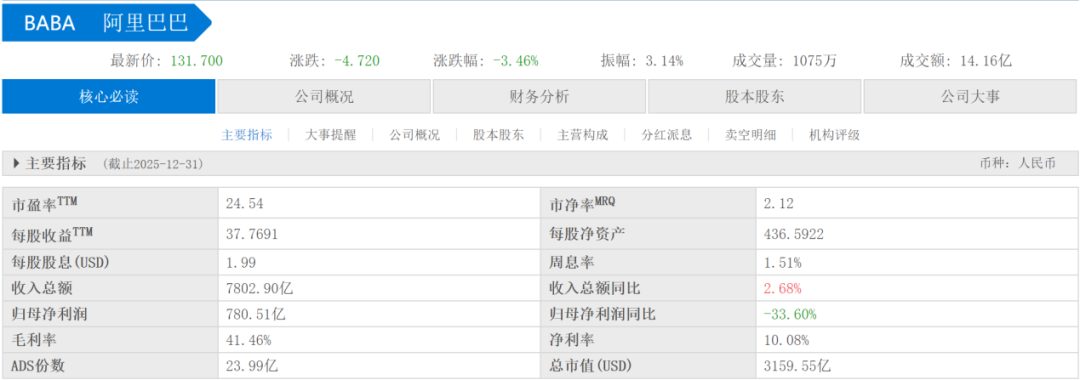
- Revenue: RMB 780.29 billion, up 2.68% YoY (growth continues to slow) (Source: Alibaba's latest financial report)
- Net profit attributable to parents: RMB 78.051 billion, down sharply by 22.60% YoY (Source: Alibaba's latest financial report)
- Doubao MAU: 345 million vs. Qianwen MAU: 166 million, a gap of 179 million (Source: Tencent News' DeepNet)
Revenue is still growing, but profits are collapsing. More critically, ByteDance's Doubao has more than twice the monthly active users (MAU) of Qianwen, with significantly stronger multimodal capabilities.
The crisis of falling behind is already very real.
On September 16, 2025, Jack Ma appeared at Alibaba's Xixi Campus HHB Bar for a gathering with executives. At the time, Alibaba's market cap had rebounded to HKD 3 trillion, which media interpreted as closely tied to its AI layout (strategic layout).
Panoramic view of Alibaba's AI race layout (Source: Internet)
4. This Is No Coincidence—It's a Life-and-Death Race in the AI Sector
Alibaba's intensive personnel changes make sense when viewed in a broader context.
ByteDance, Baidu, and Tencent are all accelerating simultaneously. The window of opportunity in the AI battlefield is narrowing. Whoever first establishes a closed loop of "model capabilities + C-end traffic + ecosystem integration" is likely to defend their moat for the next decade.
Alibaba's response has been to consolidate all AI resources under a single main storyline (main line): unified scheduling by the ATH Business Group, centralized decision-making by the Technical Committee, and Eddie Wu's direct involvement.
Personnel losses are painful, but the sense of direction is clearer than ever.
Some argue that the core logic behind Alibaba's current adjustments is to use organizational "subtraction" to achieve strategic "addition"—cutting edge businesses and injecting resources into the AI main battlefield. This resembles Baidu's contraction path since 2023, though Alibaba's scale is larger, and the pain of adjustment is more pronounced.
▍ Three Core Judgments on Alibaba's AI Transformation
- Personnel turmoil is the cost, not the crisis—after restructuring the core technical team, decision-making chains are shorter and more centralized.
- Jack Ma has not exited; he has just changed positions—from a frontline executor to a behind-the-scenes strategic tone-setter.
- Whether Qianwen can catch up to Doubao is the real test—the organizational changes have occurred, but the gap in product MAU remains.
Changing leaders is easy; changing minds is hard. Alibaba's real AI test is not who sits in the C-suite but when Qianwen can become a daily must-open for more people.
So, back to the opening question—will AI accelerate after Alibaba's personnel reforms?
The direction is set, resources are concentrated, and Jack Ma is not far away. The speed should increase.
But catching up to Doubao will take time.
Disclaimer: This article is for information sharing and industry analysis only and does not constitute any investment advice, investment analysis opinions, or trading solicitations. The market carries risks, and investments should be made cautiously. Any investment decisions made based on this article's content are at the reader's own risk, with gains or losses borne solely by the individual. The author and publishing platform assume no legal liability.
This article is an original piece by BT Finance and Economics and may not be used, reproduced, disseminated, or adapted without permission. Infringement will result in legal action.

-
![]()
Tesla Restructures Its Balance Sheet
-
![]()
Accelerating the High-Speed Interconnection Upgrade of AI Computing Clusters! JONHON Releases ELSFP External Light Source Optical Connectors
-
![]()
Breaking the overseas blockade of volumetric holographic materials, this optical enterprise secures nearly 100 million yuan in financing!
-
![]()
Why Does Jensen Huang So Openly Praise China’s AI?
-
![]()
"Wudang" Unveiled: Arm China's Next-Gen AI VPU Redefines Video Encoding
-
![]()
From Energy Conservation and Carbon Reduction to AI Decision-Making: GECON East Intelligence and Chery Group Explore a New Green and Smart Paradigm for Automobile Manufacturing
-
![]()
WAIC 2026 Observation | AI Accelerates Towards the Core of Industries, Industrial AI Enters a Critical Phase
-
![]()
Volkswagen China Fires the First Shot in Foreign-Funded 'White Box Delivery'!