The Unspoken Words Behind Apple's 'Cook Era' Farewell
 04/28 2026
 508
508
Author|Zhang Qian
Editor|Hu Zhanjia
Operations|Chen Jiahui
Produced by|LingTai LT (ID: LingTai_LT)
Header Image|Publicly available online
On April 20, an Apple announcement sent shockwaves through the tech world.
Tim Cook will step down as CEO on September 1 and transition to Executive Chair of the Board. His successor is John Ternus, Senior Vice President of Hardware Engineering.
On the day of the announcement, Apple's stock price dipped by less than one point. Interestingly, when Steve Ballmer announced his departure from Microsoft, its stock surged. In contrast, the market's muted response—voted with real money—suggests that after 15 years at the helm, Cook hasn't fallen out of favor with investors.
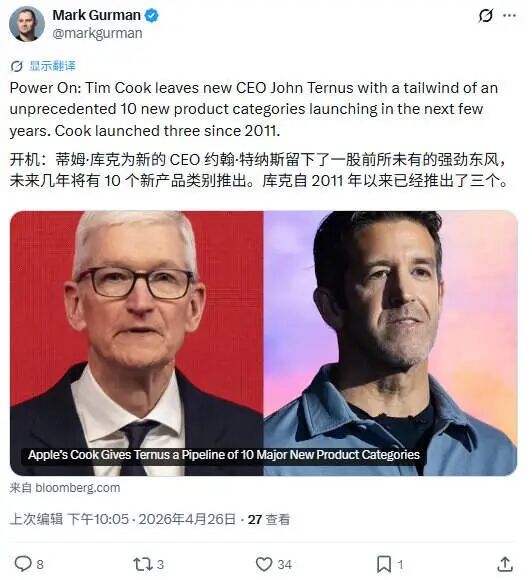
This reaction isn't hard to understand.
Just a month earlier, Cook had debunked retirement rumors on *Good Morning America*, stating, "I haven't said I'm retiring. I deeply love my job." The announcement arrived while those words were still echoing. This contrast alone suggests the transition wasn't impulsive but the culmination of a long, deliberate process.
Bloomberg published a telling photo.
Cook and Ternus walked side by side on a path in Apple's Cupertino campus, both in dark shirts, jeans, and Apple Watches, even their smiles mirroring each other.
The message Apple wanted to send couldn't be clearer: business as usual, no need to worry.
Yet zoom out slightly, and urgency becomes apparent.
Cook's track record would be considered top-tier at any publicly traded company—media reports from Tianyancha show Apple's market cap soared from $350 billion to $4 trillion, net profit nearly septupled, active devices surpassed 2.5 billion, and global retail stores expanded from 300+ to 540. The problem? As Cook prepared to hand over the reins, Apple was no longer the most valuable U.S. company. Google's AI-powered search propelled its valuation to new heights, while NVIDIA, leveraging its computational dominance, claimed the tech stock throne.
The timing of this transition is intriguing.

Cook's Unspoken Words
At an April 22 all-hands meeting, Cook spoke candidly.
When asked about his biggest lesson, he directly cited Apple Maps. "Our first truly major mistake"—his words were that blunt. When iOS 6 launched in 2012, Apple confidently replaced Google Maps with its in-house version, only to crash spectacularly. Towns vanished, roads twisted like pretzels, 3D views showed clouds obscuring entire mountain ranges, and even schools were mislocated. Cook was forced to issue a rare public apology on Apple's website, urging users to "return to Google Maps for now."
"Because we tested more localized content," Cook explained at the meeting, "we launched without adequate preparation." Many likely recalled Scott Forstall, the software chief under Steve Jobs and direct architect of the Maps fiasco, whom Cook fired shortly after taking over.
But Cook didn't seek credit. He admitted his "list of mistakes is shockingly long," then pivoted: at least Apple avoided mass product recalls or canceling announced projects, unlike peers.
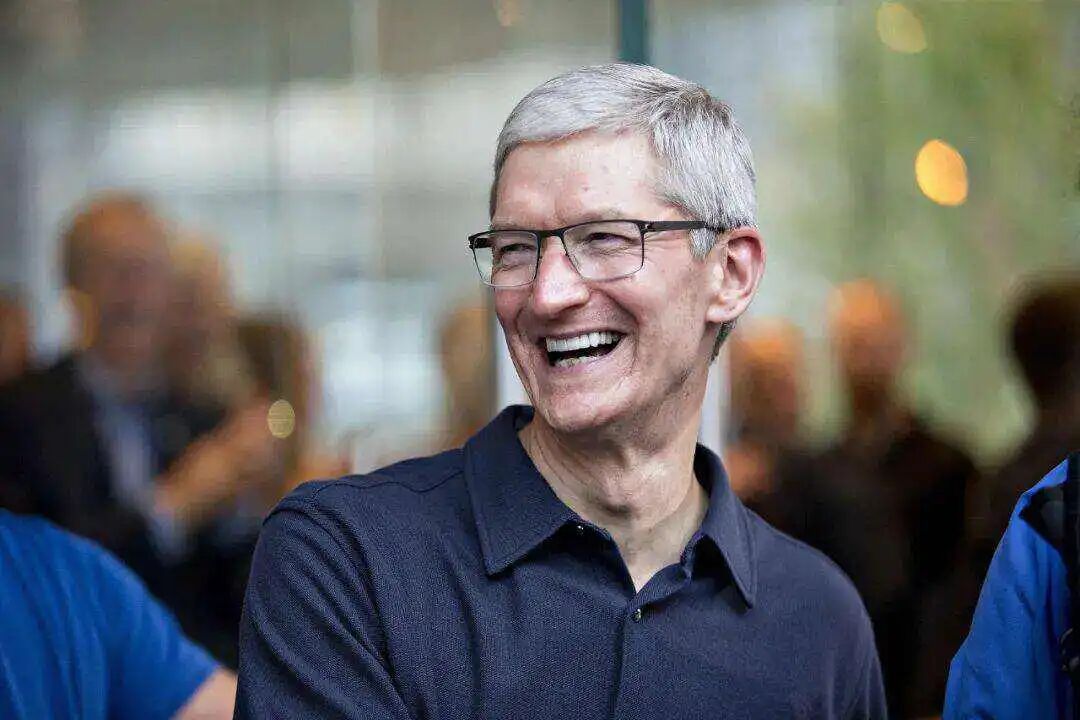
This was part self-defense, part fact.
The Vision Pro and car projects failed, but Apple cut losses during internal testing before involving customers.
Asked about his proudest achievement, Cook chose the Apple Watch. He recalled the first user email reporting how the device detected a heart irregularity and saved a life—"deeply moving," in his words. What was once dismissed as "pointless" became a health guardian for millions worldwide. This evolution from "nice-to-have" to "essential" perhaps better encapsulates Cook's product philosophy than any financial report.
Regarding his health—a topic of intense speculation—he stated bluntly: "I'm healthy, energetic, and plan to serve in my new role long-term." No room for interpretation.
Why step down now?
Cook's logic is clear: strong company performance, a clear roadmap, and a ready successor. This "best transition ever," as he called it, requires all three. It sounds rehearsed, but makes sense—would anyone take over a sinking ship?

15 Years: From Watchman to Architect
When Steve Jobs died in 2011, pundits widely predicted Apple's decline. "Without that genius, Apple is just another mediocre tech company" was the consensus.
Fourteen years later, Apple thrives.
Its market cap grew 10-fold, revenue from $108 billion to $416 billion. Last quarter, iPhone sales in China defied a 20% industry decline, leaving competitors shaking their heads. Counterpoint Research analysts noted bluntly: "While most rivals raised prices, Apple embraced affordability." A decade ago, that would've sounded like science fiction.
Jobs gave Apple its soul; Cook built its skeleton. Soul captivates at first sight; skeleton sustains through winters. The metaphor is cliché but apt.
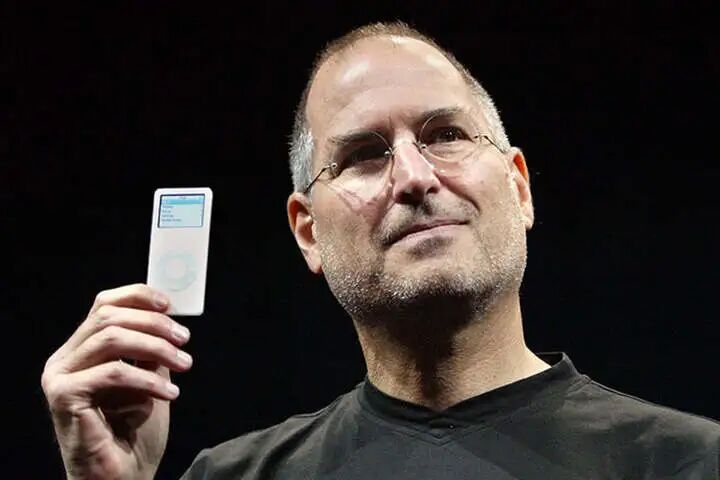
Cook's true genius lies in transforming the iPhone's residual heat into an entire ecosystem.
iPad, Apple Watch, AirPods, Mac, services, accessories—each product alone isn't revolutionary, but together they form a seamless experience network. More critically, Cook perfected supply chain mastery, honed at Compaq, to slash manufacturing costs via parallel production in China, India, and Vietnam while offloading inventory risks to contractors.
But every coin has two sides.
Critics argue Cook didn't launch truly new categories. While Apple Watch and AirPods succeeded, Bloomberg's Mark Gurman notes their core teams and design DNA trace back to Jobs' era. Vision Pro, Cook's decade-long bet, flopped post-launch, and the $10+ billion car project was scrapped entirely. For a company built on "Think Different," these aren't just financial losses but identity crises.
Tianyancha reports Cook earned $74.6 million last year, with a net worth nearing $3 billion. Yet these numbers don't answer a fundamental question: Is Cook a great CEO or merely a top-tier operator in the "post-Jobs era"?
The gap between the two may be wider than he realizes.

AI Quagmire: Siri Falls Behind
Cook's biggest unfinished business is undoubtedly AI.
Since ChatGPT's late-2022 debut, human-computer interaction has been redefined. Google went all-in on Gemini, Microsoft embedded Copilot everywhere, and NVIDIA's GPUs became more coveted than oil. Only Apple seemed frozen in time.
How bad is Siri's situation?
*The Wall Street Journal* likened it to "Neanderthals." Launched in 2011—earlier than Alexa or Google Assistant—Siri should've been Apple's AI gateway. Instead, after 13 years, it struggles with coherent conversations.
Apple's AI roadmap is equally chaotic. Next-gen Siri has been delayed repeatedly, smart home strategies postponed, smart glasses pushed to 2027, and desktop robots to 2028. For a company known for execution, these systemic delays suggest deeper issues: rigid decision-making, bloated organizational structures, and cultural inertia.
Tianyancha reports Apple overhauled its AI leadership in December 2023 and plans to launch a Siri revamp powered by Google's Gemini—not its own model. Analyst Bob O'Donnell Sharply commented (sharply commented): "The new CEO's biggest challenge is crafting an AI narrative that doesn't rely on third parties."
From this perspective , Cook's retreat is both proactive and reactive.
Proactive because, at 65 with 15 years as CEO, stepping down while still influential beats forced exit. Reactive because AI anxiety looms—investors and the board won't tolerate the "AI laggard" label indefinitely, no matter his operational track record. Appointing a younger, hardware-savvy successor with strong product instincts is the board's most sincere response.

Why Ternus? A Calculated Succession
Ternus, 50, holds a mechanical engineering degree from the University of Pennsylvania and joined Apple in 2001, predating Cook.
He's deeply involved in nearly every major Apple hardware product—iPad, AirPods, Mac—and took over the design team last year, controlling both engineering and design.
His selection reflects strategic necessity.
With 25 years spanning the Jobs and Cook eras, Ternus understands Apple's engineering culture without aligning with any faction, earning trust from both camps. At 50, he offers a decade-long stability window. Professionally, his hardware engineering background aligns with Apple's immediate need: not another sales visionary but someone who can deliver new hardware categories from concept to production.
At the all-hands meeting, Ternus didn't disappoint.
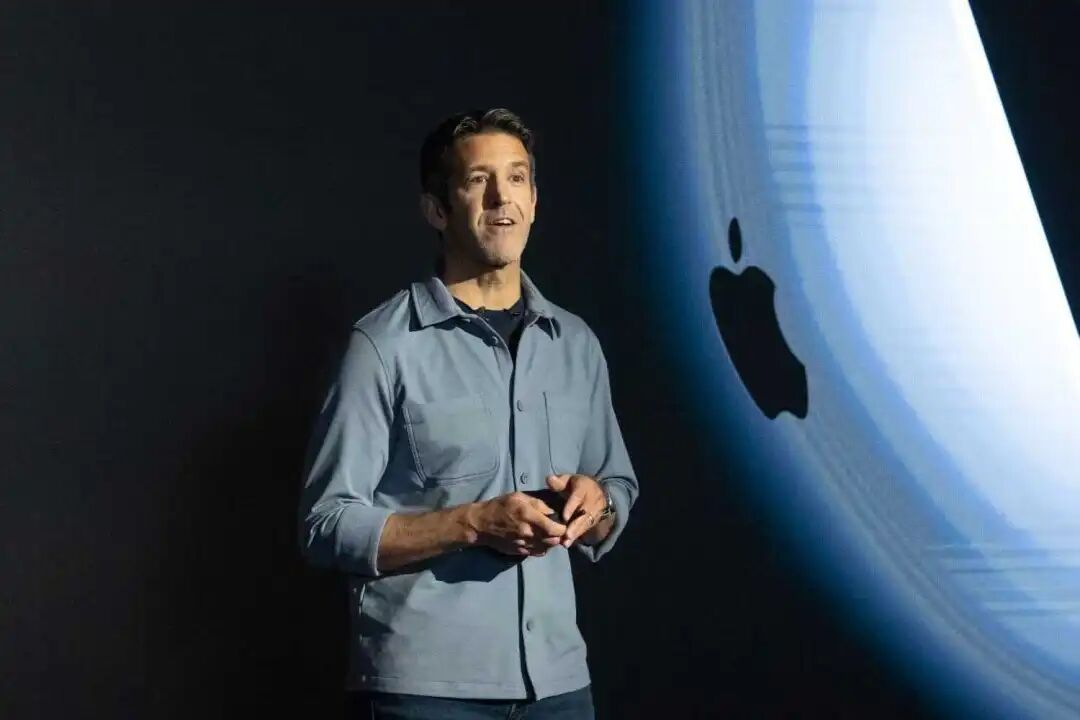
"About to change the world again"—typical Apple confidence—but he added: "This is the most exciting time to build products and services at Apple in my entire career." Genuine excitement, given the "incredible roadmap" ahead.
Design takes center stage. "We'll remain focused on design because it's at the core of everything Apple does." This reassures both internal design teams (after Jony Ive's departure) and external observers that Apple won't become a specs-obsessed engineering firm.
"Our essence as a company won't change. Our mission won't change." Two emphatic declarations, brimming with confidence.
Industry reaction has been largely positive. OpenAI's Sam Altman tweeted tribute, calling Cook a "legend." Wedbush's Dan Ives interpreted the timing strategically: "Cook wouldn't leave if performance were poor." Announcing before earnings reports was a calculated move to manage expectations.
Skeptics remain. D.A. Davidson's Gil Luria noted Ternus's hardware focus suggests Apple will double down on consumer devices—foldable phones, AR glasses, AI accessories—but this exposes a vulnerability: in AI software, will Apple keep relying on Google's Gemini? Is this partnership temporary or long-term? The new CEO must address this Day One.

Passing the baton is the best legacy.
Looking at Cook's fifteen-year tenure, what is most impressive is not how much money Apple has made, but how he inadvertently delivered a masterclass in 'corporate succession.'
Apple's storyline reads like a drama: its founder is ousted by the company he built, returns in a time of crisis, dies at 56 leaving behind an empire that the world thought would collapse, only for his successor to elevate it to unprecedented heights. Now, the third baton is about to be passed.
No one knows what the future holds. But the dramatic journey of the past few decades is enough to prove one thing: Apple has become a company that truly transcends time.
Great companies outlive their founders—a commonplace in business history, yet rarely truly understood.
General Electric outlived Edison, Intel outlived Moore, and Apple is now going through the same process. A company is not anyone's private property; it is an independent entity, running from one leader to the next.
Cook's move to executive chairman is the wisest stroke in this relay. Realizing that the company can operate efficiently without you, and that there is someone even more suitable to take the helm—this sense of reassurance is the most precious gift a founder can leave to the world.
Only by understanding this can one grasp what 'eternal life' means in the business world.
What Apple has taught us goes far beyond how to make products.
-
![]()
Insta360: The 'Hot Commodity' Being 'Hunted' by Everyone
-
![]()
SpaceX's $1.25 Trillion IPO Eve: Musk's Final Gamble Bets on a Full-Stack Space AI Ecosystem
-
![]()
DeepSeek Slashes Prices by 90%: The "Price Slayer" Is a Strategy, Not an Identity
-
![]()
Tencent Unveils New Model, Yao Shunyu Steers Towards Success
-
![]()
Dialogue with Momenta's Cao Xudong: Data is Merely a Raw Resource, System Strength is the Key
-
![]()
From a Junior High Graduate and Foxconn Factory Worker to the Head of a Multi-Billion-Dollar Empire: How Did She Achieve It?
-
![]()
The Evolution of Smartphones: How 'Android Phones' Transformed into 'Imaging Powerhouses' Over a Decade
-
![]()
The Unspoken Words Behind Apple's 'Cook Era' Farewell