A Trillion-Dollar Horizon: Crafting a New Narrative
 05/07 2026
 528
528
A Long-Term Vision: Still in the Making
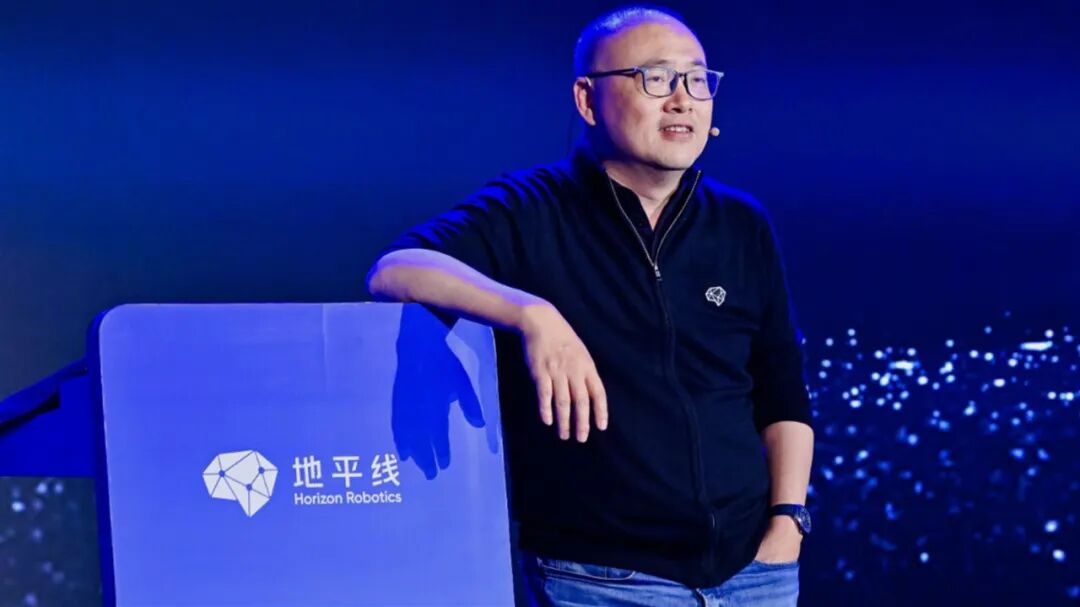
Last month, at the Beijing National Convention Center, Horizon Robotics' founder, Yu Kai, took center stage to unveil three groundbreaking products: the Xingkong Chip, Kakaxia OS, and the HSD V1.6 Intelligent Driving System. The event was themed "Endless Journey, Embracing the Stars."
Just two weeks later, Horizon's booth at the Beijing Auto Show was swarmed with visitors. BYD's Chairman, Wang Chuanfu, led a delegation to explore the exhibits, with the Xingkong Chip prominently displayed and the Kakaxia OS demo area bustling with testers. Media headlines erupted: "Horizon Steals the Spotlight," "One Chip Secures the Future," "China's Intelligent Driving Chip Reaches Maturity."
This marked Horizon's moment in the limelight. Eleven years after Yu Kai left Baidu to establish the company in 2015, Horizon went public on the Hong Kong Stock Exchange in 2024 and released its first full-year financial results in 2025: RMB 3.76 billion in revenue, up 57.7% year-over-year (YoY)—an outstanding performance amidst the price wars in the automotive market.
Annual shipments of its Journey series chips exceeded 4 million units, with high- and mid-tier chip shipments growing 4.8 times YoY. Market share data was equally impressive: Horizon ranked first among suppliers of ADAS front-view integrated machines and small domain control computing platforms for Chinese brands, capturing 47.7% of the market.
Yet, this trillion-dollar-valuation company stands at a crossroads—its old strategy has reached a turning point, but the new narrative is not yet fully formed.
01
The Old Strategy: Higher Revenue, Greater Losses
After reviewing Horizon's 2025 financials, a persistent question arises: Why did losses widen despite capturing market share and increasing per-vehicle value?
In 2025, R&D spending soared to RMB 5.15 billion, up 63.3% YoY—1.37 times the annual revenue. For every RMB 1 earned, RMB 1.37 was invested in R&D. Compared to RMB 3.16 billion in 2024, the absolute increase was nearly RMB 2 billion. Adjusted operating losses widened from RMB 1.5 billion in 2024 to RMB 2.37 billion (+58.7% YoY), while adjusted net losses surged to RMB 2.81 billion (+67.3% YoY).
Yu Kai explained during the earnings call: "This is a strategic choice. RMB 5.15 billion was heavily allocated to cloud-based AI training, the next-gen BPU 'Riemann Architecture,' and future physical AI foundation models." He emphasized, "We're not afraid of high R&D investment—it will create future technological advantages."
This rationale aligns with the concept of "strategic losses," a common narrative in the tech industry. However, Horizon's financial structure makes this approach more challenging than for others.
Its automotive business comprises two segments: licensing/services (selling algorithms and software licenses—the true profit engine) and product solutions (integrated chip hardware delivery, growing faster but with lower margins).
In 2025, the revenue mix shifted from 70-30 to 50-50, with product solutions surging 144% YoY while licensing grew just 17.4%. The growth engine burned fuel as profit reserves dwindled.
More concerning was the decline in gross margin, which fell by double-digit percentage points YoY. Yu Kai stated during the earnings call, "We've locked in memory prices, so margins remain unaffected—we're confident in maintaining above 60%." But the structural downward trend in margins cannot be explained by raw material prices alone. If high-margin licensing shrinks further, margin pressure will persist even with locked memory prices.
Horizon's current financial profile: High-margin licensing funds scale expansion in product solutions, betting on market share to secure future pricing power and profitability.
While logically sound, operationally, it is precarious. R&D is accelerating, adjusted losses are widening, and margins are shrinking. How much patience will capital markets offer? That depends on what new narrative Horizon can present next.
02
Narrative Evolution: From Chip Company to 'Vehicle Intelligence Foundation'
Horizon's 2026 product launches and auto show debut marked a subtle shift. The slogan evolved: No longer just "China's First Intelligent Driving Chip Stock," but now "Enabler of Full-Category Vehicle Intelligence Technologies."
The Xingkong Chip, Kakaxia OS, and HSD V1.6 reflect this evolution. The Xingkong Chip is China's first cockpit-driving integrated vehicle intelligence chip, supporting both cockpit digital AI and high-level intelligent driving model deployment. Its pioneering "Castle" safety physical isolation architecture enables independent operation of cockpit and driving domains.
The Kakaxia OS is even broader—China's first vehicle intelligence OS, supporting natural language commands for parallel scheduling of intelligent driving and cockpit systems, enabling a "task-as-a-service" interaction paradigm.
The Xingkong Chip reduces per-vehicle costs by RMB 1,500–4,000 and cuts R&D delivery cycles from 18 to 8 months. For automakers selling 1 million units annually, this translates to approximately RMB 4 billion in additional profit—a calculation procurement departments understand.
However, Horizon faces a reality: Qualcomm holds over 70% market share in cockpit domain controllers, dominating the market. Horizon's cockpit-driving integration strategy means taking market share from Qualcomm. NVIDIA similarly commands nearly half of the high-end intelligent driving chip market.
The Xingkong Chip's 650 TOPS computational power matches NVIDIA's Thor-X on 5nm process technology, but when comparing mass production scale and ecosystem maturity, Horizon faces two global chip giants—and time is not on its side for a gradual approach.
More challenging is the trend of automaker self-development. Huawei's intelligent driving ecosystem covers chips, OS, and cloud services, narrowing the market share gap with Horizon to just 0.85 percentage points in urban NOA computing platforms.
In other words, when leading automakers pursue self-developed or deeply customized intelligent driving solutions, the role of third-party suppliers demands reevaluation—a long-term challenge.
Upgrading from a chip supplier to a full-stack solution provider is a common trajectory in autonomous driving. Mobileye evolved from EyeQ chips to SuperVision full-stack systems; Huawei expanded from MDC computing platforms to Harmony Intelligent Mobility's full ecosystem. The direction is clear—the question is timing.
As the customer mix shifts from licensing to integrated solutions, the tension between margins and R&D investment will intensify. Every step must be carefully balanced.
Meanwhile, the industry window is narrowing. Since late 2025, Momenta, QCraft, and DeepRoute.ai have filed for HKEX listings, targeting 2026 listings. Given the 6–9-month HK IPO timeline, a new wave of intelligent driving IPOs is likely in the second half of 2026.
Why the rush? External pressures loom. Tesla FSD's China entry is imminent—Elon Musk hinted at approval in January 2026 at Davos, with full commercialization expected within 2026. Tesla's localization could structurally alter supplier selections for domestic automakers.
The funding environment is also tightening. In 2025, intelligent driving investments totaled RMB 22.848 billion—just 30% of 2024's total. Capital now favors late-stage, scenario-driven projects over early-stage, pure-tech ventures. These factors suggest the second half of 2026 could be the last IPO window for intelligent driving companies in Hong Kong.
Last year, Pony.ai and WeRide both fell below their IPO prices on debut. Pure-tech stories now lack persuasive power—commercialization viability and sustainable business models drive market valuation.
For Horizon, the impact of tighter funding is limited—it completed its IPO in 2024 and holds cash reserves. But if three to four intelligent driving firms list simultaneously in the second half of 2026, capital will be diverted, and Horizon's valuation benchmark will reset.
Its HK$100 billion valuation already implies market expectations of sustained leadership—a heavy anchor for a large ship.
Horizon must also monitor shifts in external clients' strategic priorities.
Take the Xiaomi SU7 Ultra, which standardizes urban NOA. This is a potential wildcard: Xiaomi, which emphasizes "end-to-end self-development," pursues in-house intelligent driving solutions for high-end models. For Lei Jun, intelligent driving is core to smart EVs—no moat exists without self-development.
This reflects industry trends. As NOA democratizes from vehicles priced above RMB 300,000 to the RMB 100,000–150,000 range, automakers refuse to remain mere "buyers." Suppliers must balance self-development risks, client concentration, and pricing pressures—a challenge for all intelligent driving players.
This explains Yu Kai's emphasis on "external collaboration"—escaping price wars and internal friction through technology-driven value creation, enabling consumer willingness to pay for enhanced experiences and achieving win-win outcomes with automakers.
With external competition and clients' internal capabilities evolving in tandem, Horizon feels pressure on all fronts.
03
The New Narrative: Embodied AI, Globalization, and the Trillion-Dollar Equation
Breaking down Horizon's revenue, non-automotive solutions generated RMB 200 million in 2025 (+180% YoY) but accounted for just 5.4% of total revenue. Short-term valuation contributions stem less from revenue than from narrative potential.
At Horizon's 2025 Developer Conference, Yu Kai stated: "From day one, Horizon's mission has been to build the 'brain' for robots." This 2015 founding principle took on new meaning when revisited in late 2025—embodied AI is shifting from concept to funding boom.
Its subsidiary, Digu Robot, acts as a "vanguard in the second theater." In February 2026, it secured B1 financing from Meituan, Didi, and other strategic investors; in March, B2 funding followed from Saudi Aramco's Prosperity7 Ventures and Envision Group, boosting its valuation.
Digu doesn't build whole robots—it positions itself as an "embodied AI enabler," providing chips, algorithms, and development platforms. Yu Kai consistently says, "We build weapons, not wage wars." In 2025, Digu's shipments and client count surged, with global developers exceeding 100,000. Its flagship S600 platform natively supports Horizon's open-source embodied AI models HoloMotion (cerebellum) and HoloBrain (cortex).
In the first quarter of 2026, China disclosed over 30 embodied AI financings totaling approximately RMB 20 billion, far exceeding 2025's RMB 12.6 billion. Digu's US$270 million raise positions it advantageously in this boom.
Yet the reality remains: Digu, while promising, is orders of magnitude away from justifying Horizon's valuation. Embodied AI is still in the "0 to 1" phase, with a long path from technical validation to scalable revenue.
Globalization is another long-cycle narrative still under validation.
Two months ago, Japanese media reported that Toyota and Suzuki will adopt Horizon's Journey 6B chips in global models (excluding China). This marks the first entry of Chinese vehicle-grade intelligent driving chips into Japanese automakers' global supply chains.
Previously, Horizon secured domestic joint-venture automaker fixed points, but Toyota and Suzuki's overseas procurement decisions signify formal recognition of Chinese automotive semiconductors' competitiveness in performance, reliability, cost, and delivery.
At the Beijing Auto Show, Horizon announced a strategic MOU with Aisin Seiki, completing its ecosystem with Bosch, Denso, and Aisin—the top three global Tier-1 suppliers from Germany and Japan.
Strategically, this is a key step in Horizon's globalization. Commercially, mass shipments won't reflect in financials until after 2028, depending on Toyota and Suzuki's production timelines and global automotive supply chain shifts amid geopolitical volatility.
The core question remains: What justifies Horizon's HK$100 billion valuation?
Current market pricing logic has multiple layers. The base layer derives value from ADAS market share, chip shipments, and deep production moats. The second layer relies on HSD full-stack penetration growth and intelligent driving democratization trends. The third layer involves the Xingkong-Kakaxia cockpit-driving integration's upgrade from single-chip supplier to vehicle intelligence foundation.
Further out lie globalization breakthroughs and Digu's embodied AI platform. The outermost layer is Yu Kai's vision of a "physical world digital brain"—a grand narrative encompassing automotive, robotics, and IoT.
The trillion-dollar valuation script has many chapters, but each requires time to validate—and time is capital markets' most precious resource.
On the 2025 earnings release day, Horizon's stock fell 3.1% to close at HK$7.3, down approximately 24.7% from its September 2025 peak.
Wall Street says, "When all you have is a hammer, every problem looks like a nail." For companies, the opposite holds: With a trillion-dollar valuation, the key isn't hitting every nail but showing the market which nail matters most—and driving it home.
Horizon now needs a clearer roadmap: How many years until profitability? When will cockpit-driving chips and OS see mass adoption? Can global order growth offset margin pressures?
At the 2026 earnings call, Yu Kai signaled: Revenue is expected to grow 60% annually in the coming years—a steeper trajectory than past projections. This anchors Horizon's self-assessment of growth timing.
Market calculations likely follow: Starting from RMB 3.76 billion and growing 60% annually for three years, with narrowing adjusted losses, valuation re-ratings from Xingkong-Kakaxia's first-mover advantage in cockpit-driving integration, and Digu's independent financing adding option value... the math works—if every piece delivers.
Eleven years ago, when Yu Kai left Baidu to found Horizon, he said its mission was to build "robot brains." Back then, no one knew how far the journey would be. Eleven years later, Horizon leads China in intelligent driving chip shipments, evolving from ADAS to NOA, from chips to full-stack solutions, from domestic markets to Japanese supply chains.
For Horizon, from being the "first stock of intelligent driving chips" to truly becoming the "digital brain of the physical world," there may still be several key node validations in between. The new narrative had better already be on its way.
This article is original to Xinmou
— END —
-
![]()
Tesla Restructures Its Balance Sheet
-
![]()
Accelerating the High-Speed Interconnection Upgrade of AI Computing Clusters! JONHON Releases ELSFP External Light Source Optical Connectors
-
![]()
Breaking the overseas blockade of volumetric holographic materials, this optical enterprise secures nearly 100 million yuan in financing!
-
![]()
Why Does Jensen Huang So Openly Praise China’s AI?
-
![]()
"Wudang" Unveiled: Arm China's Next-Gen AI VPU Redefines Video Encoding
-
![]()
From Energy Conservation and Carbon Reduction to AI Decision-Making: GECON East Intelligence and Chery Group Explore a New Green and Smart Paradigm for Automobile Manufacturing
-
![]()
WAIC 2026 Observation | AI Accelerates Towards the Core of Industries, Industrial AI Enters a Critical Phase
-
![]()
Volkswagen China Fires the First Shot in Foreign-Funded 'White Box Delivery'!