Lending My Face to an AI Short Film: A One-Way Journey
 05/07 2026
 466
466
As platforms invest heavily in acquiring celebrity likenesses to build AI artist databases, the faces of countless ordinary individuals are also being utilized—often without their explicit consent—in AI-generated short films.
Take my colleague Panda, for instance. He recently lent his face to a friend who was creating an AI short film. The process is akin to contributing to an AI artist database: record a video, upload your visage, and voilà, an AI digital avatar with your unique features is born. When filmmakers need extras, supporting characters, or even protagonists, they can simply tag this digital persona to fill the role.
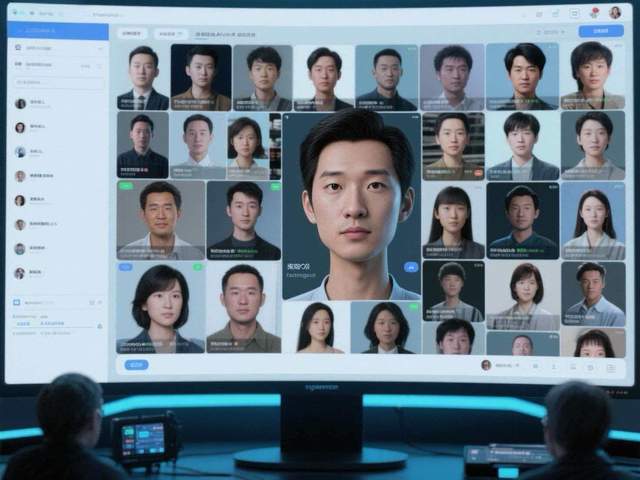
While the use of one's face in a short film created by someone you know may seem controllable, the reality is that once lent, there's no telling where it might appear next, what context it will be used in, or whether it will be cast in a role that's, shall we say, less than flattering. From the moment the record button is pressed, the faces of ordinary people embark on an uncontrolled AI odyssey, potentially never to be reclaimed.
So, what exactly transpires when one lends their face to AI?
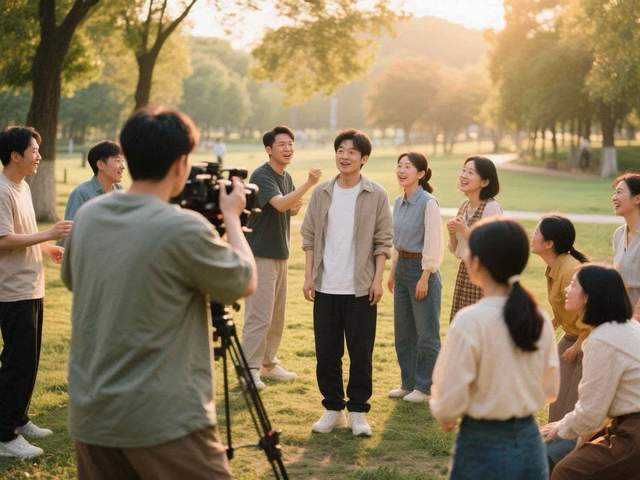
The short films we watch daily—can we, as non-professionals, actually participate in them? Some viewers, newly emboldened by the opportunity to lend their faces, feel a thrill at the prospect. They never imagined they could experience scenarios like slapping someone, being surrounded by admirers, or playing a bystander in the virtual world, traditionally reserved for trained actors.
Why not use real extras instead of borrowing faces from friends and family? How did acting become accessible to non-professionals? This brings us to the challenges faced by short film producers.
As we enter 2026, leading short film platforms have significantly reduced subsidies and incentives for small and medium-sized producers. This has led to a sharp decline in the number of short film crews and projects initiated after the Spring Festival. The cessation of subsidies and the disappearance of projects can be traced back to the previous production and script selection model in the short film industry. In this model, platforms would open their script libraries, and producers would complete the production of short films for broadcast on the platform, which would then provide guaranteed incentives and revenue sharing. For example, a mid-tier short film with 80 episodes, each lasting 1-2 minutes, could receive guaranteed incentives ranging from 200,000 to 350,000 yuan, covering basic production costs such as actors, filming, and equipment.
Nowadays, such guaranteed incentives are no longer freely available and are only offered to a select few high-quality projects and companies. The vast majority of mid-tier producers can no longer rely on platform incentives to bridge cost gaps. However, with dramas already purchased and projects already underway, they have no choice but to cut costs and boost efficiency. Many crews opt to rely on AI and non-professional actors.
Cash-strapped small and medium-sized production companies are directly abandoning traditional live-action filming and relying entirely on AI tools to produce content from script to final product. With no real actors involved, production costs can be slashed to half or even a tenth of the original.
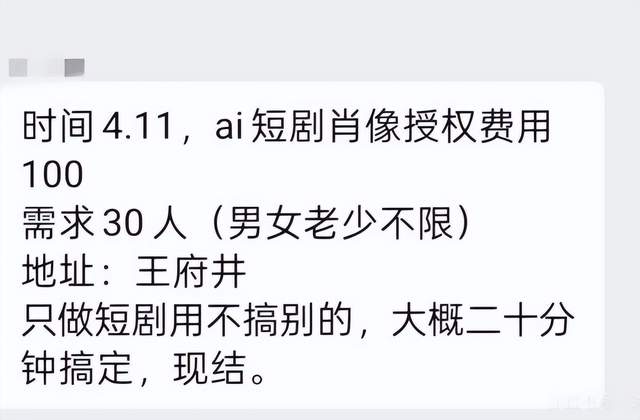
(In addition to borrowing faces for free, short films also purchase faces at bargain prices.)
However, even if AI is used throughout the production process, to make the faces of characters in the film more realistic, personal images are often used as references for generation. Production companies must also find authorized faces. Some platforms stipulate that users can only appear on the platform after completing real-person verification.
Therefore, borrowing faces from friends and family or purchasing faces from non-professionals at low prices has become the best choice for small and micro production teams balancing compliance and cost reduction. The borrowed face then officially begins its AI odyssey.
How is this face borrowed? The process is as simple and mundane as editing a photo on your phone. In practice, you download a dedicated AI video app, follow the instructions, and record a 10-15 second short video where you naturally read a few simple lines of text provided by the app. The entire process is completed online and takes only a dozen minutes to collect all facial data.
At this stage, your face cannot directly act yet; it must undergo refinement and reshaping by an AI large model.
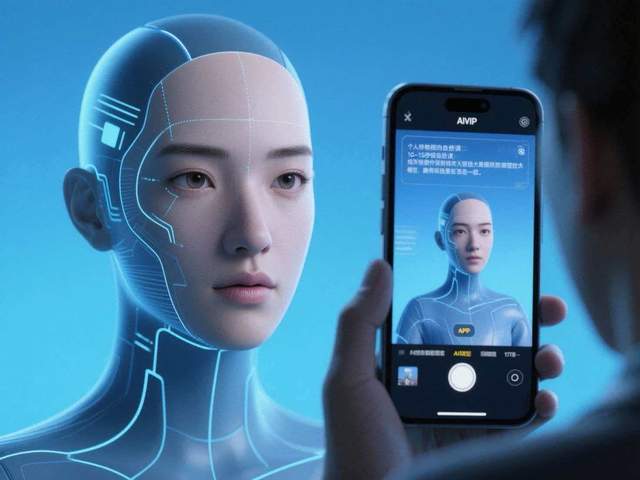
Your facial data first enters the facial recognition large model used by the platform, where your unique facial features are labeled. This includes static features like facial proportions, face shape, skin tone, and eyebrow shape, as well as dynamic features like blink frequency, the arc of your mouth when speaking, and the movement trajectory of your facial muscles. This is equivalent to fully digitizing your face.
Next, the generation model will model and replicate your face based on this data, creating a digital version of you. The platform establishes personal feature anchors for each person's facial features and embeds these anchors into the AI generation model to ensure that the digital face remains consistent with yours in different scenes and dynamic processes, without losing or changing its appearance.
To be featured in an AI short film, your face must also undergo script matching. Creators input a script into the AI video app, attach reference photos of the characters, and tag your digital avatar. The AI will automatically adapt and place your face into the corresponding character. After this step, your face can appear in the AI short film.

After the AI short film is completed, can your face retire? Do you recall casually checking the default agreement option when you opened the app for facial data collection without giving it much thought? This check might have trapped your face in the world of AI short films indefinitely.
The standard agreements of mainstream AI short film platforms often require users to grant global, free, non-exclusive, and multi-level sublicensable rights.

(Default agreement of an AI platform.)
This means that the rights to copy, disseminate, perform, and display your personal portrait are authorized to the platform and may subsequently be used to produce other short films, advertisements, etc., or even sublicensed to third parties.
From this point on, your face is no longer limited to the one film or role promised by your friend when borrowing your face. It has escaped your sight and control, permanently becoming a worker in the AI short film industry.
If you discover another film using your face secretly, can't you just directly protect your rights, complain, and demand its removal? Why can't you get your face back? Lending your face is easy, but retrieving it is far more difficult than imagined.
You might think that if an AI short film uses your face to play a role you strongly dislike without your authorization, the matter is clear-cut. However, transforming this factual injustice into legal justice involves many steps.
First, you need to open the black box of the agreement between the short film production company and the platform to clarify which specific work and rights you have authorized. However, how copyright is agreed upon between the platform and the short film producer is generally not disclosed and involves complex linkages.
Currently, there are several main ways platforms and production companies cooperate:
1. Commissioned creation: The platform commissions a producer to make a film, with all copyright, responsibility, and revenue belonging to the platform.
2. Sales and transfer: The producer sells the entire film directly to the platform, transferring rights and responsibilities together.
3. Revenue sharing: The short film goes live on the platform, and revenue is shared based on views or recharge income. In this case, right ownership depends on the agreement between the two parties.
These agreements are not disclosed, making it extremely difficult for ordinary people to clarify the authorization chain between the producer and the platform.
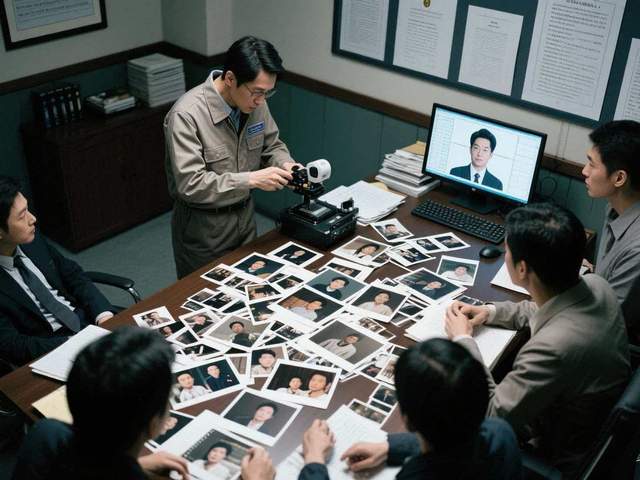
Even if you find evidence of infringement, you need to fix the evidence. It's not enough to just think the character looks like you; you must provide a large number of photos and screenshots from the short film for comparison, find many witnesses to prove 'this character is clearly you,' and, if necessary, have a professional institution conduct a similarity assessment.
After persevering through this process and finally proving that it is your face, it's time to assert your rights. However, since your face only appears for a few minutes or a dozen seconds in the film, the infringement is very minor. The other party only needs to apologize to you. The film doesn't need to be taken down; they can simply delete your scenes or replace your face and re-release it.
After going through all this trouble and spending months, you only get a trivial apology in the end. Most people, after weighing the options, probably just let it go even if their face has been stolen by an unknown short film.
What's even more disheartening is that even if you explicitly refuse and the authorization chain is fully compliant, you still cannot prevent your facial features from being secretly used.
Current mainstream facial generation models are mostly based on diffusion model architectures, whose core is statistical learning and pattern refinement from massive amounts of facial data. The facial features contained in photos and videos you unintentionally post on public platforms may be extracted by the model from vast internet materials at any time and secretly incorporated into the model's pattern library for refinement.
In this case, you may not even notice that your features are being used. At most, you might see a character in a short film who 'looks like you' and console yourself by thinking you just have a common face.

(User agreement of an AIGC product, authorizing the model to learn user data.)
Shakespeare asked in Hamlet, 'To be or not to be, that's the question.' For ordinary people, the question of whether to lend their face or not may no longer be a dilemma. Because part of your biological features, or even your entire face, may have already been integrated into AI.
The faces lent out by non-professionals can never be retrieved and will live on in AI forever. This is the dramatic scene unfolding in our era.
-
![]()
Tesla Restructures Its Balance Sheet
-
![]()
Accelerating the High-Speed Interconnection Upgrade of AI Computing Clusters! JONHON Releases ELSFP External Light Source Optical Connectors
-
![]()
Breaking the overseas blockade of volumetric holographic materials, this optical enterprise secures nearly 100 million yuan in financing!
-
![]()
Why Does Jensen Huang So Openly Praise China’s AI?
-
![]()
"Wudang" Unveiled: Arm China's Next-Gen AI VPU Redefines Video Encoding
-
![]()
From Energy Conservation and Carbon Reduction to AI Decision-Making: GECON East Intelligence and Chery Group Explore a New Green and Smart Paradigm for Automobile Manufacturing
-
![]()
WAIC 2026 Observation | AI Accelerates Towards the Core of Industries, Industrial AI Enters a Critical Phase
-
![]()
Volkswagen China Fires the First Shot in Foreign-Funded 'White Box Delivery'!