Can Zhao Ming Enjoy the Thrill of Qianli Technology?
 05/07 2026
 587
587
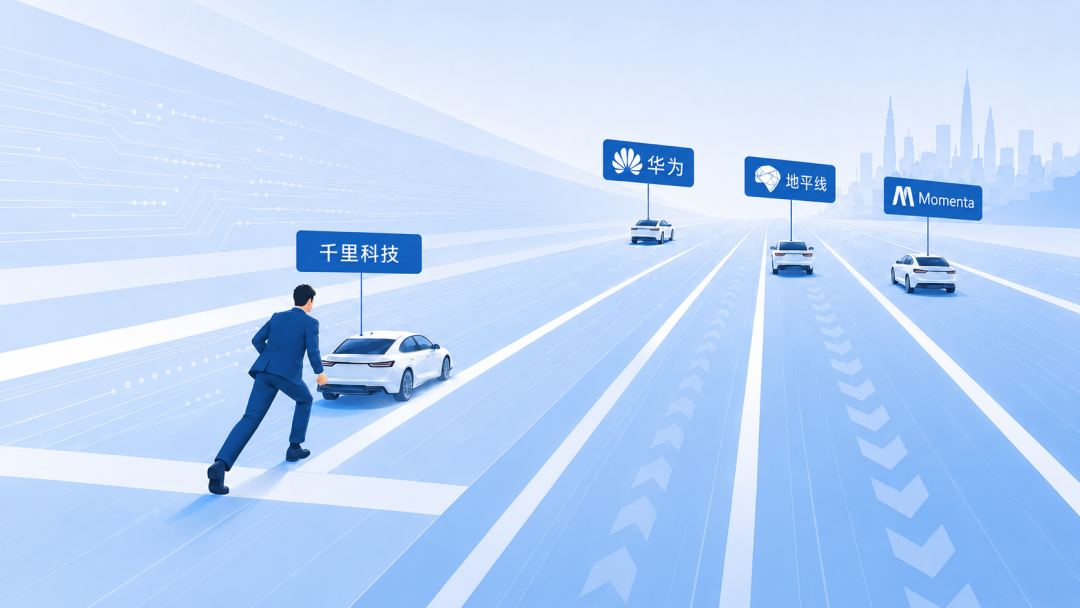
Who Gives Qianli Technology the Confidence to Grow Over 17 Times in Three Years?
Author | Hua Yinglong Editor | Gu Nian
'The window is closing, and it's a bit late for Qianli Technology to become a third-party supplier now,' a source in the automotive industry told 'Shixiang.'
This statement somewhat dampens the enthusiasm for Zhao Ming's new battlefield.
After leaving Honor, Zhao Ming did not pursue a more straightforward consumer electronics narrative but instead stepped onto the intelligent driving stage. This choice seems unconventional: intelligent driving has passed its peak financing period and the window for large-scale external procurement and trial-and-error by automakers.
In the past few years, automakers were still wait and see (observing) the boundaries between self-research, external procurement, and collaboration models; however, by 2026, the ecological niches of leading players have largely formed.
Companies like Huawei, Momenta, and Horizon Robotics have each secured a batch of core clients, while automakers such as NIO, XPeng, Li Auto, and BYD continue to strengthen their self-research capabilities. The window for third-party intelligent driving suppliers has not disappeared, but the barriers have significantly risen.
Zhao Ming, who took over Qianli Technology at the end of the race, plans to seize the tail end of the intelligent driving track with a rather aggressive acceleration. At the latest strategic launch event, Zhao Ming set an aggressive target: reaching 1 million intelligent driving installations by the end of 2026 and 8 million by 2028, aiming to become one of the world's largest intelligent driving solution providers by then.
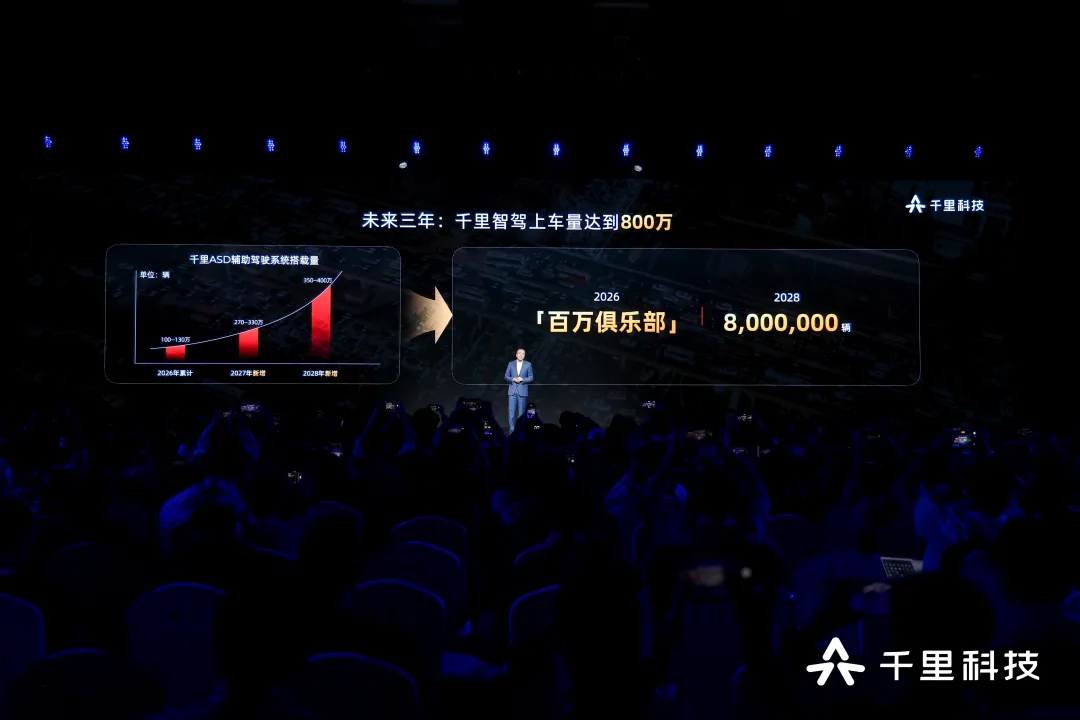
As of the end of March 2026, Qianli Technology had accumulated 460,000 installations. To achieve the target of 8 million by the end of 2028, Qianli Technology needs to add approximately 7.54 million installations in the remaining 33 months, averaging nearly 230,000 per month, to achieve over 17 times growth in three years.
The confidence behind this figure lies in the fact that Qianli Technology is not a startup telling technological ideals from scratch. It is backed by Geely, with models, orders, data, and sufficiently large mass production scenarios.
According to reports, the Qianli Haohan H5, H7, and H9 intelligent driving solutions will cover 40 Geely models this year and 96 models across seven Geely brands next year. These resources form the foundation for Qianli Technology's push towards million-scale installations.
But this card has another side.
Zhao Ming repeatedly emphasizes that Qianli Technology is 'independent' in business development and client acquisition. However, as of now, nearly all of Qianli Technology's 460,000 cumulative installations come from 17 models of Geely-affiliated brands like Zeekr, Lynk & Co, and Galaxy, with limited expansion to external brands.
Geely has given Qianli Technology the confidence to start but also the hardest identity label to shed. For Qianli Technology, the real test is not how many Geely orders it secures but whether it can turn Geely orders into credit assets as a third-party supplier. The former determines scale, while the latter determines valuation and industry position.
This is precisely where Qianli Technology values Zhao Ming.
After all, during his time at Honor, he proved his ability to independently establish the first smartphone brand from within a system. At Qianli Technology, he faces a similar but more complex task: not only pushing a Geely-deeply-involved intelligent driving company independently to the forefront but also convincing external automakers that Qianli Technology is not just an externalized version of 'Geely's Intelligent Driving Department.'

Geely Supports Half the Sky
In March 2025, Gui Shengyue, CEO of Geely Holding Group, stated the ambition to create a 'second Huawei' with Qianli Technology. However, unlike Huawei, Qianli Technology is deeply influenced by Geely.
From a shareholding perspective, Geely Group indirectly holds 29.85% of Qianli Technology's shares through the Manjianghong Fund, making it the de facto controller. Qianli Technology's intelligent driving business is primarily undertaken by its controlled subsidiary, Qianli Intelligent Driving. In Qianli Intelligent Driving's shareholding structure, Qianli Technology, Geely Group, and Maichi Intelligent Driving each hold 30%, while Lotus Robotics and the employee stock ownership platform each hold 5%. Notably, Maichi Intelligent Driving and Lotus Robotics are both Geely-affiliated enterprises.
It is worth noting that although Qianli Technology holds 30% of Qianli Intelligent Driving's shares, it only enjoys 4% of the profit rights, with the remaining 96% distributed among minority shareholders, primarily Geely-affiliated entities.
In August 2025, Geely integrated its internal intelligent driving systems, merging the Geely Research Institute, Zeekr Intelligent Driving Team, and Maichi Intelligent Driving into Chongqing Qianli Intelligent Driving, with a scale of nearly 3,000 people. Wang Jun, Co-President of Qianli Technology, serves as CEO of Qianli Intelligent Driving, while Chen Qi, former Vice President of Zeekr Intelligent Driving, serves as Co-CEO.
From a business perspective, Geely-affiliated entities also support half of Qianli Technology's operations. Qianli Technology's current business is mainly divided into automotive, motorcycle, and technology sectors (intelligent driving, intelligent cockpit, Robotaxi). Except for the motorcycle business, Qianli Technology's automotive and technology sectors are closely linked with Geely-affiliated enterprises.
In 2022, Qianli Technology and Geely jointly established 'Ruilan Automobile.' Ruilan Automobile procures nearly all its core vehicle components, such as engines, batteries, and electronic controls, from Geely, while Qianli Technology is responsible for assembly, contract manufacturing, and final assembly. Ruilan Automobile primarily sells to B-end enterprises, such as providing the Cao Cao 60 and Maple 80V models for Cao Cao Group's ride-hailing service.
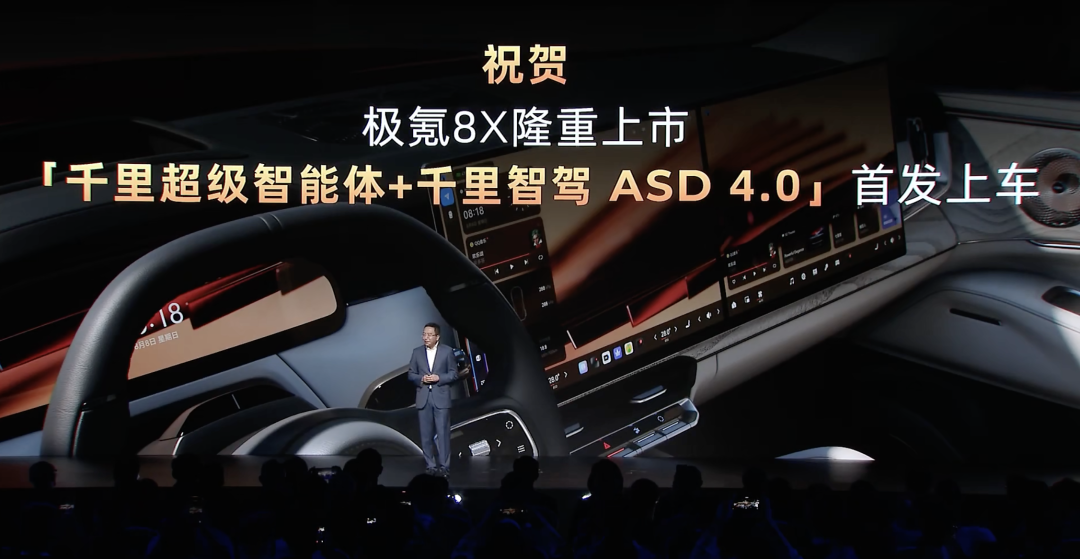
In terms of intelligent driving, in January 2026, Qianli Intelligent Driving and Geely jointly developed the G-ASD Qianli Haohan intelligent driving system, covering 16 models from Zeekr and Lynk & Co. In March of the same year, the two parties, along with Jueyue Xingchen, launched the 'Super Eva + G-ASD 4.0' cockpit-driving integration solution, which was first mass-produced in the Zeekr 8X.
In 2025, Geely Group's procurement from Qianli Technology amounted to RMB 2.648 billion, accounting for 30.8% of Qianli Technology's total procurement. In the same year, revenue from Geely Group reached RMB 2.926 billion, accounting for 29.6% of Qianli Technology's total revenue. Geely Group is both Qianli Technology's largest supplier and largest client.
Based on current cooperation trends, Qianli Technology's dependence on Geely-affiliated entities may further deepen. According to the prospectus, it is expected that providing ASD intelligent driving to Geely in 2026 will generate no more than RMB 8.8 billion in revenue, compared to only RMB 350 million in revenue from Qianli Technology's intelligent driving business in 2025, highlighting Geely's importance to Qianli Technology.
With Geely Group's resources, Qianli Technology can enjoy stable mass production orders, vehicle road test data, and model landing scenarios. However, there is also an issue: Geely's internal systems are not yet fully unified.
In the latest integration, the cockpit team from the Geely Research Institute was merged into Qianli Technology. However, among the currently open recruitment positions, the Geely Research Institute is still seeking intelligent driving-related roles, indicating that Qianli Intelligent Driving has not fully unified Geely's intelligent capabilities.
In the intelligent cockpit field, ECARX's intelligent cockpit solutions, deeply tied to Geely, are widely used in multiple Geely models, such as the Galaxy and Lynk & Co brands. For example, the ECARX Antora® 1000AI Enhanced computing platform provides the computing power hub for the Geely Galaxy A7, while the AI cockpit in the Geely Galaxy M9 is built on the ECARX Parker® computing platform.
Qianli Technology is also active in the intelligent cockpit field, having developed the ASC100 intelligent cockpit platform and advancing the ASC200 solution, which is expected to debut in high-end Geely models. This 'dual-track' approach may lead to resource misallocation and coordination challenges within the Geely system.
In January 2026, Geely made a $45.6 million strategic investment in ECARX. In April, ECARX acquired all core assets and businesses of Star-era Meizu's FlymeOS. Data shows that ECARX's technological products now have a 77% penetration rate in Geely-related brands, indicating deepening ties between ECARX and Geely. Geely is not putting all its eggs in one basket with Qianli Technology.

Difficulty in Securing Major Clients
There is a general consensus that the intelligent driving sector is rapidly entering the second half of the elimination race, with a gradually solidifying market landscape.
According to the China Association of Automobile Manufacturers' '2025 Urban NOA Automotive Assisted Driving Research Report,' in the first 11 months of 2025, Momenta's urban NOA installations reached 414,400 units, accounting for 61.06% of the third-party supplier market share; Huawei's HI mode accounted for approximately 19.76%, with the two combining for over 80%.
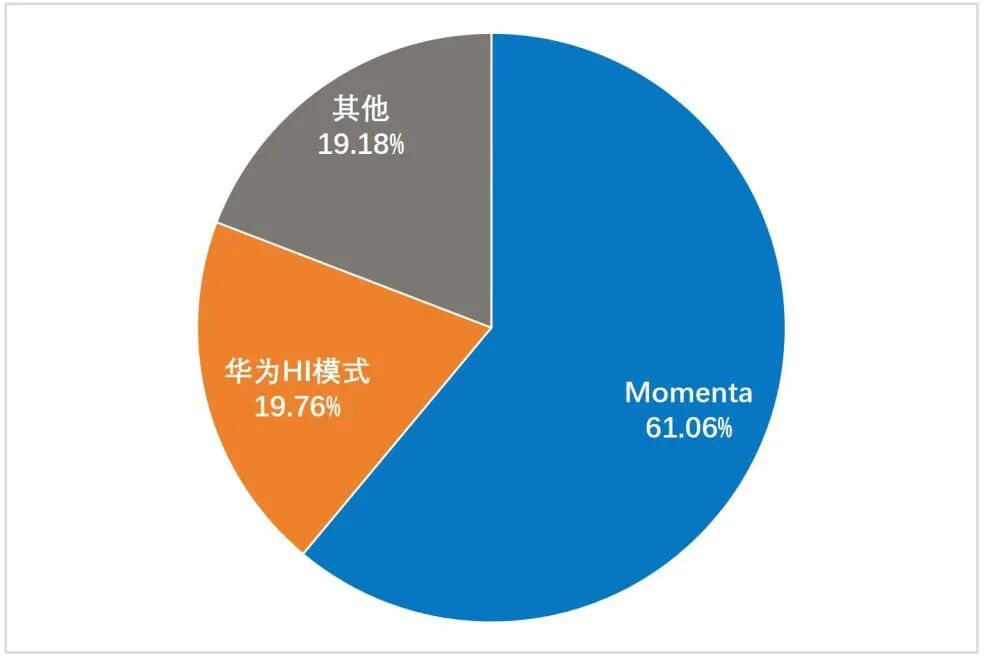
According to Zuo Si Auto Research data from January 2026, in the third-party supplier market, Huawei (including its five brands), Momenta, and DeepRoute.ai combined for a 93.3% market share. For Qianli Technology to become a 'dual hero' of intelligent driving alongside Huawei, it must break this market structure.
From a client acquisition perspective, Qianli Technology's current core reliance is still on the Geely system. Huawei, through its Harmony Intelligent Driving, has deeply bound itself with automakers like Seres and Chery, while also collaborating with groups like Changan and Dongfeng through its HI mode, forming a Huawei ecosystem encompassing component supply, HI mode, and Harmony Intelligent Driving.
Momenta has secured orders from international automakers like Toyota, Nissan, Honda, and Mercedes-Benz. Its purely third-party identity gives it a natural non-competitive advantage in client acquisition. To date, Momenta has delivered mass-produced models exceeding 70, with cumulative fixed point (designated production) breakthroughs of over 200 models, and vehicles equipped with its solutions surpassing 800,000 units.
When previously asked about business strategy, Yin Qi proposed a major client strategy: 'focus on 6 to 7 global core major clients and deeply bind with 3 to 4.'
From an optimistic standpoint, there is indeed a favorable external window period. Taking Huawei as an example, some foreign automakers are setting aside their previously dominant postures and attempting to leverage Huawei's technological brand to empower themselves. However, such collaborations are currently mostly limited to the intelligent cockpit field.
For instance, in 2025, new models like the Toyota bZ3X, bZ7, and Nissan Teana were equipped with Huawei's Harmony cockpit. BMW's new models launched this year will also feature Huawei's Harmony cockpit and vehicle connectivity, with a few automakers like Audi being more open, adopting Huawei's Qiankun intelligent driving system in models like the A5L, Q5L, and A6L.
However, due to Qianli Technology's deep ties with Geely, it may face constraints when attempting to expand to other major clients. After all, major clients' primary considerations are supply chain security and data sovereignty. Collaborating with Qianli Technology, backed by the Geely system, could become a disadvantage in establishing cooperative trust.
In contrast, independent third-party suppliers like Momenta and Horizon Robotics, without a background in vehicle manufacturing, are more likely to gain the trust of large automakers.
Even without considering the Geely connection, another more realistic issue is that securing major clients requires an extremely long time cycle.
At the Beijing Auto Show, Momenta CEO Cao Xudong pointed out that the intelligent driving industry exhibits strong scale effects and first-mover advantages, significantly more so than the chip industry. 'There is a particularly strong first-mover advantage with automakers because many automaker businesses require knocking on doors for three years. For international OEMs, it may take 5 to 7 years.'
This means that the first-mover advantage Momenta has accumulated with international OEM clients has formed a nearly insurmountable time barrier for Qianli Technology, still in its early stages. Even after years of lengthy negotiations and run in (integration), Qianli Technology may ultimately only become a backup option for major clients.
Furthermore, these foreign automakers choose Huawei or Momenta because they value their market-validated product capabilities. Huawei's Aito series led sales in 2025, with the M8, M7, and M9 models contributing over 380,000 units in total for the year, proving the reliability of Huawei's solutions. However, a deeper challenge lies in the fact that for large automakers, intelligent driving is ultimately a battle for the 'soul.' Even foreign brands currently collaborating with Huawei or Momenta will inevitably aim to gradually establish self-research capabilities in their long-term strategies. If Qianli Technology serves only as a technical outsourcer during the transition period, its commercial value ceiling is limited. The new brand 'Youxin' jointly launched by Qianli Technology and BAIC has not yet been market-validated, and whether it can replicate the blockbuster effect of Aito remains uncertain.
Another

Is 'AI-Native' the Antidote?
On the increasingly crowded intelligent driving track, Qianli Technology attempts to tell a different story with 'AI-native.'
Zhao Ming believes that most intelligent driving systems adopt a 'grafting' approach, first training a general large model and then fine-tuning it with driving data, leading to inherent bottlenecks in understanding physical laws.",
Another noteworthy phenomenon is that as competition intensifies, Qianli Technology's competitors are not only traditional third-party suppliers but now also face challenges from players in the internet industry.
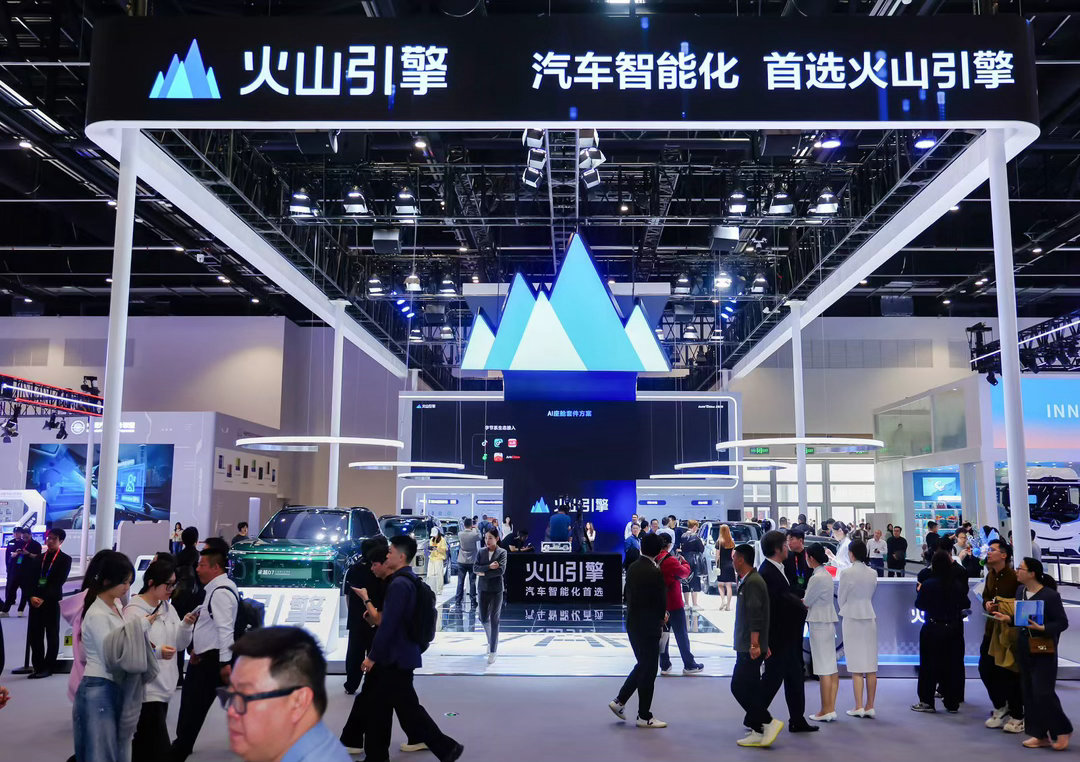
At this Beijing Auto Show, Volcano Engine, a subsidiary of ByteDance, introduced a cooperation plan centered around Agentic AI technology, primarily including an AI cockpit suite solution and a Doubao cockpit assistant solution. The former can customize output capabilities based on the needs of automotive companies, while the latter provides complete product-level delivery. Tan Dai, President of Volcano Engine, revealed that the cumulative deployment of the Doubao large model in the automotive industry has surpassed 7 million vehicles, covering over 50 automotive brands and 145 mass-produced models.
Also during the auto show, more than 10 leading Chinese automakers announced on the same day that they would integrate the Tongyi Qianwen large model into their vehicle systems, with automakers accessing Qianwen including BYD, Great Wall Motors, Geely, and others.
These stories of 'large models being integrated into vehicles,' similar to Qianli Technology's, all claim to reconstruct user experience through AI large models. Qianli Technology's advantage lies in its natural cooperative relationship with Stepfun, which reduces friction costs and accelerates product update and iteration efficiency in terms of data closure and product synergy. However, this advantage must ultimately translate into a differentiated experience that users can perceive. Only by making users genuinely feel that Qianli Technology's products are both unique and user-friendly can it prove that the 'AI + Vehicle' strategy is truly heading in the right direction.
For Qianli Technology, the good news is that as long as the Geely Group can continue to maintain its market share in the coming years, Qianli Technology can at least secure a basic foothold and stay in the game. The bad news is that there may not be much of the pie left for Qianli Technology.
-
![]()
Total Investment Hits Nearly 3.28 Billion! Goertek Launches Mass Production of 12-Inch Transparent Substrate Wafer for AR Glasses’ Micro-Nano Optical Components
-
![]()
Why Is This Precision Optical Film Leader Worth Reevaluating with a Tens of Millions Procurement?
-
![]()
AI Costs Plummet by 90% Over Nine Years: Key Insights from Davos You Shouldn’t Miss
-
Doubao, Your Late-Night AI Companion, Now Eyes Profitability
-
![]()
SRC Empowers SEER Intelligence to Reach a Market Cap of Tens of Billions, Yet Fails to Sustain Profitability
-
![]()
China’s Embodied AI Industry Faces Fierce Domestic Competition, Making Overseas Expansion Essential for Survival
-
![]()
32.8 Billion Yuan Investment! Goertek’s 12-Inch AR Glasses Optical Wafer Base in Lingang Begins Operations
-
![]()
How Far is the All-New Li Auto L8 from Being the Best Five-Seat SUV with In-House Full-Stack Development?