Half Step Away: Bridging AI and the Hearing Impaired
 05/07 2026
 459
459
Recently, we initiated the Spark Plan, aimed at gathering stories about ordinary people and their experiences with AI. One such story, penned by Li Pengcheng, a hearing-impaired individual, resonated deeply with our editorial team. Our intention is not to dwell on the challenges and past struggles faced by Li and others like him. While these hurdles are real and formidable, they are not the focal point of our narrative today.
I spent a day immersed in the world of Li Pengcheng and his friends, all of whom are hearing impaired. What struck me most was their infectious enthusiasm. They are passionate about street dancing, form choirs, and even dream of creating variety shows and documentaries for their community. Despite living in a silent world, they exude an abundance of vitality and excitement, much of which is intertwined with AI and technology.
What drew our particular attention was the realization that, while we've encountered numerous accessibility projects from tech companies, most focus on the basic living and communication needs of the disabled or assist them in finding employment. Rarely do these projects address their entertainment needs.
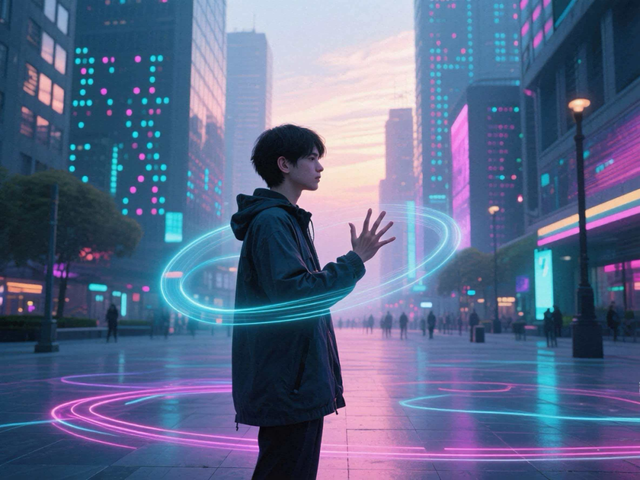
In the absence of hearing, technology serves as an extension of the senses for the hearing impaired, enabling them to still enjoy entertainment and joy. Yet, this silent delight in the tech world, the gap between AI and the hearing impaired, is surprisingly narrow—just half a step away.

We met Li Pengcheng and his partner Xu Mengjiao in person. Much of our day was dedicated to an AI programming dance project. They utilized AI programming to develop street dance assistance software tailored specifically for the hearing impaired.
How can one dance without hearing the beat? The conventional approach is through visuals.
Traditionally, sign language has been the go-to visual solution. For instance, performances like 'Thousand-Hand Guan Yin' on the Spring Festival Gala stage rely on sign language teachers for real-time direction. However, Xu Mengjiao's hearing street dance group faced unique challenges. Firstly, members hailed from all corners of the country, with many practicing online and unable to rely on on-site sign language direction. Secondly, the combination of hearing impairment and street dance is niche, making it difficult for some members to find a sign language teacher to collaborate with.
When the sign language solution proved ineffective, the street dance group turned to tactile solutions. Some members chose to lie on the floor and feel the beat through the vibrations of speakers and the floor. This method was not only exhausting but also inefficient, requiring them to lie down and listen before getting up to practice repeatedly.
The advent of AI, particularly its multimodal capabilities, allowed the dance group to explore new visual solutions and perceive the beat in a different way.
Xu Mengjiao conveyed the needs of hearing individuals dancing street dance to AI, which generated a set of programming prompts outlining the functions, core logic, and operational direction required for the street dance software. In just one day, they collaborated to create a demo of street dance assistance software designed specifically for the deaf.
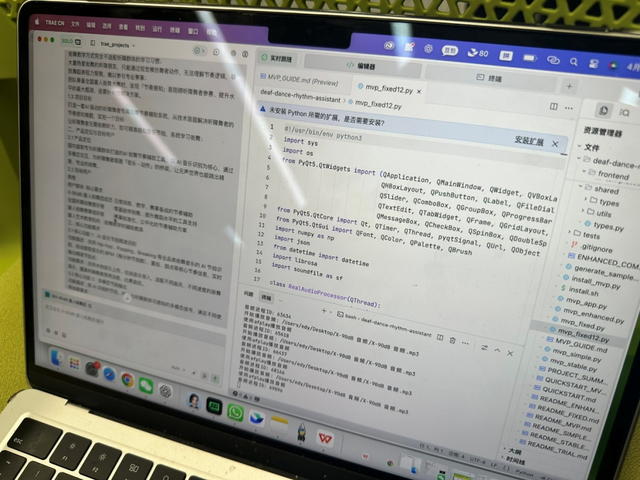
The core of this software is to compensate for the lack of hearing with visuals. Leveraging AI's multimodal understanding and conversion capabilities, it accurately analyzes various street dance music genres such as Hiphop, Popping, and Breaking, extracting key information like beats per minute (BPM), downbeats, and drumbeats. It then converts these audio signals into visual signals that the deaf can clearly perceive.
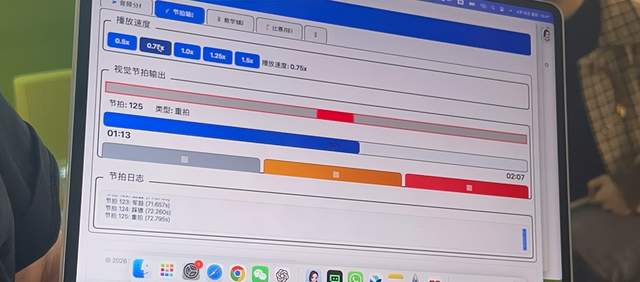
For example, different musical rhythms are represented by five distinct colors, with the strength of the beat corresponding to the speed of flashing. When a downbeat occurs, the lights flash rapidly, allowing everyone to follow the beat by watching the screen's light changes and practice dancing in sync with their partners online.
It's hard to say whether it's Xu Mengjiao's lively personality that loves dancing or if dancing makes her lively. However, she is well aware that her outgoing nature, university education, and ability to use technology to pursue her passions are envied by many hearing-impaired friends. Throughout her years of charity work, she has witnessed too many hearing-impaired individuals repeatedly encountering obstacles in reality and feeling inferior.
Can AI make younger hearing-impaired children happier?

For the 'Silent Choir,' singing has nothing to do with hearing; it's about touch.
This choir, comprised of 14 severely hearing-impaired children, hails from economically underdeveloped regions in China's third and fourth-tier cities and below. Some of these children have been abandoned by their parents, while others have long lacked emotional communication with their families and are unable to experience the joy of music through traditional means. Artist Li Bo aims to use technology to enable these children to express themselves through music.
Since they cannot hear the melody, vibrations serve as the medium. The children wear patch-type sensors that capture the subtle vibrations of their throats and muscles, as well as changes in their breathing, in real-time when they vocalize. These physiological signals are then converted into low-frequency vibrations and transmitted through giant speakers.
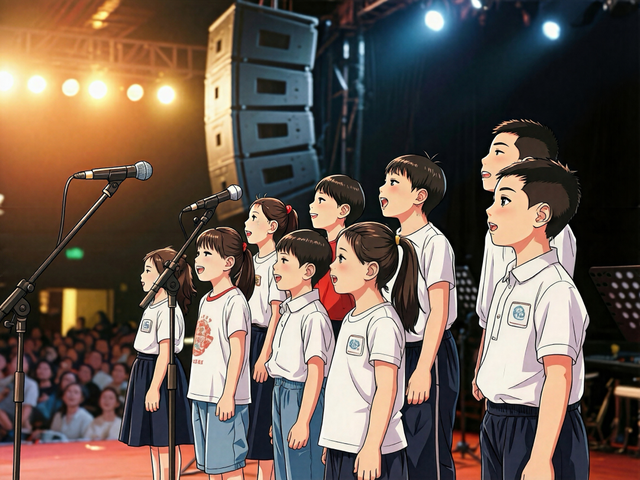
Li Bo also planned to collect 100,000 audio clips from mothers and use an entropy increase algorithm to convert these sounds into background noise, adding them to a nine-minute choir performance. However, the specific algorithmic details remain unclear to Li Bo and the technical team he is collaborating with.
In Li Bo's view, the deaf are exceptionally sensitive and stable to rhythm, and their understanding of time fundamentally differs from that of the hearing. Yet, for a long time, society has focused more on integrating the hearing impaired into the mainstream without reversing to understand the native state of the deaf.
Indeed, scientific evidence confirms that the loss of hearing is partially compensated by other senses, making the other senses of the hearing impaired particularly acute. However, society primarily operates around people with all five senses intact, leading to a subconscious belief that the deaf should wear hearing aids or undergo cochlear implant surgery to adapt to established norms.
But whether it's street dance clubs or choirs, technical solutions centered around the hearing impaired themselves, such as visual and tactile approaches, are clearly more in line with their physical intuition.

Li Pengcheng enjoys watching variety shows. Whenever work pressure becomes unbearable, he turns to them for relaxation.
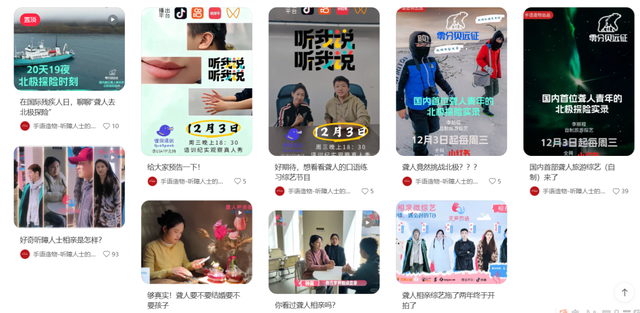
There are countless dating variety shows on the market, but none specifically cater to the hearing or disabled community. The hearing community often laments, "It's really hard for us to find love." Since no one understands their plight, they decided to take matters into their own hands. Li Pengcheng used his phone to film and AI to generate subtitles, single-handedly creating the first deaf dating variety show, 'Silent Love Song.'
Netizens complain about the dullness of the Spring Festival Gala every year. It wasn't until the accessibility sign language broadcast feature was introduced that Li Pengcheng watched the entire show for the first time. He didn't want to miss a single second and thought it was excellent. "If anyone says the Spring Festival Gala is boring, I'll hit them," he declared.
He also has other hobbies, like playing video games, but MR/VR glasses all require voice interaction, which is not friendly to him. He followed the trend and bought AI toys, only to find that they didn't respond to anything he said, probably because they couldn't understand his non-standard spoken language. In the end, he had to return them.
Dostoevsky wrote a book titled 'Man Cannot Live on Bread Alone.' Entertainment is a normal need, just like eating and drinking. However, a large number of tech accessibility products on the market pay little attention to entertainment needs, leaving it up to the hearing impaired to create their own solutions. Are tech companies just going through the motions?
One of the main reasons is that the development of these products is still dominated by hearing engineers, with the hearing impaired mostly serving as testers and feedback providers in limited numbers and with low influence.
As mentioned earlier, the hearing impaired have unique physical and life experiences that can only be truly understood through personal experience. Although hearing individuals may be sincere, they often lack the experience to truly empathize with the feelings of the hearing impaired. For example, it's common to see small, completely dark rooms designed to let viewers experience the life of the visually impaired, but those few minutes are entirely different from being in darkness 24/7 in terms of psychological impact.
Furthermore, tech companies' accessibility projects are often advanced alongside other projects. To be more efficient, product boundaries are clear, and the process is fast-paced. However, entertainment needs are highly individualized; some people like music, others love dancing, and some are addicted to short dramas. Company-level projects are destined to be unable to accommodate every niche need.
There's also a hidden shackle: society has a sense of shame about pleasure. Addressing urgent survival needs is acceptable, but involving entertainment needs seems extravagant and ahead of its time.
Even if hearing individuals have entertainment needs, they often hesitate to ask for them, not wanting to cause trouble for others. For tech companies, entertainment projects are also hesitant to pursue because they don't have the same social value as basic functions like AI sign language anchors or emergency call assistance, which are easier to get internal approval, resources, and progress for. If one genuinely wants to help the hearing impaired achieve something, the latter is a more practical and feasible choice.
Therefore, despite the sincerity and efforts of large tech teams in developing accessibility products, incorporating hearing-impaired employees and users, many tech accessibility features end up being self-indulgent.
In fact, all these issues can be resolved with one thing: a shift in the role of the hearing impaired in technology, from passively using and accepting existing accessibility products to developing their own solutions, like Xu Mengjiao did, or directing their own projects, like Li Pengcheng did. They define their own needs, create their own products, and everything falls into place.
However, the inertia and resistance of the old world still deeply influence everything.
That day, I followed Li Pengcheng, Xu Mengjiao, and their group as they faced a real-world challenge: how to transform a demo into a mature, scalable, and promotable product.
The street dance software for the hearing impaired won second prize in a hackathon. The purpose of the meeting that day was to invite more full-time designers and engineers to help optimize the demo. During the meeting, everyone tried hard to solve problems, but friction was almost constant.
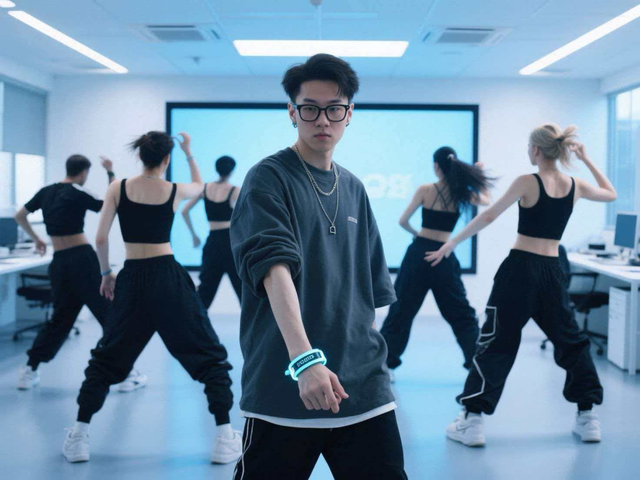
A member of the street dance group proposed that the previous software required staring at the screen, but dancers often need to face away from the screen. Could they create a wristband that transmits beat signals through vibrations? This idea was immediately rejected by the product manager present. Since the company is a pure software company and doesn't involve hardware development, they couldn't meet this software-hardware integration requirement.
The lack of bodily experience also slowed down communication. The designers and engineers present were all hearing individuals, many of whom were dance enthusiasts themselves, but they couldn't imagine how the hearing impaired practiced dancing. Just the question of "how to learn a new dance" was discussed repeatedly for a long time.
When the meeting ended, many engineers left with needs and doubts. No one could give a clear answer on when the optimization would be completed and truly implemented.
In this process, there was also a clear industrial ecosystem gap: the domestic AI ecosystem is inherently compatible with the needs of the hearing community. The biggest role of local AI is to make needs more visible, with low thresholds and easy operation, allowing the hearing community to easily turn their ideas into demos. However, there is often no follow-up guidance and resource support, leaving many high-quality ideas stuck in place.
Foreign companies have more advanced accessibility concepts and mature corporate cultures and systems to support projects. However, their accustomed overseas tech ecosystems are difficult to adapt to the domestic development and deployment environment, causing local developers to struggle with cultural and environmental mismatch.
Take this street dance software, for example. It was developed on a domestic AI development platform. However, the team optimizing the product for the street dance group was a Chinese team from a foreign company. These designers and engineers, who had long worked on multinational projects, had never even heard of this development platform. Just copying the project files completely took several hours.
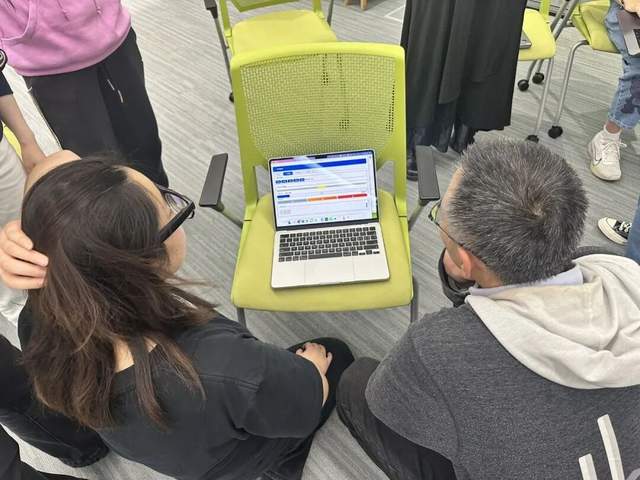
(A meeting discussion involving hearing-impaired individuals and engineers from a foreign company)
These disparities paint another vivid picture of the current technological landscape: AI has the capability to bring needs to the forefront, transforming the previously overlooked entertainment requirements of the hearing-impaired community from mere concepts into tangible demonstrations. Nevertheless, it is challenging for AI to independently navigate the entire product development process (or chain). There are numerous intermediary steps that remain unaddressed, and relying solely on the hearing-impaired individuals and basic AI tools is not enough to see the project through to completion.
I once watched a speech delivered by a hearing-impaired entrepreneur, and a particular sentence resonated deeply with many: "In the era of AI, the ability to translate real needs into functional products is paramount, and this fundamentally assesses our cognitive boundaries regarding ourselves and the external world."
Despite the loss of hearing, AI expands the vision of the hearing-impaired, revives their sense of touch, and constructs their emotional landscape... Technology transcends their physical limitations, thereby widening, extending, and enriching their entertainment experiences. Moreover, everything that the hearing-impaired community has achieved through their own efforts also pushes the boundaries of the tech accessibility field, which is an integral and indispensable component of the broader tech world.

-
![]()
Tesla Restructures Its Balance Sheet
-
![]()
Accelerating the High-Speed Interconnection Upgrade of AI Computing Clusters! JONHON Releases ELSFP External Light Source Optical Connectors
-
![]()
Breaking the overseas blockade of volumetric holographic materials, this optical enterprise secures nearly 100 million yuan in financing!
-
![]()
Why Does Jensen Huang So Openly Praise China’s AI?
-
![]()
"Wudang" Unveiled: Arm China's Next-Gen AI VPU Redefines Video Encoding
-
![]()
From Energy Conservation and Carbon Reduction to AI Decision-Making: GECON East Intelligence and Chery Group Explore a New Green and Smart Paradigm for Automobile Manufacturing
-
![]()
WAIC 2026 Observation | AI Accelerates Towards the Core of Industries, Industrial AI Enters a Critical Phase
-
![]()
Volkswagen China Fires the First Shot in Foreign-Funded 'White Box Delivery'!