Yin Qi's Third Foray into IPO Territory
 05/09 2026
 491
491

On November 11, 2024, Yin Qi ascended to the position of Chairman of Lifan Technology.
A mere month later, in December 2024, Megvii Technology, the company he had established 13 years earlier, withdrew its IPO application from the STAR Market, effectively concluding a 5.5-year listing odyssey that had accumulated losses totaling RMB 15 billion. The anticipated RMB 6 billion fundraising endeavor ultimately yielded no returns.
However, Yin Qi remained undeterred.
On January 26, 2026, Yin Qi took on another chairman role, this time at Jieyue Xingchen. On that very day, Jieyue announced a substantial RMB 5 billion Series B+ funding round, setting a new 12-month record for China's large model sector. In April, Jieyue completed its share reform, boosting its registered capital from RMB 23.94 million to RMB 56.26 million (a 135% increase) while dismantling its red-chip structure. By May 8, Jieyue was on the verge of finalizing a funding round valued at nearly USD 2.5 billion, with plans to submit its Hong Kong IPO prospectus before June 30 and list by the end of the year.
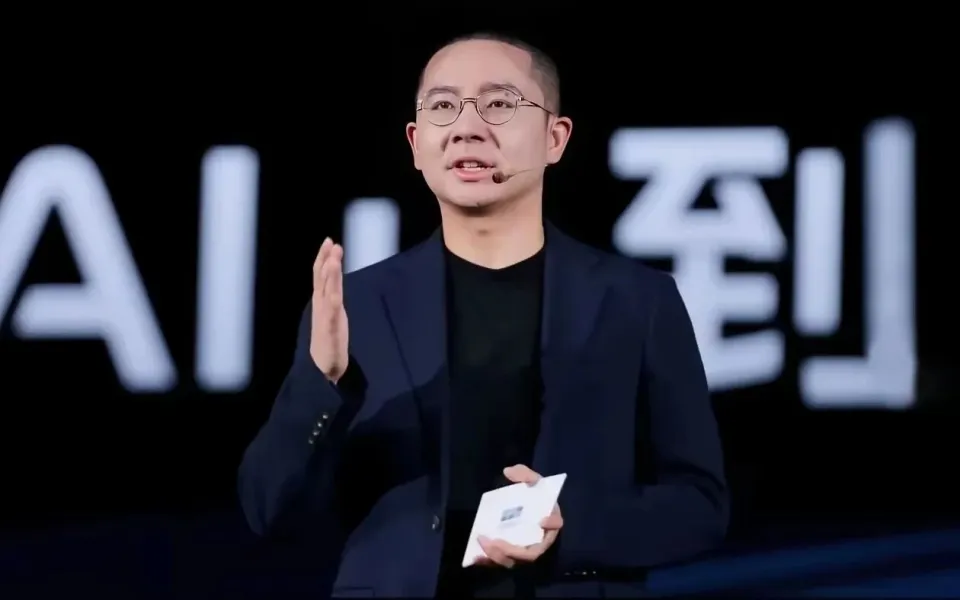
While Megvii couldn't traverse the 5.5-year path to success, Yin Qi accomplished a similar feat in just five months.
Among the once-renowned "Six Little Tigers" of large models, Baichuan and 01.AI have largely exited the scene, leaving only four—Moonshot AI, Zhipu, MiniMax, and Jieyue—on the brink of "going public." Thus, the "Six Little Tigers" have been whittled down to the "Four Little Tigers," as the AI industry shakeout nears its conclusion.
He's Weathered a Complete AI Cycle
Yin Qi stands out as one of the few AI entrepreneurs from this wave to have completed a full IPO cycle.
Born in 1988, a graduate of Tsinghua University's Yaoclass program with a master's degree from Columbia University, he co-founded Megvii in 2011 alongside Tang Wenbin and Yang Mu. Entering the market with Face++ facial recognition technology, Megvii emerged as the first of the previous generation's "AI Four Dragons"—Megvii, SenseTime, Yitu, and CloudWalk.
Megvii's IPO journey commenced in 2019 but encountered numerous setbacks.
It initially filed for a Hong Kong listing in August 2019, withdrew in 2020, shifted its focus to the STAR Market in March 2021 (receiving approval in September), yet remained mired in the registration process for three years before voluntarily withdrawing in December 2024. Over the course of 5.5 years, the planned RMB 6 billion fundraising effort yielded no results.
Megvii's cumulative losses soared to RMB 15 billion—not due to a burst bubble, but rather as a result of 13 years of relentless R&D and market expansion. Three Tsinghua Yaoclass graduates pursued technological innovation and an IPO for 13 years without crossing the finish line.
During those 13 years, none of the previous AI startups—the "AI Four Dragons"—achieved their secondary market objectives. SenseTime's stock price remained under pressure following its listing; CloudWalk's share price fell below its issue price on its debut; and Yitu withdrew its STAR Market IPO registration. Not a single AI company from that era exited the market gracefully.
When Yin Qi made a strategic pivot on November 11, 2024, he carried with him not only 13 years and RMB 15 billion in losses but also the scars of an entire generation of AI entrepreneurs—failed listings, evaporated valuations, and market resets. He witnessed it all firsthand.
Megvii's story concluded in December 2024, but Yin Qi refused to let it end there.
Over the next 16 months, he assumed the role of Lifan Technology's chairman (November 2024), renamed Lifan to Qianli Technology (February 2025), and took the helm at Jieyue Xingchen (January 2026). Each move laid the groundwork for another potential IPO.
But for now, Jieyue Xingchen likely holds the key.
Yin Qi Switched Strategic Vehicles
Jieyue Xingchen's story originates elsewhere.
On January 26, 2026, Yin Qi became Jieyue Xingchen's chairman—a move announced in tandem with the RMB 5 billion Series B+ funding round. He oversees top-level strategy, capital operations, and end-market commercialization, while CEO Jiang Daxin continues to lead R&D and daily operations. A new "1+3" decision-making team emerged.
This time, Yin Qi wasn't navigating the journey alone—Geely Automobile stood firmly behind him.
In autumn 2023, Li Shufu was introduced to Yin Qi through Harry Shum. The two hit it off immediately, with Li admitting they "should have met sooner"—a sentiment that seemed genuine. In 2024, Yin Qi acquired Geely's 19.91% stake in Lifan Technology for RMB 2.43 billion via an SPV, becoming the second-largest shareholder. He funded this acquisition himself. In November, he assumed the role of Lifan's chairman; in February 2025, Lifan was rebranded as Qianli Technology, pivoting fully to AI+intelligent driving.
Note: Yin Qi now holds dual chairman roles—at Qianli Technology and Jieyue Xingchen. Neither company needs to go public independently; together, they tell a cohesive story.
Here's the narrative: Qianli Technology focuses on AI+vehicles—intelligent driving, smart cockpits, and the future of Robotaxi—while vehicles represent the largest AI endpoint. This endpoint requires a "brain," which is where Jieyue comes in. Geely has opened its vehicle platforms, supply chains, and intelligent driving teams from Zeekr and smart, integrating a 3,000-strong R&D cluster for Yin Qi. Jieyue + Qianli + Geely's AgentOS now power Geely's Galaxy M9 mass-produced model, with nearly 40,000 units sold in just three months.
Vehicles aren't Jieyue's only endpoint. On the mobile front, Jieyue partners with 60% of top brands (OPPO, Honor, ZTE), disclosing over 42 million device installations and nearly 20 million daily services. Terminal Agent API calls have surged 170% quarterly for three consecutive quarters. An independent large model company doesn't require such dense terminal bindings—but an AI "brain" layer does.
Jieyue's funding round reveals even more. The January 26 RMB 5 billion Series B+ round attracted investors such as SDIC Pilot Fund, China Life Equity, Pudong Venture Capital, Xuhui Capital, Wuxi Liangxi Fund, Xiamen International Trade, Huaqin Technology, and existing shareholders Tencent, Qiming, and Wu Yuan Capital. The shareholder list combines distributed local state-owned assets and industrial capital. The nearly completed USD 2.5 billion round (May 8) includes Huaqin Technology, Longcheer Technology, OmniVision Group, ZTE, and the Hong Kong Investment Corporation (HKIC). Dubbed "Hong Kong's Temasek," HKIC backed a domestic large model company for the first time.
Local SOEs frame the "frontline player" policy narrative, industrial capital explains the "AI implementation" business narrative, and HKIC supports the "cross-border listing" capital narrative. All three narratives align within a single shareholder structure—exactly the story Yin Qi aims to tell.
Viewed through this supply chain lens, Jieyue Xingchen is no longer an independent large model company.
It's one of two legs in Geely's AI strategy.
Jieyue, Caught in the Middle
Placed in its true sector—as an AI brain supplier—Jieyue faces no easy path. Two dominant players loom ahead.
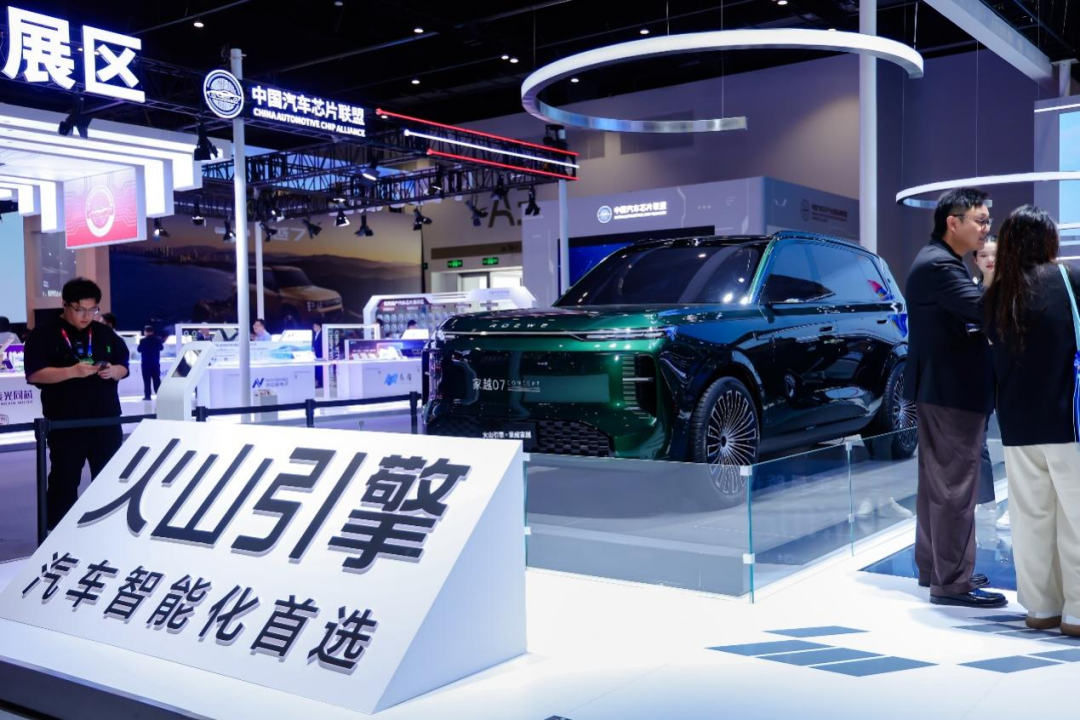
Volcano Engine (ByteDance)'s Doubao large model commands 46.4% of the 2025 public cloud API market share—equal to Alibaba and Baidu combined—with 50 trillion daily token calls and over 7 million vehicle deployments across 50+ brands and 145 models. Clients include Mercedes-Benz EQ GLC, SAIC Audi, SAIC Volkswagen, Chery, Hongqi, Buick, and Roewe. This represents the ceiling for the "neutral API + horizontal expansion" approach.
Harmony Intelligent Driving (Huawei)—with four vertically integrated brands (Aito, Luxeed, Enjoyz, and Ultra) plus externally sold Harmony Cockpit and Qiankun ADS 4—defines the "vertical full-stack + deep vehicle integration" ceiling.
Jieyue stands between these two ceilings.
It lacks Volcano's horizontal reach—once tied to Geely's equity, Volcano's clients like Mercedes, SAIC, and Chery are unlikely to switch to Jieyue, as no automaker would cede intelligentization control to an industry giant. The hasty exit of Haomo.AI (Great Wall Motor's AI arm) exemplifies this risk; Great Wall effectively stifled Haomo's growth.
It also lacks Huawei's vehicle foundation—unlike Huawei's HI Auto business, which supports hardware, chips, and ecosystems. While Geely possesses these assets, it struggles to match Huawei's comprehensiveness in this sector.
Jieyue's sole rationale: to carve out a path of "industrial capital binding" beyond Volcano's horizontal and Harmony's vertical models.
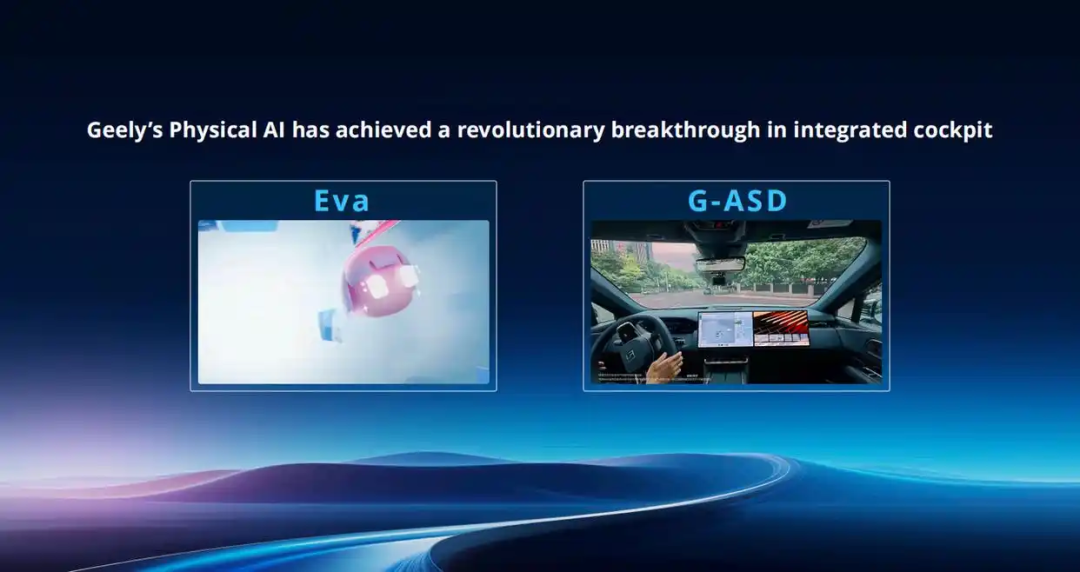
Unless Yin Qi secures another automaker with million-unit annual sales by 2026–2027 to replicate the "Geely equity binding" model, Jieyue's story may end here.
The issue remains: Geely is both its moat and its ceiling.
Epilogue
The remaining "Four Little Tigers" now fall into two categories—independent firms and those absorbed into supply chains. The former run a "central SOE long-money marathon" (led by Yang Zhilin), while the latter ride supply chain express trains to Hong Kong (led by Yin Qi). Zhipu and MiniMax linger in between, but the time to choose sides is near. Model monetization alone won't sustain them—xAI's recent struggles serve as a warning.
The 5-month sprint Yin Qi completed marks the end of Megvii's 13-year saga. If Jieyue Xingchen lists smoothly in Hong Kong, he'll become the first "AI Four Dragons" founder to take a second company public. But this time, it's neither Megvii nor an independent large model company.
Meanwhile, Yang Zhilin remains at the table. Moonshot AI's USD 20 billion valuation was built deal by deal, with RMB 10 billion in cash still burning. He needn't rise yet, but "yet" won't last forever—the viability of independent large model companies hinges on whether ARR can scale from USD 200 million to USD 2 billion by 2027.
The independent large model path may be nearing its end.
-
![]()
Tesla Restructures Its Balance Sheet
-
![]()
Accelerating the High-Speed Interconnection Upgrade of AI Computing Clusters! JONHON Releases ELSFP External Light Source Optical Connectors
-
![]()
Breaking the overseas blockade of volumetric holographic materials, this optical enterprise secures nearly 100 million yuan in financing!
-
![]()
Why Does Jensen Huang So Openly Praise China’s AI?
-
![]()
"Wudang" Unveiled: Arm China's Next-Gen AI VPU Redefines Video Encoding
-
![]()
From Energy Conservation and Carbon Reduction to AI Decision-Making: GECON East Intelligence and Chery Group Explore a New Green and Smart Paradigm for Automobile Manufacturing
-
![]()
WAIC 2026 Observation | AI Accelerates Towards the Core of Industries, Industrial AI Enters a Critical Phase
-
![]()
Volkswagen China Fires the First Shot in Foreign-Funded 'White Box Delivery'!