From Now On, We Should Study Kimi with the Same Dedication as DeepSeek
 05/09 2026
 545
545
I've delved into most of the world's leading AI large model companies and rigorously tested their products. As a long-term subscriber to ChatGPT, Gemini, and Grok, I also frequently engage with domestic models such as DeepSeek, Qwen, Hunyuan, and Doubao. Despite rarely programming or using Agents in my daily routine, I heavily rely on text-based interactions and multimodal functionalities like images and videos. I often find myself chatting late into the night with these models after new updates roll out. When it comes to programming and app development, I keep a close eye on the social media shares of several programmer friends, so I'm not entirely in the dark about tools like Claude Gode and ChatGPT Codex.
Up until last week, I confidently told my friends, "I don't think I've missed anything significant in the AI industry." However, in the days that followed, I first noticed a buzz on social media and then in my WeChat groups—the rise of Kimi (although it was already well-established). On March 16 and 20, Elon Musk praised Kimi twice—first for a paper on large model attention residuals technology, and second because Cursor's newly launched model was confirmed to be a fine-tuned version of Kimi K2.5. The latter incident, in particular, sent shockwaves through the global AI community. Let's recap what transpired:
Cursor is undeniably the world's most popular AI programming IDE. However, it primarily serves as an application interface and toolbox, completing tasks by integrating third-party large models, such as Claude.
In early March this year, Cursor unveiled its native programming model, Composer 2, which delivered exceptional performance at an incredibly low inference cost, immediately garnering significant attention. Initially, Cursor didn't disclose any external partnerships, leading many to assume it was entirely self-developed.
Over the next two weeks, numerous developers spotted traces of Kimi K2.5 in Composer 2's API and model ID, suggesting it was likely built upon K2.5. Public sentiment quickly shifted, and the media began accusing Cursor of copying Kimi.
On March 20, Cursor's founder apologized and acknowledged that Composer 2 was a secondary development based on Kimi K2.5, expressing gratitude to Kimi for its contribution. Kimi, in turn, generously stated that the model had been authorized through a partnership. Thus, the controversy was largely resolved.
To be honest, this incident left me stunned. I had always believed that Claude Opus 4.6 and GPT-5.4 were the world's premier programming large models. Domestically, I had high hopes for the new version of DeepSeek, given Liang Wenfeng's previous papers clearly focused on programming. My understanding of Kimi and its parent company, Yuezhi'anmian, mainly stemmed from its past reputation for excelling in ultra-long text analysis. My senior programmer friends were even more astonished—when Kimi K2.5 became the foundation of the most talked-about "native large model" for the world's most popular programming tool, anyone with technical acumen would grasp its significance.
The competitiveness of Kimi K2.5 lies not only in its robust reasoning capabilities and low cost but also in its open-source nature. This made it the ideal basis for Cursor's secondary development and propelled the launch of Cloudflare's new business, Workers AI. In its announcement, Cloudflare specifically highlighted K2.5's cost advantage, dubbing it the "Price-Performance Sweet Spot": "We started offering Kimi K2.5 as an experiment, but when we witnessed its performance and cost-effectiveness, this experiment quickly became pivotal."
A brief explanation: Workers AI is a large model aggregation platform designed to provide a unified API for enterprise and individual clients, enabling them to select different large models for tasks without needing their own hardware computing power. Workers AI primarily integrates open-source models, including Meta's LLaMA, Alibaba's Qwen, Google's Gemma, and DeepSeek, among others. However, until recently, almost all the models it offered were "small versions" with parameter scales ranging from a few billion to one or two hundred billion, generally incapable of handling deep reasoning, long-text, or high-intensity Agent workflow tasks. Kimi K2.5 is the first large-scale (with a total of 1 trillion parameters) cutting-edge model it has integrated. From now on, it can proudly declare, "We can assist clients in completing various complex, high-intensity tasks!"
In this realm, numerous capable large models boast high benchmark scores but often lack cost advantages in reasoning. Those with cost advantages are frequently not open-source. At this juncture, we regretfully observe that the most advanced large model ecosystems in Silicon Valley are largely built on closed-source foundations:
OpenAI's name implies "open source," but since GPT-3, its cutting-edge large models have ceased to be open-source. In 2025, it reluctantly released two GPT-OSS open-source models, which clearly do not represent its pinnacle.
Google also pursued an open-source route before 2021, but its current flagship large model, Gemini, is never open-source. Only the significantly smaller Gemma model is open-source.
Anthropic has never released any open-source models since its inception; the Claude series is entirely closed-source.
Grok's initial versions were open-source, but since Grok 3, it has no longer been open-source. After praising Kimi twice, one wonders if Elon Musk will reconsider joining the open-source ecosystem?
Globally, the most persistent and significant contributors to the open-source ecosystem have become Chinese companies. DeepSeek, Kimi, Qwen... each excels in its respective domain and has, at some point, become the world's most cutting-edge open-source model. I find Kimi particularly remarkable—its funding, valuation, and resource consumption are merely about 2% of those of Silicon Valley giants like OpenAI and are also far lower than those of the large model departments of domestic internet giants. With such limited resources, it has so rapidly pushed the boundaries of AI foundational research and generously open-sourced its cutting-edge achievements, reminiscent of OpenAI from years ago.
Apart from China, the flag-bearers of the open-source ecosystem are basically just LLaMA and Mistral. LLaMA 1-3 were globally leading open-source models, making indelible contributions to the proliferation of generative AI technology. Curiously, LLaMA-4's performance fell far short of expectations. If Mark Zuckerberg aims to reclaim the torch, he will likely need to exert much more effort. Mistral is the sole representative from France and even all of Europe. With a team of just a few dozen people at its inception, it created the world's "third most advanced" large model at the time (the first two being GPT and Claude). However, after 2024, its development pace significantly slowed, and from a foundational model technology standpoint, it has slipped into the second tier. This is actually the norm for AI startups—after all, no one can guarantee staying at the forefront of trends with limited resources. Therefore, I admire Yuezhi'anmian even more—from gaining fame in early 2024 for its long-text capabilities to astonishing the world with Kimi K2.5 now, it has proven itself to be no fleeting success.
By the way, Mistral's technological progress may have slowed, but it still managed to secure a new funding round with a valuation of $14 billion in September 2025. Microsoft, Salesforce, and ASML (yes, the Dutch lithography machine giant) are all its major shareholders. After seeing this, do you still think Kimi's $18 billion valuation is excessive? Remember, just a dozen days ago, Elon Musk's xAI just merged with SpaceX at a staggering valuation of $250 billion. Even as a devoted user of Grok, I have to admit that this valuation level is astonishing. Elon Musk's grand vision of launching data centers into space deeply excites me, but I must fairly acknowledge that Grok is still slightly behind the world's cutting-edge level.
Tuki (TukiFromKL), a renowned AI blogger on X (formerly Twitter) followed by many Silicon Valley luminaries, aptly put it: "Two Chinese labs' flagship models (Note: DeepSeek and Kimi) are both open-source, achieving more with fewer resources and challenging American companies' products that command billions in fees. The AI competition is no longer between the U.S. and China but between closed-source and open-source, and open-source is rapidly catching up."
Tuki's comment may be bold, but I concur with its essence: in previous computer technology revolutions, the open-source ecosystem has played a pivotal role, and the AI revolution is no exception. Silicon Valley giants still wield considerable technological and resource advantages, but refusing to embrace the open-source ecosystem will only constrict their path. An open-source, low-cost, and continuously updated large model is invaluable to the application layer. Take Kimi K2.5, for instance—Cursor utilized it to create the powerful Composer 2, and Workers AI leveraged it to take its first step in providing cutting-edge large model services. I believe many more application providers are strategizing on how to maximize its potential. Such technological advancements will benefit all of humanity, fostering a virtuous cycle of mutual promotion between foundational research and application layers.
Some may fret, "If cutting-edge technologies are open-sourced, how can developers monetize them?" In reality, this is the least of our concerns. Let's examine the world's largest open-source software ecosystem—Linux. It has never been closed-source, yet its ecosystem generates $20-30 billion in revenue annually, showing an upward trend in recent years. This figure doesn't even include Android, which evolved from Linux and brought smartphones into countless households. While Google strives to maintain the open-source community, it has successfully monetized through additional services.
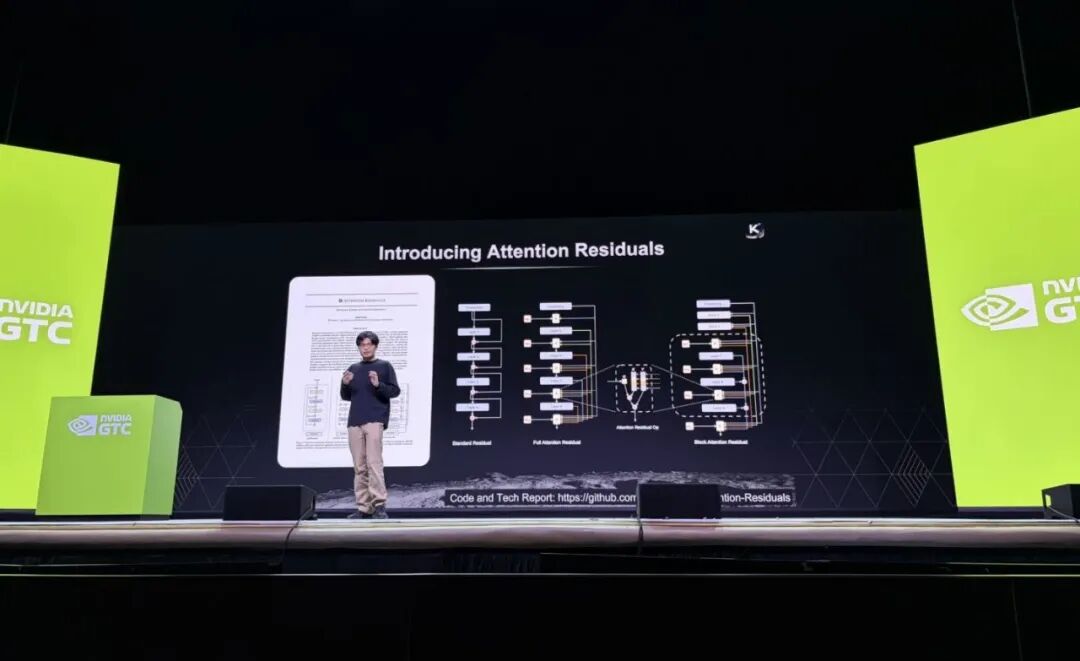
The impact of generative AI on human society has just commenced. The most crucial topic for everyone should be how to expand the pie and lower barriers as swiftly as possible. The more inclusive the effects of AI technology are, the more stable the positions of AI foundational model and application developers will be. In this regard, Chinese companies like DeepSeek and Kimi possess a clearer vision than many Silicon Valley giants. I believe this is why Yang Zhilin became the only CEO of an independent large model company invited to speak at NVIDIA GTC this year—Jensen Huang's vision is incredibly precise, once again demonstrating his ability to identify truly competitive paths amid complex competitive landscapes.
I eagerly anticipate witnessing more AI startups like DeepSeek and Kimi—with an open attitude, a lean and agile team, and a pioneering spirit. They should form a long-term competitive landscape with large companies, chasing each other. In this process, who wins or benefits the most becomes less significant because, in any case, the ultimate beneficiaries will be all of humanity.
-
![]()
Tesla Restructures Its Balance Sheet
-
![]()
Accelerating the High-Speed Interconnection Upgrade of AI Computing Clusters! JONHON Releases ELSFP External Light Source Optical Connectors
-
![]()
Breaking the overseas blockade of volumetric holographic materials, this optical enterprise secures nearly 100 million yuan in financing!
-
![]()
Why Does Jensen Huang So Openly Praise China’s AI?
-
![]()
"Wudang" Unveiled: Arm China's Next-Gen AI VPU Redefines Video Encoding
-
![]()
From Energy Conservation and Carbon Reduction to AI Decision-Making: GECON East Intelligence and Chery Group Explore a New Green and Smart Paradigm for Automobile Manufacturing
-
![]()
WAIC 2026 Observation | AI Accelerates Towards the Core of Industries, Industrial AI Enters a Critical Phase
-
![]()
Volkswagen China Fires the First Shot in Foreign-Funded 'White Box Delivery'!