Anthropic Comes to the Rescue: Is It Amazon's Turn to Shine Among the MAG7?
 05/09 2026
 694
694
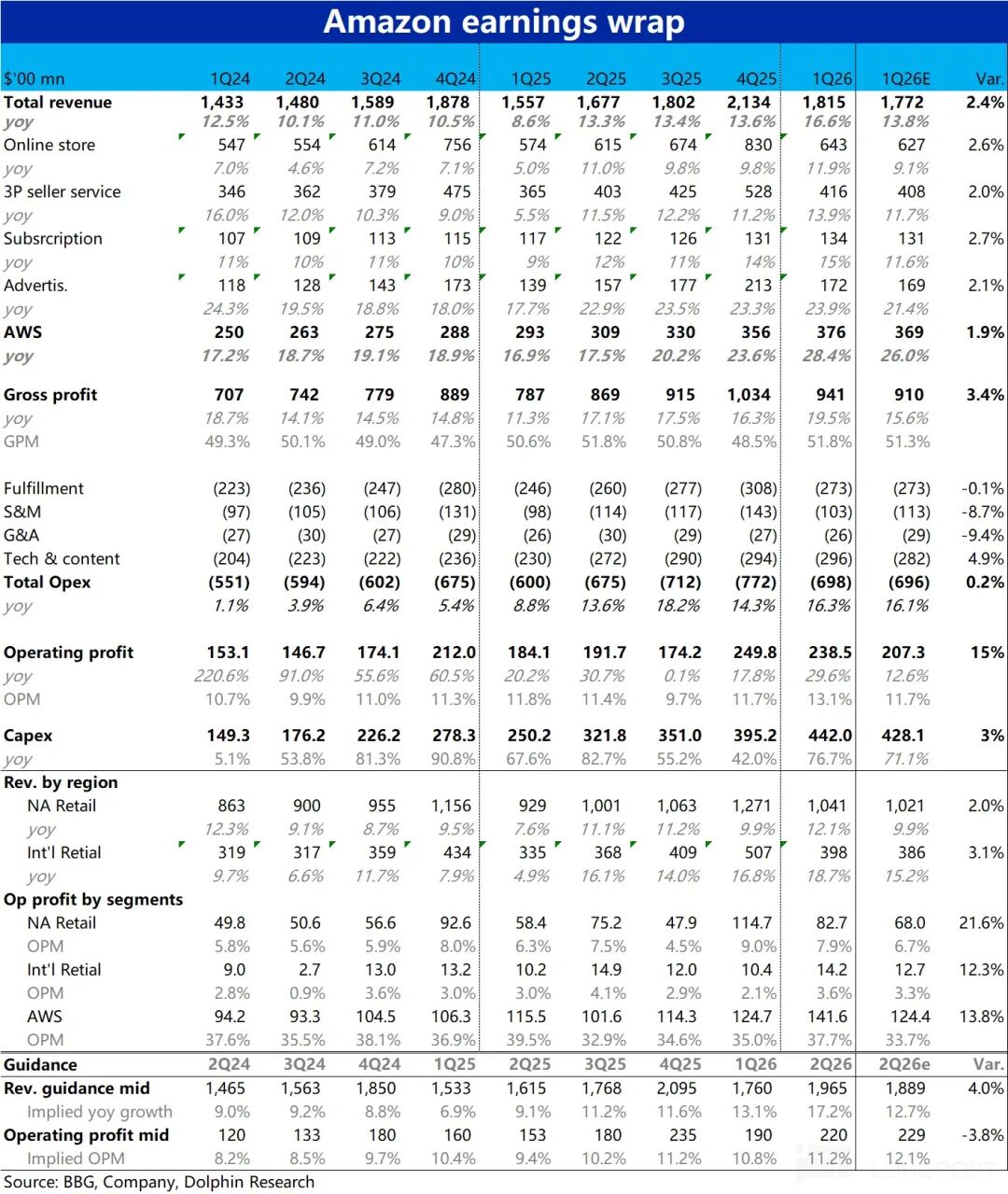
Amazon released its Q1 2026 earnings report after the U.S. stock market closed on April 30 (Beijing Time). Overall, AWS experienced significant accelerated growth, while the pan-retail segment also showed steady improvement, with both revenue and profit outperforming Bloomberg's expectations for the quarter.
However, as the company's stock price has rebounded by over 30% from its lows in recent weeks, market expectations have already been significantly raised, leaving little room for surprises from an expectations gap perspective. Specifics include:
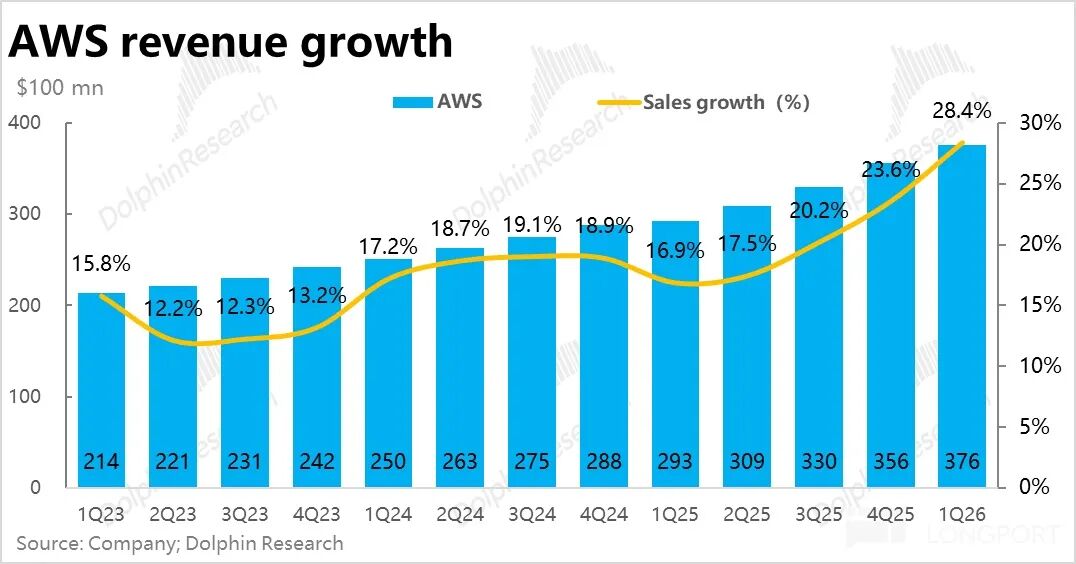
1. AWS Accelerates as Expected, Enhancing Competitive Position: The core metric of focus—AWS revenue—grew 28% year-over-year to $37.6 billion, markedly accelerating by over 4 percentage points from the previous quarter.
However, ahead of the earnings announcement, due to the remarkable performance of Anthropic, a spin-off from AWS, and frequent shortages in computing power, many investment banks had already raised their growth expectations for AWS to over 30%. Therefore, the actual growth rate for AWS this quarter fell short of the more optimistic buyer expectations.
Trend-wise, AWS has accelerated for three consecutive quarters and recently secured major contracts with OpenAI and Anthropic, the two leading AI labs, clearly indicating a significant improvement in Amazon's competitive standing in the current AI wave.
2. Capex Spending Reaches New Heights: Capex spending this quarter reached a staggering $44.2 billion, increasing by $4.7 billion from the previous quarter's high base, surpassing market expectations (which stood at $42.8 billion). Compared to the other two major CSP giants, Amazon is currently the most aggressive in Capex investment.
On one hand, this is why AWS revenue has been able to sustain significant acceleration in recent quarters (with more computing power supply coming online). On the other hand, considering the company has just signed multi-billion-dollar contracts with OAI and Anthropic, subsequent Capex investments and the pace of computing center construction are likely to further accelerate.
3. Continued Bond Issuance to Support Cash Flow: This quarter, Amazon's operating cash inflow was $26.6 billion, but after deducting Capex, the free cash outflow exceeded $17 billion. This marked the first time since the previous Capex cycle from 2021 to early 2023 that free cash flow turned negative again. After raising nearly $15 billion through bond issuance last quarter, the company raised over $53 billion this quarter.
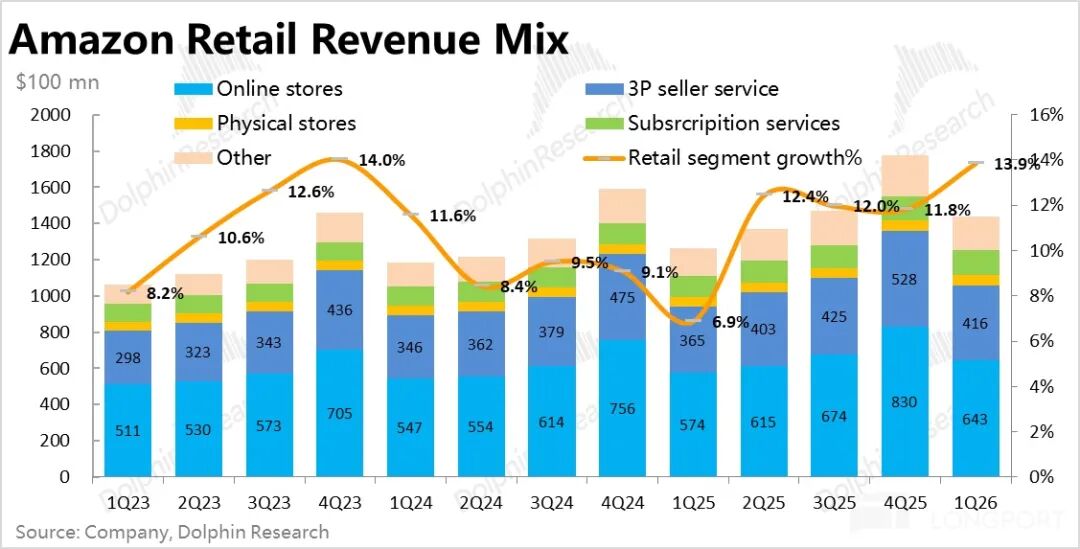
4. Retail Segment Shows Steady Progress: The total revenue for the pan-retail segment this quarter was $143.9 billion, up 13.9% year-over-year, accelerating by nearly 2 percentage points from the previous quarter. Market expectations for the retail business were not optimistic ahead of the earnings due to the impact of the U.S.-Iran conflict and soaring oil prices, making the retail segment's performance this quarter even more exceed expectations (exceeding expectations).
Among them, North American retail revenue grew by 12%, accelerating by over 2 percentage points from the previous quarter, with little actual impact from the U.S.-Iran conflict. On one hand, overall U.S. non-store retail growth in January-February (7.7%-8.6%) was indeed higher than last quarter's growth rate.
On the other hand, Amazon's own investments in logistics and near-field grocery retail should have also contributed to the acceleration in retail business growth (with a 15% increase in order volume this quarter, a historical high since the pandemic).
As for international retail revenue, it grew by 18.7%, but nearly all of this growth was driven by favorable exchange rates. At constant exchange rates, revenue growth has been hovering around 10%-11% in recent quarters, without any real acceleration.
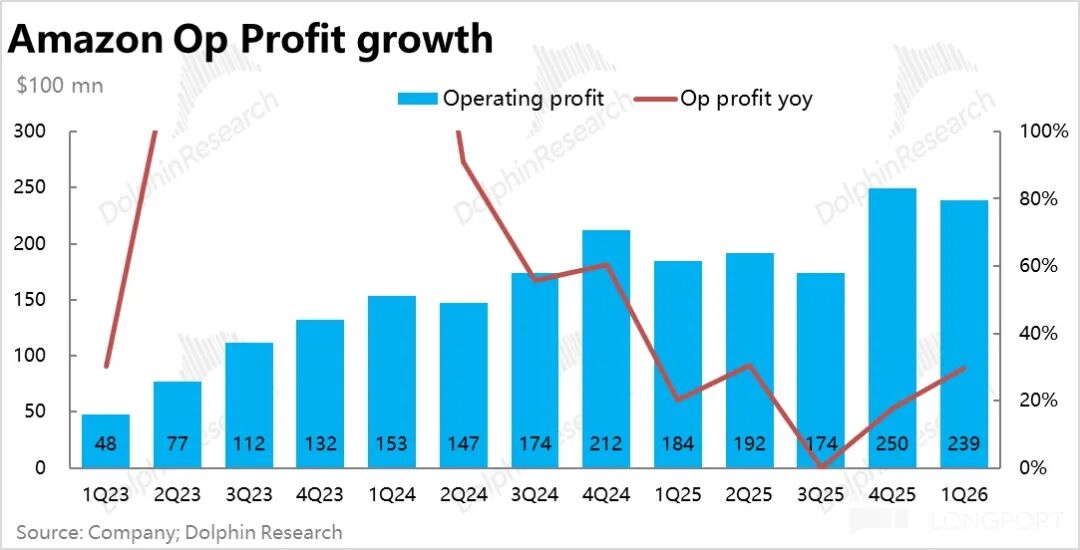
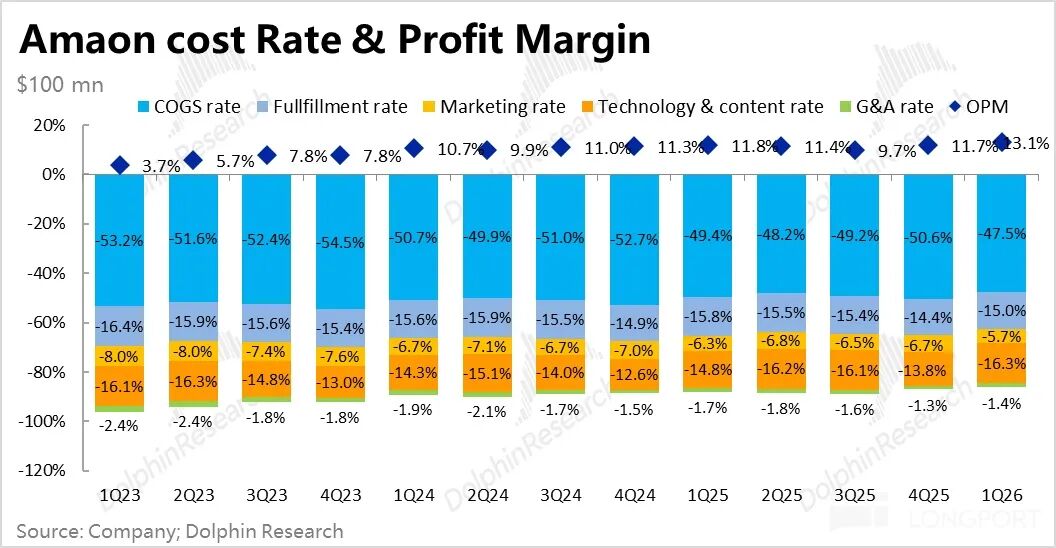
5. AWS and North American Retail Profits Also Impressive: Overall operating profit for the quarter was $23.9 billion, better than the expected $20.7 billion. Profit grew nearly 29% year-over-year, significantly outpacing revenue growth. Market concerns about the impact of the U.S.-Iran conflict and AI investments on profit margins were not as severe as feared, with margins actually still on an upward trend.
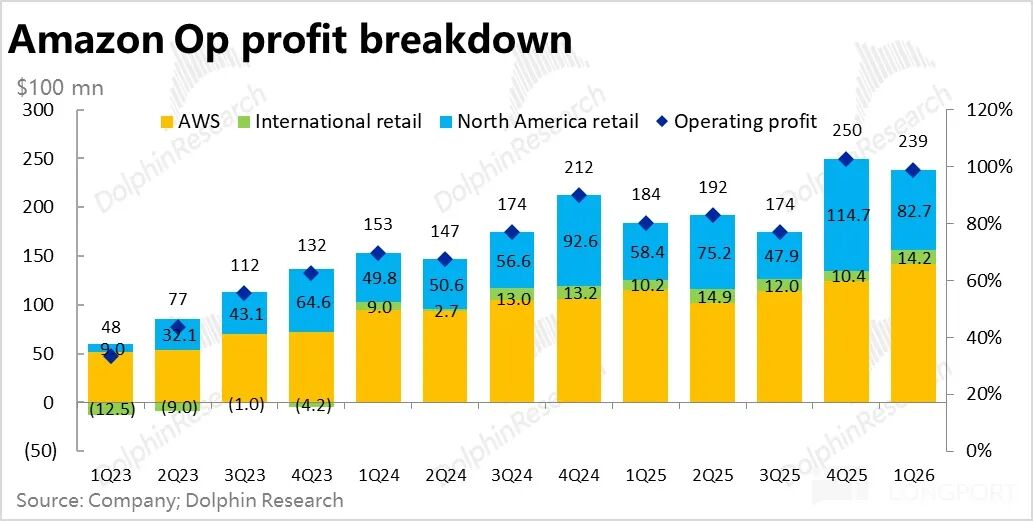
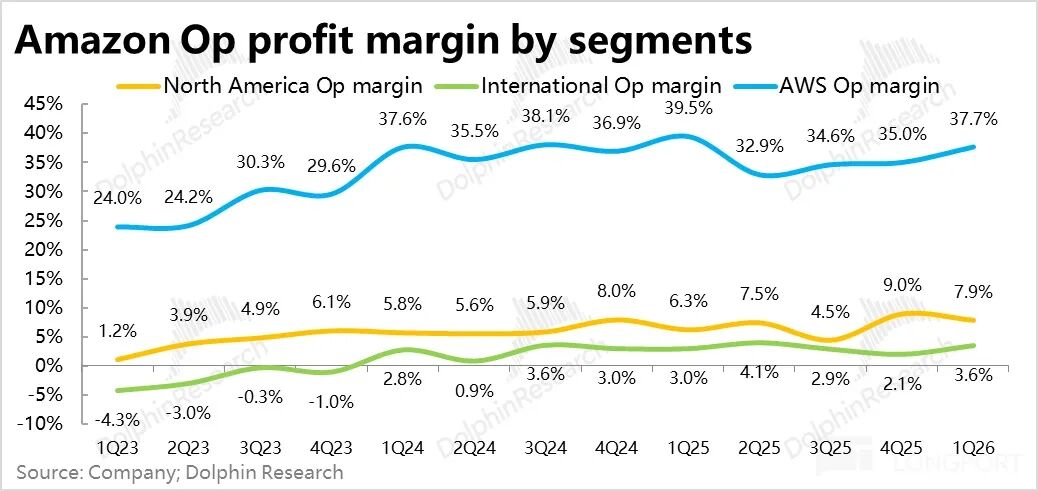
By segment, the operating profit margin for North American retail reached 7.9%, significantly higher than the expected 6.7% and the 6.3% from the same period last year. Although international retail profit also exceeded market expectations this quarter, about $350 million of that profit was due to favorable exchange rates. Excluding this impact, the actual profit margin for the international segment likely declined year-over-year.
Meanwhile, although the operating profit margin for the AWS segment did decline due to AI investments, from 39.5% to 37.7%, the actual drop was far less severe than market concerns, resulting in an actual operating profit for AWS of about $14.2 billion, also significantly better than the expected $12.4 billion.
6. Profit Surpasses Expectations Mainly Due to Gross Margin Improvement: From a cost and expense perspective, the profit surprise this quarter was mainly driven by an improvement in gross margins rather than cost control. The overall gross margin was 51.8%, up 1.2 percentage points year-over-year, similar in magnitude to last quarter's increase.
Total operating expenses were $69.8 billion, slightly higher than expected, and up 16.3% year-over-year, roughly in line with revenue growth, meaning expense ratios remained largely unchanged.
The main reason for the significant year-over-year increase in R&D expenses (up 29%) was likely the substantial investment in R&D for AWS business and AI-related features.
Dolphin Research View:
1. Strong Quarterly Performance: Overall, Amazon's performance this quarter was undoubtedly solid:
a. The AWS segment experienced accelerated revenue growth, with profit margins not declining as sharply as market concerns suggested;
b. The pan-retail segment, especially North American retail, demonstrated resilient revenue growth and margin improvement despite the U.S.-Iran conflict;
c. Although Capex spending continued to rise, leading to negative free cash flow and frequent bond issuance for financing, the market is unlikely to be overly critical given AWS's accelerated growth and the signing of major contracts, which validate the value of the investments through tangible business growth.
2. Guidance Suggests Continued Revenue Acceleration but Greater Profit Pressure: For next quarter's guidance, the company expects revenue to grow 16%-19% year-over-year, continuing to accelerate from this quarter.
One reason for this is that this year's Prime Day promotion has been moved from July to June, benefiting retail revenue in the second quarter (Wells Fargo estimates the benefit at around $7 billion, equivalent to a 4% contribution to growth).
On the other hand, assuming the upper limit of the guided revenue and that retail segment revenue grows 15%-16% next quarter, this implies AWS revenue growth of around 30%-35% next quarter, continuing to accelerate.
However, the expected median operating profit for next quarter is $22 billion, somewhat below market expectations. This implies a next-quarter profit margin of 11.2%, lower than the market's expected 12.1% and in line with the level from the same period last year.
This suggests that the impact of the conflict and Capex investments on profit margins may become more pronounced next quarter. However, the actual outcome will depend on delivery performance; if the upper limit of the guidance ($24 billion) is achieved, the implied profit margin would align with market expectations.
3. Continued Improvement in AI Competitive Position: Combining this quarter's earnings performance with a series of recent company-related developments, the most significant shift in Amazon's recent logic is the notable enhancement of its comprehensive AI competitiveness in the current AI wave. This accumulation of positive signs over the past few quarters has finally undergone a "quantitative change into qualitative change" this quarter. Specifics include:
a. Deeper Cooperation with OpenAI: Following OAI's announcement last quarter of signing a $38 billion, seven-year contract with AWS, cooperation between Amazon and OAI deepened further this quarter.
First, OAI committed to expanding its order size with AWS to $138 billion over seven years, equivalent to about $20 billion in annual AWS revenue.
With the cancellation of Microsoft's exclusivity in selling OAI APIs, Amazon can now also distribute various models and tools developed by OpenAI on AWS and embed some functionalities into AWS's own services/products.
OAI committed that about 2GW of its New (newly added) multi-billion-dollar computing power contracts will be based on Trainium chips.
b. Deepened Cooperation with Anthropic: Similarly, Amazon and Anthropic recently signed a new series of cooperation terms. This includes Amazon committing to invest an additional $5 billion in Anthropic, with the option for up to $20 billion in further investment.
"In return," Anthropic committed to expanding its computing power contract with AWS to $100 billion over 10 years and also committed to using a total of 5GW of Trainium chips (including existing models and subsequent new releases).
Through cooperation with the two leading AI labs, Amazon has achieved multiple objectives: securing more computing power contracts, enhancing its products' AI capabilities, and establishing foundational users and an ecosystem for its ASIC chips.
This is reflected in the earnings as a significant acceleration in AWS revenue growth, with RPO contract balances rising from $244 billion last quarter to $364 billion (already reflecting OAI's orders, but Anthropic's multi-billion-dollar contracts have not yet been included).
c. Self-Developed Chips: It is worth highlighting separately that annualized revenue from chip sales has reached $20 billion, and if including internal usage, the annual revenue scale has reached $50 billion, with committed order amounts for Trainium chips reaching $225 billion.
From this perspective, Amazon's ASIC chip business (including GPUs and CPUs) is already close to one-fifth the size of Nvidia's (including self-use portions) and is expected to contribute independently to the group's valuation.
From the perspective of the group's overall competitiveness, Trainium is expected to save the company tens of billions in Capex spending annually (reducing reliance on external chips) and provide a few percentage points of advantage in operating profit margins due to its higher energy efficiency.
In other words, among the three core competitiveness factors in the AI era—large models, cloud, and chips—Amazon already holds industry-leading positions in the latter two.
From an investment perspective, Amazon is clearly at a critical inflection point where its investment narrative is changing, with subsequent positive (positive developments) likely to be gradually released and realized in the AWS and chip businesses. For a more detailed value analysis, Dolphin Research has published a same name (same-titled) article in the "Dynamic-Depth" section of the Changqiao App.
In the medium to short term, Dolphin Research believes that an important indicator for assessing Amazon's investment opportunities is the growth rate of Anthropic's annualized revenue, or the speed of adoption and usage of its models/products.
We believe that the significant acceleration in AWS revenue growth in Q1 and Anthropic's success in the AI transition from Chatbot to Agent and Vibe Coding during the same period, driven by its Opus model and Claude Code, are closely correlated. According to reports, Anthropic's annualized revenue surged from about $9 billion at the end of 2025 to $19 billion by March this year.
As Anthropic's primary computing power supplier and its most significant AI client at present (OpenAI just signed a contract with AWS, with limited substantial revenue contribution in the short term), AWS's AI revenue likely grew by a similar magnitude in Q1, when Anthropic's annualized revenue doubled.
Therefore, close attention should be paid to subsequent major product/model updates released by Anthropic, such as the model "Claude Mythos"—rumored to have significant breakthroughs in logical reasoning and cybersecurity—and whether it can achieve similar or greater success than Claude Code, driving another substantial increase in Anthropic's Token consumption. If so, it could likely prompt AWS's revenue growth to exceed expectations again.
Detailed analysis is as follows:
I. AWS: Accelerated Growth, Solid Profits, but Expectations Are High
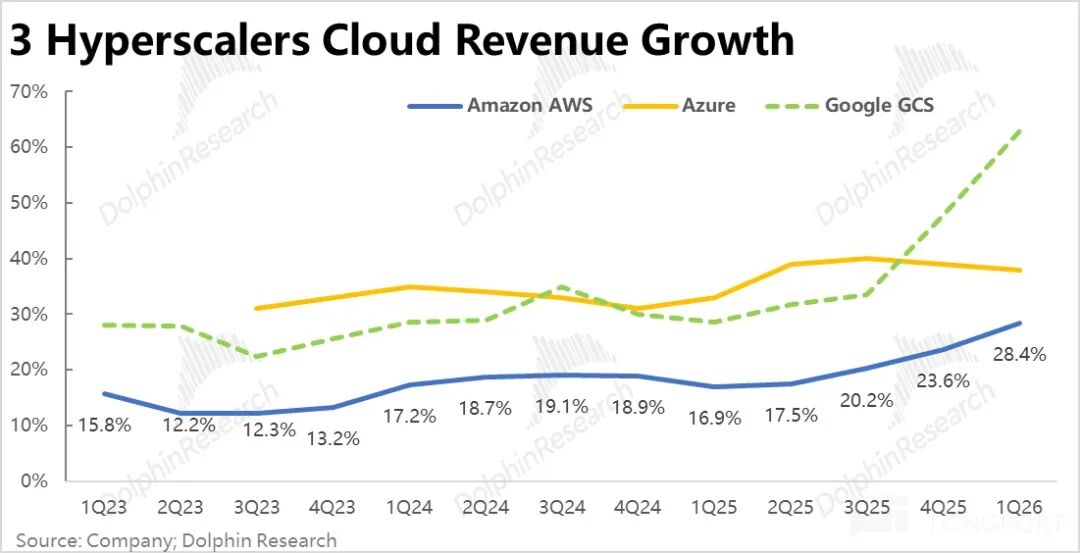
The most closely watched core business metric—AWS revenue—grew 28% year-over-year to $37.6 billion (with similar growth at constant exchange rates), accelerating by over 4 percentage points from the previous quarter and nearly 11 percentage points from the same period last year.
However, although AWS is continuing to accelerate, its actual performance did not exceed expectations. Ahead of the earnings, several major banks had already raised their growth expectations for AWS this quarter to over 30%, with full-year 2026 growth expectations raised to over 35%. Therefore, the actual performance may have been slightly disappointing for optimistic investors.
Given that AWS already has the highest Capex spending among CSPs, which continues to rise, and that the company has just signed multi-billion-dollar contracts with both OAI and Anthropic, subsequent AWS growth is basically guaranteed to continue accelerating. The question is whether it can meet the significantly raised market expectations.
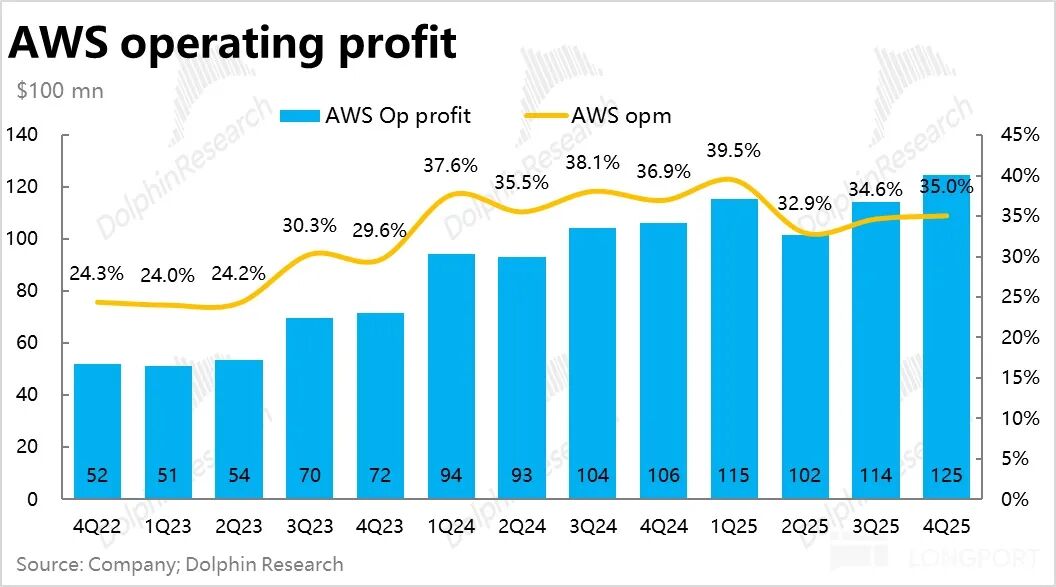
In addition to accelerated growth, AWS's operating profit this quarter also significantly exceeded expectations, with an actual operating profit margin of 37.3%, far surpassing the market's expected 33.7%. Actual operating profit was nearly $14.2 billion, up 23% year-over-year, without a significant issue of "revenue growth without profit growth."
Although profit margins did decline year-over-year due to the impact of AI business, the drop was only 1.8 percentage points. The pressure was not as severe as widely expected by sellers, but with Capex and AI-related revenue accounting for a further increasing share, the downward trend in profit margins is likely to continue.
II. Continued Increase in Capex
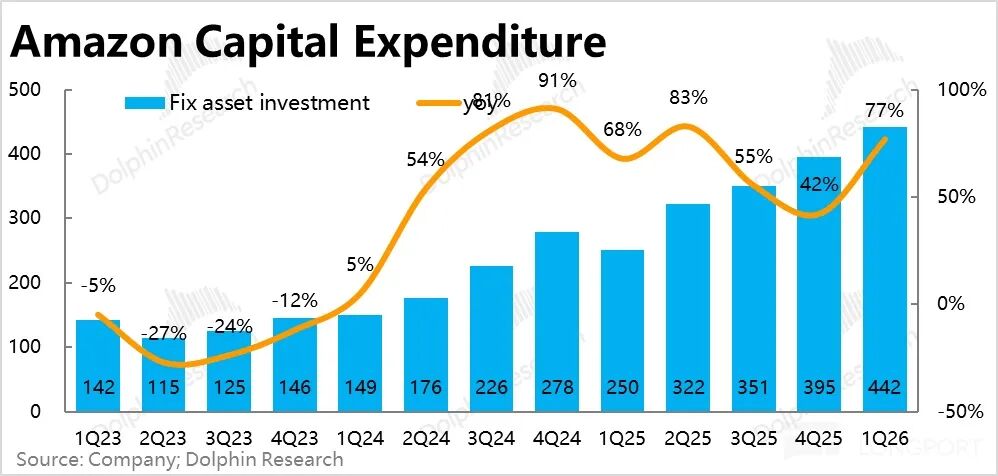
In terms of Capex, expenditures this quarter reached $44.2 billion, up approximately $4.7 billion from the previous quarter and higher than the already-not-low market expectation of $42.8 billion. In horizontal comparison, Amazon is also the only one among the three major cloud providers with Capex exceeding expectations and showing a quarter-over-quarter increase from 1Q to 4Q. However, from a full-year perspective, the company still maintains a Capex budget of $200 billion.
Such aggressive Capex investment, on one hand, explains why AWS revenue has continued to accelerate significantly. Dolphin Research believes it is also likely because the company recently signed major deals with OAI and Anthropic, necessitating an accelerated pace of computing center construction to meet the computing demands of these two major clients on time.
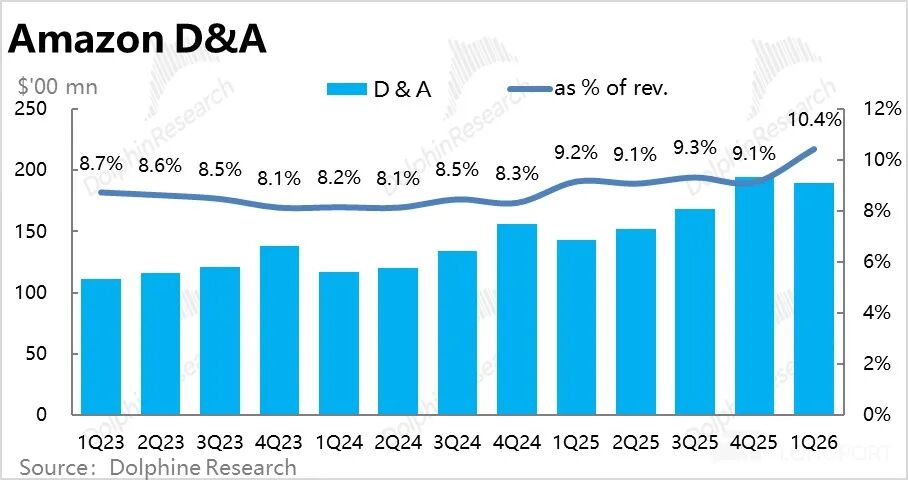
Correspondingly, the proportion of D&A to revenue also surpassed last year's level of just over 9%, reaching 10.4% this quarter. Dolphin Research believes this may be one of the reasons for AWS's still-decent profit margins this quarter, consistent with our previous judgment that the proportion of depreciation to revenue is likely to increase by another 2-3 percentage points by 2026. Therefore, the pressure on AWS's profit margins is expected to inevitably increase in the coming quarters and warrants attention.
III. Steady Growth in Pan-Retail: Genuine Improvement in North America, International Growth Driven by Exchange Rates
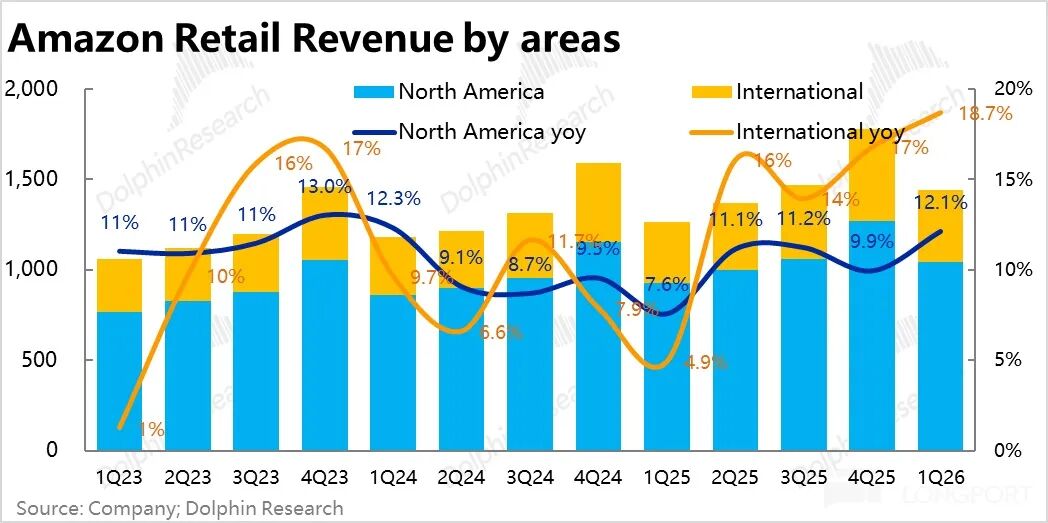
The performance of the pan-retail sector this quarter has also been steady with growth, with total revenue reaching $143.9 billion, a year-over-year increase of 13.9%, accelerating by nearly 2 percentage points from the previous quarter. Due to the significant rise in U.S.-Iran conflicts and oil prices, unlike the optimistic attitude towards AWS, market expectations for the retail business before the results were not overly optimistic. Therefore, it can be said that the retail business's performance this quarter exceeded expectations.
By region, retail revenue growth in North America was 12%, accelerating by more than 2 percentage points from the previous quarter. According to the U.S. Census Bureau's reported growth in non-store retail, the year-over-year increase from October to December was 5%-7%, while the increase from January to February was 7.7%-8.6%. This indicates an overall acceleration in the U.S. retail industry.
However, we believe that Amazon's recent investments in logistics efficiency (such as same-day delivery) and proximity-based grocery retail have also contributed to the acceleration of retail business growth.
In addition, retail business revenue in international regions grew by 18.7%, but almost entirely driven by favorable exchange rates. In constant currency terms, revenue growth in recent quarters has consistently been around 10%-11%, without any real acceleration.
Growth across various business lines has also been generally steady with improvement, as follows:
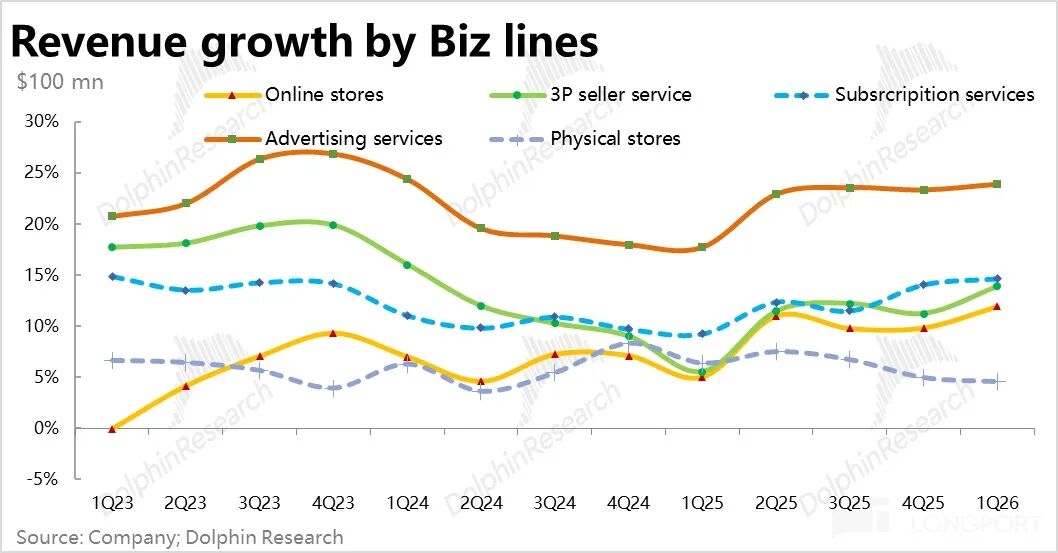
a. Revenue growth from self-operated retail and third-party merchant services saw a slight improvement of 1-2 percentage points quarter-over-quarter, while sales growth in offline physical stores slowed somewhat.
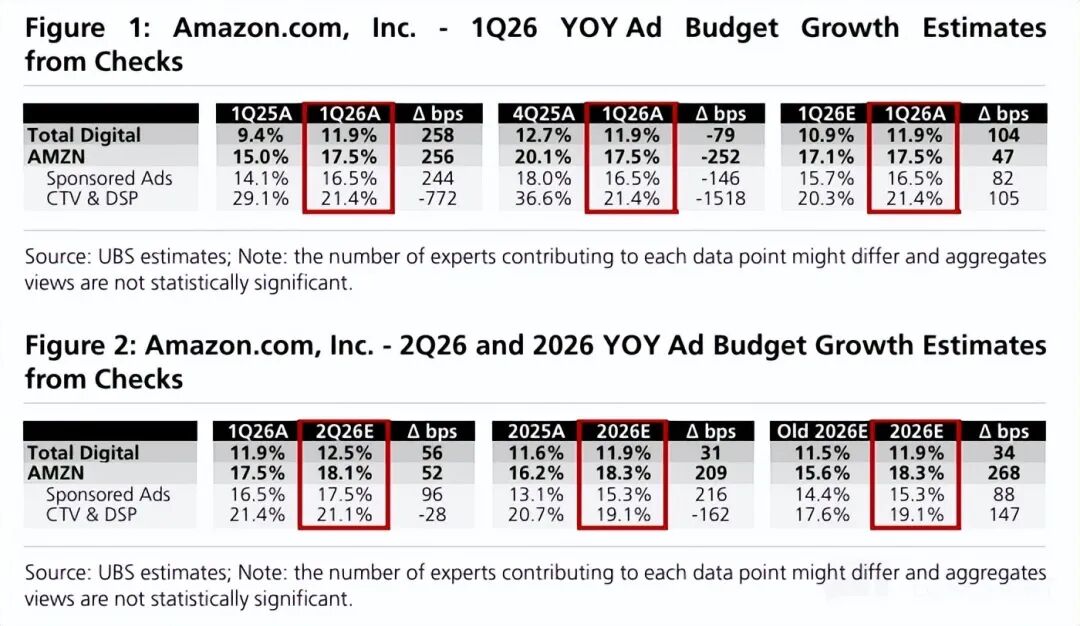
b. Advertising revenue growth remained strong, increasing by 22% in constant currency terms, flat with the previous quarter's growth rate. According to previous reports, advertising for other Amazon multimedia content, such as Prime Video, should be the main driving force.
Additionally, according to recent research on advertising budgets, Amazon's advertising revenue growth is expected to significantly outpace overall market growth in 2026, approximately 18% vs. 12%.
IV. Profit Exceeds Expectations, with North America and AWS as Major Contributors
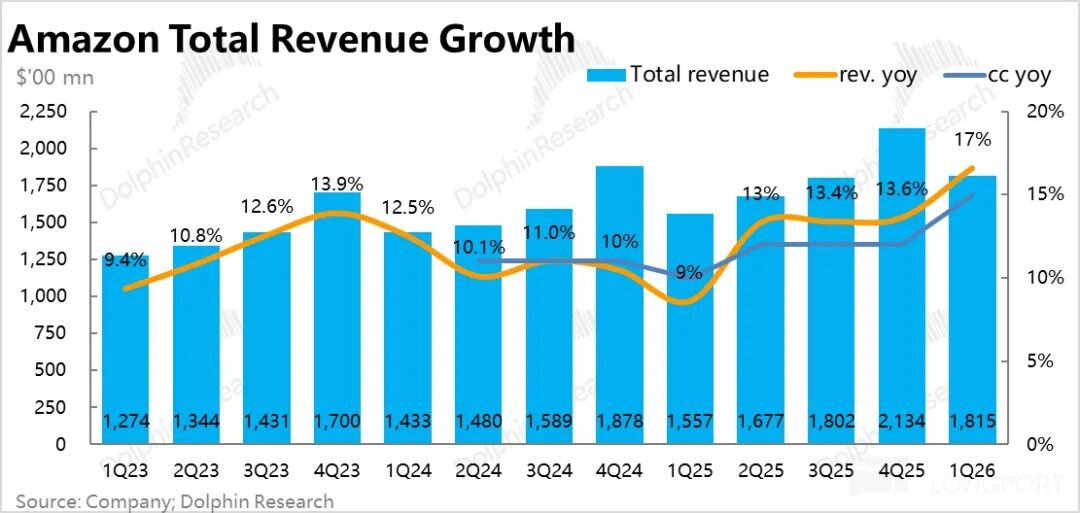
Across all businesses, Amazon's total revenue this quarter was $181.5 billion, a year-over-year increase of 16.6%, better than the market expectation of $177.2 billion. Excluding the impact of favorable exchange rates, actual revenue growth was approximately 15%, accelerating by 3 percentage points from the previous quarter, primarily driven by AWS, with contributions from retail in North America.
Meanwhile, Amazon's profit this quarter was also strong, with overall operating profit reaching $23.9 billion, better than the expected $20.7 billion.
Profit increased by nearly 29% year-over-year, significantly outpacing revenue growth. The market's concerns about the impact of U.S.-Iran conflicts and AI investments on the company's profit margins are, at least for now, not evident, with the company's profit margins actually still on an upward trend.
By segment:
a. As mentioned earlier, while AWS's profit margins did decline year-over-year, the decline was only 1.8 percentage points, not as severe as market concerns.
b. Within the pan-retail sector, the operating profit margin in North America reached 7.9% this quarter, significantly higher than the expected 6.7% and the 6.3% in the same period last year, indicating that profit margins are still on the rise.
c. The operating profit for the international retail sector this quarter was $1.42 billion, higher than market expectations. However, it should be noted that approximately $350 million of this profit was due to favorable exchange rates. Excluding the impact of exchange rates, the actual profit margin for the international sector this quarter declined slightly compared to the same period last year.
Therefore, overall, the profit exceeding expectations this quarter was mainly due to contributions from the North American retail sector and AWS business.
V. Gross Margin Exceeds Expectations, R&D Expenses Surge
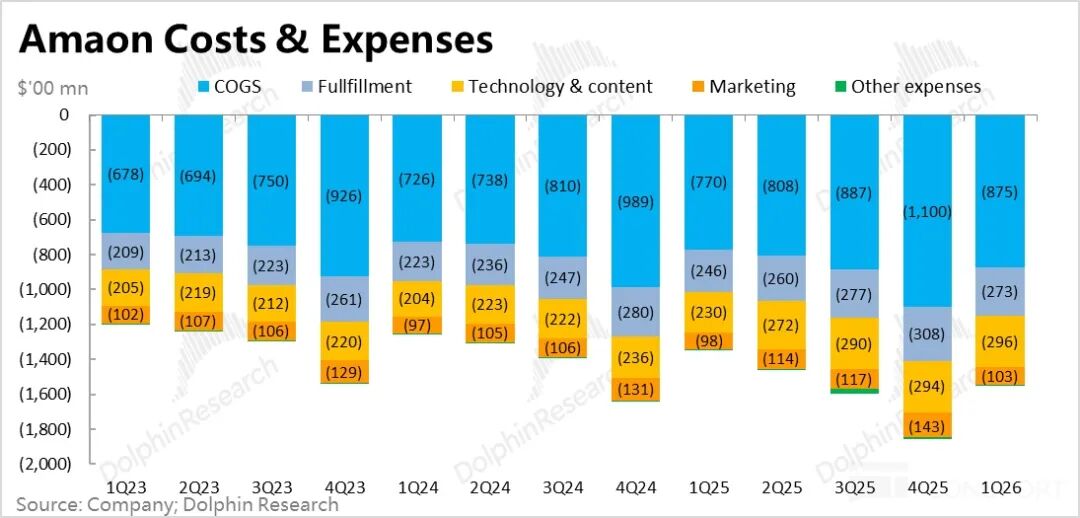
From a cost and expense perspective, the primary contributor to the profit exceeding expectations this quarter was the improvement in gross margin, rather than cost control. Specifically, Amazon's overall gross margin this quarter was 51.8%, expanding by 1.2 percentage points year-over-year, with an improvement magnitude similar to that of the previous quarter.
This indicates that, despite the gradual increase in Capex and depreciation dragging down AWS's gross margin, the impact of revenue structure improvements and efficiency gains in the pan-retail sector is more significant.
From an expense perspective, total operating expenses this quarter were $69.8 billion, slightly higher than expected, with a year-over-year increase of 16.3%, roughly in line with revenue growth. In other words, the contribution of expense control to profit margin improvement this quarter was very limited.
Specifically, the main driver was a significant year-over-year increase of 29% in R&D expenses, while other expenses remained relatively restrained. Since R&D expenses include AWS employee compensation, R&D costs, some equipment costs, and streaming content production costs, it can be inferred that the primary reason is likely the significant investment in AWS business and AI-related functionality R&D.
- END -
// Reprint Authorization
This article is an original work by Dolphin Research. Reprinting is only allowed with authorization.
// Disclaimer and General Disclosure
This report is for general comprehensive data purposes only, intended for general reading and data reference by users of Dolphin Research and its affiliated institutions. It does not take into account the specific investment objectives, investment product preferences, risk tolerance, financial status, or special needs of any individual receiving this report. Investors must consult with independent professional advisors before making investment decisions based on this report. Any person making investment decisions using or referring to the content or information in this report assumes all risks. Dolphin Research shall not be liable for any direct or indirect responsibilities or losses that may arise from the use of the data contained in this report. The information and data in this report are based on publicly available sources and are for reference purposes only. Dolphin Research strives to ensure but does not guarantee the reliability, accuracy, and completeness of the relevant information and data.
The information or viewpoints mentioned in this report shall not, under any jurisdiction, be regarded or considered as an offer to sell securities or an invitation to buy or sell securities, nor shall they constitute recommendations, inquiries, or endorsements of relevant securities or related financial instruments. The information, tools, and data contained in this report are not intended for or proposed for distribution to jurisdictions where distribution, publication, provision, or use of such information, tools, and data conflicts with applicable laws or regulations, or to citizens or residents of jurisdictions where Dolphin Research and/or its subsidiaries or affiliated companies are required to comply with any registration or licensing requirements in such jurisdictions.
This report only reflects the personal viewpoints, insights, and analytical methods of the relevant creators and does not represent the stance of Dolphin Research and/or its affiliated institutions.
This report is produced by Dolphin Research, with copyright solely owned by Dolphin Research. No institution or individual may, without the prior written consent of Dolphin Research, (i) make, copy, reproduce, duplicate, forward, or create any form of copies or reproductions in any way, and/or (ii) directly or indirectly redistribute or transfer to other unauthorized persons. Dolphin Research reserves all relevant rights.
-
![]()
AI Giants Start Borrowing to Fuel Computing Power Race
-
ByteDance Initiates Largest B2B Structural Adjustment, This Time It's Truly Different
-
![]()
Let's Talk About Kingsoft Office's Mid-Year Outlook and the True Strength of Its AI-Powered Office Solutions
-
Despite 150 Million Users, Struggles Persist: AIShige Faces Tough Competition from Seedance and Kling in AI Video Monetization
-
![]()
Ensuring Safe Gear Shifting in the Automotive Industry: Transitioning from 'Product Oversight' to 'Full-Chain Governance'
-
![]()
Net Profit Soars to $133.7 Billion! Azure Revenue Tops $100 Billion, with AI Fueling Microsoft's Growth
-
![]()
Before 6G Hits the Market, the U.S. Forges a 'Rules Alliance': What Challenges Await Chinese IoT Enterprises?
-
![]()
Intelligent Driving's 'Little Blue Light' Faces Ban: Night Glare and Cut-in Risks Prompt Official Action