Buying Jimeng and Getting Doubao for Free? Decoding the Pricing Strategy of ByteDance's AI Services
 05/10 2026
 547
547

An "Ice-Breaking" Attempt at AI Consumer-End Payments.
"Be like Doubao—even if it ‘fudges’ tasks, when caught by users, it apologizes with a grin."
After unexpected uses like singing, teaching outfits, and supervising children's homework, Doubao itself has become a meme topic. When users point out its mistakes, it responds with the classic line, "This time, I will definitely give you the most authentic and straightforward answer."
But this AI assistant app, which everyone "teases," is now preparing to charge users.
Updated app information in the App Store reveals that Doubao is about to launch a tiered subscription system—while basic features remain free, three paid subscription plans are being introduced: Standard at 68 RMB/month, Enhanced at 200 RMB/month, and Professional at 500 RMB/month. According to reports, ByteDance insiders revealed that the subscription service primarily targets high-computational-power scenarios such as PPT generation, data analysis, and film and television production.
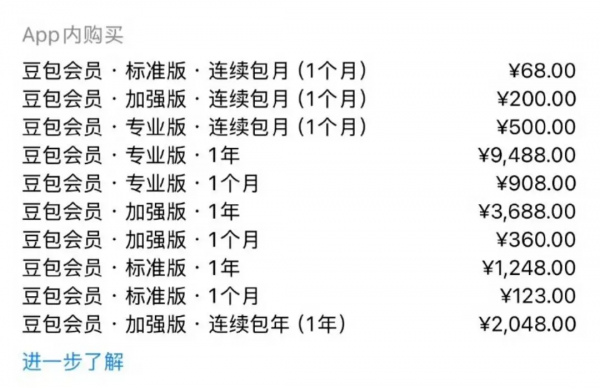
Growing into a super app with over 300 million monthly active users, Doubao has finally taken the step from free to paid, marking a significant move for Chinese AI applications to charge consumer-end users directly.
User attitudes toward Doubao's paid model are polarized. Some opposing users roast (complain on social media) about Doubao's various operations: "I asked it to make a New Year video for the Year of the Horse, but it ended up being for the Year of the Snake," or "After all that talk about making a PPT, it gave me three blank slides."
As a highly anticipated AI assistant product, what supports Doubao's monetization ambitions? How was this pricing strategy determined?
Benchmarking Overseas? What Exactly Is Doubao Selling?
Before discussing why Doubao charges, we first need to understand how Doubao's pricing is determined and whether this pricing logic is reasonable.
If compared purely by numbers, many people's first reaction is to benchmark it against overseas AI assistant products like ChatGPT.
In terms of pricing, Doubao's current paid membership tiers are priced at 68 RMB, 200 RMB, and 500 RMB per month. According to reports, ByteDance insiders stated that the paid features primarily include PPT generation, data analysis, and film and television production.
Using ChatGPT as a comparison, OpenAI's subscription tiers are GO (Lightweight at $8/month, approximately 54 RMB), Plus (Enhanced at $20/month, approximately 136 RMB), and Pro (Premium, which was halved from $200 to $100 a month ago, approximately 680 RMB).
With pricing comparable to overseas standards, Doubao's pricing is clearly not cost-effective domestically. Compared to the lowest-tier pricing, it is at least one-third more expensive than AI assistants like Kimi and MiniMax, even though it offers multimodal advantages but lacks Agent or Coding capabilities.
From a pricing perspective, Doubao is benchmarking against overseas prices. However, in a domestic environment where AI product subscriptions are generally low-priced or even free, can domestic users accept Doubao's pricing?
In fact, Doubao's pricing seems more like a migration of the pricing strategy from another ByteDance product, "Jimeng."
To some extent, the most valuable components of the paid Doubao system are its multimodal models like Seedance and Seedream. According to the membership pricing disclosed on Jimeng's official website, it also offers three tiers of membership pricing, with monthly prices for continuous subscriptions at 69 RMB for Basic, 199 RMB for Standard, and 499 RMB for Premium. Doubao's pricing system almost entirely overlaps with Jimeng's.
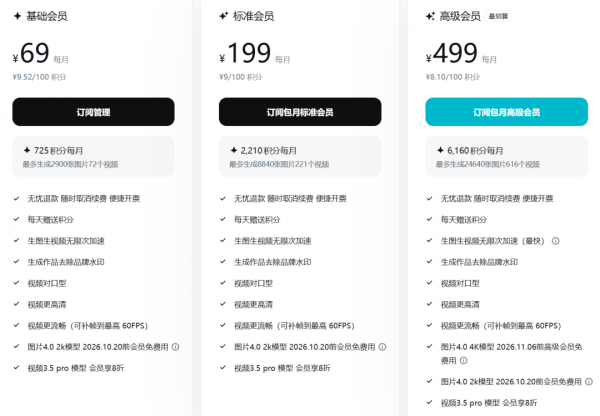
Reasoning backward from the pricing strategy to Doubao's paid value-added services, it is reasonable to infer that Doubao's pricing system may be based on a "buy one, get N" approach for multimodal capabilities.
In other words, users will be able to spend money on Doubao to access services like AI video and AI image generation in the future. Features like Office capabilities (e.g., PPT) or data analysis functions are more like "bonus packs" added to the core selling points.
Taking PPT demand as an example, both the specific optimizations of the underlying Seed 2.0 model for Office needs and the official launch of the AI PPT feature in April this year indicate Doubao's intention to optimize for office use.
However, compared to its peers, Doubao is not only late to the game but also falls far short of being a "productivity tool" at present.
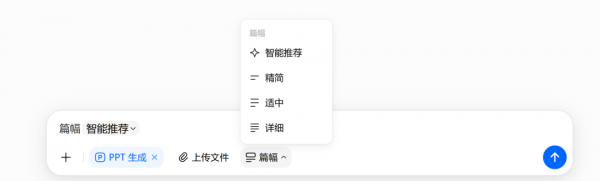
Currently, the detail optimizations of Doubao's AI PPT function are limited to adjusting length restrictions. Relying solely on AI-generated templates and images results in a relatively crude final presentation. In contrast, other domestic and overseas AI assistant products have deployed Office plugins earlier and offer richer functionalities. For example, both Kimi and MiniMax support selecting specific PPT templates and categorizing them by content domain, such as research, promotion, or reporting.
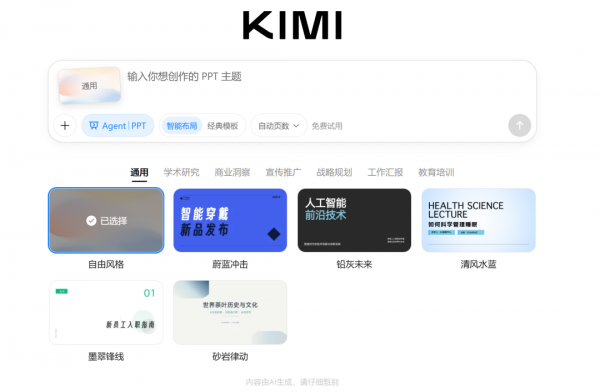
Focusing on office needs like PPTs, the current version of Doubao has not yet entered the top tier in terms of functionality and design, forming a stark contrast with the stable and predictable video generation experience users can get on Jimeng.
As the AI assistant product with a significant lead in monthly active users, Doubao does not lack a market for expanding paid value-added services. However, compared to cheaper pricing and more comprehensive services offered by domestic peers, Doubao is clearly not yet ready.
Doubao's prematurely exposed paid design is more of a market test to gauge user acceptance of different price tiers.
Leveraging Multimodal Capabilities: Doubao Aims for Universal User Charging
Doubao, which hopes to command higher prices through multimodal capabilities, can be considered a "minority" compared to the domestic and overseas AI assistants focusing on Coding and Agent features.
Take domestic players like Kimi and Zhipu, for example. Their paid value-added services include increased AI Coding quotas. For instance, Kimi offers different tiers of membership with varying Kimi Code quotas, ranging from 4x to 20x, effectively selling Tokens at a discount.
In addition to selling Tokens in large quantities at low prices, Agent capabilities are the second card played by large model vendors in their subscription models.
Due to the Token consumption being hundreds of times more costly than ordinary tasks, domestic vendors have adopted a route of offering a small amount of free trials followed by paid purchases when introducing Agent services. The recently popular but now cooling-down "lobsters" (a term referring to a trend) also generally have corresponding paid plans.
Doubao's charging model is actually a new attempt by ByteDance to combine its current product advantages. It aims to transform expensive services like AI image and video generation into a charging model that can reach more users.
Compared to AI Coding and Agent capabilities, video generation is also a proven good business in the market. However, in the past, video generation typically existed as standalone products, such as Kuaishou's Kling, which does not have an advantage in general conversation models or user coverage. Among other mainstream large model vendors, few players rank in the top tier in the AI video track ( track = track , meaning "field" or "area").
In contrast, ByteDance is a rare all-rounder: it has good models and good scenarios (Doubao).
In recent months, the possibility of Tokens as a business has been widely recognized. However, AI was not originally developed to sell Tokens. Only by finding scenarios can computational power consumption be driven, such as with "lobsters" or AI Coding.
What Doubao attempts to sell is more widely applicable services. It may also find a group of users who have non-professional-level AI needs but still have office requirements: for example, users who are willing to pay a small amount for AI image editing. Their requirements for AI are not professional-grade but are more practically oriented, such as creating PPTs, analyzing Excel spreadsheets, or writing work reports.
For professional video creators, the addition of other office capabilities represents a "buy one, get multiple" cost-effective package.
Compared to AI assistants from large companies and startups, the current version of Doubao already shows this trend.
In the interface of Doubao's desktop version, Doubao has created an AI creation page for its multimodal functions while incorporating some designs for daily image editing functions, such as AI background removal and image clarity enhancement.
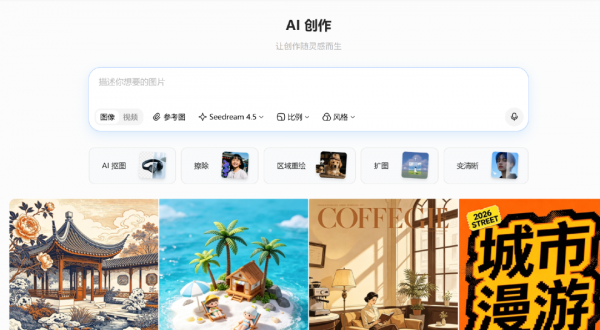
Viewing Doubao's subscription model from this perspective, Doubao, which is not a "top student" in other AI capabilities, is still following its most proficient route—driving the feasibility of paid value-added plans through a broad and comprehensive approach.
It can be said that Doubao's monetization logic is not "how smart Doubao is" but "how strong Doubao is overall."
However, with the addition of AI video and image generation, whether Doubao's relatively high pricing in the domestic batch can attract more users remains uncertain. Whether this consumption logic can truly convince users to pay is still unknown.
In the current context of strengthening narratives around AI payments, Doubao's paid trial has added fuel to the fire in educating users about paying for AI services.
Epilogue: Why Is Doubao Charging Now?
Doubao's subscription model may seem late, but its launch at this time is no accident.
First, during the user acquisition phase, Doubao has exhausted all means to drive growth. Whether through traffic support from its behind (behind-the-scenes) Traffic Factory (traffic factory, referring to ByteDance's vast user base and promotional resources), or by spending money to sponsor the Spring Festival Gala and engage in "red packet wars" with Baidu, Alibaba, and Tencent, ByteDance has invested significant resources to promote Doubao.
ByteDance, known for its ability to achieve remarkable results through sheer force, has successfully made Doubao the clear leader. When user growth reaches a certain level, monetization becomes inevitable.
It is reported that in the first quarter of this year, Doubao's monthly active users surged to 345 million, up by 100 million from 226 million in Q4 last year. Meanwhile, the AI applications currently ranked second and third have around 150 million monthly active users each, combined still less than Doubao alone.
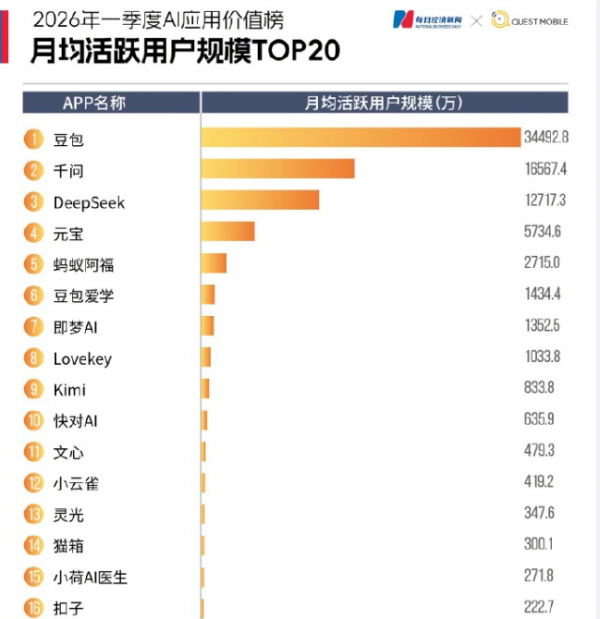
On the one hand, with user growth gradually approaching its ceiling, Doubao now has the confidence to test commercialization. On the other hand, as a free AI assistant, Doubao has profit calculations to consider internally.
For high-difficulty demands like generating PPTs or videos, the costs incurred by AI are hundreds of times higher than those for ordinary Q&A sessions. It is reported that ByteDance's spending on AI infrastructure this year will exceed 200 billion RMB, up at least 25% year-on-year.
Internally, ByteDance has also demanded that Doubao generate revenue. According to a report by National Business Daily, there were voices within the company last year expressing uncertainty about Doubao's clear commercialization path, while the reasoning costs brought by its large DAU (Daily Active Users) product also put pressure on profits.
Doubao, which is not yet fully prepared, is using this pricing strategy to "ask" users: How much do you think Doubao is worth?
-
![]()
Tesla Restructures Its Balance Sheet
-
![]()
Accelerating the High-Speed Interconnection Upgrade of AI Computing Clusters! JONHON Releases ELSFP External Light Source Optical Connectors
-
![]()
Breaking the overseas blockade of volumetric holographic materials, this optical enterprise secures nearly 100 million yuan in financing!
-
![]()
Why Does Jensen Huang So Openly Praise China’s AI?
-
![]()
"Wudang" Unveiled: Arm China's Next-Gen AI VPU Redefines Video Encoding
-
![]()
From Energy Conservation and Carbon Reduction to AI Decision-Making: GECON East Intelligence and Chery Group Explore a New Green and Smart Paradigm for Automobile Manufacturing
-
![]()
WAIC 2026 Observation | AI Accelerates Towards the Core of Industries, Industrial AI Enters a Critical Phase
-
![]()
Volkswagen China Fires the First Shot in Foreign-Funded 'White Box Delivery'!