Robot Sets New Human Record in Half Marathon: Honor’s AI Ecosystem Strategy Hits Milestone
 05/10 2026
 557
557
This marks a groundbreaking achievement in both the smartphone industry and the embodied AI sector.
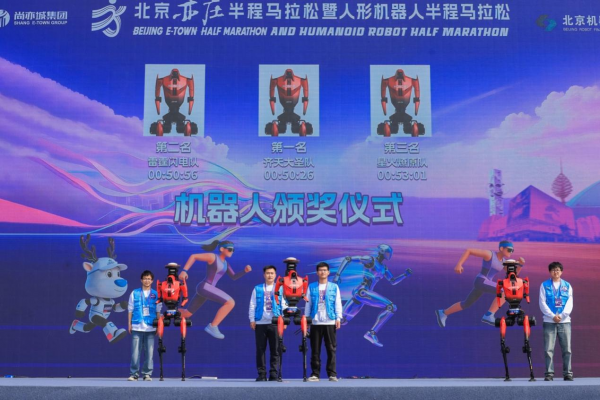
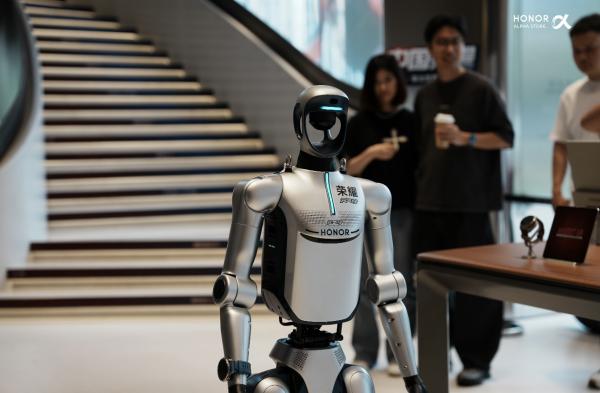
On April 19, a red "Lightning" robot from Honor crossed the finish line of a half marathon on Beijing’s Yizhuang track in 50 minutes and 26 seconds, drawing praise from a special commentator at The New York Times for its remarkable feat. What makes this achievement stand out is that it wasn’t accomplished by a traditional robotics company.
Since Honor CEO Li Jian unveiled the Alpha Strategy at MWC 2025, Honor’s AI ecosystem has rapidly expanded and evolved.
The half marathon victory serves as compelling evidence of this progress. Among Honor’s robot lineup, "Lightning" secured the championship medal, setting a new record for humanoid robots in half marathons and surpassing the human world record of 57 minutes and 20 seconds. Additionally, it swept the top six places in the race. Another robot, "Vitality Buddy," won the Best Gait Award.
At this pivotal moment, viewing Honor’s entry into embodied intelligence as merely a business expansion underestimates its strategic vision. This marks the first tangible success of Honor’s Alpha Strategy in its inaugural year, symbolizing AI’s transition from confined digital spaces into the physical world. It signals a shift in AI terminal competition—from internal rivalry among single devices to a comprehensive ecological battle involving multi-terminal collaboration.
Perhaps it’s time to reevaluate Honor’s true value as an intelligent technology leader.
| Lightning Breaks Records: A Milestone for Honor’s Alpha Strategy |
"Unlike specialized robotics firms, Honor isn’t a ‘classically trained’ robotics company. However, this half marathon demonstrated not just a robot’s speed but also the accelerated strategic transformation of a tech company. Honor has identified a niche where it excels and is leveraging it," a tech industry insider told Yidu Pro.
Honor has indeed delivered, surprising the industry with its robotic advancements.
As "Lightning" maintained a steady pace and even accelerated in the final kilometer, the tech world felt the impact of embodied intelligence.
Historically, embodied intelligence has faced criticism for its clumsiness and lack of agility. An automaker executive once told Yidu Pro that humanoid robots surpassing human endurance in long-distance sports challenges the perception that they are limited to modular assembly line tasks.
Clearly, the world expects robots to exhibit human-like traits, with components like robotic arms and sensors approaching human flexibility.
Running is a complex physical and neurological activity for humans. If a robot can replicate human-like running motions consistently, it represents a significant leap in embodied intelligence.
Honor’s robot team sweeping the top six places in the half marathon reflects the culmination of its forward-looking terminal ecosystem布局 (layout) under the Alpha Strategy.

A year ago, Honor announced its Alpha Strategy, aiming to transition from a smartphone manufacturer to a global leader in AI terminal ecosystems. Today, "Lightning" has transformed this vision into a tangible breakthrough, proving that Honor’s transformation is more than just rhetoric—it’s a well-executed strategy yielding results.
More importantly, this victory has initiated a paradigm shift in the AI terminal ecosystem. For decades, intelligence has been confined to screens, lacking a physical presence. No matter how powerful on-screen intelligence is, it cannot pick up a fallen cup; no matter how precise the code, it cannot sense the need for a warm drink when you’re tired.
At MWC 2026, Li Jian introduced the concept of Augmented Human Intelligence, advocating for AI to possess both IQ and EQ—a new approach to AI evolution. Essentially, this means endowing AI with intelligence (IQ) and emotional awareness (EQ), moving beyond technological speed to imbue intelligence with warmth, ultimately enhancing humanity’s ability to adapt, evolve, and enjoy life in a changing world, fostering human-AI symbiosis.
The competitive logic of AI terminals is fundamentally changing. The era of single-device parameter rivalry is ending. The future battleground will involve multi-terminal collaboration, software-hardware integration, and real-world scenario implementation.
Honor is leading this new phase, securing a commanding position with an undeniable victory. While it may sound ambitious, this achievement is the result of diligent refinement. Li Jian once revealed, "Our team works tirelessly, testing repeatedly."
This perseverance was evident in smartphone development and now extends to embodied intelligence. Perhaps it’s time to reassess Honor—it’s no longer just a smartphone manufacturer.
| Reassessing Honor: From Consumer Electronics King to AI Powerhouse |
Many are surprised by Honor’s ability to build robots that outrun humans, overlooking the fact that the consumer electronics industry is a rigorous training ground for systems engineering.
Honor’s vision for future intelligence extends beyond stronger capabilities—it aims to be more human-centric, warmer, and capable of seamless collaboration with the real world.
Through precise collaboration of personal, global, and edge intelligence, AI will break interaction barriers between humans and the digital and physical worlds. Personal intelligence becomes the closest digital avatar to humans, global intelligence acts as a superbrain connecting everything, and edge intelligence serves as an intelligent antenna perceiving the world.
Robots are ideal carriers for this tripartite intelligence collaboration, extending intelligent services from fingertips to surroundings, enabling AI to truly step into the real world.
Strategically, Honor has transferred its consumer electronics expertise to a more complex terminal form. This victory wasn’t achieved through a single breakthrough but through the maturation of comprehensive systems engineering capabilities.
Honor has efficiently transferred core capabilities from its product lines to robotics. For example, micron-level precision assembly ensures precise robot joint operation; scalable supply chain management guarantees stable component supply and cost control; and a full-process quality control system ensures robot stability under extreme conditions.
Additionally, end-side AI capabilities, algorithm and environmental perception, chip-system collaboration, structural design, precision manufacturing, materials engineering, and battery efficiency—technologies validated by hundreds of millions of smartphone users—have laid a solid foundation for Honor’s robotic breakthroughs.
Thus, this half marathon race was essentially an industrial showcase in the real world, proving Honor’s ability to accelerate humanoid robot commercialization and transition robots from lab exhibits to household items.
A smart hardware industry insider told Yidu Pro that Honor’s advantages in building humanoid robots lie in technology reuse and scalable intelligent industrial capability transfer, but this is not the complete picture. Honor’s brand strength, terminal channel and retail capabilities, user experience insights, and NPS (Net Promoter Score) will also be key advantages.
The industrial capabilities accumulated in consumer electronics will drive humanoid robot popularization. Honor has secured a favorable position in this technological competition with this unique advantage.
| Honor’s Spiritual Resonance: The Rise of Domestically Developed Products Against Adversity |
When discussing competition, many recall Zhang Xue’s relentless pursuit on another track.
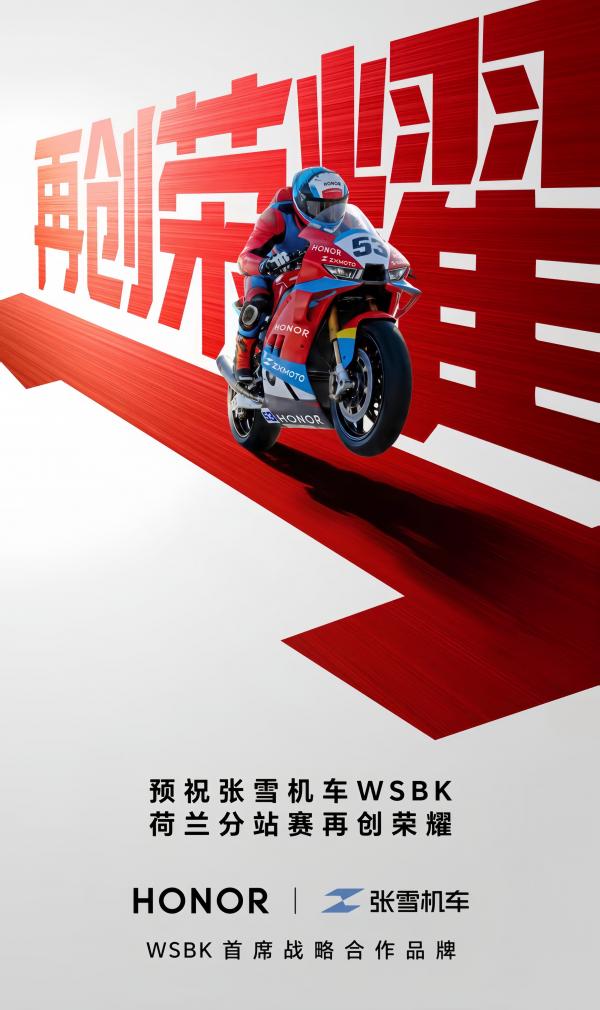
In April 2026, Honor’s Global CMO, Guan Haitao, facilitated a collaboration between Honor and Zhang Xue Motorcycles, making Honor the chief strategic cooperation brand for Zhang Xue Motorcycles in the WSBK arena. During this period, Guan Haitao presented Honor WIN series smartphones and gaming laptops to the Zhang Xue Motorcycle team, extending his best wishes for "WIN."
This encounter reflects a spiritual resonance between two Chinese brands pursuing technological breakthroughs against adversity: both demonstrate an unyielding spirit, achieving Chinese speed on their respective tracks.
Honor’s journey mirrors the rise of domestically developed products. From surviving market downturns to becoming a global AI terminal ecosystem leader, Honor has adhered to independent innovation, keeping core technologies in-house. Meanwhile, Zhang Xue has created a Chinese legend in the heavy motorcycle track, long dominated by foreign brands.
In Guan Haitao’s view, this collaboration transcends mere cross-border partnership—it’s a mutual recognition of two kinds of "Chinese stubbornness." This spiritual resonance goes beyond commercial naming, affirming the strength of domestically developed products on different tracks.
This partnership has transformed Honor from a tech brand focused on parameters to a cool, passionate, and attitude-driven brand, showcasing the spiritual core of Chinese tech brands.
At the industry level, Honor maintains an open and collaborative stance. It promotes research, production, and application through competitions, driving deep integration of technology R&D, product manufacturing, and scenario application—as demonstrated in this marathon victory.
Thus, Honor and other robotics companies are comrades-in-arms, willing to share technological paths and ecological experiences, driving coordinated industry chain development and promoting humanoid robots’ transition from labs to consumer scenarios.
Only within an open framework can China’s robotics industry accelerate development, enhancing the global competitiveness of Chinese humanoid robots.
In the long run, "Lightning’s" victory is just a comma in Honor’s Alpha Strategy.
As humanity enters the AI era, Honor will continue to uphold "Intelligence Inspires Humanity," deepening collaboration among personal, global, and edge intelligence to improve the AI terminal ecosystem. Its exploration not only opens new growth avenues for itself but also provides a replicable path for the consumer electronics industry’s transformation.
Image sourced from the internet, removal upon request.
-
![]()
Buying Jimeng and Getting Doubao for Free? Decoding the Pricing Strategy of ByteDance's AI Services
-
![]()
Robot Sets New Human Record in Half Marathon: Honor’s AI Ecosystem Strategy Hits Milestone
-
![]()
Who are the key players in the WiFi6 chip market, both visible and behind the scenes?
-
![]()
Doubao to Start Charging: Without Transparent Pricing, How Can There Be Competition?
-
![]()
What is the recovery timeline for Microsoft after the breakup?
-
![]()
Who is Most Panicked by Doubao's Charging Model?
-
![]()
OpenAI Surprises Apple: Doubao Phone Emerges as the 'Trailblazer'
-
![]()
There's No Such Thing as a Truly Free Doubao