No Need to Gauge AI Titans' 'Conscience' with Liang Wenfeng as the Yardstick
 05/12 2026
 530
530
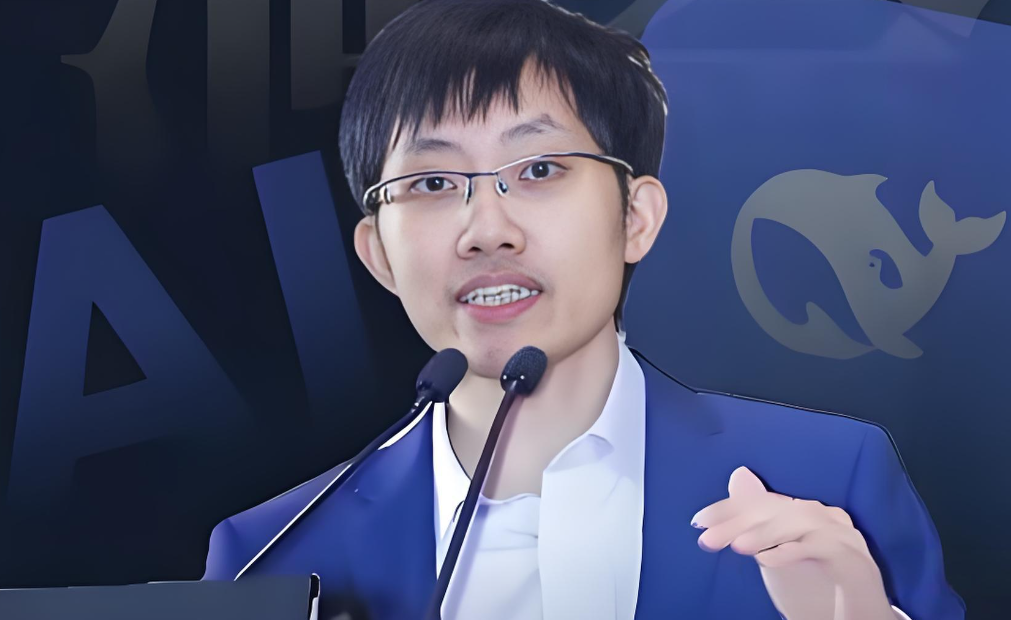
AI Titans Need Not Emulate Liang Wenfeng's Ethos.
Recently, news surfaced that DeepSeek is embarking on a substantial funding round, aiming to raise up to 50 billion yuan (approximately $7.35 billion), a sum poised to set a new benchmark for a single funding round by a Chinese AI company.
Before the fundraising outcomes are unveiled, two focal points have garnered significant attention. One centers around Alibaba and Tencent, the two tech behemoths entangled in investment rumors. The other revolves around the 'sources' of these rumors.
According to these sources, Alibaba was specifically mentioned, with assertions that financing negotiations had faltered.
These purported sources even proffered two seemingly plausible explanations: a disagreement over the valuation, and the fact that Alibaba already possesses Qwen, rendering further investment in Liang Wenfeng's venture unnecessary in terms of money or resources.
This narrative is highly misleading. The peculiarity lies in the disparity of attention given to Alibaba and Tencent as potential investors. While both are ostensibly on the list, Tencent is relegated to a mere footnote, with the spotlight firmly fixed on Alibaba.
Does this 'preference' imply that Tencent, despite its wealth, lacks AI technological prowess?
Numerous media outlets have seized upon this unverified 'source' to weave a popular tale: Liang Wenfeng, a paragon of technological idealism, shuns the shackles of capital; Alibaba, deeming him 'too costly' and lacking foresight, is unwilling to invest; Tencent, though wealthy, is technologically inferior, acting as a mere 'dispenser of wealth' to forge alliances.
Moreover, AI titans are also cast as 'petty'. For instance, a tech media outlet asserted that these giants will never fathom Liang Wenfeng's vision. His past refusal of external investment was interpreted by them as 'arrogance'.
Ultimately, the media's verdict is that these titans lack an innovative spirit and may never comprehend why someone would spurn the meticulously laid table they've prepared—because they firmly believe that the culmination of all entrepreneurial endeavors should be a commercial empire.
In essence, this translates to the notion that titans will never grasp Liang Wenfeng's ethos; capital is devoid of ideals, and only this entrepreneur clings tenaciously to original innovation.
Within this framework, Liang Wenfeng is depicted as a litmus test for the commercial 'conscience' of titans: rejecting their investment signifies adherence to original innovation, perceived by titans as arrogance; accepting it signifies a shrewd deal in their eyes but is viewed by outsiders as capitulation to capital.
This binary narrative, replete with plot twists and emotions, is a spectacle that outsiders relish, yet it misguides the AI industry.
Historically, Liang Wenfeng's stance towards titans and external funding has been a subject of much debate. He eschews external financing, dilution of controlling stakes, and the imposition of a commercialization timeline.
DeepSeek indeed stands out among domestic AI startups. An analysis by an information company suggests that, under the premise of open-source and free access, DeepSeek is essentially an 'AI lab' rather than a commercially driven entity.
It relies on High-Flyer Quantitative for financial sustenance, leveraging the lowest cost to create industry-leading large models. At this juncture, Liang Wenfeng maintains a distance from titans to prevent his business from becoming a mere conduit for traffic and to shield his technological roadmap from short-term commercialization pressures exerted by these giants.
Liang Wenfeng has meticulously calculated and managed the pace of his endeavors.
Now, as large models have evolved into a costly arms race, demanding substantial funding for computing power, electricity, talent, etc., Liang Wenfeng can scarcely endure the market and competitive pressures solely with his own resources. For instance, a key concern is the poaching of several core technical personnel by ByteDance and Xiaomi at exorbitant prices.
This has fueled rumors of a 50 billion yuan funding round. A closer examination of the widely circulated financing structure also underscores Liang Wenfeng's restraint: he welcomes external capital but still commits 20 billion yuan of his own to retain controlling stakes. Additionally, he has enlisted state-owned capital to fortify the capital base and deliberately minimized the equity presence of internet titans.
He shuns control by capital but requires it for survival. Every move is a calculated decision, devoid of sentimentality. This action is construed as a 'reluctant bow to reality'.
I would contend that the excessive romanticization of Liang Wenfeng and DeepSeek is itself a misunderstanding. Or rather, Liang Wenfeng's proactive pursuit of financing does not signify a waiver of his original aspirations; it is merely a strategy for survival and growth.
To put it bluntly, do not use AI luminaries as a litmus test for the 'conscience' of titans. Do not exploit the situation to fragment China's AI industry.
DeepSeek is the most promising entity among domestic AI startups, perhaps even the finest. But AI titans also adhere to their own commercial logic. Decisions regarding whether to invest, how to invest, and the investment amount are all strategic considerations.
This jesting also underestimates the investment acumen and rationality of titans.
Alibaba, of course, boasts its own Qwen large model, with a mature technological chain, vast application scenarios, and a comprehensive commercialization system. Yet, Alibaba has also invested in Kimi, Zhipu, MiniMax, etc., encompassing nearly half of China's AI startup landscape.
Tencent invests to forge alliances. A key investment criterion for it is to prioritize implementation and profitability in tandem, integrating targets into its own business ecosystem to generate synergistic value. This is also a lesson Ma Huateng gleaned from the 3Q War.
ByteDance and Baidu are also formidable contenders. Zhang Yiming and Li Yanhong have consistently championed technological self-reliance, but around ByteDance AI and Baidu AI, they are also constructing a vast ecosystem, paving the way for the entire AI industry.
Thus, many habitually undervalue the innovation of titans, which is itself a bias. China's AI industry is inherently stratified: one category comprises startups like DeepSeek and Kimi, which are unburdened by historical baggage, focus relentlessly on model capabilities, and are closer to AI's native user base.
The other category consists of industrial titans like Alibaba, Tencent, and ByteDance, which undertake computing infrastructure, scenario implementation, and inclusive applications, seamlessly integrating AI into the fabric of daily life.
One drills deep, the other spreads wide. Innovation knows no hierarchy; it is merely a division of labor.
Liang Wenfeng's decision to embrace financing, grounded in reality, reflects a positive attitude. However, beyond the capital game, being subjected to an onslaught of emotional narratives constitutes a form of moral coercion or judgment that deviates from the facts.
Some media outlets deliberately oversimplify the logic and forcefully construct a narrative: the pure entrepreneur versus the utilitarian capitalist, the idealistic lab versus the commercial titan. Liang Wenfeng is elevated to a pedestal, portrayed as a technical devotee detached from worldly concerns; titans are collectively belittled, reduced to capital machines devoid of innovation.
This is a quintessential example of hype-driven destruction.
Overly deifying Liang Wenfeng is tantamount to shackling him with invisible chains. Once DeepSeek makes commercial concessions or compromises with capital in the future, the public opinion that currently lauds it will swiftly mock it for 'losing its original aspirations'.
More critically, this adversarial narrative is tearing apart China's AI ecosystem.
The industry is at a pivotal juncture. Startups require funding, and titans need technological innovation. They coexist on the same industrial chain and should be complementary and symbiotic.
However, under the sway of emotional public opinion, they are forcibly divided into two opposing factions.
It makes for entertaining viewing, but the industry bears the brunt.
Ultimately, Liang Wenfeng is not an industry moral compass; he is merely a sober and restrained technological entrepreneur. AI titans like Alibaba and Tencent are not villains; they are indispensable infrastructure pillars for China's AI industry.
China's AI industry needs technologists like Liang Wenfeng and Yang Zhilin, as well as titans like Alibaba, Tencent, ByteDance, and Baidu to provide computing power and construct ecosystems.
For domestic AI to thrive, some must delve deep into the fundamentals and tackle formidable challenges, while others must build scenarios and achieve commercialization. Some must gaze at the stars, while others must keep their feet firmly on the ground. Only then can the industry be truly complete.
If we persist in creating divisions, besides providing entertainment for onlookers, what benefit does it bring to China's AI landscape?
-
![]()
Tesla Restructures Its Balance Sheet
-
![]()
Accelerating the High-Speed Interconnection Upgrade of AI Computing Clusters! JONHON Releases ELSFP External Light Source Optical Connectors
-
![]()
Breaking the overseas blockade of volumetric holographic materials, this optical enterprise secures nearly 100 million yuan in financing!
-
![]()
Why Does Jensen Huang So Openly Praise China’s AI?
-
![]()
"Wudang" Unveiled: Arm China's Next-Gen AI VPU Redefines Video Encoding
-
![]()
From Energy Conservation and Carbon Reduction to AI Decision-Making: GECON East Intelligence and Chery Group Explore a New Green and Smart Paradigm for Automobile Manufacturing
-
![]()
WAIC 2026 Observation | AI Accelerates Towards the Core of Industries, Industrial AI Enters a Critical Phase
-
![]()
Volkswagen China Fires the First Shot in Foreign-Funded 'White Box Delivery'!