Nvidia Starts Adding Soap to the Bubble
 05/12 2026
 591
591
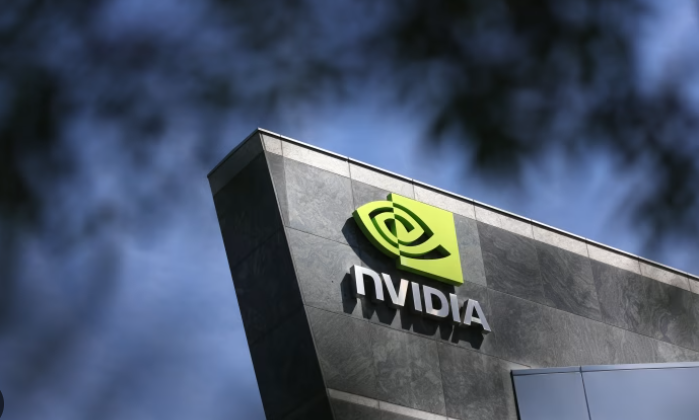
Nvidia is doing one thing: using its massive cash reserves to invest in companies that buy its GPUs, then watching those companies use that money to buy even more GPUs.
It’s like pouring water with one hand to create foam while the other hand adds dish soap.
Entering 2026, the chip giant has made over $40 billion in investment commitments in five months, covering every layer from fiber manufacturing and data center operations to foundational model R&D. Its role is shifting from chip supplier to the most critical capital allocator across the entire AI supply chain.
Some money is for building things. Some is for making things seem more valuable. Nvidia is doing both.
01
Multi-Billion-Dollar Sprinkler: Drenching the AI Supply Chain
Nvidia’s investment moves have become so frequent this year that 'sprinkler' is the only fitting metaphor.
Media describes its rhythm like an automatic irrigation system: every few weeks, it pivots direction, leaving $2 billion wherever dry patches appear—Synopsys in December, CoreWeave in January, Lumentum and Coherent on the same day, Nebius in March, Marvell right after.
Nvidia’s cash distribution operates nearly mechanically, resembling a supplier list from the procurement department rather than a portfolio strategy.
Last week brought even bigger moves.
Nvidia struck a deal with Corning, pledging up to $3.2 billion to help the 175-year-old glassmaker build three new optical technology factories in the U.S., boosting AI infrastructure optical connectivity capacity 10-fold and fiber expansion by over 50%.
The next day, it granted data center operator IREN up to $2.1 billion in warrants to co-deploy 5 gigawatts of AI infrastructure.
Adding its $30 billion mega-bet on OpenAI, plus stakes in Anthropic and xAI (now merged into SpaceX), Nvidia has completed at least 7 public company investments and participated in roughly 24 private financing rounds this year, forming an investment matrix that fully covers 'chips—optical communications—data centers—large models.'
Jensen Huang’s explanation sounds almost humble: 'There are so many excellent foundational model companies. We don’t pick winners; we support everyone.'
But a glance at the financials reveals this sprinkler system only waters Nvidia’s own GPU demand chain.
Investee companies are nearly all major buyers of Nvidia chips. The investments directly drive procurement of optical modules, GPUs, and data center infrastructure, then lease computing power to hyperscalers like Microsoft, Meta, and OpenAI—a clear outline of a 'self-operated demand closed loop.'
02
Circular Handoffs and Intel’s Paper Wealth
This is where controversy intensifies.
Goldman Sachs analyst Schneider used 'circular revenue' in research notes: Nvidia’s equity financing to OpenAI increasingly resembles a supplier funding its own customer to return payments in the form of GPU purchases. It’s like a food supplier investing in a failing restaurant and demanding the restaurant keep buying its ingredients with that money.
In 2026, Nvidia expects to recognize roughly $13 billion in revenue from OpenAI alone, with most gross profits reinvested back into OpenAI. Media commentary noted that the AI boom has spawned a circular, creative financing feast where some money simply spins in place.
Critics compare this to the 'vendor financing' frenzy during the dot-com bubble: equipment makers provided financial support to customers who used the funds to buy equipment, making true demand increasingly indistinguishable. When markets turn, fake demand collapses within quarters.
But Huang dismissed 'circular financing' as 'absurd' in a Bloomberg interview, insisting Nvidia’s investments represent only a fraction of these companies’ massive funding needs and are votes of confidence in long-term generational businesses, not financial engineering.
The most visible paper return now comes from Intel. In late 2025, Nvidia acquired roughly 215 million new Intel shares for $5 billion; over the next eight months, Intel’s stock price surged nearly 6x, swelling Nvidia’s paper gains toward $25 billion.
Wedbush Securities analyst Bryson noted in a report that Nvidia’s Intensive trading [frequent deals] 'precisely fit the circular investment narrative' but, if executed well, these investments also build a 'supply chain moat' competitors cannot easily replicate.
Mizuho chip analyst Klein called funds directed toward optical communications, fiber, and silicon photonics components 'extremely shrewd' CFO team capital deployment that accelerates R&D for scarce technologies in Nvidia’s supply chain. But for investments in new cloud providers like CoreWeave and Nebius, he was blunter: 'These investments make me uncomfortable. It feels like pre-paying for your own GPUs.'
If the cycle turns, markets will eventually ask how much of today’s reported AI demand is real versus a mirage propped up by Nvidia’s own balance sheet.
03
Cash Doesn’t Burn, but Confidence Cracks First
Many technical metrics could measure this high-stakes gamble, but nothing beats Nvidia’s own financials for directness.
In Q4 FY2026, Nvidia reported $68.1 billion in revenue (+73% YoY); full-year revenue hit $215.9 billion (+65% YoY) with net income of $120.067 billion; free cash flow reached $97 billion. The company returned $41.1 billion to shareholders via stock buybacks and cash dividends.
Yet on the day after releasing its strongest-ever earnings, Nvidia’s stock fell ~5.5%, erasing roughly $260 billion in market cap. The issue wasn’t poor results—'beating expectations' had simply lost its marginal surprise.
Markets scrutinized the 2nm chip fab Terafab, optical interconnects, and the new Rubin architecture, only to find certainty only exists for the next 12 months. How long can AI capital expenditures expand? How far can growth duration stretch?
Nvidia isn’t the one burning cash—its reserves could keep it as the AI era’s central water tower for years. But cash isn’t the problem; confidence cracks first. It fractures at the corner of circular investments, where suppliers must use their own capital to irrigate customer demand, prompting markets to calculate how much natural rainfall lies beneath this lawn.
Bubbles aren’t necessarily frauds. Sometimes they’re just what happens when every participant believes the same thing simultaneously. But when you keep adding soap to the bubble to make it seem sturdier, more enduring, more like reinforced concrete, it becomes an engineering experiment demanding extreme investor sobriety.
-
![]()
Tesla Restructures Its Balance Sheet
-
![]()
Accelerating the High-Speed Interconnection Upgrade of AI Computing Clusters! JONHON Releases ELSFP External Light Source Optical Connectors
-
![]()
Breaking the overseas blockade of volumetric holographic materials, this optical enterprise secures nearly 100 million yuan in financing!
-
![]()
Why Does Jensen Huang So Openly Praise China’s AI?
-
![]()
"Wudang" Unveiled: Arm China's Next-Gen AI VPU Redefines Video Encoding
-
![]()
From Energy Conservation and Carbon Reduction to AI Decision-Making: GECON East Intelligence and Chery Group Explore a New Green and Smart Paradigm for Automobile Manufacturing
-
![]()
WAIC 2026 Observation | AI Accelerates Towards the Core of Industries, Industrial AI Enters a Critical Phase
-
![]()
Volkswagen China Fires the First Shot in Foreign-Funded 'White Box Delivery'!