Pity Stirs as OpenAI and Anthropic Dive into Financial Maneuvers
 05/13 2026
 553
553
Yesterday, Sam Altman orchestrated the acquisition of a small London-based firm.
The firm in question is Tomoro. Established in 2023, it boasts a team of 150 employees, has never sought venture capital, remained under the radar of tech media, and operates with a straightforward business model—deploying engineers to client offices to impart effective ChatGPT usage techniques.
However, the company's client roster is quite notable: Tesco, Virgin Atlantic, Red Bull, and Supercell, the Finnish mobile gaming giant.
But Altman's move didn't stop there. He relocated the 150 Tomoro staff to a newly formed entity named DeployCo. Subsequently, in partnership with 19 investors, a staggering $4 billion will be injected over the next five years, with OpenAI itself contributing up to an additional $1.5 billion, culminating in a company valued at $10 billion.
What's the nature of this operation? It's akin to splurging $5.5 billion on talent acquisition, capital infusion, and the establishment of a subsidiary dedicated to teaching other firms how to leverage OpenAI. Can this strategy yield profits?

Yet, the real intrigue lies in the roster of joint investors: TPG, Bain Capital, Brookfield, Goldman Sachs, SoftBank, Warburg Pincus, McKinsey, Bain & Company, and Capgemini. This lineup evokes the image of having Michael Jordan and Shaquille O'Neal on your team, making it seem as though even your grandmother could clinch a championship.
Moreover, OpenAI's arch-rival embarked on a similar path just eight days prior. Anthropic, in collaboration with Blackstone, Goldman Sachs, and Hellman & Friedman, is venturing into a comparable business.
Within a week, two of Silicon Valley's most valuable companies made identical investments. What does this signify?
It suggests they're seeking someone to handle the gritty work. Simultaneously, AGI is no longer the focal point; valuation reigns supreme.
The Dirty Work Mocked for 15 Years
Before delving deeper, another company merits mention—Palantir.
Those abreast of financial news should be acquainted with this name. Palantir's core business involves integrating multi-source data across domains and embedding itself deeply in the core decision-making processes of military, security, and government affairs. Leveraging its military-grade security credentials and private deployment model, it has recently made significant strides in the AI + military sector.
However, Palantir's beginnings were far from glamorous.
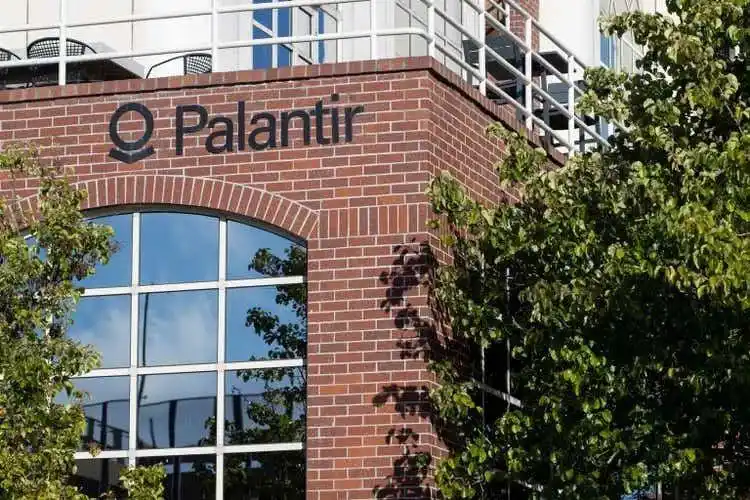
In May 2003, a group of PayPal alumni—Peter Thiel, Alex Karp, and Stephen Cohen—pooled their resources to establish a company in Palo Alto. Their inaugural client was none other than the CIA. Their modus operandi involved dispatching a team of suit-clad engineers, laptops in hand, directly into clients' offices—be it the FBI, the Pentagon, or later, JPMorgan Chase and Airbus—where they would remain for half a year. They would tackle the clients' messy data, streamline flawed processes, resolve cross-departmental disputes, and address IT infighting. Subsequently, they would customize a data system for the client.
Palantir dubbed these individuals Forward Deployed Engineers (FDEs), with the internal codename 'Delta.' To put it bluntly, they were outsourced software engineers.
This type of work was looked down upon by Silicon Valley at the time.
The Silicon Valley hierarchy was clear: SaaS (selling a single codebase to thousands of companies) was considered high-end; consulting (projects built on manpower) was deemed low-end. Palantir's practice of dispatching FDEs to clients' sites for half a year earned it the label of a 'consulting company masquerading as a software company' in the VC circle. To be fair, this wasn't entirely unfounded—in Palantir's early revenue structure, the headcount cost per client project was unusually high for a software company.
And so, it endured ridicule for 15 years.
In 2020, it went public with a market capitalization of $16.5 billion on the first day, slightly lower than its last private valuation in 2015. Over the next few years, its market cap fluctuated, but as a 'software company,' it consistently failed to justify its valuation. The investment community reached a consensus on Palantir: 'Your gross margins aren't improving, and your headcount isn't expanding. What's the essential difference between you and IT consulting firm Accenture?' (No offense to Accenture; this is purely about the valuation model.)
Until 2023, when companies began massively purchasing GPT-4's API and massively discovered one thing—they couldn't make the models work. Data needed cleansing, processes were fragmented, and IT was divided. No matter how intelligent the model was, if the business couldn't operate smoothly, it was futile. Proof-of-concepts were perpetually in progress but never translated into tangible output.
At this juncture, the model of 'dispatching engineers to handle the dirty work' suddenly gained respectability. Palantir's market cap began to soar, peaking at $400 billion in 2025 and recently stabilizing at $330 billion.
Palantir endured ridicule for 15 years before being rescued by AI.
But when OpenAI and Anthropic emulate Palantir, it's not to generate revenue but to pave a smoother path for their own IPOs, having witnessed Palantir's success.
The Early-Spinning Flywheel
Returning to Tomoro, this company wasn't an afterthought for OpenAI last week.
When it was founded in 2023, it was closely aligned with OpenAI. According to Bloomberg, Tomoro was 'founded in 2023 in alliance with OpenAI.' Those 150 London-based engineers, from the company's inception, were undertaking OpenAI's dirty work—albeit under a different brand.
When GPT-4 was initially released in 2023, what was OpenAI's narrative to the outside world? It revolved around AGI, superintelligence (now, the only one willing to entertain the notion of AGI might be DeepSeek), scaling laws, and the belief that 'if the model is sufficiently large, it will resolve everything.' But simultaneously, it was discreetly nurturing 150 engineers in London.
A couple of years ago, if someone in the market asserted, 'No matter how powerful the model is, companies won't be able to utilize it effectively without assistance in integration,' they would immediately be labeled as 'not grasping the scaling law.' But Altman knew in his heart that in OpenAI's London office, Tomoro's 150 engineers were weekly assisting companies like Tesco and Virgin Atlantic in connecting data pipelines, streamlining customer service processes, and implementing real-world uses of ChatGPT.
To be candid, B-side clients for large models simply cannot function without these 'dirty work' engineers.
These individuals toiled away for nearly two years, their names forgotten, until yesterday when they suddenly graced the cover of OpenAI's announcement.
However, those 150 individuals from Tomoro aren't sufficient to satiate DeployCo's appetite.
How extensive is DeployCo's scope? As mentioned earlier, 19 investors will collectively inject $4 billion over five years—this full figure was first disclosed by Bloomberg on May 4, with OpenAI's announcement only highlighting the $4 billion headline.
Where does the money originate? Let's revisit those 19 names, categorized into three groups:
The first group, private equity and banks: TPG (leading), Bain Capital, Brookfield, Advent, Goldman Sachs, SoftBank, Warburg Pincus, and Welsh Carson Anderson & Stowe.
The second group, consulting firms: McKinsey, Bain & Company, and Capgemini.
The third group, corporate clients: BBVA. This Spanish bank is also DeployCo's inaugural corporate client—but its name appears in the shareholders' column.
Combining these three groups, DeployCo's structure becomes evident—PE provides the capital, consulting supplies the personnel, and banks furnish the clients. The company hasn't even been established, and the flywheel is already in motion.
It's not that OpenAI is venturing into the enterprise services market; it's that OpenAI has enlisted 19 shareholders to undertake enterprise services on its behalf.
Anthropic's structure is similar but more equitable. Eight days ago, it and Blackstone, Hellman & Friedman each contributed $300 million—each party owning one-third, on equal footing. Also at the shareholder table are Apollo, General Atlantic, Leonard Green, GIC, and Sequoia Capital.
OpenAI's structure resembles a holding group, while Anthropic's mirrors a partnership. But ultimately, it's the same concept—selling APIs alone is insufficient; you need to bring in a group of shareholders as partners.
By the way, the only investor appearing on both DeployCo's and Anthropic's joint venture lists is Goldman Sachs. Everyone else has chosen sides—TPG opted for OpenAI, Sequoia selected Anthropic. Only Goldman Sachs CEO David Solomon straddles both fences, a detail worth monitoring in the future.
This Is an Off-Balance-Sheet Move
In reality, everything is being done in anticipation of going public; otherwise, this operation wouldn't exist.
OpenAI could have easily funded and established an enterprise services department internally. It's not short on cash—having raised over $120 billion in the past 12 months alone, so setting up a 150-person engineer team for $5 billion isn't a significant undertaking.
But it chose to spin off this business into a joint venture, maintaining control but operating it separately—meaning DeployCo won't be consolidated into OpenAI's main company's financial statements.
Because enterprise services entail low-margin dirty work. The 150 individuals represent headcount costs—and based on Palantir's experience, for every major client secured, the engineer team needs to expand accordingly. This is a consulting company's cost curve, not a software company's, and it would drag down OpenAI's valuation model.
OpenAI's main company's current valuation hinges on one narrative—it's a high-margin AI software platform company, and its valuation multiple should be based on software companies, not consulting firms. If DeployCo's costs were directly consolidated into the financial statements, the company's gross margins would be diluted, and the valuation narrative would crumble.
Hence, the SPV emerged. SPV stands for Special Purpose Vehicle—a joint venture established specifically for one purpose, accounted for separately and not consolidated into the parent company's financial statements.
DeployCo adheres to this structure. OpenAI holds a controlling stake, but DeployCo is a separate legal entity with its own financials, and OpenAI only receives a share of the revenue. On the books, the main company only sees the revenue share from enterprise services, not the cost side of the 150 FDEs—all costs remain on DeployCo's own books.

The image is AI-generated.
To put it bluntly, DeployCo isn't a new business; it's an off-balance-sheet maneuver.
There's also an intriguing detail unearthed by Axios.
The 18 investors entering DeployCo aren't receiving ordinary equity—they have terms with a 17.5% guaranteed return and a capped profit upside.
To put it simply, this isn't PE gambling on a high-growth AI business; it's holding a quasi-bond. Their money is lent to DeployCo, not invested alongside it for growth. TPG, Bain Capital, Brookfield, and other PE firms aren't strangers to high-risk, high-reward deals—but in this case, they've opted for fixed returns.
Such terms only emerge in two scenarios: either OpenAI lacks confidence in the true gross margins of enterprise services and dares not grant PE ordinary shares, or PE itself lacks confidence in the speed of AI adoption and prefers a guaranteed return over upside potential.
To put it bluntly, OpenAI is offloading undesirable assets, and other shareholders are accepting guaranteed returns, each obtaining what they need.
This might be the inaugural instance of 'financial engineering of model companies' in the AI era, where capital structure precedes business model.
In Closing
This is the dirty work that Palantir couldn't evade in the past but has now sidestepped through financial engineering.
But you can't evade the facts, even if you can sidestep the financial statements. The model business can no longer be sustained solely by selling tokens—this is the biggest consensus in Silicon Valley's model circle over the past week, although no company admits it openly; it's now an undeniable reality.
Ultimately, the last name on the investor list in DeployCo's announcement isn't Sam Altman's own.
Playing AI is really not as lucrative as playing finance.
For AGI, we can only place our trust in that individual.
-
![]()
Why Does Jensen Huang So Openly Praise China’s AI?
-
![]()
"Wudang" Unveiled: Arm China's Next-Gen AI VPU Redefines Video Encoding
-
![]()
From Energy Conservation and Carbon Reduction to AI Decision-Making: GECON East Intelligence and Chery Group Explore a New Green and Smart Paradigm for Automobile Manufacturing
-
![]()
WAIC 2026 Observation | AI Accelerates Towards the Core of Industries, Industrial AI Enters a Critical Phase
-
![]()
Volkswagen China Fires the First Shot in Foreign-Funded 'White Box Delivery'!
-
![]()
AI Agent Smartphones: The Next Competitive Edge Transcends Large Models
-
![]()
Over 880 Million Yuan Worth of Orders Unveiled, Bidding Launched for Shenzhen Eastern Public Transport
-
![]()
Tesla's Robotaxi Hits the Road: A Monumental Gamble with an Uncertain Future