New Energy Vehicle Market: A 'One Dominant Force, Multiple Strong Contenders' Era Emerges
 05/13 2026
 358
358
Lead | Lead
The April sales figures for new energy vehicle (NEV) contenders have been unveiled, with Leapmotor leading the pack by delivering 71,387 units, marking a significant 73.9% year-on-year increase and solidifying its position as the frontrunner in NEV deliveries. Xiaomi surpassed the 30,000-unit milestone, experiencing a remarkable 50% month-on-month surge, thus joining the elite group. Li Auto maintained its strong presence with 34,085 units, while HiMode Intelligent Mobility delivered 32,759 units, XPeng 31,011 units, and NIO 29,356 units. Several automakers clustered around the 30,000-unit mark, with differences of less than 5,000 units, creating a fiercely competitive 'multiple strong contenders' scenario. Transitioning from the initial 'NIO, XPeng, Li Auto' trio, the NEV market has gradually evolved from a 'three-way standoff' to a 'one dominant force, multiple strong contenders' landscape, with intense competition anticipated among the top players in the future.
Produced by | Heyan Yueche Studio
Written by | Cai Yan
Edited by | He Zi
1945 words in total
3-minute read
Leapmotor dominates with 71,000 units, while Li Auto, Xiaomi, and others vie for supremacy around the 30,000-unit threshold. April sales herald the official arrival of the NEV market into a 'one dominant force, multiple strong contenders' phase. The upcoming battle will hinge on who can sustain their momentum amidst scaling efforts and volume sales.
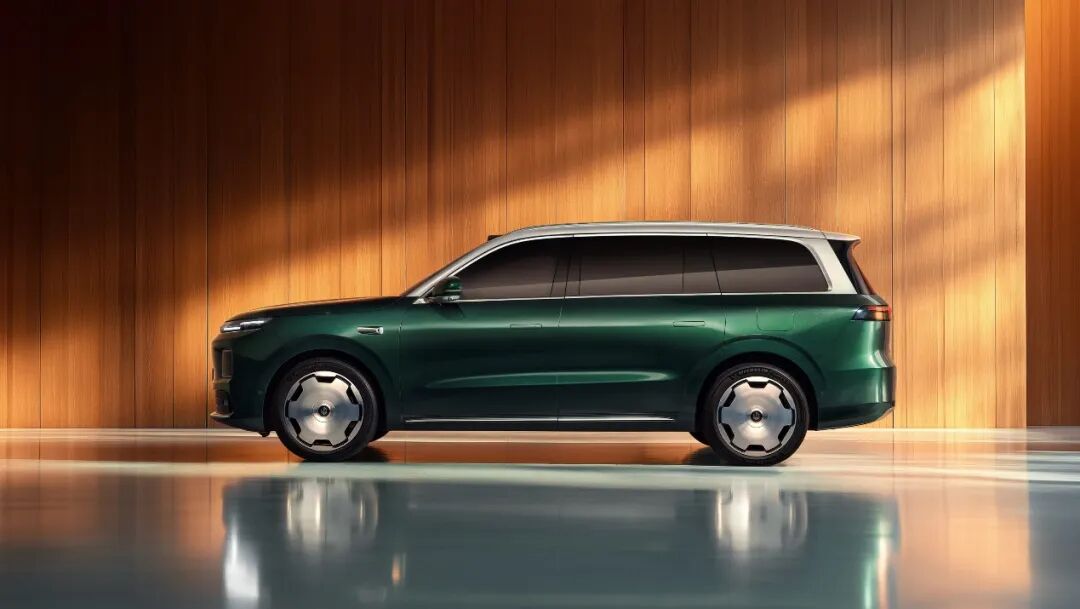
△ The NEV market shifts towards a 'one dominant force, multiple strong contenders' divide
Leapmotor Leads, 'Multiple Strong Contenders' Clash at 30,000-Unit Level
The April 2026 sales report for NEV contenders sends a clear signal: the market has officially transitioned from an early 'three-way standoff' to a 'one dominant force, multiple strong contenders' scenario. Leapmotor topped the charts with 71,387 deliveries, a 73.9% year-on-year increase and a 42.7% month-on-month rise, with a net increase of over 20,000 units in a single month, securing its position as the NEV delivery leader for multiple consecutive months. This performance is nearly double that of second-place Li Auto, highlighting a significant gap. Leapmotor's growth is primarily fueled by a robust product cycle: the Leapmotor A10, launched in late March, garnered over 40,000 firm orders in its first month, with daily production exceeding 1,000 units; the Leapmotor D19, launched on April 16, features a dual-power layout of pure electric and extended-range, securing over 15,000 firm orders in just 15 days.
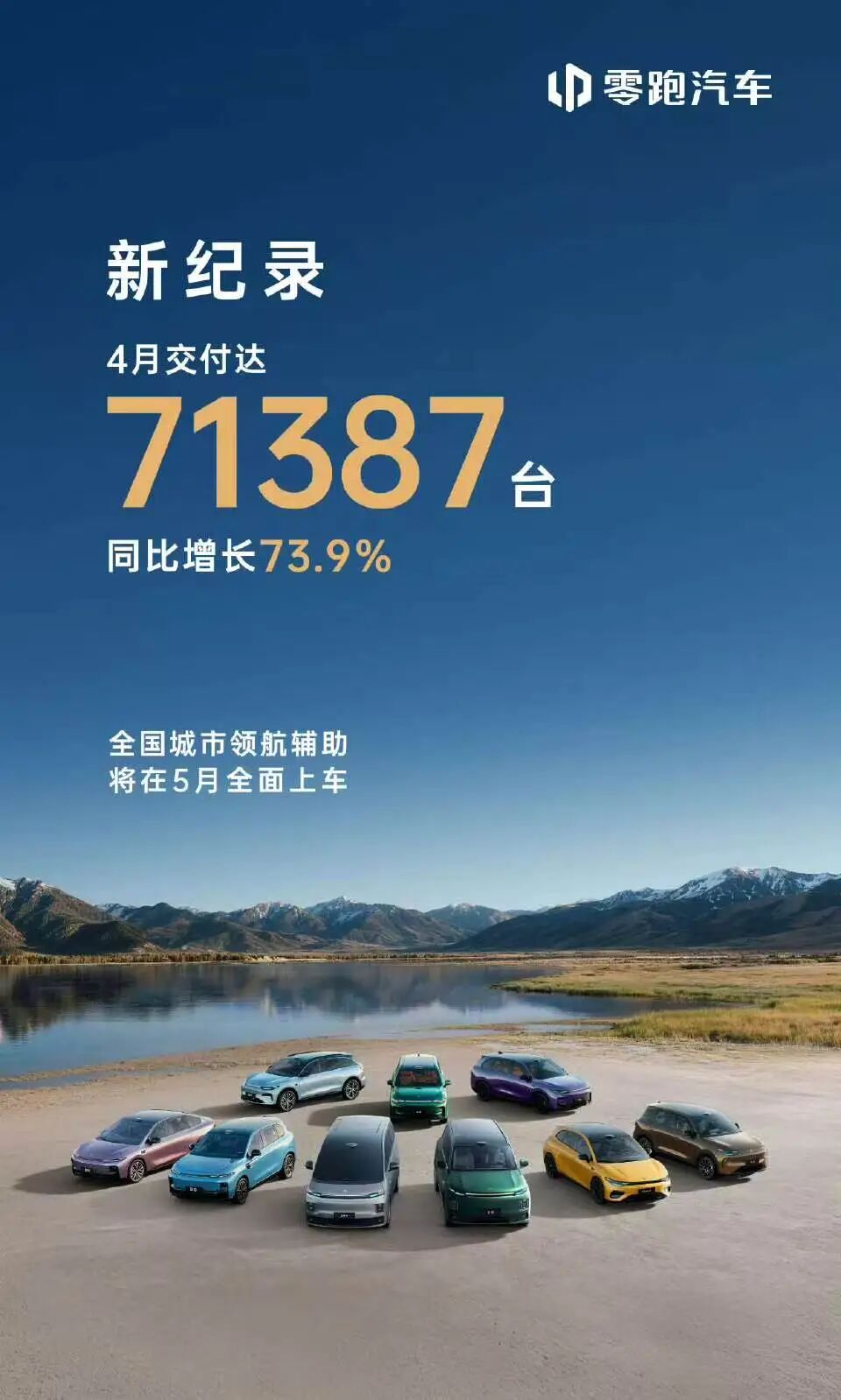
△ Leapmotor tops April deliveries with 71,387 units
If Leapmotor played the 'dominant force' role in April, then the 'multiple strong contenders' group—comprising Li Auto, HiMode Intelligent Mobility, Seres, Zeekr, Xiaomi, and XPeng—has brought the fight to the fiercely contested 30,000-unit monthly sales arena.
Li Auto delivered 34,085 units in April, a slight 0.43% year-on-year increase but a 17.0% month-on-month decline. Nevertheless, Li Auto's cumulative deliveries have surpassed 1.669 million units, maintaining its lead in cumulative deliveries among NEV contenders—a foundation that other brands are unlikely to shake in the short term. Following closely, Seres and Zeekr delivered 33,187 and 31,787 units, respectively, with Zeekr achieving a staggering 132% year-on-year growth, setting a new brand delivery record. HiMode Intelligent Mobility delivered 32,759 units, up 18.8% year-on-year, as the empowering effect of Huawei's advanced intelligent driving system ADS 3.0 continues. Xiaomi surpassed the 30,000-unit mark in April, with a month-on-month increase of about 50%, and cumulative deliveries exceeding 109,000 units in the first four months of the year. Leveraging its intelligent features and rapid production ramp-up, Xiaomi quickly joined the top tier. From cross-border car manufacturing via smartphones to monthly sales exceeding 30,000 units, Xiaomi's rapid pace has indeed created significant 'expectation disruptions' in the industry. XPeng delivered 31,011 units, with an 11.5% year-on-year decline—the only brand among the top NEV contenders to experience a year-on-year drop—but a 13.1% month-on-month rebound. Combined with new models unveiled at the Beijing Auto Show and promotional strategies like 'zero down payment plus limited-time zero interest,' a recovery is anticipated. NIO followed closely with 29,356 units, narrowly missing the 30,000-unit mark, but the synergistic effect of its three-brand matrix—NIO, LeDao, and Firefly—has begun to take shape, with cumulative deliveries in the first four months up 71% year-on-year.
Taking a holistic view, the gap between several automakers—from Li Auto's 34,085 units to NIO's 29,356 units—is less than 5,000 units, forming an extremely dense competitive landscape in the 30,000-unit range. While the 30,000-unit figure may not be an absolute threshold, it is becoming a dividing line between the top and mid-tier players.
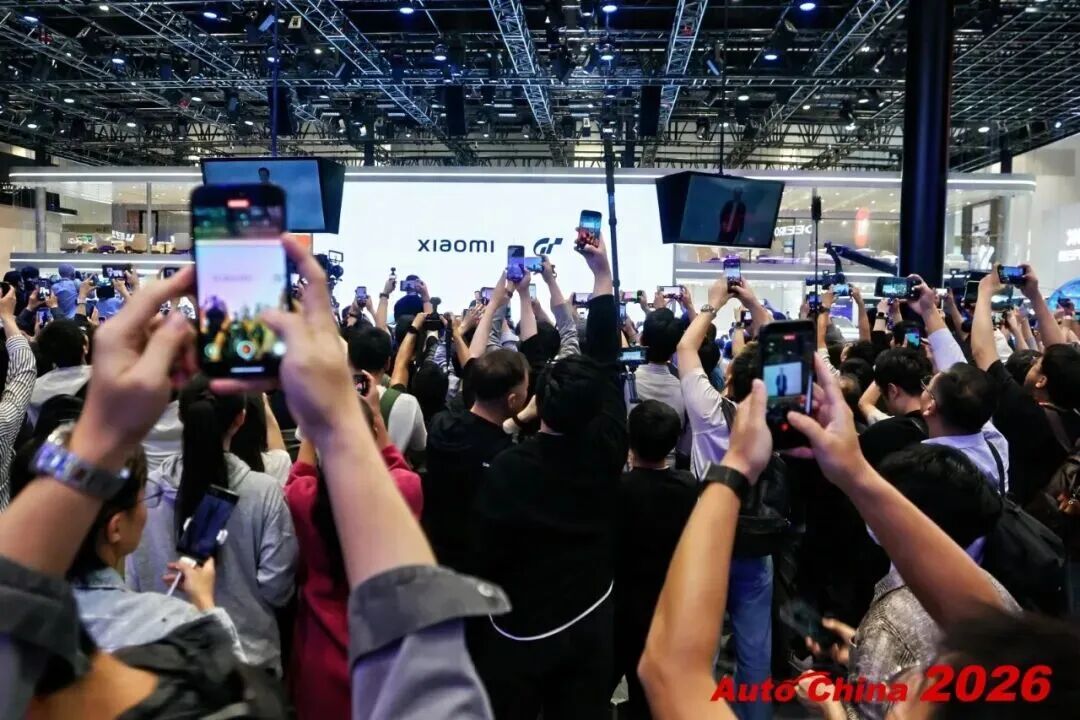
△ Xiaomi surpasses 30,000 units in April
Flagship Models Drive Technological Competition
Alongside the April sales figures, the dense new product lineup at the 2026 Beijing Auto Show also sent a signal. The show featured a total of 1,451 exhibition vehicles and 181 premieres, setting a new global auto show record. The most eye-catching development was the collective emergence of '9-series' flagship models—large SUVs like the Li Auto L9 Livis, NIO ES9, and Seres M9 competed head-to-head, making the full-size SUV segment more crowded than ever.
Li Auto unveiled its embodied intelligent flagship SUV, the all-new Li Auto L9 Livis, globally, priced at RMB 559,800. It features an 800V active suspension, the world's first 'fully realized' full-line-control chassis, four LiDAR sensors, and dual 5nm Mach chips, delivering 2,560 TOPS of intelligent driving computing power. Through the L9 Livis, Li Auto is laying a solid foundation for the embodied intelligent driving sector, while models like the Li Auto MEGA, Li Auto i8, Li Auto i6, and Li Auto L6 also made their debut, marking Li Auto's accelerated expansion beyond its comfort zone of extended-range vehicles into a multi-line product matrix.
The NIO ES9, positioned as a 'tech-admin flagship,' starts at RMB 528,000, or RMB 420,000 under the battery leasing scheme. Based on the NT3.0 platform and 900V architecture, it features the Tianxing intelligent chassis. Li Bin proclaimed, 'Forget MPVs,' directly challenging the MPV market with the ES9. At the Beijing Auto Show, NIO, LeDao, and Firefly made their first joint appearance with 11 models. During the show, NIO also announced the completion of its Silk Road battery swap network, spanning 3,448 kilometers with over 30 battery swap stations planned, extending its strategic energy replenishment network layout from urban cores to regional arteries.
XPeng introduced the all-new GX, priced from RMB 399,800, positioned as a large six-seater SUV. Meanwhile, the 2026 XPeng MONA M03, all-new XPeng P7, and 2026 XPeng X9 also made their debut at the show, collectively forming XPeng's 'all-star product matrix.' Additionally, the unveiling of the next-generation humanoid robot IRON and the 'Land Aircraft Carrier' split-flight vehicle highlighted XPeng's ambition for a full-scenario layout in the physical AI matrix.
This signifies that NEV contenders will accelerate their pace in technological iteration and upgrades.
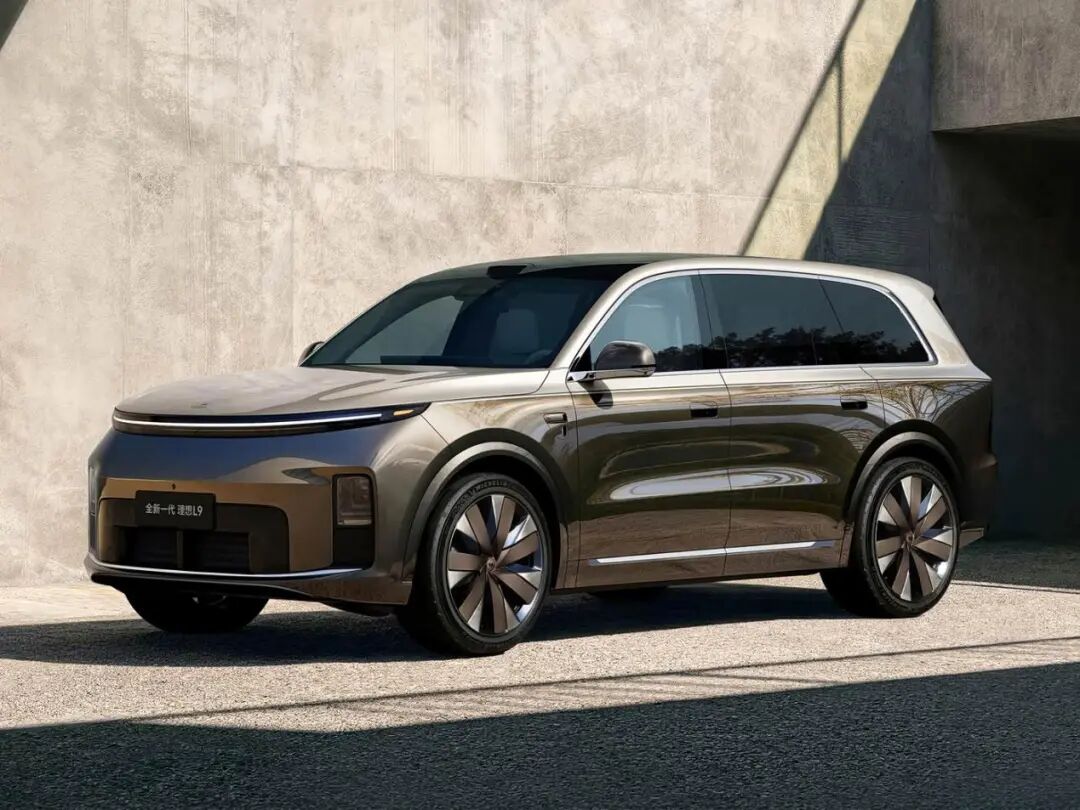
△ Li Auto launches the embodied intelligent flagship SUV, the Li Auto L9 Livis
Commentary
Currently, brands vary in their focus on 'scaling up' versus 'volume sales,' but the competition in core capabilities—such as full-stack self-developed intelligent driving, 800V high-voltage platforms, and line-control chassis—has fully commenced. Li Auto is betting on chassis and intelligent driving architectures, NIO is deepening its battery swap ecosystem and admin flagship models, XPeng is building moats with its second-generation VLA intelligent driving, and Leapmotor is applying pressure in the scaling battlefield with an extreme pricing strategy. From the second half of 2026 onward, competition will no longer be a simple sales ranking but a comprehensive game of technological foundations, product matrices, and systemic capabilities. Brands lacking foundational self-developed ability and relying solely on marketing-driven strategies will eventually be eliminated. The true winner will be the brand that finds the optimal balance between product rhythm, cost control, and intelligent technologies.
(This article is original to 'Heyan Yueche' and may not be reproduced without authorization.)
-
![]()
Kunlunxin's IPO: Is Baidu's Pricing Dilemma Lurking Beneath?
-
![]()
Pity Stirs as OpenAI and Anthropic Dive into Financial Maneuvers
-
![]()
Small Pre-Order Numbers Are Just a Sneak Peek: Seres V9 Faces Three Major Challenges to Overtake GL8
-
![]()
New Energy Vehicle Market: A 'One Dominant Force, Multiple Strong Contenders' Era Emerges
-
![]()
AI Enters the Era of 'Self-Evolution', Li Yanhong First Proposes 'DAA' as the Measurement for the AI Era
-
![]()
Mercedes-Benz China Executive Steps In to Steer Volvo Through Turbulent Waters
-
![]()
She Once Steered OpenAI's Technology, Now Aims to Redefine Its Rules
-
![]()
Porsche Bids Farewell to Bugatti Amid Tears as Mysterious Buyer Stealthily Takes the Helm