Q1: AI Has Seamlessly Integrated into Every Aspect of Tencent's Operations
 05/14 2026
 541
541
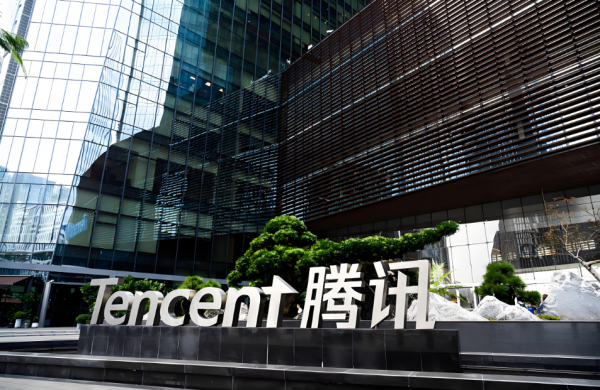
Since the start of this year, Tencent has sparked public interest in its AI strategy through the viral trend of virtual shrimp farming. Whether it's the influx of people adding lobster-themed features to the lobby of Tencent's headquarters or Ma Huateng's announcement of Tencent's AI-related initiatives on social media, it's clear that AI is becoming increasingly intertwined with Tencent. These developments are not only reshaping public perception of Tencent's AI strategy but also driving a comprehensive internal and external transformation within Tencent itself. Today, AI is evident in every facet of Tencent's business lines and application scenarios, deeply embedding itself into the intricate fabric of Tencent's operations.
Tencent's Q1 2026 financial report stands as the best testament to this transformation. Through this report, we not only witness Tencent's new growth in Q1 but also observe the profound changes triggered by AI that underpin this growth.
Overall, Tencent achieved revenue of RMB 196.458 billion in Q1, marking a year-on-year increase of 9.13%. Profit reached RMB 58.093 billion, up 21.48% year-on-year. Under non-International Financial Reporting Standards (IFRS), net profit attributable to equity holders was RMB 67.9 billion, a year-on-year increase of 11%. Non-IFRS operating profit was RMB 75.63 billion, a 9% increase year-on-year. Excluding the impact of income, costs, and expenses from new AI products (Hy, Yuanbao, CodeBuddy, WorkBuddy, and QClaw), non-IFRS operating profit increased by 17% year-on-year to RMB 84.4 billion.
One of the key drivers behind Tencent's Q1 growth is its comprehensive embrace of AI and its unwavering confidence and courage in implementing AI across all business lines. Despite these achievements, Tencent remains unsatisfied with its AI progress and continues to adopt a more proactive stance in embracing AI. As Ma Huateng, Chairman and CEO of Tencent, remarked, "A year ago, we thought we had boarded the ship, but later realized it was leaking. Now, we feel like we're standing on it but can't sit comfortably yet. We hope the ship can speed up."
Rebuilding Hunyuan: Tencent Lays a Solid Foundation for AI
Since the beginning of this year, a reconstruction of the Hunyuan Large Model has been underway. Perhaps, Ma Huateng's statement above best captures the essence of this reconstruction. By rebuilding the full-chain technological foundation, including pre-training, post-training, reinforcement learning, and inference optimization, and establishing new departments such as AI Infra, AI Data, and Data Computing Platform, Tencent has bolstered its computing power, data, and engineering support, achieving a comprehensive evolution of the Hunyuan Large Model from a "ranking-oriented" to a "practicality-oriented" approach. The Hy3 preview, released in April this year, has brought about comprehensive improvements in coding capabilities, intelligent agent capabilities, and reasoning efficiency.
Data indicates that the total Token calls for the Hy3 preview have surpassed those of the previous model by more than tenfold, with particularly significant growth in coding and intelligent agent scenarios. In Tencent applications such as WorkBuddy, CodeBuddy, and QClaw, related Token calls have increased by more than 16.5 times. OpenRouter data shows that after the end of the free trial period for the Hy3 preview, its daily and weekly Token usage remained at the top; from April 27 to May 11, it topped the OpenRouter weekly chart for three consecutive weeks. Currently, it ranks first and second in segmented scenarios such as tool calls and programming.
The data performance of the Hy3 preview underscores this point. Tencent's business test results show that in intelligent agent applications like CodeBuddy and WorkBuddy, the Hy3 preview's first response speed improved by 54%, the average task completion time shortened by 47%, and the task success rate remained at 99.99%. In the Tencent Docs AI PPT feature, the generation success rate increased by 20% compared to the previous model.
The Hy3 preview not only excels in data but also emphasizes practicality. After its launch, the Hy3 preview has been applied to products such as Tencent Yuanbao, ima, QQ Browser, WeChat Reading, and Sogou Input Method, and is open to industries and developers through the Tencent Cloud Token Plan. Thanks to the rich and diverse applications of the Hy3 preview, it has achieved an impressive total parameter count of 295 billion and an activated parameter count of 21 billion.
Ultimately, rebuilding Hunyuan has laid a new and more solid foundation for Tencent, while Tencent's powerful and diverse ecosystem has provided the Hy3 preview with greater opportunities for implementation and application. Benefiting from this, Tencent Cloud also achieved impressive performance in Q1. The financial report shows that Tencent Cloud's revenue from fintech and enterprise services increased by 9% year-on-year to RMB 59.9 billion in the first quarter, with enterprise service revenue increasing by 20% year-on-year. As the Hunyuan Large Model continues to evolve, especially after its reconstruction, it will continuously bring more strength to Tencent's AI applications, enabling Tencent to continue to accelerate, and the speed of this large ship in the AI ocean will become faster and faster.
AI Native Applications and Enhanced Applications Complement Each Other, Accelerating Tencent's Renewal
In recent years, renewal has been a key theme associated with Tencent. Although renewal has brought about many changes to Tencent, there have been few instances where all of Tencent's business modules have been quickly and comprehensively renewed, truly penetrating into the nerve endings of Tencent's operations. With the reconstruction of the Hunyuan Large Model this year, native applications and enhanced applications triggered by AI have begun to achieve a comprehensive internal and external renewal.
Since the beginning of this year, what has left a deep impression on us is the set of virtual shrimp-raising tools launched by Tencent amidst the nationwide craze for virtual shrimp farming. Numerous native applications derived from the AI large model, such as WorkBuddy, CodeBuddy, QClaw, ClawPro, and Marvis, have continuously emerged. Now, WorkBuddy has become an exclusive efficiency tool for office workers, ranking first in China in terms of daily active accounts as the most popular AI efficiency intelligent agent service. Third-party reports also show that its monthly visits and month-on-month growth rate rank first in the domestic PC-end AI native office intelligent agent market.
QClaw, targeting mass users, emphasizes "scan and use," and has integrated DS-V4 and Hy3 preview, supporting Hermes-type agents. It has newly launched a "file space" function, fully connecting local files, Tencent Docs, and ima knowledge base.
Through AI native applications represented by WorkBuddy and QClaw, Tencent has elevated the coverage of its AI products to a new level. The financial report shows that WorkBuddy ranks first in domestic DAU. Around these major AI native applications, AI native applications such as Yuanbao and ima continue to fully integrate with the virtual shrimp-raising ecosystem.
Riding on the nationwide craze for virtual shrimp farming, Tencent has built a complete set of AI native applications, truly binding users who have a demand for AI applications.
While continuously deriving AI native applications, Tencent is also leveraging AI to continuously enhance traditional applications, achieving a comprehensive renewal of existing applications from the bottom up. Whether it's social applications represented by WeChat and QQ, office applications represented by Tencent Meeting, Tencent Lexiang, and Enterprise WeChat, or lifestyle applications represented by Tencent Docs, QQ Browser, Tencent News, and Tencent Maps, we can find traces of AI in all of them.
With the support of AI native applications and AI-enhanced applications, AI has become a capillary system that penetrates into every aspect of Tencent's business chains. Through them, Tencent not only brings about its own renewal but, more importantly, re-establishes a deep connection between Tencent and its users, ultimately achieving Ma Huateng's vision of "boarding the ship" and hoping to "speed up."
AI Activates Core Businesses, Accelerating Tencent's Transformation
One of the important reasons why AI is attracting increasing attention and importance from more players is its ability to activate their own businesses, achieve a shift and acceleration in traditional businesses, and thus drive new growth. This is also evident in Tencent's Q1 performance. It can be said that AI has now become a powerful engine driving Tencent's new round of growth.
In the marketing sector, through the deep application of AI, Tencent's marketing service revenue reached RMB 38.17 billion in the first quarter, a year-on-year increase of 20%. Tencent's advertising recommendation model has been continuously upgraded and fully deployed in advertising conversion rate prediction tasks, contributing to significant growth in transaction volume in scenarios such as WeChat Channels, Official Accounts, Mini Programs, and Moments. The intelligent advertising product matrix, Tencent Marketing AIM+, has empowered approximately 30% of advertisers' marketing service spending. Among them, the "Content Amy" product, launched for content consumption scenarios, has achieved a 40% penetration rate in the casual game industry.
In the gaming business, by applying AI throughout the entire process of game development and experience, Tencent Games is opening up new growth breakthroughs. For example, the NPC combat AI in "Rock Kingdom: World" and the AI NPCs in "Peacekeeper Elite" are deeply transforming various aspects of game development and experience. For instance, the NPC combat in the new game "Rock Kingdom: World," launched in the first quarter, is primarily driven by reinforcement learning AI. On the 9th day of its launch, the number of new users exceeded 30 million, and the average DAU in the first month reached 13 million.
In the WeChat business module, we also see the influence of AI. In Q1, AI has optimized the algorithm recommendation model, transformed search through AI, and deeply empowered WeChat Mini Programs through AI. Similarly, within the current WeChat ecosystem, we can also see the presence of AI. In Q1, the combined monthly active users of WeChat and WeChat further increased to 1.432 billion.
In Conclusion
Looking through Tencent's Q1 financial report, traces of AI can be seen everywhere in the text. It's no exaggeration to say that AI has deeply penetrated into every aspect of Tencent's operations. This is attributed to Tencent's forward-looking strategy in AI, its rapid corrections in AI implementation, and its precision and speed in grasping the AI trend. As Ma Huateng said, Tencent has already boarded the AI ship and hopes to speed up, and Q1 serves as the clarion call for such rapid development and set sail.
-
![]()
Why Does Jensen Huang So Openly Praise China’s AI?
-
![]()
"Wudang" Unveiled: Arm China's Next-Gen AI VPU Redefines Video Encoding
-
![]()
From Energy Conservation and Carbon Reduction to AI Decision-Making: GECON East Intelligence and Chery Group Explore a New Green and Smart Paradigm for Automobile Manufacturing
-
![]()
WAIC 2026 Observation | AI Accelerates Towards the Core of Industries, Industrial AI Enters a Critical Phase
-
![]()
Volkswagen China Fires the First Shot in Foreign-Funded 'White Box Delivery'!
-
![]()
AI Agent Smartphones: The Next Competitive Edge Transcends Large Models
-
![]()
Over 880 Million Yuan Worth of Orders Unveiled, Bidding Launched for Shenzhen Eastern Public Transport
-
![]()
Tesla's Robotaxi Hits the Road: A Monumental Gamble with an Uncertain Future