Hands-On App Creation is Now a Reality! Tencent's TuSi vs. Ant Group's LingGuang: One Offers Installability, the Other, Speed
 05/19 2026
 586
586
Creating apps is easy, but distributing them is hard.
Has the era of 'anyone can create an App' truly arrived?
Following Ant Group's launch of 'Flash Apps,' Tencent's Vibe Coding product, 'TuSi,' has gone live on its own App Marketplace, positioning itself as an 'App Generation and Inspiration Co-Creation Platform.' Simply put, users describe their needs, AI breaks down the functional requirements, and ultimately outputs a finished app.
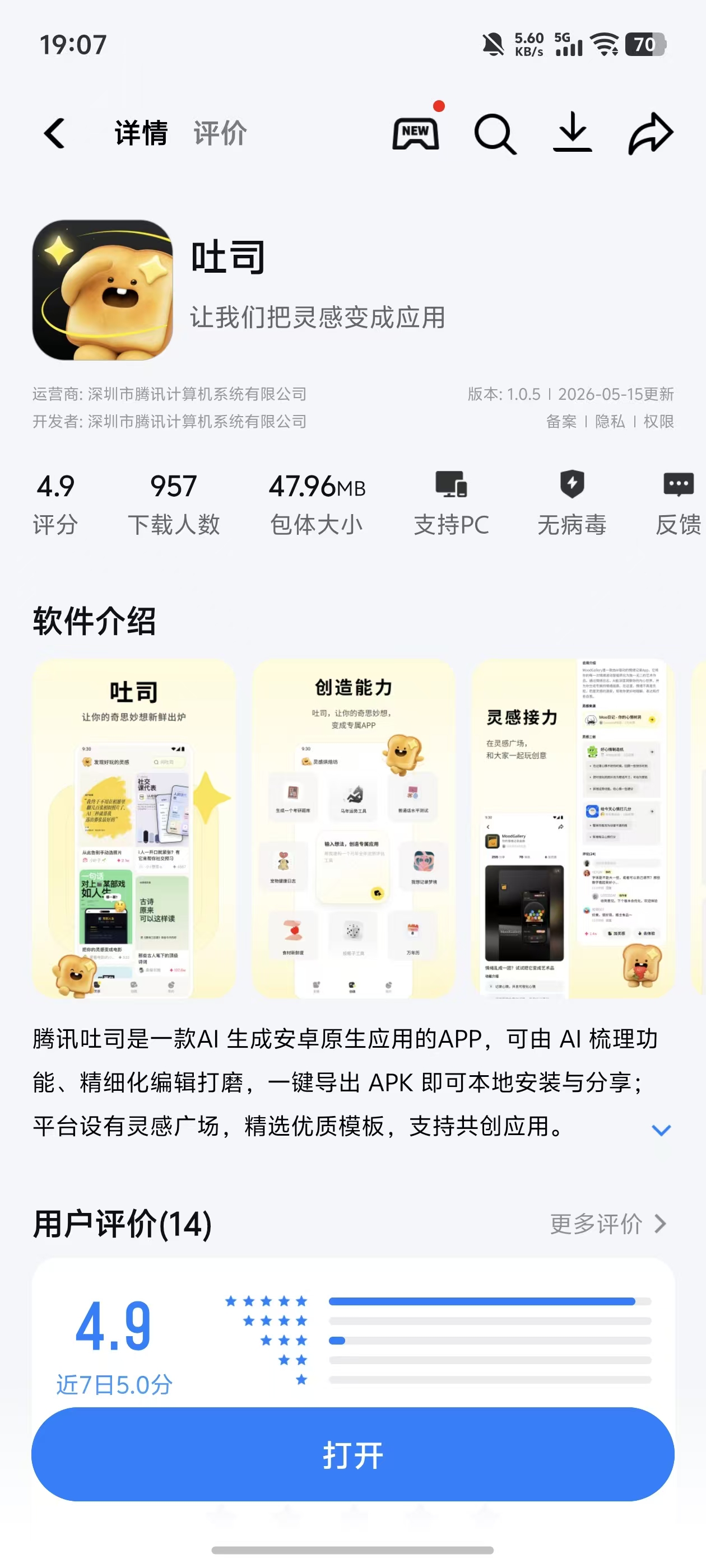
(Image source: App Marketplace)
Before Tencent, Vibe Coding apps like Ant Group's LingGuang and Baidu's Miaoda were already popular in the market. However, the apps they generated typically could only be shared within internal platforms or shared online with other friends. TuSi's standout feature is its ability to package apps into an APK file, allowing them to be installed and used on Android phones.
The popularity of Vibe Coding stems from fulfilling the public's aspiration of enabling anyone, regardless of skill level, to develop apps. However, having ideas doesn't necessarily mean they can be executed well. How does Tencent's low-key launched 'TuSi' perform? Let's put it to the test with a hands-on experience.
TuSi's 'Installability' is its Biggest Advantage, but It's Too Slow
'TuSi' is arguably the least 'Tencent-like' product among Tencent's recent app releases. Its icon is a glowing piece of toast, and from the moment you enter the app, this toast appears in various small places, at least making a very cute first impression.
After opening the app, there are three tabs at the bottom: 'Inspiration,' 'Create,' and 'Mine.' The structure is minimalist, and the logic is clear. In the 'Inspiration' tab, you can see many apps created by excellent authors, mostly practical applications. We can also open and use them directly or create a similar app based on their prompts.
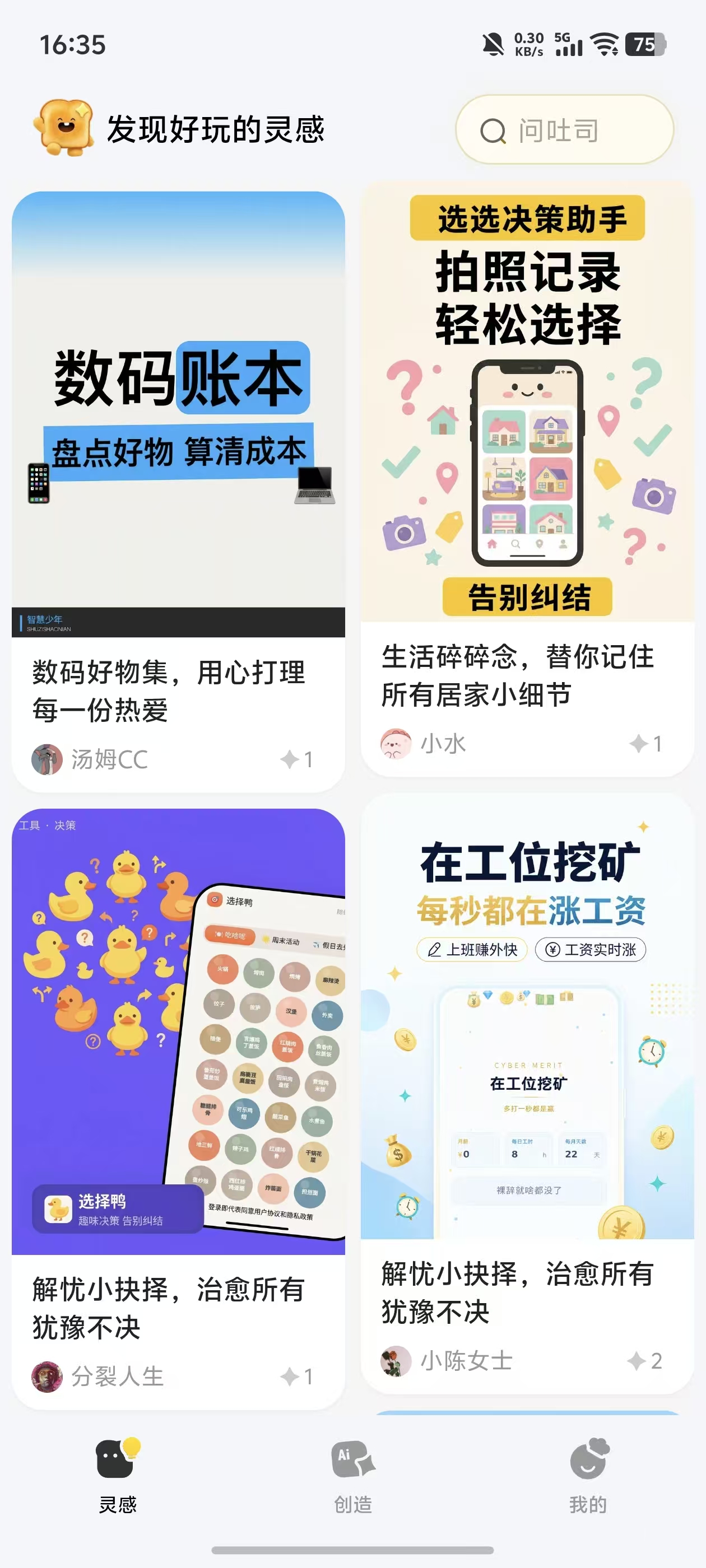
(Image source: TuSi App)
Here, Leikeji discovered a small issue: for apps in the 'Inspiration' tab, we can only choose to experience them online or create a similar version; there is no 'download' option. For example, we saw an app called 'Red Cross First Aid Guide' with a lot of first aid knowledge that we wanted to download to our phone for easy access anytime. Unfortunately, we could only recreate a similar version through 'Create Similar' rather than installing it directly.
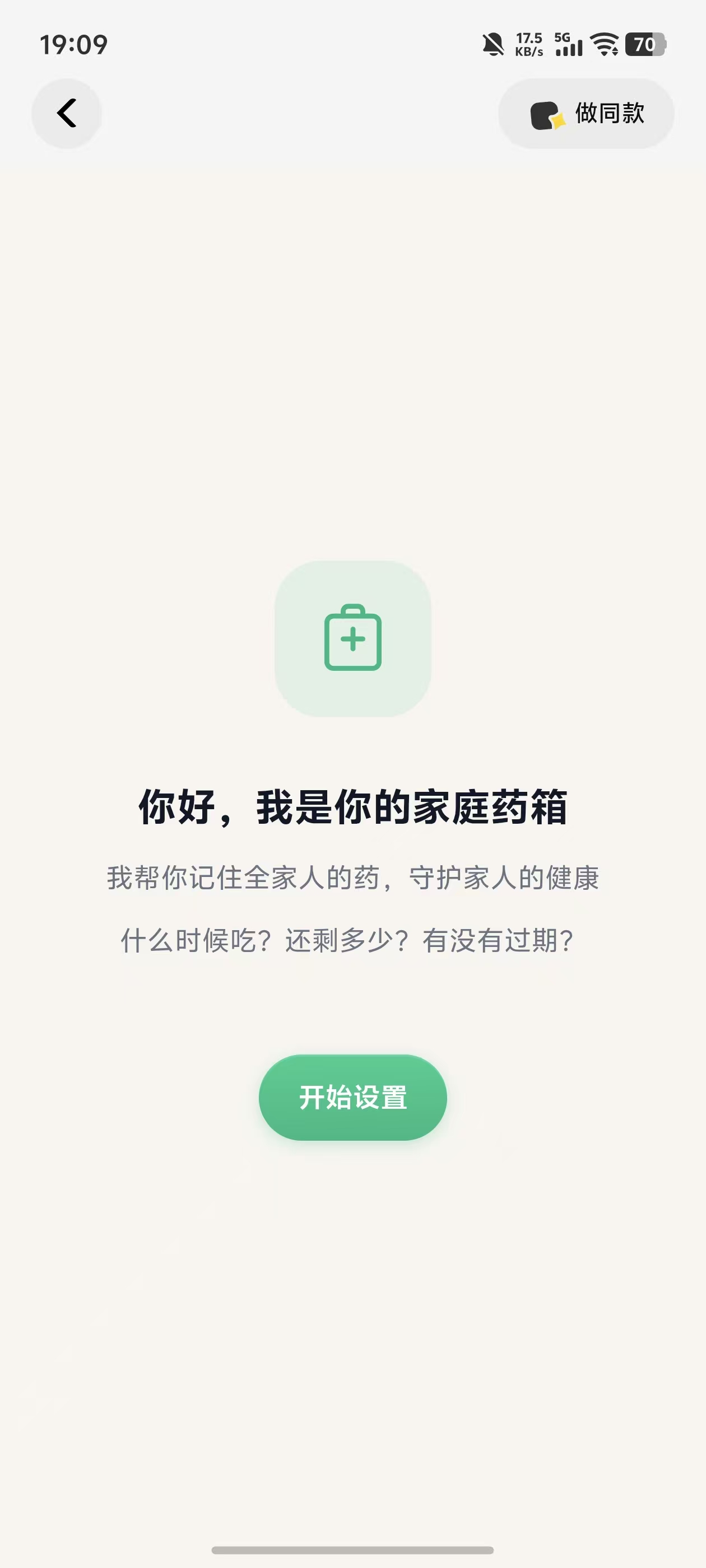
(Image source: TuSi App)
'Create' is straightforward: open it, input your inspiration, and create an app. It can be done without needing overly detailed prompts. However, TuSi currently only offers 5 attempts, and it's unclear whether this is a daily refresh limit or a fixed free quota of 5. All generated works are automatically saved to the 'Mine' tab and can be viewed and used at any time.
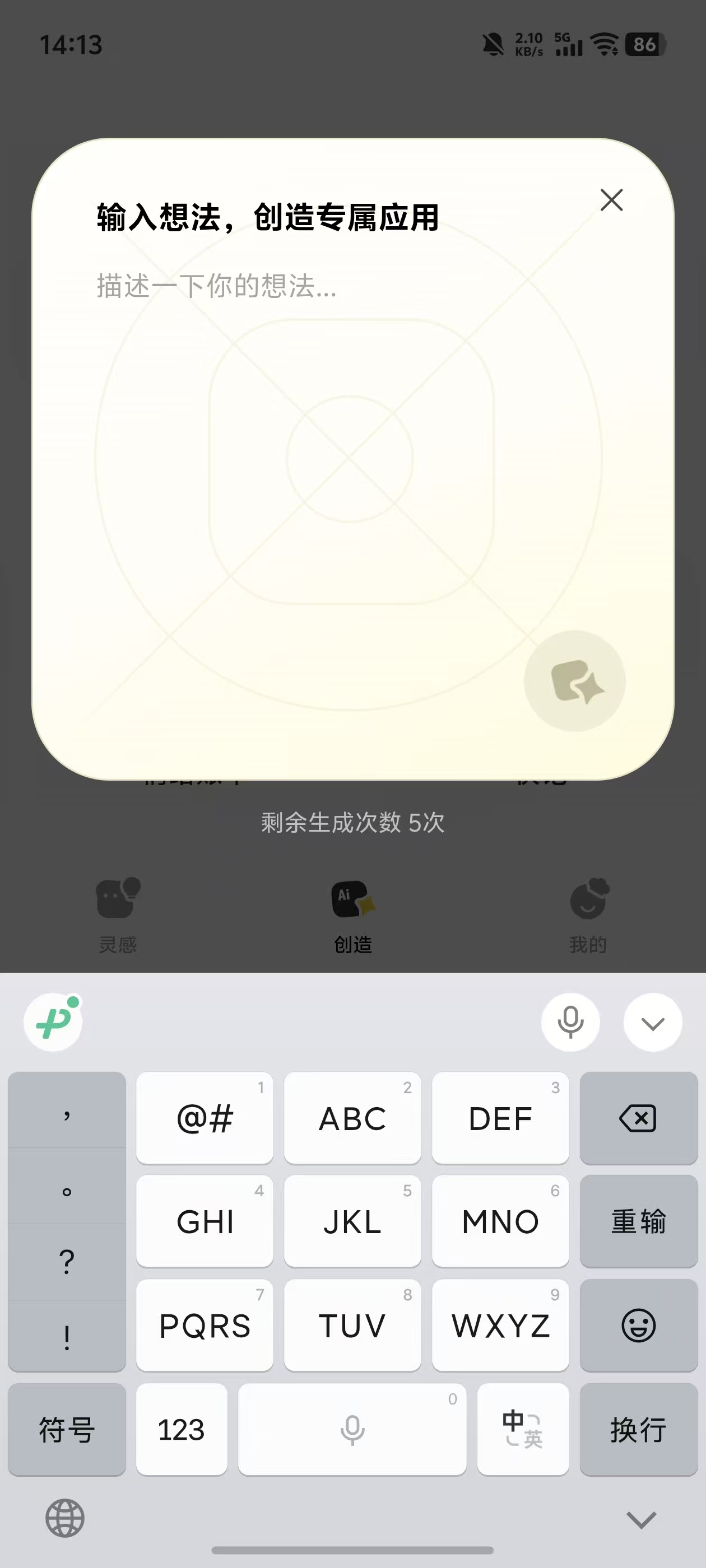
(Image source: TuSi App)
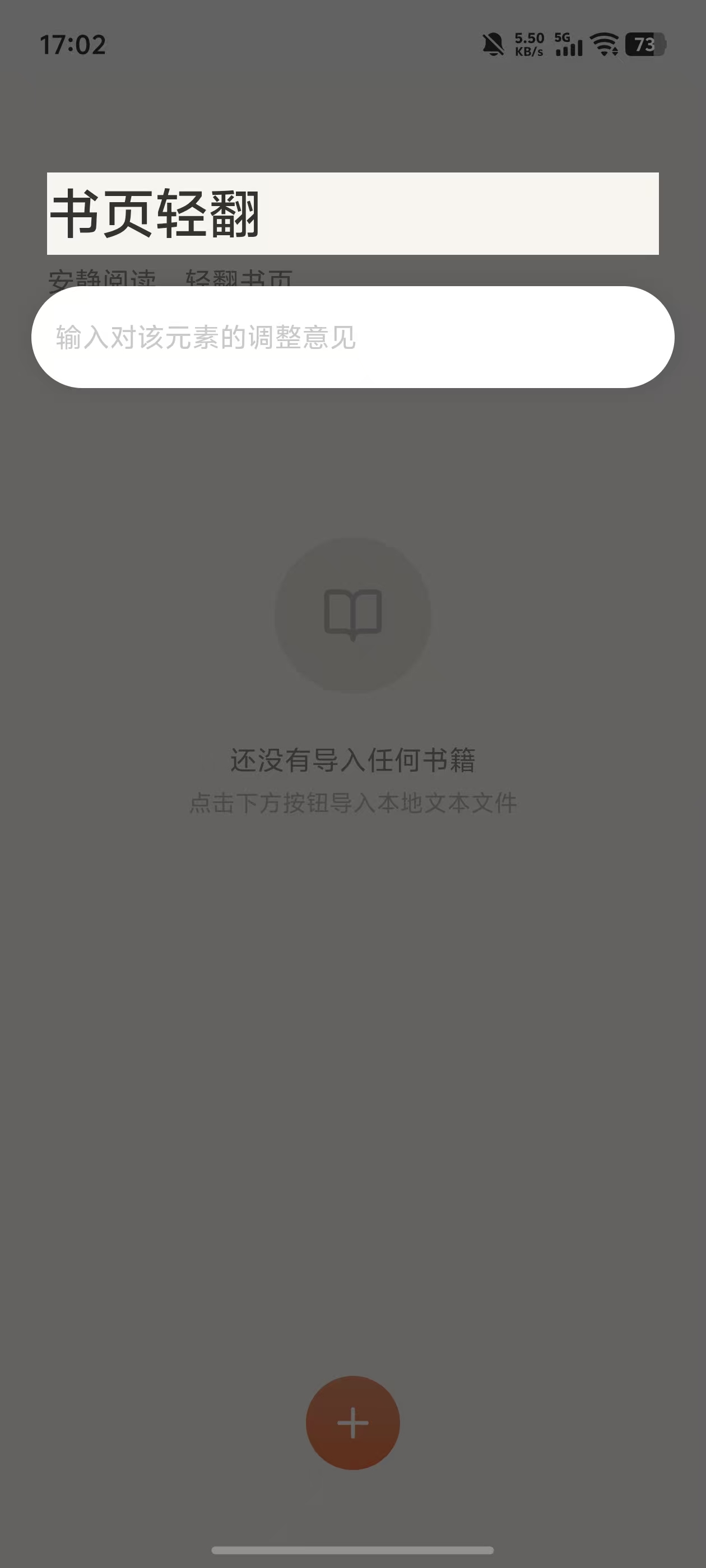
After describing the app we want to create in one sentence, TuSi enters the generation phase. After identifying the requirements, it breaks them down into several key functional points, followed by the desired style, such as smart adaptation, Morandi color scheme, etc. If any issues are found during the preview, adjustments can be made through clicking or dialogue. Although it sounds simple, the generation and preview process takes over ten minutes, which is indeed not fast.
(Image source: TuSi App)
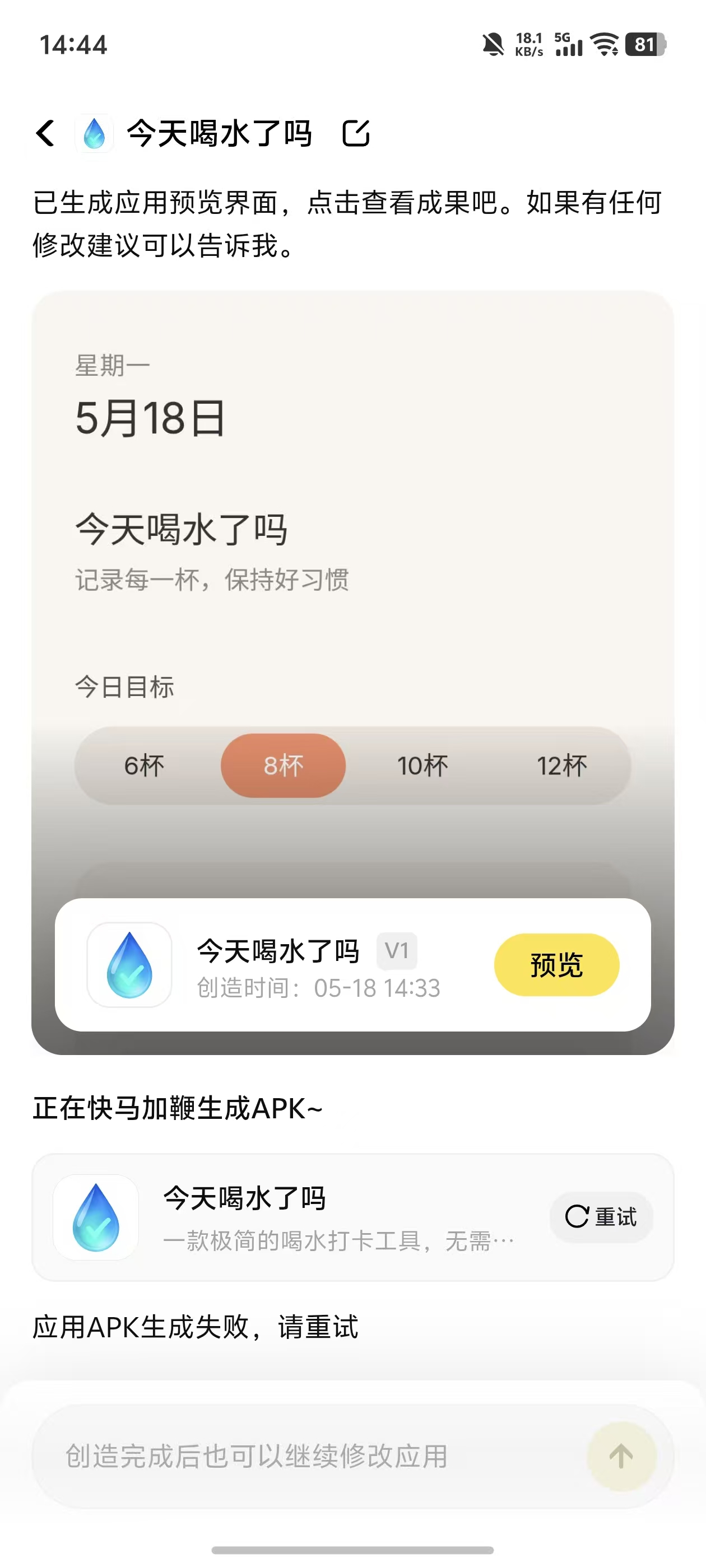
After completing the adjustments, we can choose to export the APK file directly. This process also takes over ten minutes, and there is a possibility of packaging failure. However, once completed, the installation package can be directly recognized by the phone and installed on the home screen, which is quite interesting.
(Image source: TuSi App)
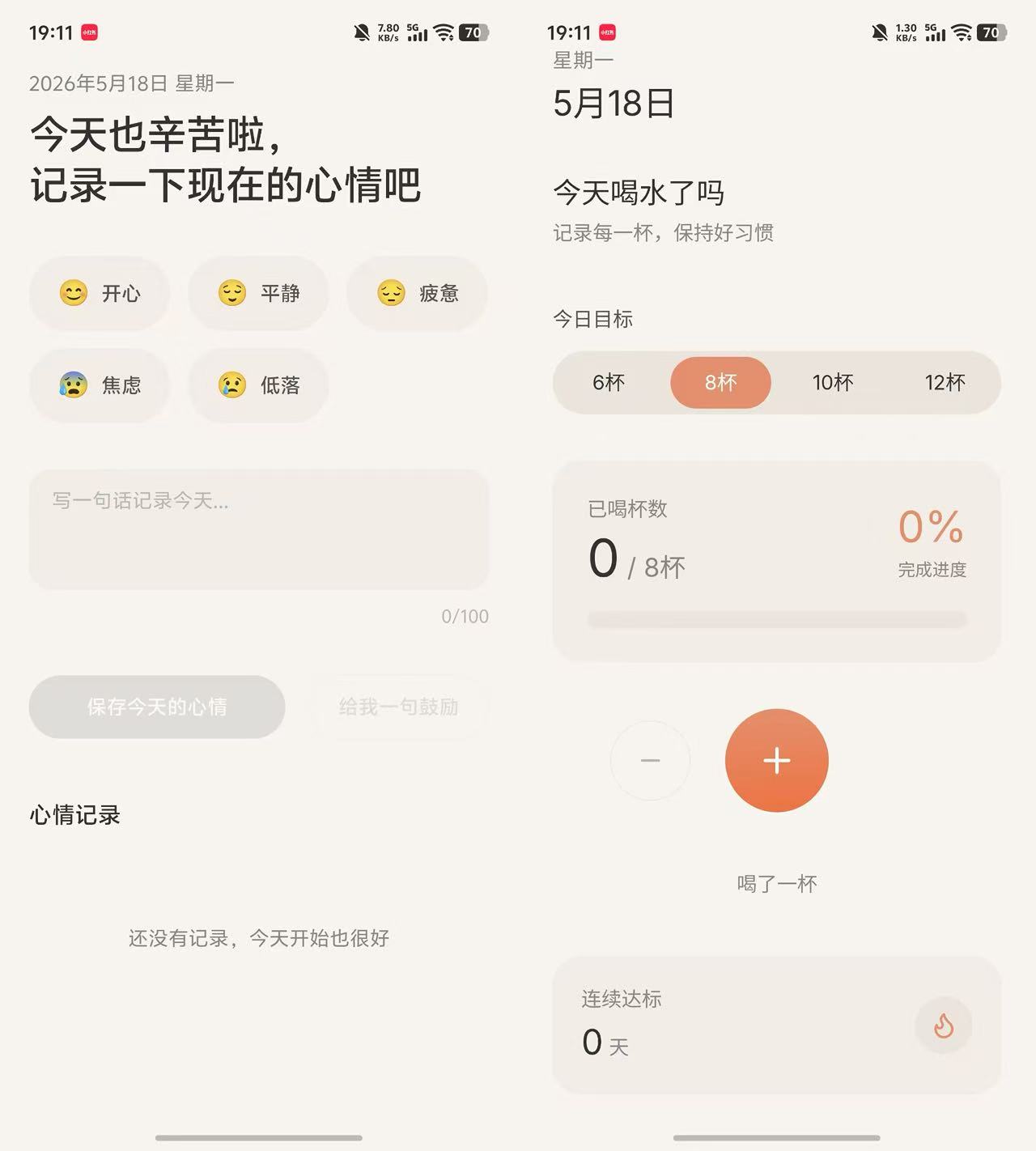
From Leikeji's perspective, TuSi's current significance lies in its ability to simply write out some relatively simple tool-based apps with one sentence and install them on the phone for direct use. These apps have no splash ads, no built-in ads, and no paid membership systems. For example, I created a water reminder app, a mood tracker app, and a reader app, all of which are minimalist applications without any ads.
(Image source: TuSi App)
The only drawback is that the entire process isn't particularly fast. Generating a preview takes over ten minutes, and packaging it into an APK takes another ten minutes. In total, developing a very simple app takes about half an hour. Moreover, when you see excellent examples, you can't download them directly; creating a similar version means a long wait time.
Atmosphere Programming Battle: TuSi Offers 'Installability,' LingGuang Offers 'Speed'
Before TuSi, Ant Group's LingGuang app, released on November 18, 2025, incorporated one of the earliest Vibe Coding features on mobile, which LingGuang called Flash Apps.
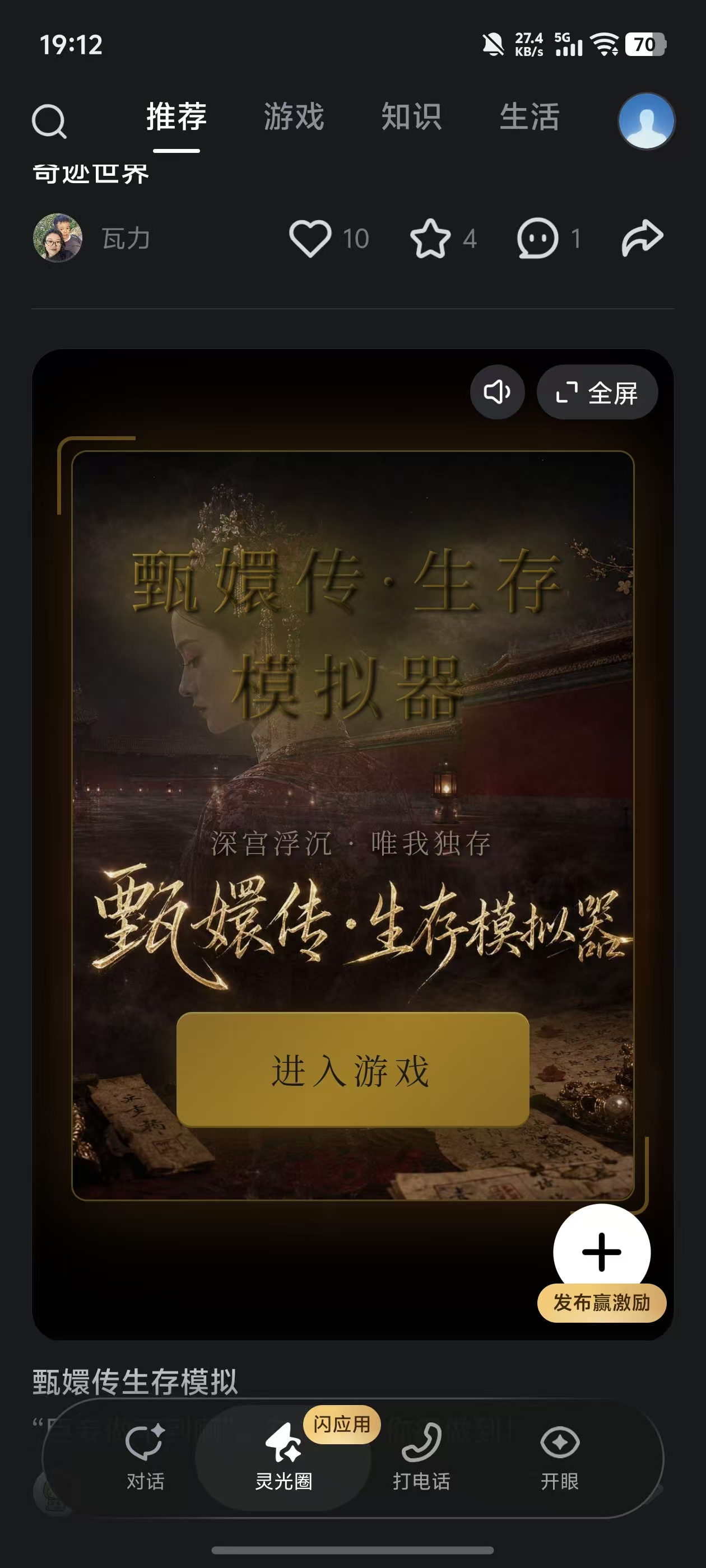
Let's start with a technical difference. LingGuang's 'Flash Apps' are essentially real-time generated HTML pages that run in an internal browser. They are use-and-go, requiring neither packaging nor installation. Once generated, they render directly, and closing the page makes them disappear. They have no local storage, no offline capabilities, and always rely on the network for access. TuSi takes a different approach: AI completes the entire process of functional design, code generation, environment configuration, packaging, and compilation, ultimately outputting an APK that can be installed on a phone.
(Image source: LingGuang App)
This difference results in LingGuang having a natural advantage in speed. For example, when I asked LingGuang to create the same water reminder app, it took only about 20 seconds, with results similar to TuSi's APK. Mainly, such single-function apps don't have deep technical challenges.
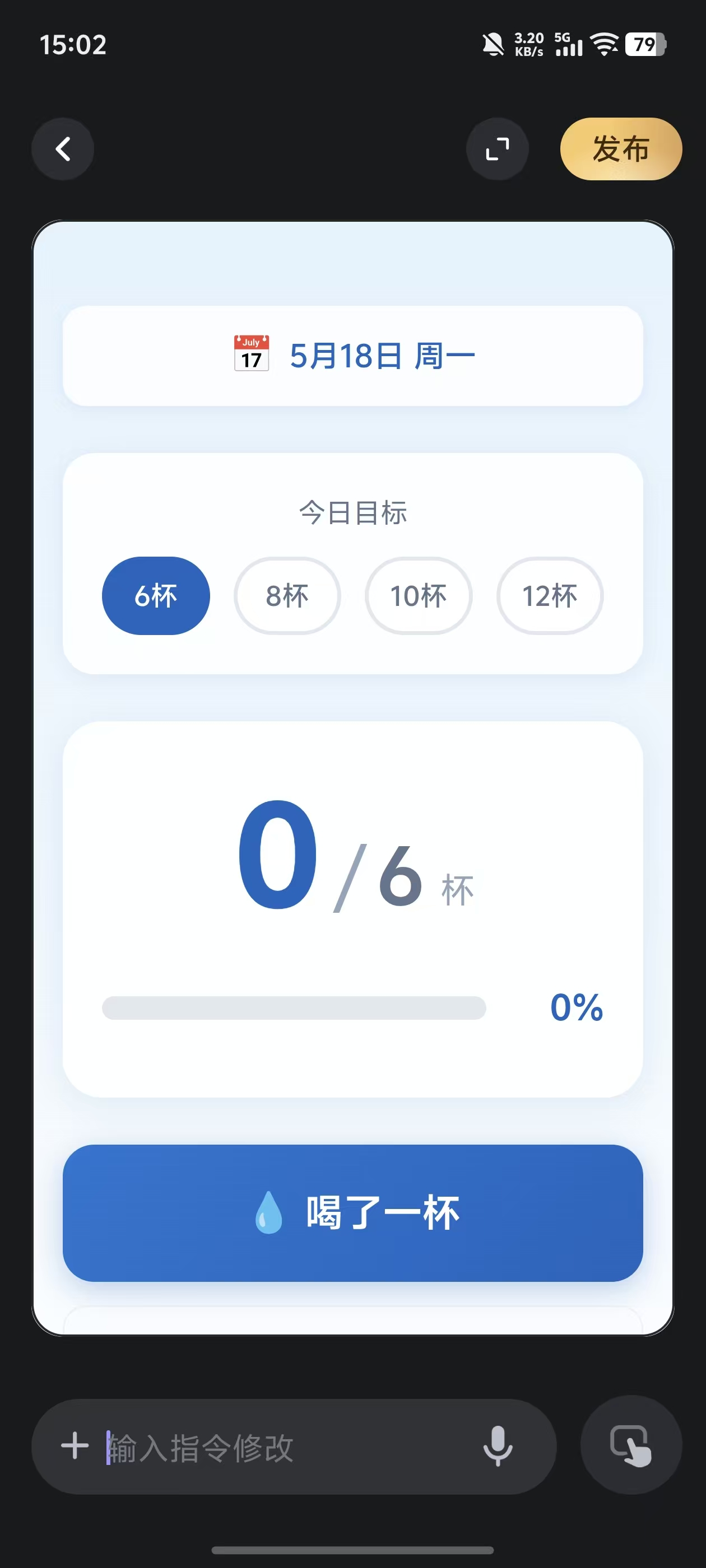
(Image source: LingGuang App)
However, HTML generation is inherently fast. I used LingGuang to create a Chinese Paladin character simulator, including character design, plot branches, and story background, and it was done in less than two minutes. This speed is hard to replicate with any product that 'generates real apps' because HTML doesn't require compilation; the model generates the code, which renders directly without any waiting period. Moreover, HTML offers high flexibility, allowing for game logic, narrative structures, and dynamic interactions to be created as desired. This is why LingGuang's creators are more prone to 'creating fun stuff,' such as Empresses in the Palace simulators, campus life games, and text-based RPGs, all of which can be found in LingGuang's plaza. In contrast, TuSi's inspiration plaza mostly features practical apps.
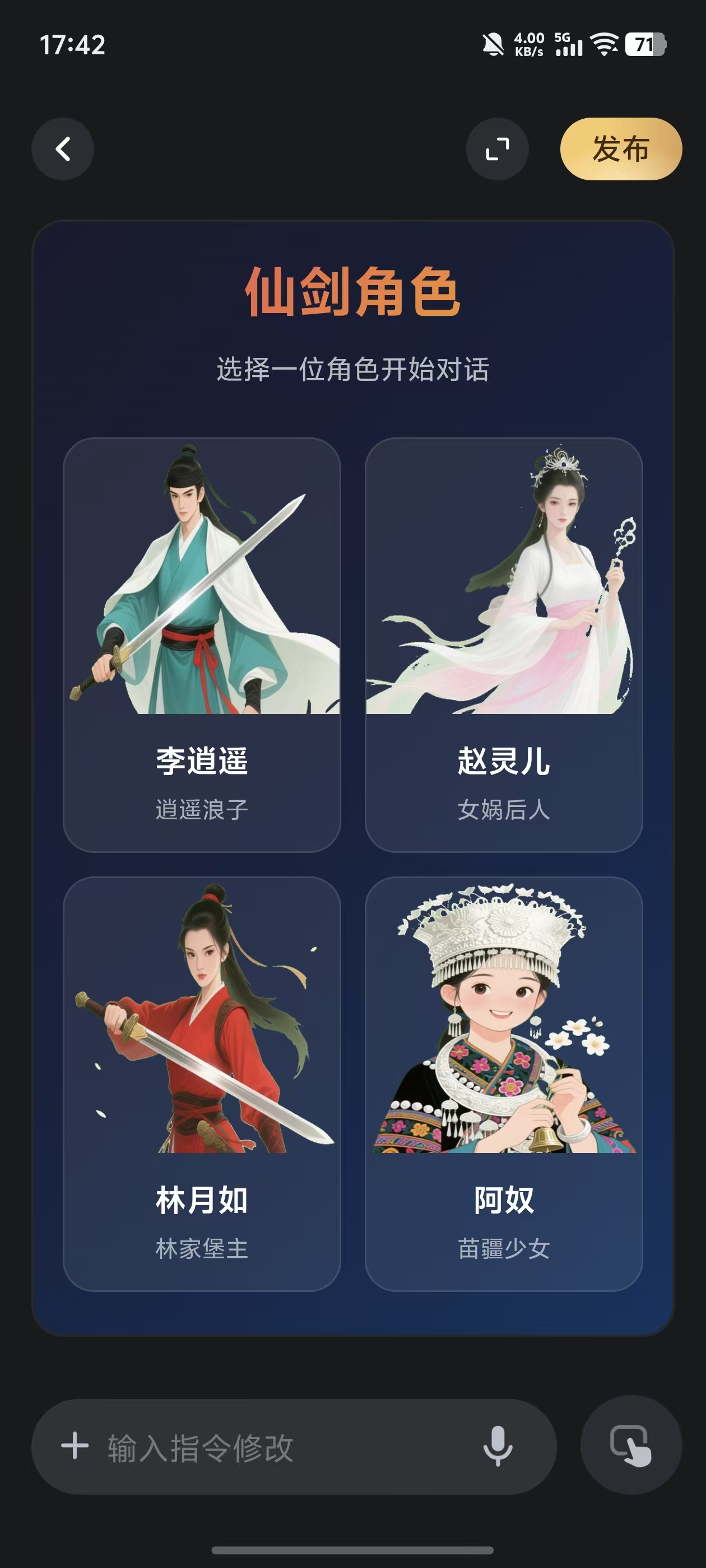
(Image source: LingGuang App)
However, LingGuang also has its issues. The things it creates can't be saved; the generated apps have no independent entry points. Users have to return to LingGuang to find them again when they want to use them. Essentially, they are still content attached to the LingGuang container rather than truly independently running products.
TuSi's APK is different. Once installed on the phone, it's there to stay, with an icon on the home screen, capable of running offline, and the installation package can be shared with people who know nothing about TuSi. It generates a true app, not just a code snippet dependent on a platform to open. Notably, TuSi is currently only available on the App Marketplace and cannot be found in other app stores.
However, being a 'real app' is both TuSi's advantage and a higher requirement it faces. Users will compare it to products in the App Store, not to another AI-generated HTML page. But when we talk about a high-quality app, the requirements might be too high for truly inexperienced ordinary users. More critically, neither LingGuang nor TuSi hands over the entire coding process to users, destined they focus more on 'fun' than 'professionalism.'
Creating Apps is Easy, but Distributing Them is Hard
Not just LingGuang and TuSi, but almost all development tools focusing on Vibe Coding are currently facing the issue of distribution.
LingGuang has great potential. Its Flash Apps are fun, and creators are active, constantly churning out Empresses in the Palace simulators, Chinese Paladin character generators, and text-based RPGs. However, as we mentioned earlier, these creations have a common problem: almost no one knows where they are except users playing with the LingGuang app. As of April this year, LingGuang users had cumulatively created over 30 million Flash Apps, but each of these 30 million apps' Spread radius (propagation radius) is limited to a single share link.
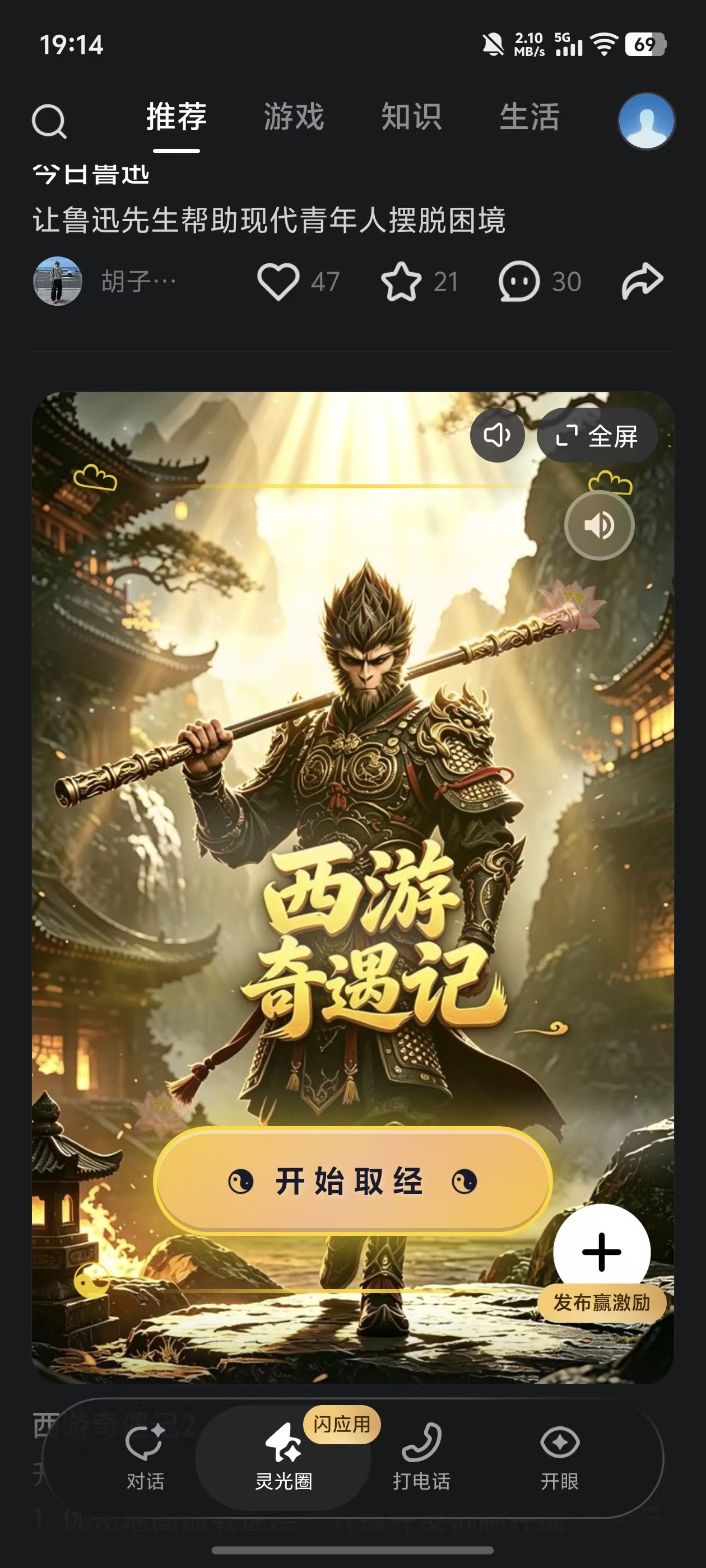
(Image source: LingGuang App)
TuSi, on the other hand, seems to have solved this problem in reverse. Once installed on the phone, it's there to stay, with a home screen icon, capable of sharing the installation package, and recipients don't need to know what TuSi is to install and use it. Perhaps one day, backed by Tencent, TuSi could integrate with the App Marketplace, allowing TuSi creators to showcase and download their apps from there.
Unfortunately, listing on mainstream domestic app stores requires a corporate business license, which is not feasible for individual developers. Personal registration is technically possible but strictly limits content to tool-based, non-commercial applications. In other words, if an ordinary user generates an app with TuSi and wants it listed on the App Marketplace, they would first need to register a company.
On the other hand, Vibe Coding might not be suitable for ordinary people in the first place.
When Andrej Karpathy proposed this concept, he spoke of 'completely abandoning code understanding and relying solely on intuition to let AI write it.' His intended audience was developers with programming experience. However, many developers entering this field first consider how to make it fun for everyone, like LingGuang. Meanwhile, development tools like Codex provide complete code in response to programming requests, allowing for fine-tuned modifications or natural language requests for improvements. All of this is based on the user's ability to read code in the first place.
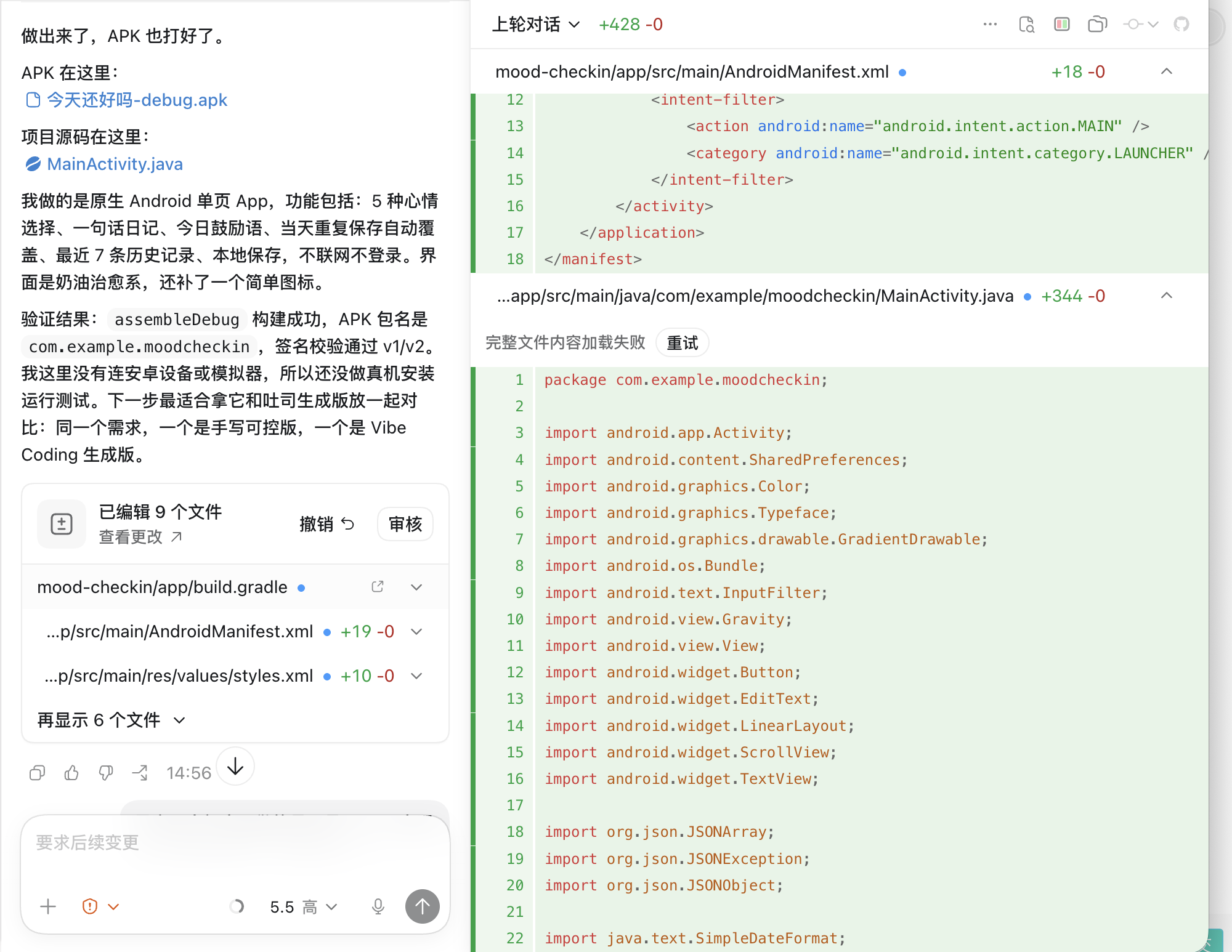
(Image source: Codex)
Experienced developers use Vibe Coding to delegate repetitive tasks to AI while maintaining control over the direction. Inexperienced users, at best, can only create small tools. Based on the previous experience, I believe TuSi's current direction is at least correct. It can indeed help many ordinary people materialize their 'ideas,' even if the results aren't perfect, it solves the problem of getting started. However, if you want to go further, relying solely on 'atmosphere' might not reach the level of mainstream applications.
Tencent, Alibaba, Ant Group, LingGuang, Atmosphere Programming
Source: Leikeji
Images in this article are from: 123RF Royalty-Free Image Library
-
![]()
Focus | CCCC’s Takeover of Greentown Comes to Fruition: Why Did the 11-Year ‘Control Without Authority’ Era End?
-
![]()
Final Verdict: The 2026 China Auto Forum Shines with Unique Characteristics at a Pivotal Moment
-
![]()
Tencent Maintains Matrix Approach, Alibaba Merges Entry Points: Tech Titans Initiate AI Agent Consolidation
-
![]()
Geely Secures Portion of Ford’s Spanish Production Capacity
-
![]()
Tesla Stalls This Second
-
![]()
Elon Musk's 'Money-Burning' Spree: All Car Sales Profits Poured into AI
-
![]()
Why Did Tesla’s Profits Drop and Cash Flow Go Negative?
-
![]()
AI Titans Are All in the Red: Time for Intelligent Driving Car Buyers to Reassess?