After an 8 Billion Yuan Investment in Wuhan, Will French Automobiles Outperform Japanese Ones?
 05/19 2026
 494
494
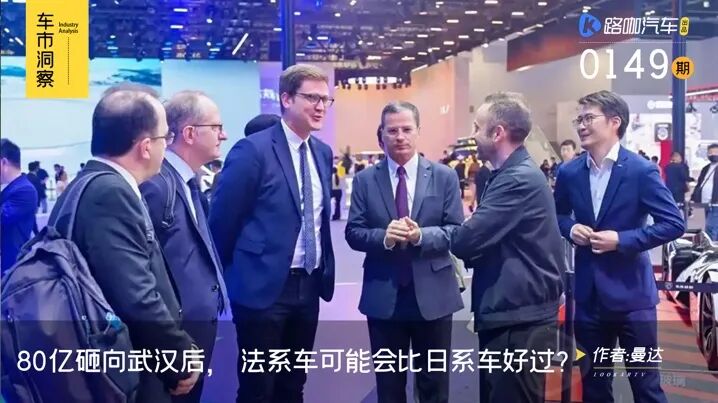
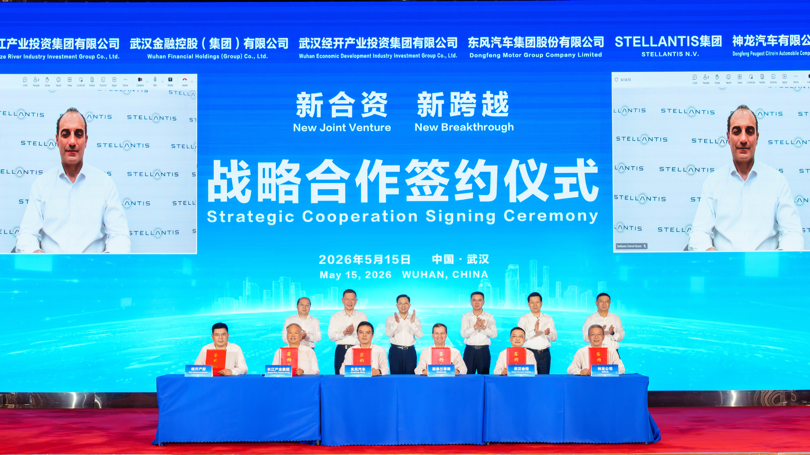
After acquiring a stake in Leapmotor, Stellantis, the world's fourth-largest automaker, has once again extended an olive branch to Chinese automakers. Alongside Dongfeng Motor Group and other partners, it has poured 8 billion yuan into its Chinese joint venture, Dongfeng Peugeot Citroen Automobile (DPCA).
According to the plan, Citroën and Peugeot are set to launch multiple new energy vehicle models starting from 2027. Meanwhile, the JEEP brand will be produced at DPCA's factories and distributed worldwide. In essence, Stellantis, which has been jokingly dubbed the "Losers' Alliance" by Chinese netizens, is once again leveraging Chinese electric vehicle technology to rejuvenate its global sales.
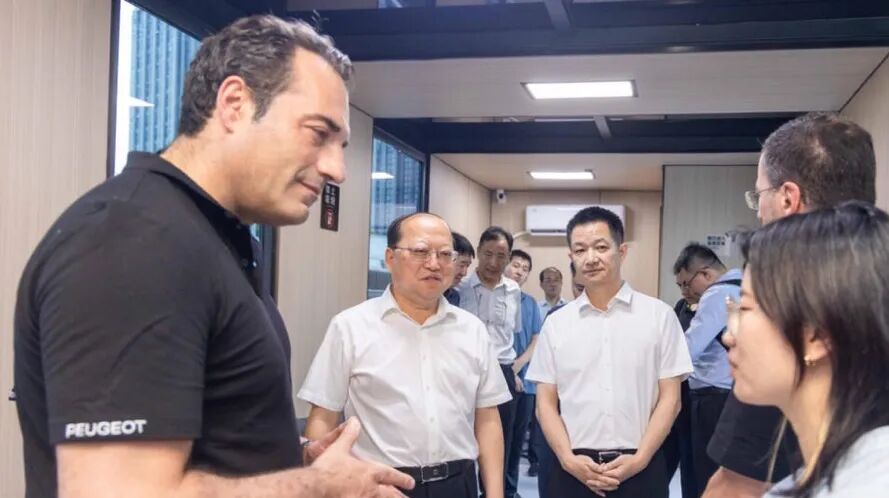
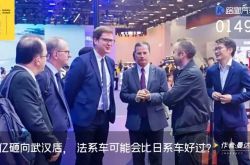
Prior to the official announcement, more detailed rumors had already been circulating. In July of the previous year, Stellantis' newly appointed CEO, Antonio Filosa, along with approximately 20 core decision-makers and accompanying staff, arrived in China on a corporate jet and held closed-door discussions with Dongfeng Group in Wuhan.
During their visit to China, Antonio and his team also stopped by their partner Leapmotor in Hangzhou. A source close to Dongfeng Motor disclosed to Luca Auto that after test-driving new models from Leapmotor, VOYAH, and Mengshi, Antonio and his team reached a consensus: to utilize Dongfeng's EV technology and platform to reimagine JEEP's new energy off-road vehicles. At that time, it had been merely one month since the official launch of the "Huawei Zhiye First Car," the Mengshi M817, jointly developed by Dongfeng and Huawei.
In an industry where it's widely believed that "you can't build cars without 20/40 billion yuan," an 8 billion yuan investment may not seem astronomical, but it is crucial for revitalizing DPCA using global resources.
What can be achieved with 8 billion yuan?
Upon returning to China in July of the previous year, Antonio and his team issued a new directive to Stellantis' headquarters: to keep pace with Chinese automakers and shorten the new car development cycle to within 18 months.
According to Stellantis' plan, DPCA will introduce two brand-new models, both new energy vehicles under the Peugeot brand, including pure electric and plug-in hybrid versions. The first model is slated for launch in 2027, and the second in 2028. These models will be marketed not only in the Chinese market but also globally. Jeep will also complete its R&D and production in Wuhan, with its first new model set to debut in 2027.
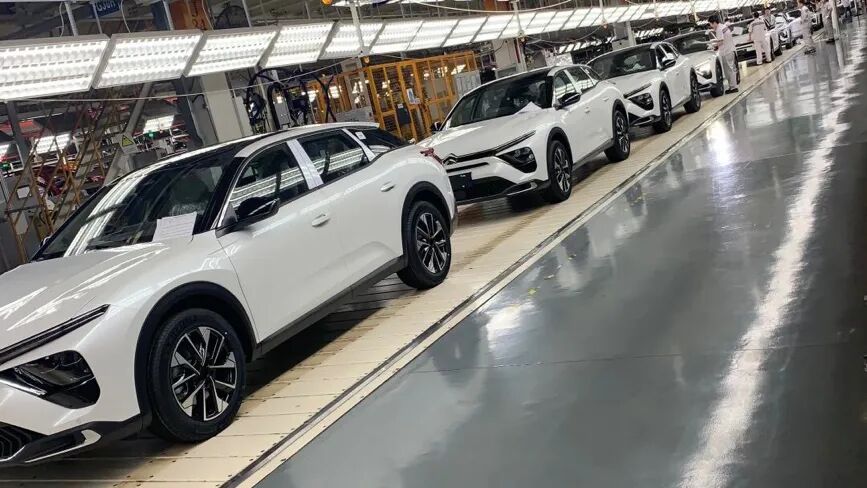
In other words, the two sides have initially planned for 3-4 new models for the Peugeot and JEEP brands, with an average investment of 2 billion yuan per model. Most significantly, these models will be manufactured at DPCA's factories, resulting in substantial savings on fixed asset expenses.
In 2023, Stellantis and Dongfeng Group extended their joint venture agreement until 2037, with Stellantis increasing its capital contribution by 3.8 billion yuan. In the same year, Dongfeng Group acquired specific land use rights, buildings, and structures belonging to DPCA in Wuhan and Xiangyang and entered into a leasing agreement with DPCA, effectively completing Stellantis' "asset-light" layout in China.
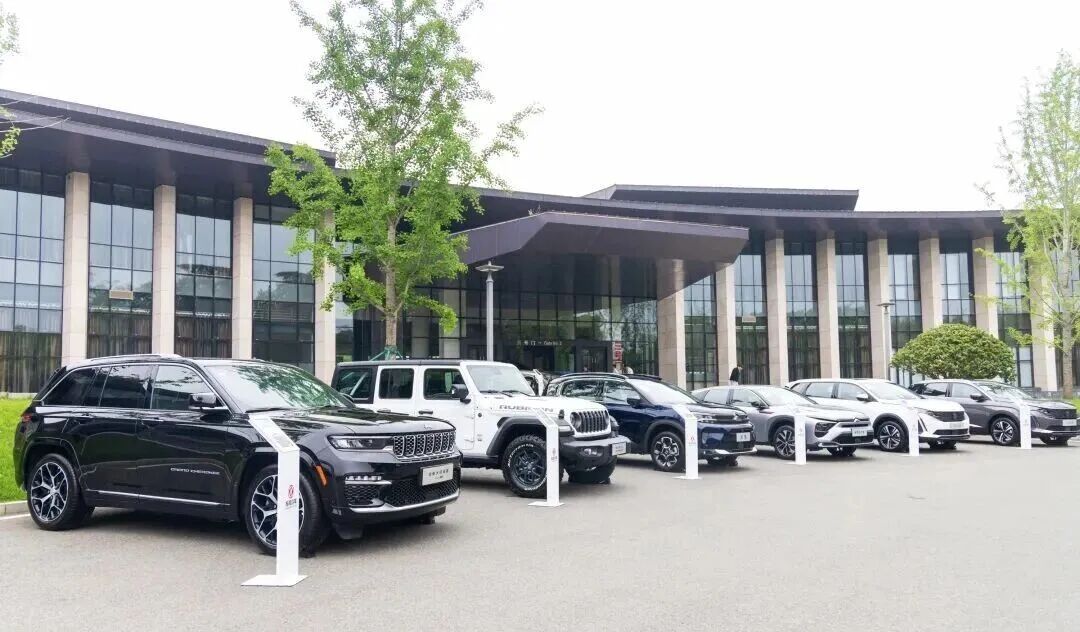
To activate production capacity, DPCA's factory in Wuhan is also being utilized to produce new energy vehicles from Dongfeng's self-owned brands, such as Dongfeng Nanomi and Dongfeng eπ. It's evident that for DPCA, which is about to introduce new models, the majority of costs stem from upfront design and R&D.
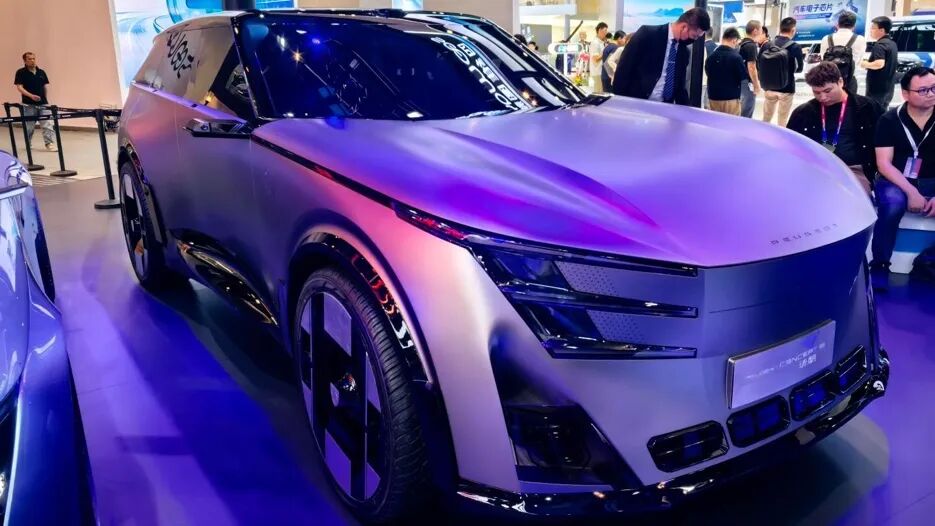
At the Beijing Auto Show in April this year, French cars made a high-profile comeback after a three-year hiatus. Leaders from Stellantis' headquarters, global regions, and various business segments in China all attended the event. Peugeot showcased two flagship intelligent electric concept cars, the Concept 6 Lion and the Concept 8 Liuming.
During the Beijing Auto Show, Stellantis executives revealed to Luca Auto, "We are also striving to turn these two concept cars into real vehicles for users to choose from." This suggests that there will be notable differences between the new models to be mass-produced in 2027 and the concept cars, but it doesn't rule out the possibility of retaining some core technologies and design languages.
Following in Leapmotor's Footsteps, French Cars Could Perform Well
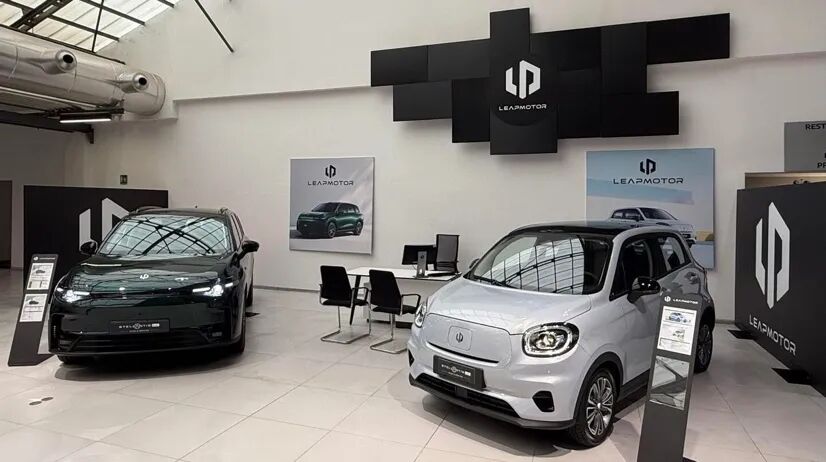
Developing electric vehicles led by China and selling them globally is a transformation path that almost all joint venture automakers are currently exploring. Stellantis has already received "positive feedback" from its cooperation with Leapmotor.
Leapmotor's first-quarter financial report revealed that its overseas sales reached 41,000 units, a year-on-year increase of 442%, accounting for 37.1% of total sales, a record high, and achieving new breakthroughs in the Italian and German markets.
Stellantis' joint venture with Leapmotor, "Leapmotor International," is exclusively responsible for the global sales and production of Leapmotor vehicles outside of China. This cooperation model is expected to be replicated at DPCA, with an even deeper level of cooperation than Leapmotor International.
According to the first-quarter financial report, Stellantis' global sales reached 1.4 million units, a year-on-year increase of 12%. Sales in its core markets—Europe and North America—increased year-on-year, driving improvements in revenue and profit.
In contrast, let's examine the financial performance of Japanese automakers in the fourth fiscal quarter of 2025 (January to March 2026).
Honda's profits plummeted, marking its first full-year net loss since going public nearly 70 years ago. Management announced that it would abandon its previous goal of completely phasing out fuel vehicles by 2040 and suspend the launch of some electric vehicle models. Nissan's net loss narrowed, but revenue and profit did not improve significantly due to declining sales in key markets such as Japan, China, and Europe.
Even Toyota, the global sales champion, faces the dilemma of "increasing revenue but not profit." Executives admitted at the financial report meeting that the downward trend in per-vehicle profitability has not yet been curbed.
In short, the three major Japanese automakers have directly or indirectly admitted the failure of their electric vehicle transformation. Honda pointed out in its financial report that it will shift its focus to the North American market in the future.
Furthermore, in its 2026 strategic plan, Japan stated, "Launch new energy products in the Chinese market based on the platforms of local partners to enhance product competitiveness and cost competitiveness." This has become the destiny of almost all joint venture automakers. Relying on mature channel systems and stable market shares, foreign automakers that "can't survive" in China can also be the best partners for Chinese automakers to go global.
Although DPCA officially stated that its new round of strategic cooperation with Stellantis Group "adheres to a dual approach of deepening domestic operations and expanding overseas," we can boldly predict that the focus of multiple subsequent new models from Peugeot and JEEP will be on overseas markets. The most direct reason is that the Chinese market does not lack new entrants, especially EV players.
For Stellantis and others about to embark on the 2.0 joint venture era, the biggest challenge comes from the uncertainty brought by geopolitics.
Over the past two years, the strategic maneuvering between China and the EU over electric vehicle tariffs has prompted more and more Chinese automakers to build factories overseas. BYD recently announced that it is in talks with Stellantis to acquire idle factories. Shortly before that, Geely was reported to be acquiring Ford's factory in Spain to produce "Ford-branded" electric vehicles. In short, while Stellantis and others attempt to maximize the advantages of China's industrial chain through reverse joint ventures, Chinese automakers are also going global in their own way.
-
![]()
After an 8 Billion Yuan Investment in Wuhan, Will French Automobiles Outperform Japanese Ones?
-
![]()
"Charging Industry Set to Move Beyond 'Cutthroat Low-Price Competition'", "Charging sector, profitability, structural enhancement, high-quality growth, the 15th Five-Year Plan era"
-
![]()
No Shortcut to the 'Final Circle' of the Autonomous Delivery Van (Robovan) Era
-
![]()
Yann LeCun's Retweet Declares Meta AI 'Dead'
-
![]()
Token Package Plans Launch: The 'Traffic War' in the AI Era Now Involves Doubao and Peers
-
![]()
Which enterprises have incorporated world models into their autonomous driving solutions, and what are the differences in their implementations?
-
Alibaba's AI Revenues Made Transparent, Tencent's AI Strategies Remain Hidden
-
![]()
Hands-On App Creation is Now a Reality! Tencent's TuSi vs. Ant Group's LingGuang: One Offers Installability, the Other, Speed