"Charging Industry Set to Move Beyond 'Cutthroat Low-Price Competition'", "Charging sector, profitability, structural enhancement, high-quality growth, the 15th Five-Year Plan era"
 05/19 2026
 424
424
China has successfully built the world's most extensive EV charging infrastructure, catering to the charging requirements of over 40 million new energy vehicles. Yet, despite this impressive infrastructure growth, the profitability of charging stations lags behind expectations. A recent market survey report from CCTV Finance highlights that the annual profit of a prominent charging station plummeted from 500,000 yuan in its inaugural year, 2020, to just 80,000 yuan in 2023, and currently hovers around 60,000 yuan annually.
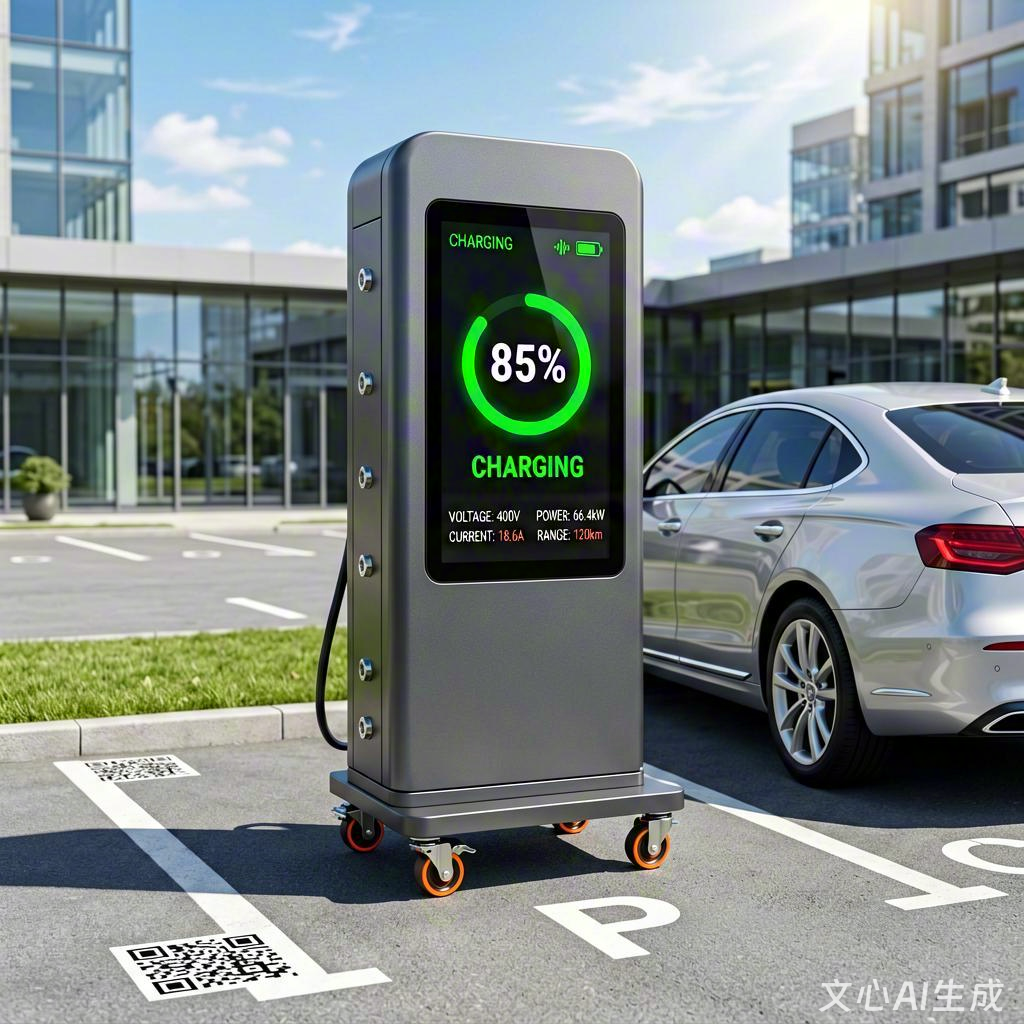
Zou Peng, Director of the Technology Department at the China Association of Automobile Manufacturers (CAAM) and Executive Secretary-General of the China Electric Vehicle Charging Infrastructure Promotion Alliance, candidly admitted to Auto Review, "The industry is now undergoing a profound transformation, marked by significant structural shifts. The entire sector grapples with the challenge of increasing volume without proportional revenue growth, with over 60% of public charging stations either incurring losses or barely breaking even." He noted that many small and medium-sized stations struggle to cover fixed costs like rent and labor, with investment recovery periods stretching far beyond those in the industry's infancy. However, Zou pointed out that as we enter the new era of the 15th Five-Year Plan, the domestic charging industry's profitability is poised for structural enhancement, bidding farewell to 'cutthroat low-price competition' and embracing a high-quality development phase centered on technology, operations, and market dynamics.
Over 60% of Public Charging Stations Face Financial Struggles
Data from the National Energy Administration reveals that as of the end of March this year, China's EV charging infrastructure totaled 21.481 million units, up 46.9% year-on-year. This includes 4.863 million public charging facilities with a combined rated power of 234 million kilowatts and 16.618 million private charging facilities with an installed capacity of 147 million kilovolt-amperes.
Despite this expansion, charging stations continue to grapple with low profitability. Another leading EV charging pile enterprise shared a set of data: A charging station built with a 1.2 million yuan investment, featuring 16 fast-charging guns and charging 200 kWh per gun daily at a service fee of 0.3 yuan per kWh, yields a mere 0.04 yuan profit per kWh after accounting for depreciation, taxes, and other costs. Small and medium-sized stations fare even worse, with annual revenues plummeting and failing to cover even labor and rent expenses.
Zou reiterated that the industry is indeed in a period of profound adjustment, characterized by significant structural differentiation, with the entire sector facing the dilemma of increasing volume without corresponding revenue growth. Over 60% of public charging stations operate at a loss or with minimal profits. For leading compliant stations, the net profit per kWh after deducting all costs is as low as 0.04 yuan. Many small and medium-sized stations struggle to cover fixed costs like rent and labor, with investment recovery periods significantly longer than in the industry's early days.
Analyzing the causes, Zou identified three main factors contributing to sustained industry profit pressure. Firstly, the growth rate of supply has, at times, outpaced demand, with the average utilization rate of public charging piles nationwide falling short of the industry's break-even point. Secondly, homogeneous competition has triggered internal price wars, exacerbated by the complete phase-out of construction and operation subsidies and rising fixed costs, further squeezing profit margins. Thirdly, as charging equipment ages, operation and maintenance costs rise annually, adding to the overall cost burden.
Industry insiders note that technical barriers in the charging industry are relatively low, and entry thresholds are modest. Operators can commence operations by simply purchasing standard equipment, leasing a site, and connecting to a third-party platform. Meanwhile, electricity is a standardized product, with minimal differences in charging services across stations in terms of vehicle range and battery life, making it difficult to establish differentiated advantages. Even if some stations offer value-added services like car washes and rest areas, they have yet to develop a replicable high-profit model, making it challenging to justify premium service fees and leading to fierce low-price competition.
No Widespread Price Hikes Anticipated Nationwide
Notably, recent media reports have indicated price increases for public charging piles in some regions, with the cost per kWh rising by 0.04 to 0.2 yuan at the same station and time period, encompassing both electricity and service fees.
An EV owner in Guangxi shared in a media interview, "Public charging pile prices have risen this year. Previously, it was 0.55 yuan per kWh after 11 PM, but now it's 0.68 yuan. Prices have also increased at other times." He mentioned receiving a notice earlier in the year about changes in electricity pricing policies in the Guangxi power trading market for 2026, with an overall increase in electricity prices for the region. Owners can check specific charging fees at stations on relevant platforms and plan their charging times accordingly. Taking his Xiaomi Yu7 MAX, a 101 kWh pure EV, as an example, it previously cost 55 yuan to fully charge at a public charging station, but now it costs 68 yuan, an additional 13 yuan.
However, subsequent media visits and verifications found that charging costs remain relatively stable, with no significant price increases for public charging piles in Beijing, Langfang, Qingdao, Xuancheng, Wuhu, Guangzhou, Nanning, and Fuzhou. Only some public charging piles in a few cities have experienced slight price fluctuations, ranging from a few cents to one jiao per kWh.
Some analysts attribute the recent price hikes for public charging piles in certain regions to policy adjustments. In December 2025, the National Development and Reform Commission and the National Energy Administration jointly issued the Basic Rules for the Medium- and Long-Term Electricity Market (hereinafter referred to as the "Rules"), stipulating that starting from March 1, 2026, time-of-use electricity price levels and periods will no longer be artificially set for market participants directly engaged in market transactions. Many regions have now abolished fixed time-of-use electricity prices in favor of floating rates. With a significant increase in wind and solar power generation, peak-to-valley fluctuations have also changed.
Zou believes that the recent minor price adjustments for charging in some domestic cities are not directly linked to price hikes under the Rules. The core of the Rules is to promote market-based dynamic fluctuations in charging electricity prices in line with power supply and demand, rather than mandating terminal charging price increases. "The recent minor local price fluctuations are primarily due to, first, increased grid load during peak electricity consumption periods, leading to higher electricity purchase costs for operators in the industrial and commercial sectors, prompting a few stations to reasonably pass on cost pressures through price adjustments; second, the industry has long been operating with meager profits or even losses, with fixed costs continuing to rise, forcing some high-quality locations to make small price adjustments to restore profitability; third, some stations have improved charging service quality through upgrades and the addition of supporting facilities, leading to price increases based on high-quality charging services," Zou pointed out. Currently, there has been no widespread general increase in public charging pile prices in China, only minor, time-specific, and structural price fluctuations at some stations in a few cities. Reports of 'price doubling' on the internet are extreme isolated cases and do not represent the industry as a whole. In the future, domestic charging prices will exhibit structural fluctuations, but there will be no widespread significant price hikes overall.
"The recent price fluctuations at some public charging piles are not a comprehensive price hike but rather price differentiation," said a representative from Teld. They also mentioned in a media interview that EV owners who charge during off-peak hours will save more, while those who charge during peak hours may incur higher costs. After the new policy abolishes fixed peak-valley electricity prices and adopts market-based real-time floating pricing, when power supply is tight and demand exceeds supply, the cost for operators to purchase electricity will increase, naturally leading to higher charging costs for EV owners; conversely, charging prices will be relatively lower. Additionally, the operating costs of charging stations vary by region, with higher costs for rent, operation, and maintenance in core business districts and other locations.
Structural Enhancement Anticipated During the 15th Five-Year Plan Era
Looking ahead to the 15th Five-Year Plan era, Zou believes that the profitability of the charging industry is expected to achieve structural enhancement, with the industry bidding farewell to 'cutthroat low-price competition' and entering a high-quality development phase centered on technology, operations, and market mechanisms.
This optimism is based on five favorable factors. Zou proposed that firstly, the deepening of electricity marketization reforms and the implementation of mechanisms such as capacity electricity prices and ancillary service markets will enable charging stations to generate multiple revenue streams by participating in grid peak shaving and frequency regulation, shifting the profit model from single service fees to diversified power trading. Secondly, accelerated technological iteration and the widespread adoption of models such as liquid-cooled ultra-fast charging and integrated photovoltaic-storage-charging will not only enhance charging efficiency and user experience but also significantly reduce costs and increase efficiency through energy storage arbitrage and green power consumption. Thirdly, the expansion of market space, with accelerated coverage of energy replenishment networks in counties and rural areas, coupled with the commercialization of new scenarios such as vehicle-to-grid (V2G) interactions and automatic charging, will unlock incremental value spaces. Fourthly, the further growth in the number of new energy vehicles will highlight differentiated charging needs, collectively enhancing the profitability of the charging industry. Fifthly, the large-scale development of value-added charging services, such as data assetization.
Of course, challenges cannot be overlooked. Zou pointed out that grid capacity is a core constraint, with the large-scale deployment of ultra-fast charging piles exerting immense pressure on existing distribution networks. The high cost and long cycle of power grid expansion and upgrades have become bottlenecks restricting industry development. Additionally, rapid technological iteration poses asset impairment risks, with early-built low-power slow-charging piles being phased out at an accelerated pace, subjecting operators to significant depreciation pressures and imposing higher requirements on corporate financial stability. Meanwhile, the divergence in operational capabilities is intensifying, with small and medium-sized enterprises lacking refined site selection, digital operation and maintenance, and user operation capabilities likely to be gradually eliminated even during industry upswings.
In Zou's view, the 15th Five-Year Plan era will be a pivotal five-year period for the charging industry to transition from 'earning service fees' to 'earning energy price differentials.' The profitability of leading enterprises is expected to steadily improve, but a general industry-wide price hike is unlikely, with differentiation and integration being the main themes.
Industry experts believe that the current charging industry has entered a ruthless market elimination phase due to intense internal competition and meager profits, somewhat akin to the shakeout experienced by the new energy vehicle industry previously. Many small and medium-sized operators, unable to sustain themselves in the low-price turmoil, will inevitably be cleared out by the market, with the industry landscape shifting from 'ubiquitous presence' to concentration. However, although this market-driven survival of the fittest is ruthless, from a long-term dynamic perspective, it can eliminate inefficient production capacity and optimize resource allocation, essentially representing a process of market self-regulation. Even if some enterprises exit, their stations and assets will be taken over by subsequent players, exhibiting a market characteristic of 'one after another.'
Collaboration and Concerted Efforts from Multiple Stakeholders
It is evident that charging services cannot afford to 'operate at a loss for the sake of visibility' but should instead become a truly sustainable and profitable business. This requires not only corrective measures from regulatory authorities in top-level planning and rule design but also for enterprises themselves to break free from the path dependency of 'trading volume for price.' It should be a systemic adjustment involving concerted efforts from both top and bottom.
Zou proposed, “To steer the charging industry away from cut-throat, low-price internal competition and onto a sustainable operational path, while preserving reasonable industry profit margins, necessitates collaborative efforts and joint actions from regulatory bodies and market stakeholders.” For regulatory authorities, he put forward the following suggestions. First, bolster top-tier planning and dynamic supply-demand guidance to prevent blind station construction and disorderly expansion at the root. Second, refine market regulatory rules to clamp down on unfair competition tactics, such as selling at a loss, and standardize pricing practices. Third, adjust policy support priorities, transitioning from a focus on ‘heavy construction subsidies’ to ‘heavy operational support’, thereby effectively lowering enterprises’ fixed operating costs, such as grid connection fees and site rentals.
For industry enterprises, Zou advised abandoning the broad-brush approach of ‘prioritizing volume over price’ and instead concentrating on refined operations to enhance quality and efficiency. Simultaneously, they should expedite business model innovation, reduce dependence on single service fees, embrace differentiated strategies, target high-frequency and essential scenarios, strengthen industry self-regulation, jointly uphold a healthy market ecosystem, and foster high-quality industry growth.”
-
![]()
After an 8 Billion Yuan Investment in Wuhan, Will French Automobiles Outperform Japanese Ones?
-
![]()
"Charging Industry Set to Move Beyond 'Cutthroat Low-Price Competition'", "Charging sector, profitability, structural enhancement, high-quality growth, the 15th Five-Year Plan era"
-
![]()
No Shortcut to the 'Final Circle' of the Autonomous Delivery Van (Robovan) Era
-
![]()
Yann LeCun's Retweet Declares Meta AI 'Dead'
-
![]()
Token Package Plans Launch: The 'Traffic War' in the AI Era Now Involves Doubao and Peers
-
![]()
Which enterprises have incorporated world models into their autonomous driving solutions, and what are the differences in their implementations?
-
Alibaba's AI Revenues Made Transparent, Tencent's AI Strategies Remain Hidden
-
![]()
Hands-On App Creation is Now a Reality! Tencent's TuSi vs. Ant Group's LingGuang: One Offers Installability, the Other, Speed