What are the ways AI Coding is reshaping the software industry?
 05/25 2026
 641
641
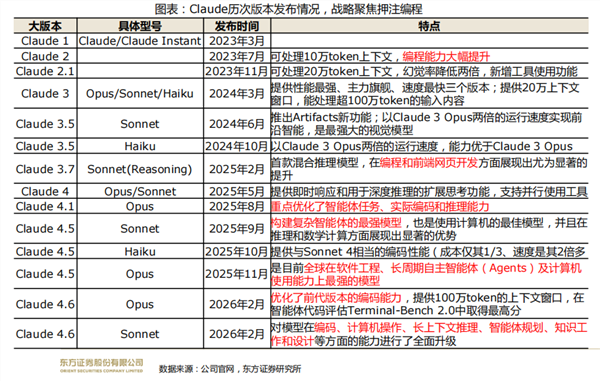
In early 2026, Boris Cherny, the primary creator of Claude Code, made a statement during a public dialogue that left the entire developer community in silence: “For me, programming has already been solved.”
He explained that he uses his phone daily to orchestrate hundreds of AI agents, allowing them to independently complete coding, reviews, and even communicate with each other, without writing a single line of code himself. This is not the personal experiment of a tech geek—it is an engineering paradigm being large-scale (Note: The Chinese character here seems out of context and may require confirmation. Assuming it means 'massively' or 'on a large scale') implemented by Anthropic, a company valued at nearly a trillion dollars. Co-founder Dario Amodei later confirmed that Anthropic's internal engineers rarely write code by hand anymore. Instead, they manage large systems of AI agents to complete tasks, with each person's output being two to three times greater than before.
The true significance of this development lies not in an AI company using AI to write code, but in Anthropic using its own operations to pioneer a new path of value creation for the entire business world.
01. Efficiency Reborn: From Linear Growth to Exponential Leap
To understand the commercial value of AI Coding, efficiency is the most intuitive entry point. Traditional improvements in development efficiency have often been linear: faster compilation tools save a few dozen seconds, better frameworks eliminate some repetitive code, and smoother collaboration processes reduce a few reworks. These are percentage-level optimizations, climbing upward along the same productivity curve.
AI Coding, however, introduces an entirely new curve. When a developer no longer types business logic line by line but instead describes intentions in natural language and lets AI generate complete modules; when unit testing, interface documentation, and boilerplate code—tasks that once required significant effort—are completed instantly; when technical research no longer means shuttling back and forth between documentation and forums but instead involves engaging in multiple rounds of dialogue with AI—the overall output of individual developers and teams enters a state of near-exponential growth. This efficiency gain is not just about being “a bit faster”; it makes things that were once impossible to occur frequently become part of daily routine.
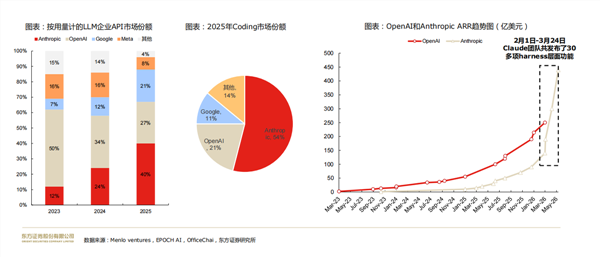
More profoundly, this quantitative change in efficiency is triggering a qualitative change in business decision-making. When the cost of trial and error becomes extremely low, companies dare to explore more possibilities. What once allowed for validating only three solutions in a quarter can now enable parallel validation of thirty. For the first time, the pace of business strategy iteration may catch up with the speed of market change. This is the true commercial dividend behind efficiency.
02. Cost Restructuring: From Fixed Heavy Assets to Elastic Light Assets
The next chapter in the efficiency story is often cost. However, the impact of AI Coding on cost structure is far more profound than simply laying off staff or reducing developer salaries. It is redefining whether software production is a heavy or light asset activity.
In the past, building a competitive software company nearly required a certain scale of technical team as an entry ticket. You needed front-end, back-end, data, operations, and testing personnel, with sufficient staffing in each role to cover the workload. Even for a minimum viable product, a well-rounded small team was often necessary, determining the threshold for startup capital.
The emergence of AI Coding has changed the role of the “developer.” An engineer with architectural thinking and product sense, aided by AI, can now cover the productivity range of three to five people in the past. They are not simply faster but have become versatile.
This means the size of the minimum viable team is shrinking dramatically. We are beginning to see more and more “one-person startups,” or “super individuals,” creating products that previously required angel round funding to launch. They are not superheroes; they have simply offloaded a large amount of execution-level work to AI, focusing instead on defining problems, designing experiences, and steering direction. For large enterprises, this also (Note: This Chinese character seems out of context; assuming it means 'likewise' or 'similarly') means cost structures become more flexible. There is no longer a need to rapidly expand teams for short-term projects only to face staffing issues later, nor to be constrained by the scarcity of human resources for certain niche technology stacks. AI programming makes technical capabilities as callable as cloud services, scaling elastically on demand.
Now, as AI significantly levels the playing field in basic coding efficiency, the advantage of low-cost labor is eroding. Value is shifting to deeper layers: the ability to understand customer business, design solutions, and manage complex integrations is becoming more valuable than simply stacking code executors. The value distribution across the entire industrial chain is being readjusted by an invisible hand.
03. Knowledge Democratization: Truly Blending Business Language with Technical Language
Furthermore, in the past business world, there has been an ancient gap between “what can be imagined” and “what can be built.” Business personnel are full of insights into markets, users, and processes but must translate these insights into requirement documents, which then pass through product managers and designers before finally being delivered to engineers for coding.
Low-code and no-code platforms have long promised to “empower business personnel,” but they have always faced a ceiling in flexibility—where templates end, innovation stops.
AI Coding offers a completely different path: it allows people to directly manipulate logic using natural language. A marketing manager can generate a script for automating user data processing without learning Python, simply by describing the requirements to AI. A supply chain manager can articulate their inventory optimization logic to AI and immediately see a runnable prototype.
When the translation cost between business language and technical language approaches zero, the innovation flow within enterprises undergoes a fundamental change. Previously, an idea for business optimization might wait weeks in the technology department’s queue, but now, the time gap between idea and validation is compressed to the duration of a coffee break. This change fosters a new organizational culture: people no longer assume “that needs technical implementation” but instead assume “we can try it out first.” Once this “just-do-it” spirit becomes part of the organizational DNA, business agility is no longer just a slogan in consulting reports.
More importantly, it changes the mechanism for discovering business opportunities. In the past, many needs hidden like gold mines went undiscovered because business personnel simply could not imagine what a technical solution might look like, and thus could not propose it. Now, when AI can instantly transform vague requirements into visible interfaces or interactive prototypes, the boundaries of imagination are expanded. A customer service supervisor might, in conversation with AI, accidentally stumble upon a completely new customer operations tool. This ability to “accidentally discover” is the most sought-after and hardest-to-systematically-cultivate source of innovation for enterprises.
04. Asset Evolution: Beyond Code, Models as the Moat
If a company’s core software is AI-assisted or even primarily generated, where does its commercial moat lie?
This is a question all business leaders must answer in the AI Coding era. One traditional moat has been the code assets themselves—vast and sophisticated codebases embodying years of business logic, difficult for competitors to replicate. But as the cost of code generation plummets, this moat is drying up.
True value is beginning to accumulate elsewhere: in the knowledge used to generate the code itself. This includes deeply nuanced descriptions of the business domain—the business insights underlying prompt engineering—as well as structured business rules, encoded decision logic, and the feedback loops that continuously refine AI models with business data.
Future enterprise software assets will no longer be merely static code repositories but a living “business model + AI generation pipeline.” Code is merely the instantaneous output of this process, much like a paper map is the instantaneous output of geographic information. What truly holds value is the underlying geographic data, not the paper itself.
Thus, a new dimension of competition emerges. Enterprises must manage not only code versions but also “intention versions”—why business rules were defined as they were, what contexts prompted the AI to generate that logic, and how to have the AI regenerate code more aligned with the current situation as the business environment changes.
05. Conclusion: The Return of Value
Looking back from this moment, the software industry has gone through two distinct phases. Early on, software was rare and invaluable; later, the internet brought prosperity, making software widely accessible, but the ability to write software remained a scarce resource, locked in the minds of a few.
The true commercial value of the AI Coding era lies not just in further boosting efficiency or reducing costs but in completing the final step of this long journey—returning the ability to create software to all those with the willingness to create.
- End -
-
Ofilm Teams Up with ADSensE to Propel Large-Scale Deployment of All-Solid-State LiDAR Powered by ADS6311 Chip!
-
![]()
Loss of 2.5 Billion Yet Facing Strong Demand for Shares? Another Battle for Control of Lianchuang Electronics
-
![]()
Huawei’s Enjoy Series Flies Off the Shelves, Prompting Xiaomi to Double Down on Budget Smartphones
-
![]()
Beijing Hyundai's Top Executive Criticizes Industry Disorder: Certain Brands Treat Customers as Beta Testers
-
![]()
The domestic mobile phone market has declined for five consecutive quarters! Huawei defies the trend with significant growth: maintains its top market share
-
Annual Revenue Surpasses 3 Billion: An Automotive Trim 'Little Giant' Makes Its Debut on the Beijing Stock Exchange
-
![]()
The Space Force Wants to Spend $30 Billion on Rocket Launches: Is Trump Doubling Down, and Is SpaceX the Big Winner?
-
![]()
Going Crazy! One out of Every Three Plug-in Hybrids Sold in Europe is a Chinese Vehicle