The domestic mobile phone market has declined for five consecutive quarters! Huawei defies the trend with significant growth: maintains its top market share
 07/23 2026
 399
399
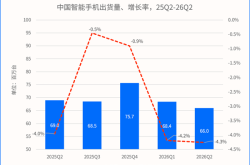
Kuaikeji, July 23 news—IDC released its research report on China's smartphone market for the second quarter of 2026, indicating that domestic mobile phone shipments totaled 66.01 million units this quarter, a 4.3% YoY decline. This marks the fifth consecutive quarter of year-over-year decline in market shipments.
In the first half of the year, cumulative shipments reached 134 million units, a 4.2% YoY decrease.
With continuous price increases in memory chips and price hikes by major Android brands, coupled with the weakening effect of subsidy policies for trade-in programs, overall mobile phone sales during the recent 618 shopping festival declined by nearly 15% YoY, indicating a general weakening in consumers' willingness to upgrade their devices.
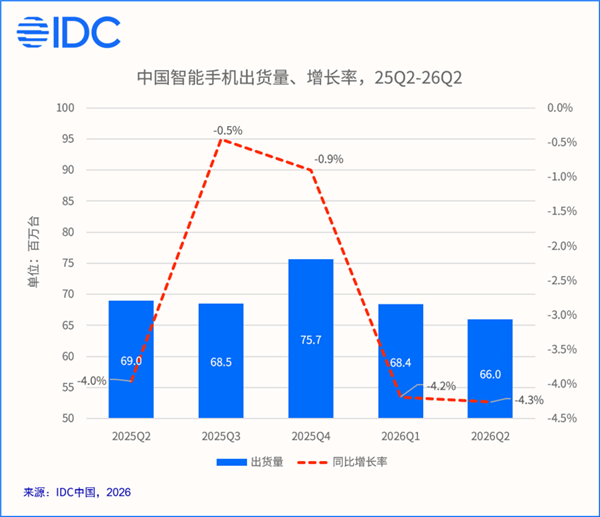
The current domestic mobile phone market exhibits a clear bipolar competitive landscape, with only Huawei and Apple achieving positive YoY growth in shipments across the entire industry, while other mainstream Android brands have experienced varying degrees of decline in their shipment figures.
Huawei maintains its top position in the domestic market with a 22.6% market share, achieving a 19.4% YoY increase in shipments. It continues to refine its product lineup across all price segments, with a stable pricing strategy combined with the HarmonyOS ecosystem continuously improving user retention rates.
Apple holds the second position with an 18.1% market share, achieving a 24.4% YoY increase in shipments. It has preemptively set expectations for price increases in its next-generation models, prompting many users to purchase the iPhone 17 series in advance. Regular promotional activities have also stabilized terminal sales prices.
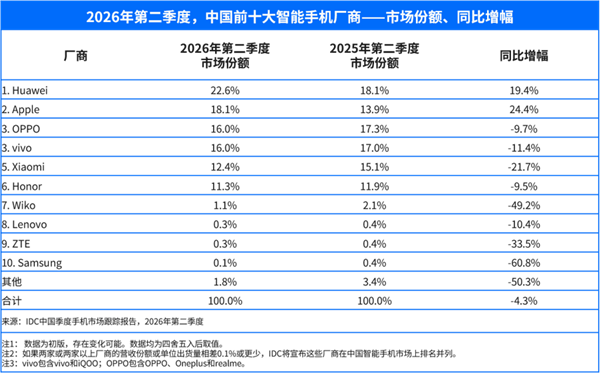
OPPO, vivo, Xiaomi, and Honor occupy the remaining major market shares, with OPPO at 16%, vivo at 16%, Xiaomi at 12.4%, and Honor at 11.3%.
Xiaomi has experienced a significant decline in market share. Compared to its competitors, its price increases have been more restrained. To maintain profitability, the brand has proactively reduced shipments of low-end models to avoid losses. Simultaneously, it has optimized its product matrix by continuously launching new models, comprehensively upgrading product capabilities while strictly controlling overall costs, thereby stimulating user demand for upgrades through stronger product offerings and employing flexible product strategies to offset industry downturns and cost impacts.
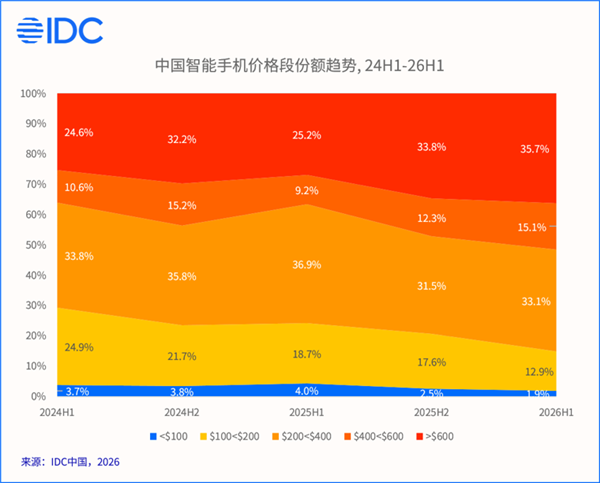
IDC predicts that once the inventory of low-end models is gradually depleted, cost pressures for components will be fully passed on to terminal prices in the second half of the year. The annual market shipment decline may further widen compared to the second quarter. In 2027, there are no significant expectations for a decline in flash memory and RAM prices, and the overall market environment for the mobile phone industry will remain under pressure.
Consumer demand for device upgrades is merely delayed rather than completely vanished. It is expected that a new upgrade cycle will arrive between 2028 and 2029, leading to a recovery in the overall market size.
-
![]()
Beijing Hyundai's Top Executive Criticizes Industry Disorder: Certain Brands Treat Customers as Beta Testers
-
![]()
The domestic mobile phone market has declined for five consecutive quarters! Huawei defies the trend with significant growth: maintains its top market share
-
Annual Revenue Surpasses 3 Billion: An Automotive Trim 'Little Giant' Makes Its Debut on the Beijing Stock Exchange
-
![]()
The Space Force Wants to Spend $30 Billion on Rocket Launches: Is Trump Doubling Down, and Is SpaceX the Big Winner?
-
![]()
Going Crazy! One out of Every Three Plug-in Hybrids Sold in Europe is a Chinese Vehicle
-
![]()
Gemini Falls Out of Global Top 10: Where Is Google's AI Empire Headed?
-
![]()
Jiefeng Power Secures IPO Registration: A Critical Turning Point for an Exhaust System Supplier’s Evolution
-
![]()
Gemini Slips From Global Top 10: What Lies Ahead for Google's AI Dominion?