Beijing Hyundai's Top Executive Criticizes Industry Disorder: Certain Brands Treat Customers as Beta Testers
 07/23 2026
 453
453
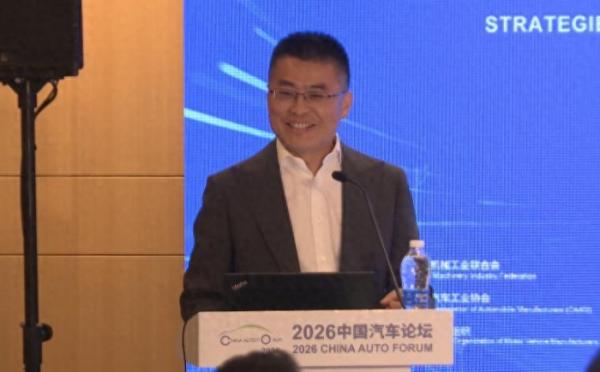
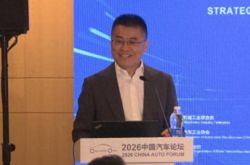
At the 2026 China Auto Forum held yesterday, Li Fenggang, the General Manager of Beijing Hyundai, openly criticized the disorder within the automotive industry. He pointed out that some automotive brands, in their eagerness to launch products swiftly, treat customers as beta testers and bypass many essential verification tests, thereby exposing customers to numerous potential risks. He underscored that automobiles are not fast-moving consumer goods and should not be compared to electronic consumer products such as smartphones.
His comments addressed a significant issue prevalent in the current automotive landscape, particularly within the new energy vehicle (NEV) sector: in a bid to rapidly enter the market and capitalize on opportunities, certain brands may compromise on essential verification testing, effectively making users their test subjects. This highlights a clash between two distinct development philosophies in the automotive industry:
I. Verification Philosophy of Traditional Automakers
Beijing Hyundai, represented by Li Fenggang, emphasizes its commitment to a rigorous verification philosophy.
① Process-Oriented Approach: Traditional automotive development processes are meticulous and time-consuming. A new model typically undergoes millions, or even tens of millions, of kilometers of durability testing in extreme conditions, including extreme cold, heat, and high altitudes, to ensure vehicle reliability, safety, and stability.
② Risk Mitigation: The philosophy dictates that before delivering vehicles to customers, the brand must identify and rectify all potential issues through internal testing. Releasing inadequately tested products to the market is deemed irresponsible and can severely tarnish the brand's long-standing reputation.
③ Value Proposition: This model prioritizes maturity and reliability, using the principle of not treating customers as experimental subjects as a core selling point and brand promise.
II. Iterative Logic of New Entrants
The brands indirectly referred to by Li Fenggang are generally perceived as new automotive forces or tech companies undergoing aggressive transformation, following an internet-inspired model.
① Speed as Paramount: In a fiercely competitive market, speed is of the essence. To capitalize on technological advancements and user attention, product development cycles are significantly shortened.
② Software-Defined Vehicles: They advocate for pre-embedding hardware and iterating software, meaning they quickly launch hardware products with core functionalities to capture the market and then continuously enhance features and fix bugs through subsequent over-the-air (OTA) updates.
③ User Co-Creation: In this approach, real-world user scenarios and data become integral to product iteration. Some issues are indeed identified and resolved through user feedback post-mass delivery, which, while not ideal, is sometimes seen as a necessary part of the process.
Both models have their merits and drawbacks. The traditional verification model excels in product maturity, stable quality, positive user reputation, and strong brand credibility; however, it suffers from long development cycles, potential missed market opportunities, and relatively slower technological iteration. Conversely, the internet iteration model boasts rapid product launches, swift adoption of the latest technologies, frequent feature updates, and continuous user experience evolution; yet, it risks initial product flaws or bugs, questionable reliability, and potential user dissatisfaction and trust crises.
In my opinion, Li Fenggang's criticism of treating customers as beta testers is a natural outcome of market competition, essentially a defensive marketing strategy employed by traditional automakers in response to the impact of new automotive forces. He effectively tapped into some consumers' concerns about the reliability of new technologies, highlighting his own strengths through comparison and attempting to establish a competitive edge in the realm of safety and reliability.
Simultaneously, this represents a necessary phase in industry development. The automotive industry is undergoing an unprecedented transformation from purely mechanical products to intelligent mobile terminals. In this process, the clash and fusion of old and new models are inevitable. While the aggressive iteration model brings challenges, it also significantly drives technological progress and user experience innovation across the industry.
In the long run, the two models are not mutually exclusive and will eventually converge. After gaining a foothold, new automotive forces will inevitably enhance their foundational verification systems and improve product reliability. Traditional automakers are also learning to adopt faster iteration speeds and more flexible user engagement strategies. Ultimately, achieving both speed and quality will be the ultimate goal for all successful automakers.
By the way, Li Fenggang's latest statement also serves as a cautionary note to consumers. While embracing new technologies and features, they should maintain reasonable expectations regarding product maturity, understanding that a swift launch does not guarantee reliability. Whether to opt for mature and stable traditional models or cutting-edge tech products should be based on individual risk tolerance and actual needs.
In conclusion, Li Fenggang's remarks shed light on the growing pains and contradictions during the automotive industry's transformation, directly exposing the chaos of prioritizing speed over verification driven by intense industry competition. This has significant warning implications for consumer safety and the healthy development of the industry. At the same time, it should be acknowledged that his statement is, after all, a commercial competition narrative serving Beijing Hyundai's interests.
In fact, the industry's optimal solution is not to completely reject rapid iteration but to establish standardized and comprehensive pre-verification processes, ensuring new vehicles are safe and reliable upon delivery rather than transferring testing costs and risks to consumers. For consumers, Li Fenggang's remarks offer a valuable perspective for consideration, with both strengths and limitations, but the final decision always rests with them. What are your thoughts?
-
![]()
Beijing Hyundai's Top Executive Criticizes Industry Disorder: Certain Brands Treat Customers as Beta Testers
-
![]()
The domestic mobile phone market has declined for five consecutive quarters! Huawei defies the trend with significant growth: maintains its top market share
-
Annual Revenue Surpasses 3 Billion: An Automotive Trim 'Little Giant' Makes Its Debut on the Beijing Stock Exchange
-
![]()
The Space Force Wants to Spend $30 Billion on Rocket Launches: Is Trump Doubling Down, and Is SpaceX the Big Winner?
-
![]()
Going Crazy! One out of Every Three Plug-in Hybrids Sold in Europe is a Chinese Vehicle
-
![]()
Gemini Falls Out of Global Top 10: Where Is Google's AI Empire Headed?
-
![]()
Jiefeng Power Secures IPO Registration: A Critical Turning Point for an Exhaust System Supplier’s Evolution
-
![]()
Gemini Slips From Global Top 10: What Lies Ahead for Google's AI Dominion?