AI Hasn’t Even Fully Integrated into Smartphones—Now They’re Trying to Put It in Cars?
 05/25 2026
 548
548
Lead
Introduction
Step One: Can It Be as User-Friendly as Doubao?
Do you remember the hype around the “first year of AI in cars” two years ago? Fast forward to this year’s Beijing Auto Show, and nearly every new car on display is showcasing what a true AI-powered smart cockpit can do.
Volcano Engine has also introduced a new generation of automotive AI solutions based on its Agentic AI architecture. It announced that over 7 million smart cars, equipped with Doubao’s large model, now span more than 50 brands and 145 models. Alibaba’s Tongyi Qianwen revealed that leading automakers, including Changan, Dongfeng, BAIC, BYD, Geely, Great Wall, and Li Auto, have all integrated its technology.
From foreign brands like Mercedes-Benz’s all-electric GLC and SAIC-Audi’s E7X to domestic models like Chery’s Exeed EX7 and FAW Hongqi’s HS6 PHEV, automakers are proving that AI can take over the car’s “brain,” evolving human-vehicle interaction from passive to proactive. The positive implications of AI in cars are now shifting toward a competitive landscape centered on user experience.
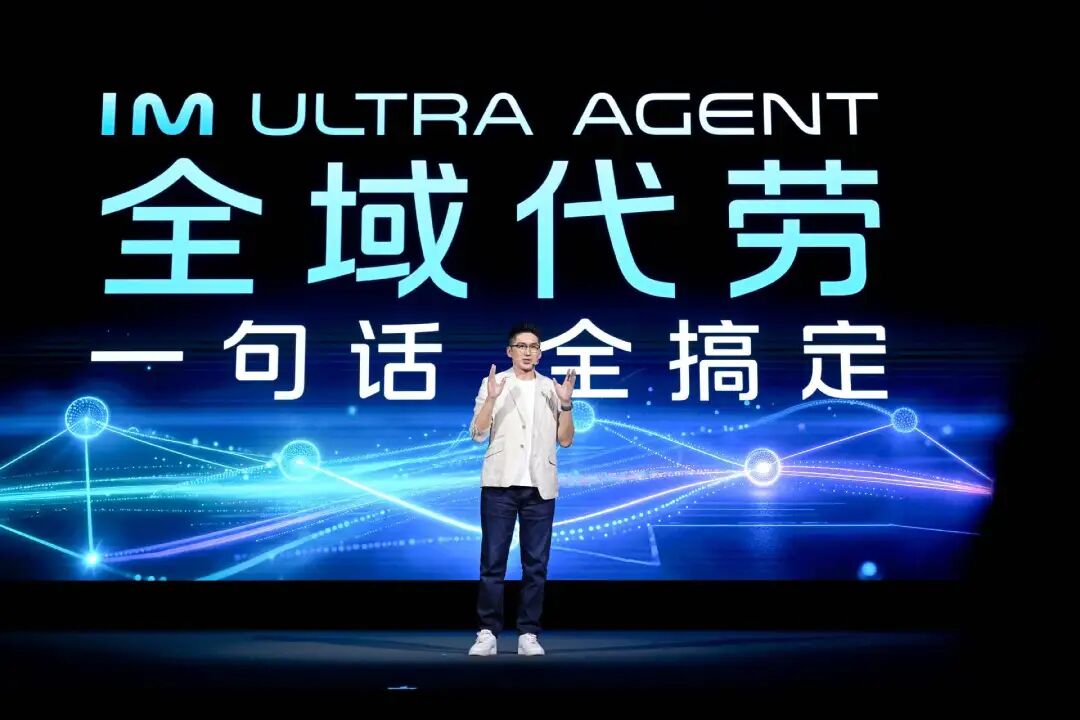
However, this enthusiasm will eventually temper. As Zhong Xuedan, Vice President of Tencent Smart Mobility, bluntly stated: “Today, interaction efficiency on smartphones can reach 85 to 90 points, while in-car cockpit interaction lingers at 40 to 50 points.” Over the past year, the industry has faced a dilemma: voice assistants have become more talkative, yet the overall travel experience has not fundamentally improved.
Rather than indulging in grandiose visions of AI cockpits’ infinite possibilities, it’s better to first examine the smartphones in our hands. If mobile terminals—which iterate faster and face lower technical barriers—have not yet achieved full AI adoption, how can we expect cars, with their exponentially greater complexity, to succeed overnight?
01 AI in Cars Still Needs Time
To gauge the true progress of AI in cars, the smartphone—the consumer electronic device we use the longest daily—serves as the most direct reference. As the product with the highest global shipment volume, fastest technological iteration, and most frequent user replacements, the smartphone’s AI adoption process offers valuable insights. If even smartphones are still halfway through AI integration, in-car AI cannot possibly succeed overnight.
First, let’s examine the current data. According to IDC’s forecast, by 2026, China’s shipments of next-generation AI smartphones are expected to reach 147 million units, accounting for about 53% of the overall market. Surpassing 50% for the first time—this figure looks promising. However, we must ask: What qualifies as a next-generation AI smartphone?
Reportedly, the criteria for this label are quite broad, ranging from on-device deployment capabilities of large models to the extent of cloud-based AI functionality. This definition is broad enough to exclude 90% of consumers from using AI effectively. For consumers, the biggest issue is whether they can truly utilize AI.
Data shows that even among users who have purchased so-called AI smartphones, a high proportion rarely use AI functions frequently. Most still use these phones for social media, video streaming, and basic communication, with AI penetration remaining superficial. In comparison, as of March 2026, Doubao’s large model had 345 million monthly active users, but this is purely a consumer-grade AI application, fundamentally different from generative AI capabilities natively integrated into smartphone terminals.
In early December 2025, the Doubao AI smartphone debuted at 3,499 yuan, with a limited release of about 30,000 units. Positioned by ByteDance as an engineering prototype for market testing, the official website specifically warned that it was “only for industry professionals needing to experience the Doubao smartphone assistant” and “does not promise the functional completeness of a mature product; ordinary consumers should choose cautiously.”
Nevertheless, due to its AI capabilities for cross-application automation, the first 30,000 units quickly sold out, fetching thousands or even tens of thousands of yuan on the secondhand market. However, the vast majority of these early adopters were developers and tech enthusiasts.
Industry insiders commented that “Doubao outlines the prototype of an AI-era smartphone,” but its technical fervor soon encountered real-world obstacles: Mainstream apps like WeChat and Meituan, citing platform security risks, banned automated calls by the Doubao assistant, with some users even having their WeChat accounts restricted.
Clearly, this celebrity product that caused a stir in the AI circle barely made a ripple in the tens-of-millions-scale smartphone market. The vast majority of ordinary consumers have still never seen—let alone used—a true AI smartphone. It has not only failed to break out of the developer circle but also failed to reach the mass market.
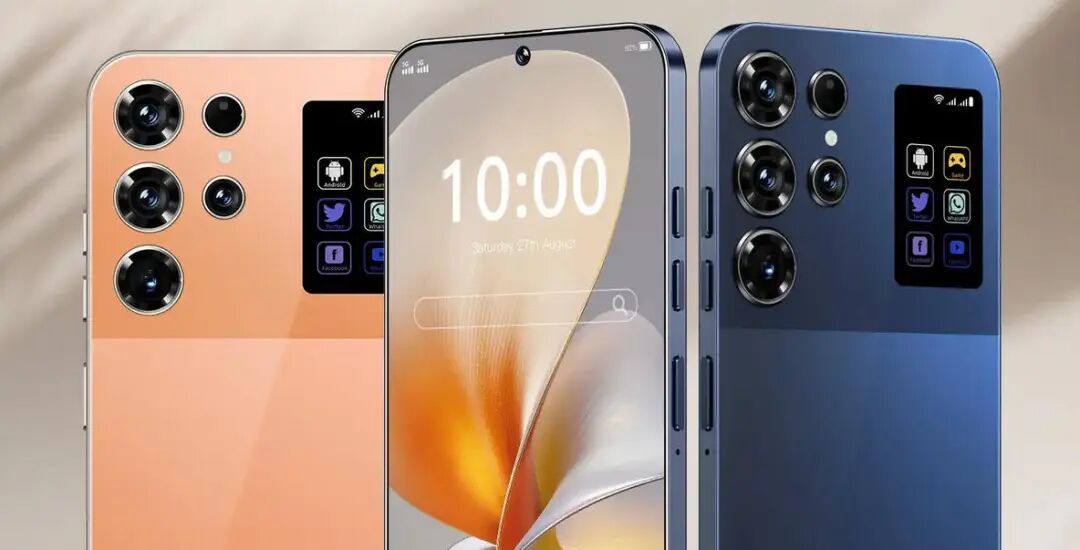
Why is AI smartphone adoption so slow? The root cause lies not in business models or user habits but in a series of technological bottlenecks that have yet to be fully broken through—bottlenecks that also hinder AI adoption in automotive cockpits, even amplified severalfold.
A true “AI car” must do more than generate text or recognize speech; it needs to integrate vehicle control, intelligent driving, navigation, and cockpit functions into a unified closed loop. Most current solutions claiming to be “AI agents” are still far from executing multi-step, cross-scenario tasks.
In other words, just as AI smartphones need time, in-car AI must wait even longer. It requires the industry to invest in solid engineering, continuous algorithm iteration, and long-term user experience refinement, progressing step by step through a lengthy trial-and-error phase. Rushing for quick results will backfire; patience is the only way to truly respect technological progress.
02 Don’t Let AI Become Just Another Marketing Gimmick
If technological bottlenecks determine that AI in cars cannot be rushed, then automakers’ overhyped marketing and consumers’ misaligned perceptions of AI represent an even more daunting challenge than chip computing power.
In fact, the painful lessons from intelligent driving are already clear. When marketing terms like “intelligent” far exceed a product’s actual capabilities, and users severely lack understanding of the technology, conflicts, accidents, and trust erosion inevitably follow. AI cockpits risk repeating this old path.
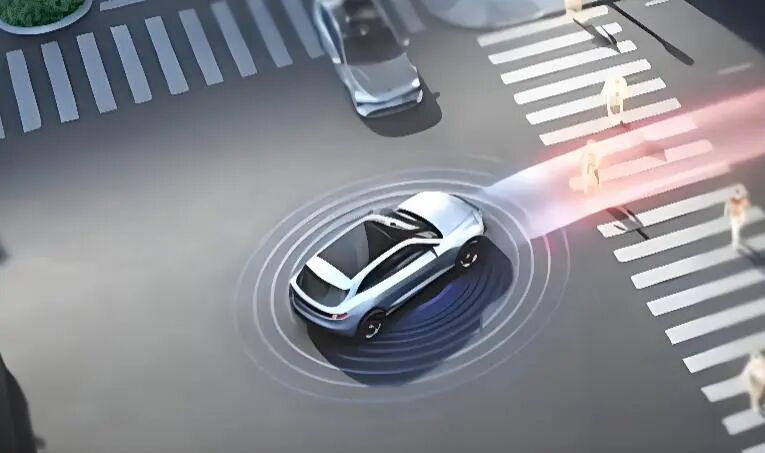
Surveys show that over 40% of consumers mistakenly equate Level 2 assisted driving with autonomous driving. Under the intense hype of terms like “advanced intelligent driving” and “zero takeover for 100 kilometers” from some salespeople, users develop an extremely dangerous expectation: A car costing hundreds of thousands of yuan should drive itself like in sci-fi movies.
Yet in reality, the system frequently misidentifies or responds sluggishly in complex scenarios like construction zones or heavy rain. This stark gap between marketing promises and actual performance rapidly erodes consumer trust. If neither the technology nor the driver is at fault, who bears responsibility for the resulting mutual distrust?
Returning to smart cockpits, reports from nearly any auto launch event are filled with terms like “AI intelligence,” “proactive prediction,” “deep synergy,” and “redefining human-vehicle relationships.” Automakers use these trendy phrases to paint an enticing picture, but real user feedback tells a different story.
Whether on automotive forums, social media, or third-party complaint platforms, countless consumers criticize the disjointed experience of in-car AI across scenarios—for example, commands understood on highways become unintelligible in tunnels. If even basic voice interaction fails, how can AI be expected to handle more complex tasks?
These are merely interaction-level drawbacks. The core issue is that consumers do not consider these functions important in their purchasing decisions. Smart cockpit features rank far below traditional factors like exterior design, power performance, safety configurations, and brand reputation in influencing car-buying choices.
The real problem is that automakers treat “AI” as a tool to elevate configuration tiers and create marketing differentiation without truly considering users’ cognitive levels. For most ordinary consumers, the term “artificial intelligence” carries an aura of mystery and omnipotence. Once the experience falls short, natural distrust toward AI cockpits emerges.
Moreover, if intelligent driving requires driver takeover in certain situations, shouldn’t AI cockpits also require driver intervention when making choices? In the past, drivers only needed to focus on driving, but with the proliferation of in-car functions, they must now divert attention to confirm execution results, increasing accident risks.
When you open Doubao, you need no tutorials or memorization of rigid commands. You can speak naturally, like texting a friend, and it will dissect your intent, call appropriate tools, retrieve necessary information, and ultimately provide a clear execution result.
Yet to date, truly comprehensive AI solutions remain rare, with most models’ smart cockpits offering only basic AI large model functions. Therefore, if automakers genuinely want to succeed in AI integration, they must abandon the speculative mindset of exploiting new concepts for market gains and return to the fundamental value for users.
-
Ofilm Teams Up with ADSensE to Propel Large-Scale Deployment of All-Solid-State LiDAR Powered by ADS6311 Chip!
-
![]()
Loss of 2.5 Billion Yet Facing Strong Demand for Shares? Another Battle for Control of Lianchuang Electronics
-
![]()
Huawei’s Enjoy Series Flies Off the Shelves, Prompting Xiaomi to Double Down on Budget Smartphones
-
![]()
Beijing Hyundai's Top Executive Criticizes Industry Disorder: Certain Brands Treat Customers as Beta Testers
-
![]()
The domestic mobile phone market has declined for five consecutive quarters! Huawei defies the trend with significant growth: maintains its top market share
-
Annual Revenue Surpasses 3 Billion: An Automotive Trim 'Little Giant' Makes Its Debut on the Beijing Stock Exchange
-
![]()
The Space Force Wants to Spend $30 Billion on Rocket Launches: Is Trump Doubling Down, and Is SpaceX the Big Winner?
-
![]()
Going Crazy! One out of Every Three Plug-in Hybrids Sold in Europe is a Chinese Vehicle