Apple’s Groundbreaking 'homeOS': The First Embodied AI All-Scenario OS Sparks a Pivotal Battle for Closed-Loop Hardware Systems
 05/26 2026
 434
434
Global Outpost - May 25, 2026 · Industry Review
A Game-Changing Moment in the Silicon Valley Ecosystem! Apple’s First Embodied AI All-Scenario OS, 'homeOS', Makes a Surprise Debut, Ushering in a Decisive Battle for Closed-Loop Hardware Systems
Insights from Apple’s Cupertino headquarters have sent shockwaves through the global software and hardware supply chain. Without prior notice, Apple officially announced its long-anticipated new system architecture—homeOS. This is not just an incremental update to a smart home system; rather, it represents a seamless integration of edge-side large models (On-Device AI), multimodal spatial awareness, and high-precision mechanical structures—forming an 'embodied AI all-scenario bus'. Apple is leveraging extreme software-hardware synergy to precisely align the previously disordered digital tolerances within home and light industrial environments.
Global Outpost Hardcore Editorial - May 25, 2026 · Original Release: homeOS Makes a Surprise Debut · Ushering in the Era of Spatial Computing
In the tangible physical world, any intelligent system that fails to achieve millisecond-level closed-loop control is merely a pretender. Conversations about purely software-based illusions must come to an end, and the focus must shift to the foundational compute chips and sensor buses. In-depth supply chain audits reveal that the true power of Apple’s homeOS lies in its ability to overcome the historical reliance of embodied AI on high-latency cloud-based inference. By deploying a custom 15-billion-parameter (15B) spatial multimodal large model on the edge using a new-generation chip, Apple achieves flawless real-time control from perception to action, elevating consumer-grade embodied AI systems to unprecedented industrial-grade standards.

The true test for large models venturing into the physical world is no longer about theoretical benchmarks but how they handle real-world challenges such as uneven floors, variable lighting, and wear and tear on mechanical joints. Overseas analysts highlight that the long-standing issue of 'false positive rates in physical operations' within the industry has been decisively resolved through Apple’s vertically integrated approach. homeOS directly manages all underlying drivers, from 3D LiDAR and ultra-wideband (UWB) positioning to motor actuators, reducing end-to-end latency from sensor data to mechanical action to under 5 milliseconds. The key to success in this battle lies in delivering physical interactions with the lowest power consumption and the highest level of certainty.
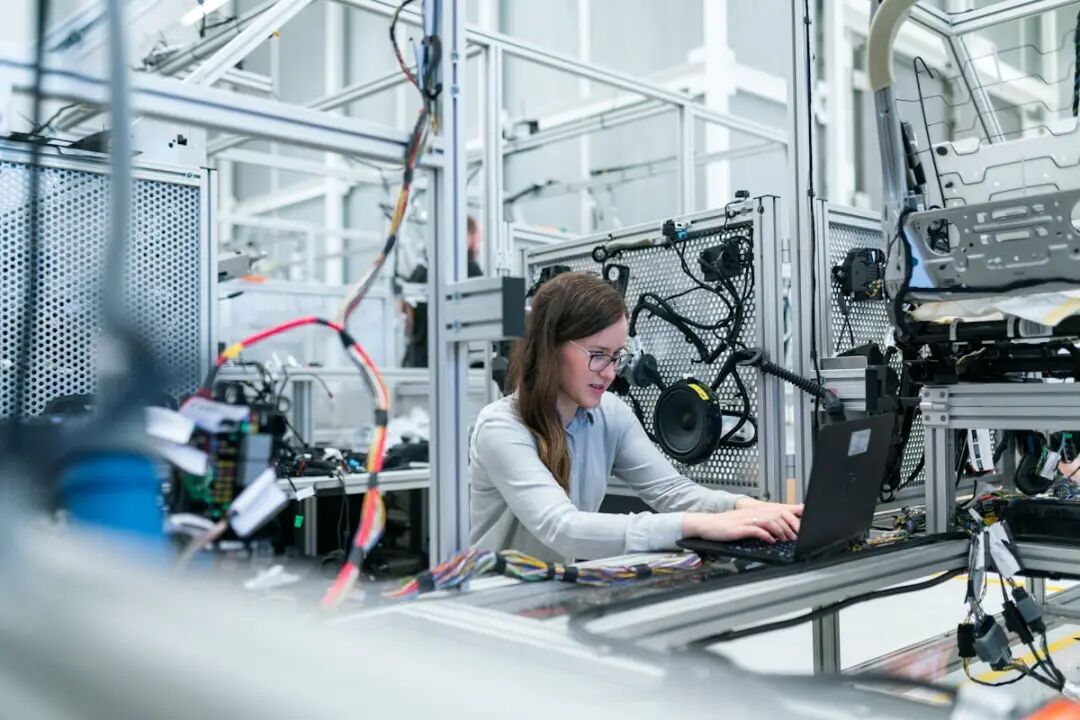
The calibration process of 3D stereo vision sensors in complex environments is a critical aspect. The core breakthrough of homeOS is its departure from the traditional approach of blindly amplifying cloud compute power. By constructing a real-time physical world grid (Spatial Mesh) locally, it directly achieves multimodal data alignment and dynamic tolerance correction on the edge, effectively eliminating the posture deviations and target misdetections common in traditional mechanical hardware.
Dual-Core Clash: Deconstructing the Two Major Engineering Challenges of homeOS in Disrupting the Physical Intelligence Ecosystem
Peeling away the tech-mercenary-laden PR hype, we dissect the true competitive advantages of Apple’s system foundation with an expert, no-nonsense perspective:
Level 1: 'Heterogeneous Integration' of Edge-Side Spatial Large Models and Real-Time Operating Systems
Core Mechanism: Rewriting Microkernel Drivers / Perfectly Synchronizing AI Inference Frame Rates with Control Buses
Traditional embodied AI software frameworks are often hastily assembled on Linux, where model inference 'stuttering' can easily result in physical collisions or missed detections by robotic arms. Apple’s homeOS is rebuilt on a real-time microkernel (RTOS) architecture, segmenting multimodal large model inference tasks and embedding them into hardware-level high-priority queues. This ensures that, regardless of the complexity of semantic understanding tasks in the upper layers, the underlying anti-collision and posture correction buses have absolute, uninterruptible electrical guarantees, ensuring extremely high system reliability.
Level 2: 'Tolerance Interception' Using Spatial Computing Redlines to Lead the Hardware Supply Chain
Rejecting subpar intelligent components and re-auditing through software-hardware integration
Core Mechanism: Relying on Full-Chain High-Density Algorithm Control / Pixel-Level Correction of Hardware Manufacturing Tolerances in Software
In real light industrial and home environments, minute deformations in components and physical gaps in gearboxes can lead to mechanical operation failures. Apple has set a new 'digital audit line' for the global hardware supply chain through homeOS: utilizing powerful edge-side 3D vision and stress feedback algorithms to inversely compensate for mechanical tolerances introduced by hardware. This enables extremely high-precision grasping and operation closed-loop control without relying on extremely expensive, aerospace-grade precision reducers, effectively blocking subpar compliant hardware from the ecosystem.
Outpost Insight: Don’t Believe Empty Rhetoric Lacking Precision—The Physical World’s Rules Are Always Dictated by Cost and Efficiency
Many industry observers once enjoyed discussing how large models would transform the world from the comfort of their offices. However, those who have ventured into real automated assembly plants or grappled with specific component silk-screening and welding yields understand the harsh realities of the physical world. The cold, hard truth behind Apple’s homeOS launch is its aim to convert the billions in R&D budgets and formidable profits previously accumulated from iPhone and Apple Silicon into absolute control over physical spaces. It doesn’t compete on the scale of trillion-parameter cloud models and massive power consumption but instead uses the lowest wattage and extremely high-density edge-side control code to transform AI into a stable, per-second-priced modern industrial-grade standard product. This underlying positional warfare, measured in milliseconds and tolerances, is the true path to long-term victory that will ruthlessly eliminate PPT speculators.
The official debut of homeOS signifies the completion of global AI’s transition from 'virtual dialogue' to 'embodied physical entities'. This reshuffling of the bus landscape, initiated by Silicon Valley giants relying on extreme hardware discipline, is compelling all smart home, humanoid robot, and semiconductor foundry enterprises to re-evaluate under new industrial standards.
Global Outpost · Outpost Finale
Apple’s homeOS not only defines the future of all-scenario intelligence but also forcibly reclaims software and hardware pricing power in the embodied AI era with a real-time control barrier built by edge-side 15B models. In the long run of the physical world, crude compute power superstitions will fade, and only exquisite engineering that minimizes code and mechanical tolerances to the extreme will emerge as the ultimate victor.
-
Ofilm Teams Up with ADSensE to Propel Large-Scale Deployment of All-Solid-State LiDAR Powered by ADS6311 Chip!
-
![]()
Loss of 2.5 Billion Yet Facing Strong Demand for Shares? Another Battle for Control of Lianchuang Electronics
-
![]()
Huawei’s Enjoy Series Flies Off the Shelves, Prompting Xiaomi to Double Down on Budget Smartphones
-
![]()
Beijing Hyundai's Top Executive Criticizes Industry Disorder: Certain Brands Treat Customers as Beta Testers
-
![]()
The domestic mobile phone market has declined for five consecutive quarters! Huawei defies the trend with significant growth: maintains its top market share
-
Annual Revenue Surpasses 3 Billion: An Automotive Trim 'Little Giant' Makes Its Debut on the Beijing Stock Exchange
-
![]()
The Space Force Wants to Spend $30 Billion on Rocket Launches: Is Trump Doubling Down, and Is SpaceX the Big Winner?
-
![]()
Going Crazy! One out of Every Three Plug-in Hybrids Sold in Europe is a Chinese Vehicle