Liushenyu Mine Disaster Drives Industrial Innovation: Pioneering a New Era of Intelligent Mine Safety with Integrated Air-Ground Systems
 05/27 2026
 561
561
On May 22, 2026, a devastating gas explosion struck the Liushenyu Coal Mine in Qinyuan, Shanxi Province, claiming the lives of 82 individuals. This tragic incident underscores the pressing issue of coal mine safety and highlights the limitations inherent in traditional safety supervision and rescue approaches.
As a cornerstone of China's energy security, coal accounted for 51.4% of the nation's primary energy consumption in 2025, with raw coal production surpassing 4.85 billion tons nationwide.
Authoritative data reveals that China operates approximately 4,000 active coal mines, with over 40% classified as high-gas or coal-and-gas outburst mines. These high-risk mines are predominantly located in major coal-producing regions, such as Southwest, Central, and North China, where complex geological conditions and elevated gas disaster risks are prevalent. Balancing the dual imperatives of energy security and safe production necessitates the integration of the low-altitude economy and embodied intelligence, which is no longer a mere option but a critical requirement.
With traditional safety supervision models proving unsustainable, the fusion of the low-altitude economy and embodied intelligence emerges as the linchpin for addressing mine safety challenges and revamping the integrated air-ground safety inspection and emergency rescue system. This system enables early detection and warning of hazards, while in the event of sudden accidents, the air-ground collaborative emergency rescue system can minimize casualties among rescue personnel and enhance rescue efficiency.
The Hidden Intelligence Blind Spots in Mines
In recent years, China has vigorously pursued the intelligent construction of coal mines. By 2026, 1,066 intelligent coal mines had been established across the country, with intelligent production capacity accounting for over 65%.
However, the intelligent transformation process reveals an imbalanced pattern characterized by "breakthroughs in specific areas but subpar overall performance." Large state-owned coal mines exhibit higher levels of intelligence, while smaller mines lag in technological upgrades. Despite rapid progress in mining intelligence, significant gaps persist in safety supervision and emergency rescue capabilities.
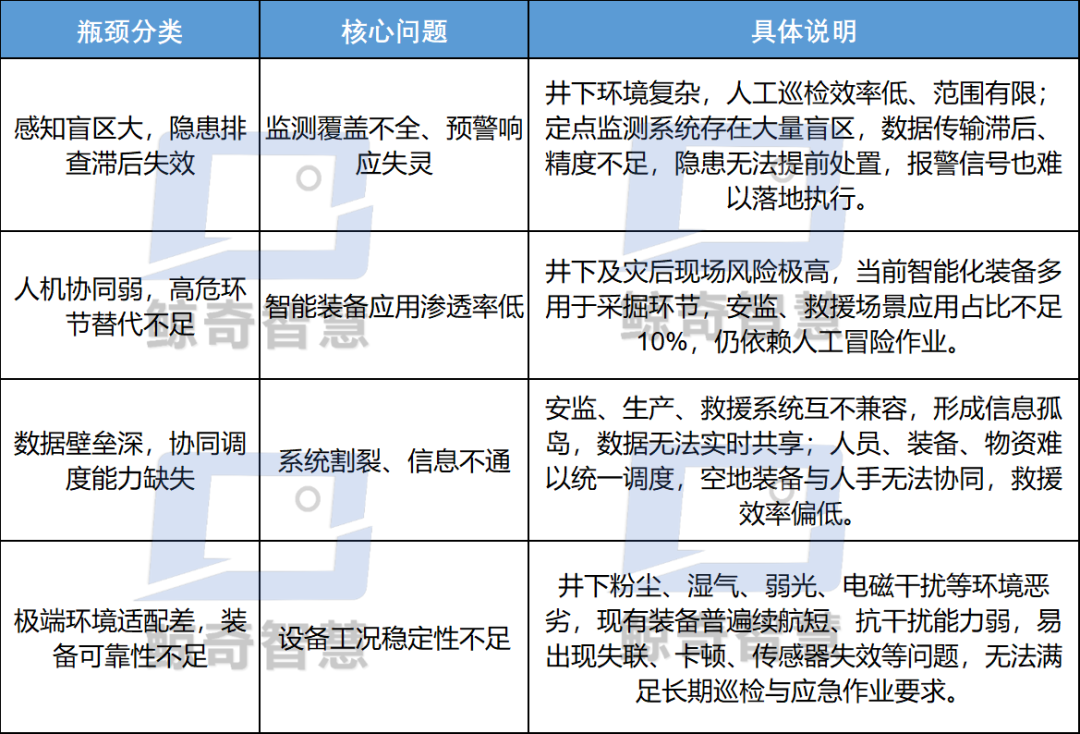
The Liushenyu Mine explosion, occurring in a high-gas mine with an annual production capacity of 1.2 million tons, serves as a stark reminder of the critical blind spots in the intelligence of smaller mines. Issues such as the absence of personnel positioning systems and perfunctory hazard inspections underscore the urgent need for improvement.
Integrated Air-Ground Systems: An Intelligent Imperative
Currently, the low-altitude equipment and embodied intelligence sectors are flourishing. Addressing the pain points of mine intelligence, embodied intelligence technology is poised to deeply empower drones and robots. Through multi-modal large models, autonomous navigation, and environmental adaptation technologies, these systems can achieve fully autonomous and large-scale operations in high-risk environments.
Drones can autonomously plan routes, avoid obstacles, and identify hazards; robotic dogs can conduct independent inspections, collect data, and transmit information; bipedal robots can perform equipment maintenance and personnel rescue operations, reducing reliance on manual control and enhancing operational safety and reliability in extreme conditions.
Leveraging the complementary strengths of air-ground systems and human-machine collaboration, drones and embodied intelligent robots can comprehensively cover safety inspection and emergency rescue scenarios both above and below ground in coal mines.
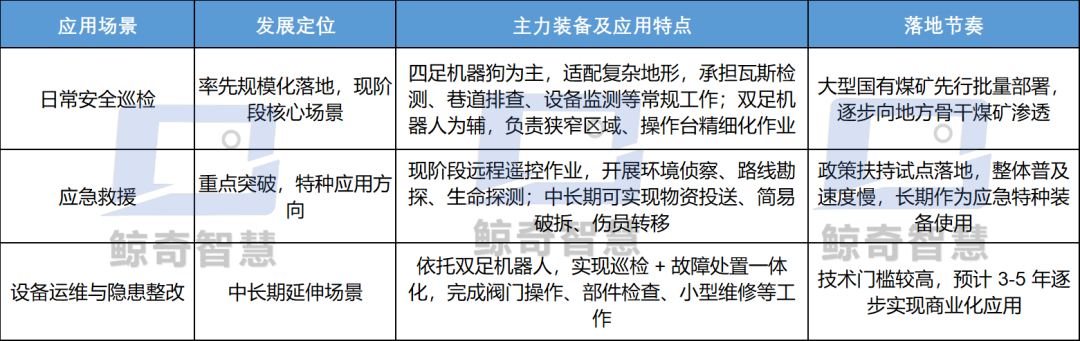
Embodied intelligence represents the core technological direction for resolving coal mine safety supervision and rescue challenges. Its application in these fields is a definitive and promising sector with vast long-term potential. However, its short-term development will follow a pattern of "pilot projects first, gradual penetration, and tiered implementation."
It directly addresses the three major pain points of traditional models: safety, efficiency, and manpower. It is both a policy-driven necessity for mine intelligence upgrades and an inevitable choice for reducing personnel, enhancing safety, and improving efficiency in high-risk scenarios. Nevertheless, widespread adoption will take time due to cost, technological, and standardization constraints.
From the demand side, stricter safety production policies, rising labor costs, and the imperative to reduce high-risk personnel continue to drive the industry towards intelligent equipment. From the technological side, the characteristics of embodied intelligence align perfectly with the complex scenarios of coal mines, offering ample room for iteration and innovation.
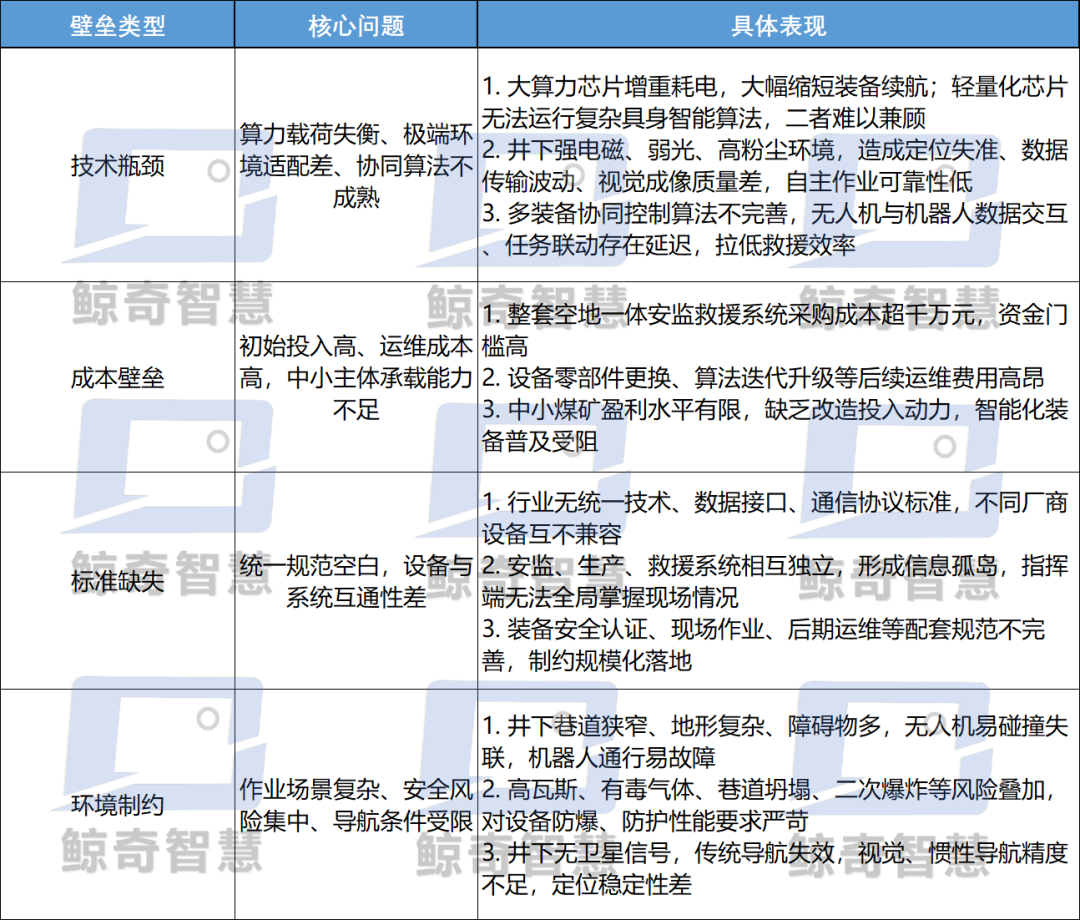
In the future, as the industrial chain matures, costs decline, and standards unify, full industry penetration will gradually occur, deeply integrating with the low-altitude economy to achieve fully autonomous unmanned operations in high-risk scenarios. Daily safety inspections will feature seamless human-machine collaboration, forming a complete intelligent system from perception and warning to inspection and emergency response.
For the industrial sector, focusing on the development of explosion-proof, highly reliable, and cost-effective products, prioritizing essential scenarios, and advancing software-hardware compatibility represents the most pragmatic development path at this stage.
Currently, embodied intelligence is no longer an "optional tool" but a foundational component of coal mine safety production, fully supporting the reshaping of mine safety management models.
*Editor's Note: Original content creation is a laborious process; please respect the author's efforts. For reprints, please contact us for permission.
-
Ofilm Teams Up with ADSensE to Propel Large-Scale Deployment of All-Solid-State LiDAR Powered by ADS6311 Chip!
-
![]()
Loss of 2.5 Billion Yet Facing Strong Demand for Shares? Another Battle for Control of Lianchuang Electronics
-
![]()
Huawei’s Enjoy Series Flies Off the Shelves, Prompting Xiaomi to Double Down on Budget Smartphones
-
![]()
Beijing Hyundai's Top Executive Criticizes Industry Disorder: Certain Brands Treat Customers as Beta Testers
-
![]()
The domestic mobile phone market has declined for five consecutive quarters! Huawei defies the trend with significant growth: maintains its top market share
-
Annual Revenue Surpasses 3 Billion: An Automotive Trim 'Little Giant' Makes Its Debut on the Beijing Stock Exchange
-
![]()
The Space Force Wants to Spend $30 Billion on Rocket Launches: Is Trump Doubling Down, and Is SpaceX the Big Winner?
-
![]()
Going Crazy! One out of Every Three Plug-in Hybrids Sold in Europe is a Chinese Vehicle