Major Tech Companies Bet Big on AI Programming as Vibe Coding Sparks Mass App Creation Trend
 05/28 2026
 666
666
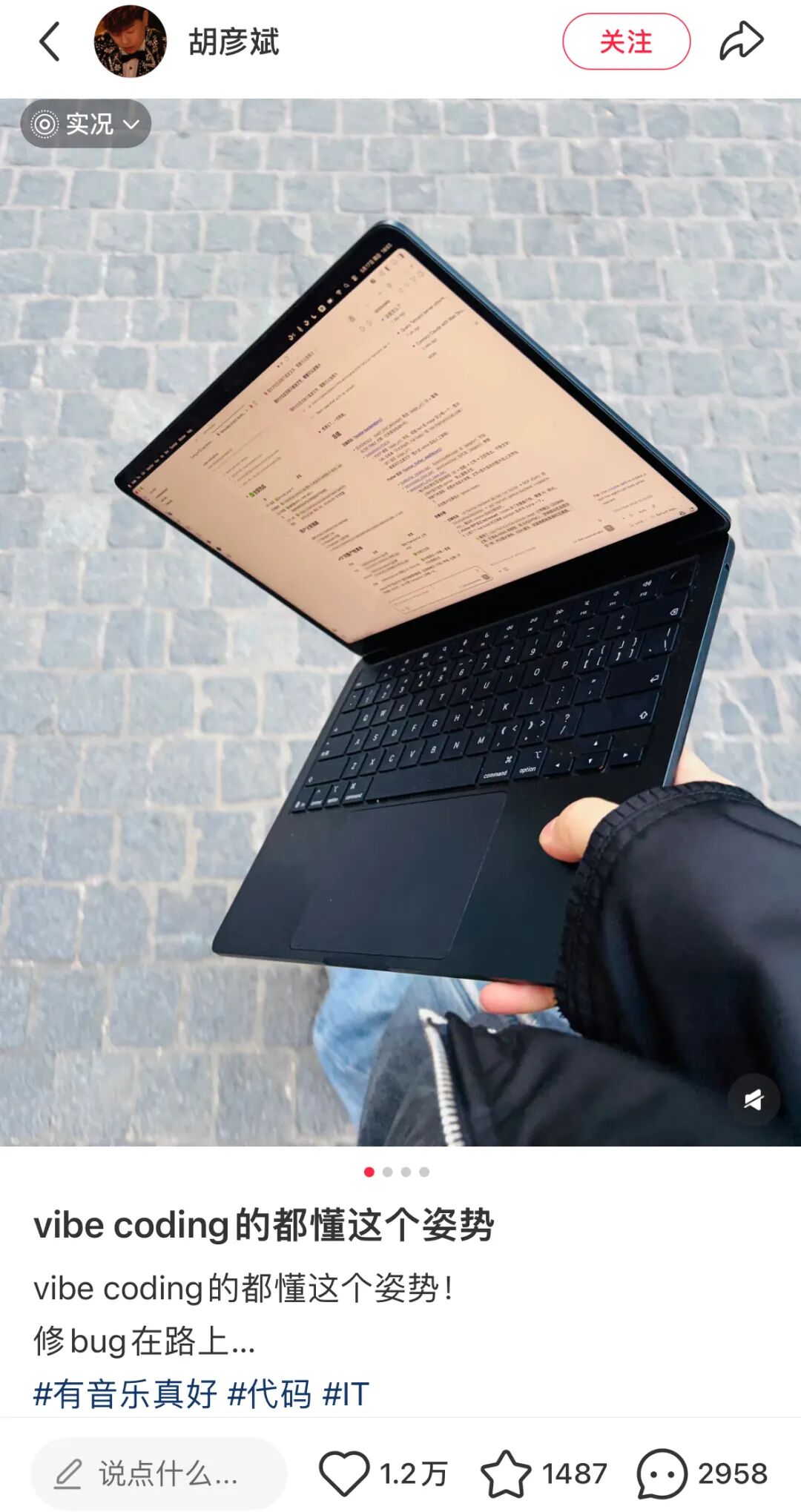
In May 2026, singer Hu Yanbin shared his daily routine of using AI programming to develop an app on social media. The interactive community app he created for fans, named 'Yan Huo,' features tour information displays, daily check-ins, and interactive communication, and has now entered beta testing.
After the post was published, the comment section quickly became lively. After all, a Chinese singer-songwriter dedicating himself to mastering Vibe Coding was a topic in itself. More notably, the number of people like Hu Yanbin—who can 'create apps without deep coding knowledge'—is growing at an astonishing rate.
When Ant Group's Lingguang was first released six months ago, its 'Flash Apps' feature focused on enabling ordinary users to create apps, sparking polarized public opinion. By the second quarter of 2026, the landscape had completely changed, with China's leading internet companies all entering the field.
Baidu elevated natural language-based app generation to production-level delivery, Tencent launched a standalone product emphasizing inspiration and collaborative creation, and ByteDance transformed its AI programming tool into an independent platform detached from traditional development environments, upgrading AI from an auxiliary tool to a collaborative entity capable of independent task execution.
The fundamental driver of this collective shift is the qualitative leap in foundational model capabilities—from merely writing code snippets to independently understanding requirements, planning architectures, generating code, and completing debugging and deployment in a complete closed loop.
When AI truly possesses engineering-level delivery capabilities, the reconfiguration of productivity relationships ceases to be mere technological speculation and becomes an industrial reality. The full-scale entry of major tech companies represents a profound reconstruction of software production barriers, creator ecosystems, and industry value distribution.
The Capability Inflection Point: From 'Code Writing' to 'Independent Delivery'
To put it more bluntly, Vibe Coding resembles a cloud-based personal chef.
In the past, creating your own app required learning to chop ingredients, prepare dishes, cook, and manage a kitchen. Now, you simply describe what you want from a menu, and the AI kitchen delivers the finished product directly to you. You don't need professional programming skills—just clearly articulate your needs, and AI handles code generation, function arrangement, packaging, and deployment silently in the background.
In this direction, Ant Group's Lingguang was the first domestic player to take the plunge. In November 2025, Ant Group launched the multimodal AI assistant 'Lingguang,' with one of its three core features—'Flash Apps'—enabling users to describe requirements in natural language and generate interactive mini-apps within half a minute. The Ant team dubbed this interaction paradigm 'Wish Coding,' meaning going directly from 'conception' to 'usage.'
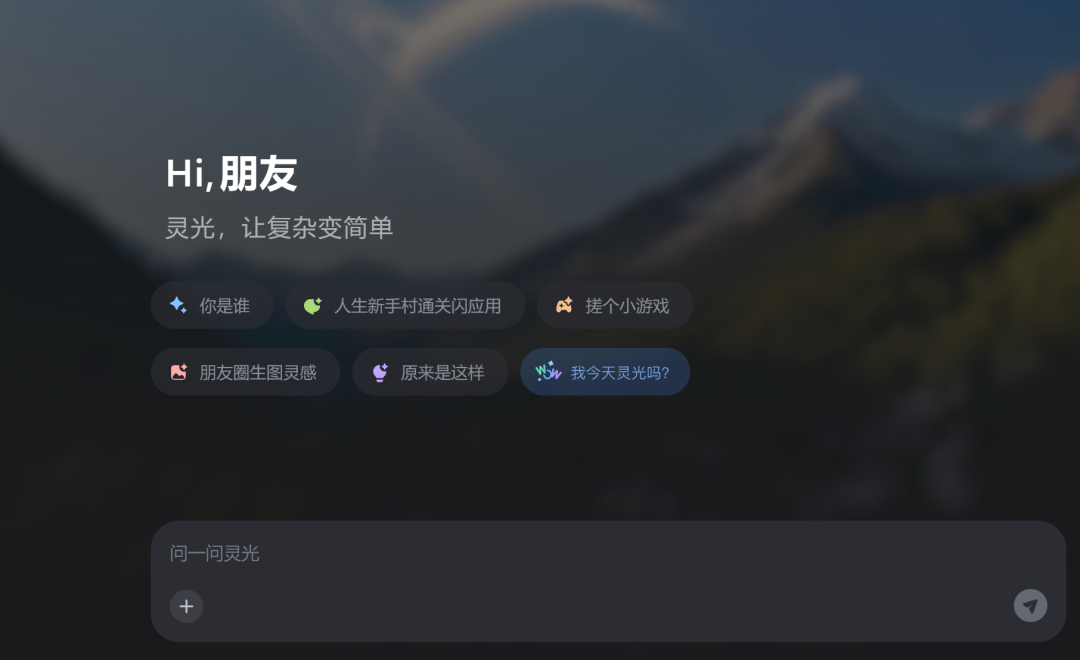
Lingguang's post-launch data was impressive, with over 2 million downloads in six days and 12 million user-created Flash Apps by December 26, 2025—most created by users with no coding knowledge. However, public opinion was polarized, with many dismissing it as merely 'slightly advanced interactive cards' with toy-like properties. But reality proved otherwise.
In February 2025, OpenAI co-founder Andrej Karpathy first proposed the concept of Vibe Coding to describe how AI enables developers to create applications with minimal focus on code itself.
At the time, Swedish developers Anton Osika and Fabian Hedin's AI-driven full-stack app development platform Lovable had already attracted capital market attention, securing $15 million in Pre-A funding. By December 2025, Lovable completed a $330 million Series B round, valuing the company at $6.6 billion. Additionally, recent TechCrunch reports indicate that Cursor, a highly anticipated U.S. AI programming unicorn, is seeking $2 billion in funding, with its valuation expected to reach $50 billion.
When the AI programming concept first gained traction, the industry faced bottlenecks: AI-generated code required significant intervention from professional developers to be usable, while apps created by ordinary users remained 'functional in appearance but unusable in practice.' High churn and low retention were common challenges across the sector.
The true watershed moment arrived around 2026. In May 2026, the SWE Atlas benchmark evaluated multiple large models' performance in three professional engineering workflows: Codebase Q&A, test writing, and code refactoring. GPT-5.4 and Opus 4.7 scored highest, with analysis showing that top models could now take over tasks and complete deliveries in real engineering environments.
More notably, domestic models are closing the gap rapidly. Recently, the global third-party programming leaderboard Code Arena announced that Alibaba's latest flagship model, Qwen3.7-Max, scored 1,541—surpassing GPT-5.5, Gemini-3.5-Flash, and others, ranking second globally among large model vendors after Claude series.
The substantive significance of this capability leap is that AI has evolved from 'writing runnable code snippets' to 'independently completing entire software projects,' bridging the full workflow from requirement understanding and architectural design to code generation, debugging, and deployment.
Last year, Ant Group's Lingguang faced criticism for being 'impractical,' but it bet on continuous improvements in foundational model capabilities. When models truly crossed the threshold from 'code writing' to 'independent delivery,' the sector's fundamentals were redefined.
In April 2026, the Lingguang App comprehensively upgraded its Flash Apps feature, integrating multi-agent collaboration and multimodal content generation technologies. The upgraded platform could now generate content interaction interfaces based on user natural language instructions while strengthening access to native mobile capabilities like cameras, gyroscopes, LBS positioning, and haptic feedback. By then, Lingguang's Flash Apps had surpassed 30 million cumulative creations, and the pioneer's persistence began paying off.
Major Players Enter: Three Distinct Underlying Logics on the Same Track
As the sector's value becomes clear, how major players enter the field warrants scrutiny. On the surface, all are pursuing 'natural language-based app generation for ordinary users,' but their strategic intentions and pathways differ significantly due to variations in core capabilities, user bases, and commercial logics.
Baidu's approach is the most 'heavyweight,' focusing on production-level delivery and commercial closed loops. On March 24, 2025, Baidu's MeDo officially launched globally, supporting one-click generation of WeChat native mini-programs by September. By May 2026, its 3.0 version could directly generate native iOS and Android apps via natural language, supporting online hot updates.
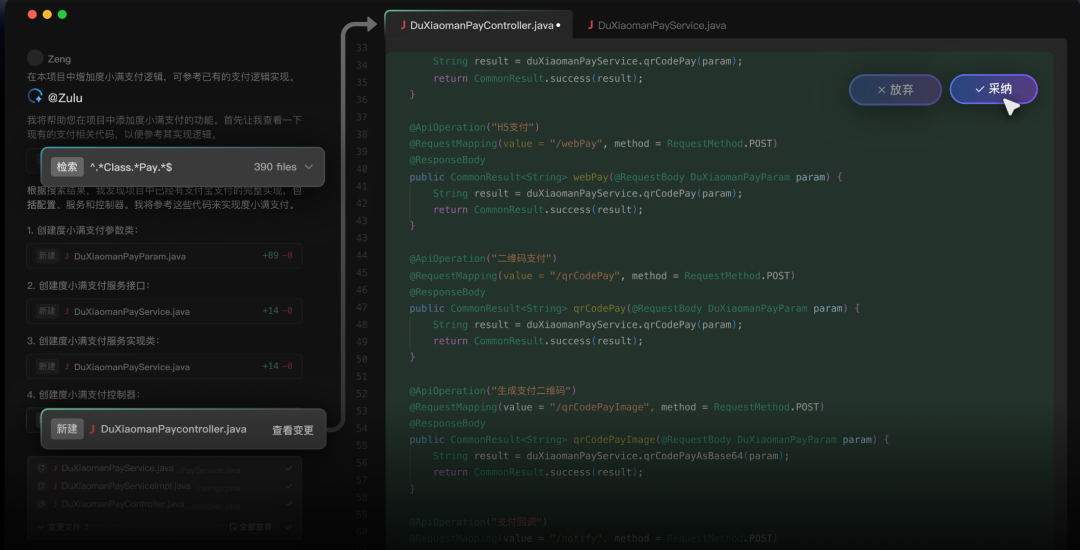
A scene demonstrated at Baidu Create Conference was particularly persuasive: a second-grader used MeDo to 'handcraft' an installable native app without writing a single line of code. Even 90% of MeDo App's own code was automatically generated by MeDo's AI agent—a detail that served as the most direct product manifesto. To date, MeDo App has served over 10 million users and created $5 billion in application value.
Tencent's Tuosi took a contrasting lightweight approach. Launched on May 15, 2026, Tuosi positions itself as an 'exploratory Vibe Coding product' and 'app generation and inspiration co-creation platform,' with core functionality allowing users to input natural language descriptions of ideas, which AI automatically decomposes into functional requirements and packages into downloadable apps.
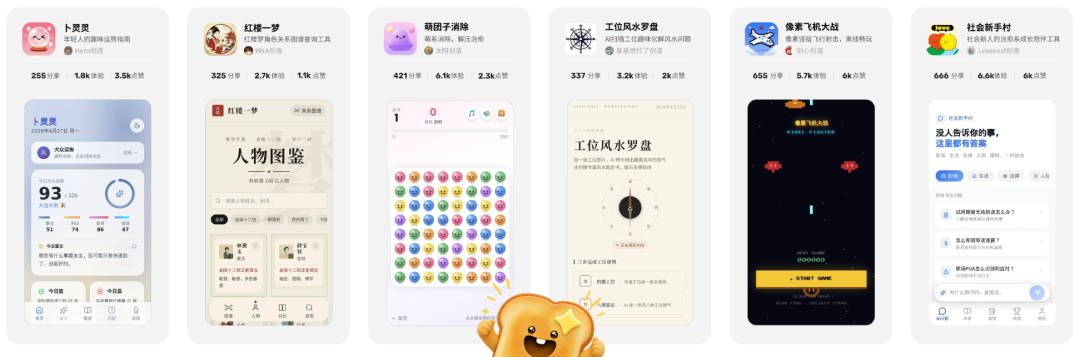
Unlike MeDo's emphasis on 'production-level' capabilities, Tuosi focuses on 'fun' and 'sharing.' The platform includes social sharing and inspiration plaza features, allowing users to publish their apps as templates for others to clone or remix. This 'light usage + social spread ' model aligns with Tencent's product DNA, achieving market education at extremely low barriers and scaling user growth through social chains.
Concurrently, Tencent Cloud's Intelligent Agent Development Platform launched the ADP Intelligent Workbench, enabling natural language-based generation of enterprise-grade intelligent agent applications for corporate scenarios, complementing Tuosi's C-end exploratory fun with B-end commercial applications.
ByteDance's strategy is more systematic and aggressive. In July 2025, ByteDance's AI-native integrated development environment (IDE) tool TRAE first launched SOLO mode beta testing internationally, followed by a standalone SOLO terminal detached from traditional IDE architectures in March 2026, offering both 'Code' and 'More Than Coding' work modes.
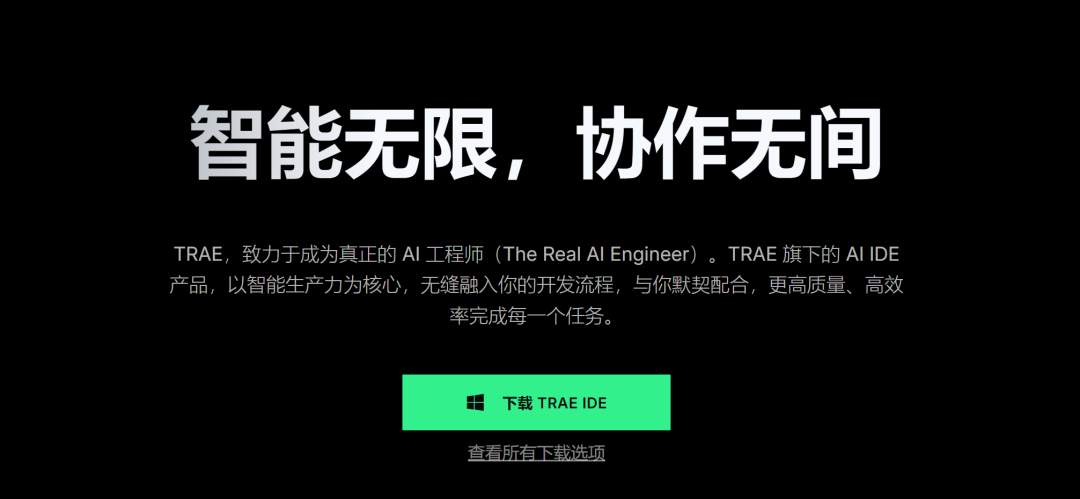
Its core breakthrough lies in generalizing AI Agent capabilities across the entire product development lifecycle. Users can upload various materials like meeting transcripts, hand-drawn sketches, or unprocessed data files, and AI automatically completes requirement analysis, prototyping, data processing, and report generation.
ByteDance's ambition extends beyond enabling ordinary users to create apps—it aims to redefine AI as a collaborative paradigm that independently plans and executes tasks rather than merely awaiting instructions. Its multi-tiered layout also includes products like Doubao MarsCode to cover domestic developer ecosystems.
In 2025, the global low-code and AI programming platform market reached $50 billion. Gartner predicts that by 2026, over 75% of new enterprise applications will be built using low-code or no-code technologies. Against this backdrop, the industry is witnessing a structural divergence where 'major players compete for entry points while smaller firms refine Coding capabilities.' Startups are collectively pivoting to vertical scenarios for deep polishing, while major players systematically vie for AI-era development entry points and infrastructure.
Meanwhile, major players' entry is accelerating industry consolidation. This competition extends beyond product functionality to who can build a complete ecosystem. As development barriers drop to merely articulating ideas, elementary school students creating apps is shifting from newsworthy events to industry norms—an explosion in app creation is only a matter of time.
Mass Creation: The Reality Gap Between Productivity Release and Commercialization
As technological barriers continue lowering and major players fully enter, deeper changes are underway: the production relations of software development are being fundamentally rewritten, touching on structural issues of 'who creates software' and 'how value is distributed.'
Hu Yanbin's 'Yan Huo' App provides a vivid case study. When someone deeply understands a vertical scenario—like a singer understanding his fanbase—AI enables translating that understanding directly into a fully functional product without navigating the lengthy process of team assembly, requirement documentation, development, testing, and launch.
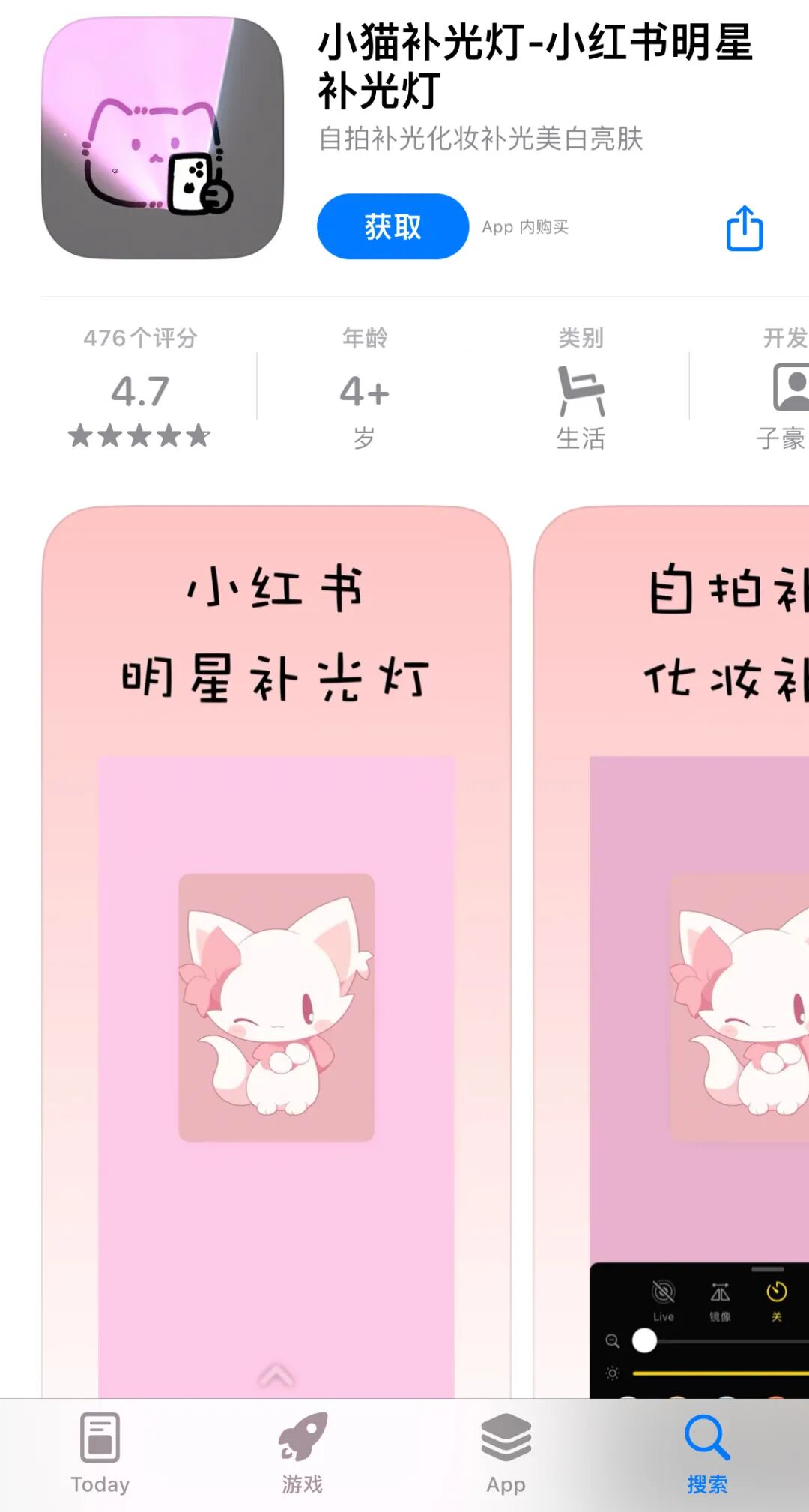
More cases continue emerging. In 2025, an independent developer with no coding experience created the 'Kitten Fill Light' app using AI programming tools, generating $400,000-$500,000 in revenue post-launch. Baidu's MeDo platform has seen early developers earn millions, while university students are also generating significant income through Vibe Coding.
Under traditional software development models, launching an app required collaboration among product managers, designers, front-end/back-end engineers, and testers. Vibe Coding is compressing this workflow into 'one person plus one AI.' When programming skills cease being scarce, true scarcity shifts to demand insight and the ability to transform ideas into products—a paradigm shift mirroring the internet era's transition from professional developer monopolies to all the people content creation.
However, the commercialization path remains uneven. Industry data from CodeRabbit shows that in 2025, AI-generated code produced approximately 1.7 times more bugs than human-written code, while security risks cannot be ignored.
In March 2026, Kaspersky Lab disclosed multiple malicious abuse attacks targeting legitimate no-code development platforms. Attackers exploited legitimate domains and SSL certificates to build highly realistic phishing pages, bypassing traditional security detection. Several mainstream platforms also exposed vulnerabilities like remote code execution and SQL injection. These risks point to a deeper question: when code is written by AI rather than humans, who bears ultimate responsibility for quality and security?
More notably, current business model challenges persist. According to The Information, Lovable's gross margin stands at just 35%, while programming assistant Replit's hovers around 36%—far below the traditional software industry's average of 60-80%.
In the long run, with technology no longer a moat, platforms must find genuine barriers and further integrate the complete commercial chain from generation to distribution and monetization. Baidu is exploring in-platform monetization through the Creator Dream-Building Program, Tencent is leveraging social fission to accumulate user scale for future commercialization, and ByteDance aims to broaden application scenarios by generalizing AI capabilities—each answering in its own way how to make this productivity release sustainable.
Looking ahead, the sector's evolution will likely unfold in three stages. The current first stage is the tool democratization period, where core competitive factors are generation quality and user experience—who can truly make ordinary users adopt and stick with the tools will win the first loyal user base.
The second stage will be ecosystem construction, where platform competition escalates from single-point features to full-chain contests around distribution channels, monetization models, and community operations. Hu Yanbin's cross-circle participation indicates Vibe Coding's influence is radiating from tech circles to cultural spheres, with user communities and content ecosystems gradually becoming key differentiators.
The third phase may enter a period of paradigm reconstruction. When AI-generated code can match or even surpass the quality of that produced by professional developers, the organizational structure and business model of the software industry will undergo fundamental changes. When development costs approach zero, it will become reasonable and economical to customize one-time applications for single scenarios or short-term needs. This may not just be a vision, but a fundamental change in the way the entire society solves problems.
Today, the most powerful internet companies in China have all entered the arena, each betting with real money and strategic resources on the same judgment: enabling ordinary people to participate in software creation is not just a non-essential demand for trying something new, but a structural opportunity to rewrite the underlying logic of the software industry.
-
Ofilm Teams Up with ADSensE to Propel Large-Scale Deployment of All-Solid-State LiDAR Powered by ADS6311 Chip!
-
![]()
Loss of 2.5 Billion Yet Facing Strong Demand for Shares? Another Battle for Control of Lianchuang Electronics
-
![]()
Huawei’s Enjoy Series Flies Off the Shelves, Prompting Xiaomi to Double Down on Budget Smartphones
-
![]()
Beijing Hyundai's Top Executive Criticizes Industry Disorder: Certain Brands Treat Customers as Beta Testers
-
![]()
The domestic mobile phone market has declined for five consecutive quarters! Huawei defies the trend with significant growth: maintains its top market share
-
Annual Revenue Surpasses 3 Billion: An Automotive Trim 'Little Giant' Makes Its Debut on the Beijing Stock Exchange
-
![]()
The Space Force Wants to Spend $30 Billion on Rocket Launches: Is Trump Doubling Down, and Is SpaceX the Big Winner?
-
![]()
Going Crazy! One out of Every Three Plug-in Hybrids Sold in Europe is a Chinese Vehicle